
-

-


Follow Us
-

 On Facebook
 On Flipboard


The cameras found Donna Kelce before she found the microphone. Standing at the center of a GameChanger press event on May 18, 2026, the woman most Americans knew as “Travis and Jason’s mom” looked like someone who had stopped asking permission. The NFL offseason had barely started, and she was already working. Not cheering from a suite. Not waving from a parade float. Building something with her name on it, backed by a Gran(d) Prize package valued at over $10,000 and 365 free Premium subscriptions aimed at youth sports families nationwide.
Thirty Years Behind a Desk
Before the Super Bowl watch parties and sideline hugs went viral, Donna Kelce spent three decades in banking. Mastercard. Truist financial services. The kind of career that earns a pension and a retirement plaque. Most people with that résumé coast into their golden years. She looked at hers and saw a launchpad. The NFL offseason created a window where media attention shifts from the field to player decisions, and Donna stepped directly into that spotlight with a sports tech partnership nobody predicted.
The Reality TV Springboard
Everyone assumed Donna Kelce’s fame had a ceiling. NFL mom. Proud grandparent. Maybe a cookbook deal. That assumption started cracking when she appeared on Peacock’s “The Traitors,” competing against contestants half her age. The show proved she could carry a camera on her own terms, separate from her sons’ jerseys. It also proved something the entertainment industry had been slow to recognize: audiences wanted more of her. Not as a sideline character. As the lead. The GameChanger deal landed months later.
Banking VP to Tech Star
The GameChanger partnership revealed the real pivot. Donna Kelce partnered with the youth sports platform to launch a nationwide campaign featuring a “Gran Cave” package and 365 free Premium Family Plan subscriptions for families. “I wish we had GameChanger when my boys were younger!” she said, recalling raising Travis and Jason. Thirty years of banking, condensed into a campaign about the families she’d once been part of. A grandmother fronting a sports tech initiative during the NFL offseason. The old assumption that age limits reinvention died right there at that podium. She buried it herself.
The Grandparent Playbook

Here’s what the tech industry missed for years: grandparents are the ones driving kids to practice, sitting in bleachers, filming games on their phones. They are the hidden infrastructure of youth sports. Donna Kelce’s campaign with GameChanger targeted that exact demographic, positioning grandparents not as spectators but as the market. The “Gran Cave” concept reframed the entire relationship between older adults and sports technology. That reframing carried a financial thesis most Silicon Valley founders never considered building around.
The Numbers Behind the Name

The campaign’s scale tells the story the press conference couldn’t. A Gran(d) Prize package valued at over $10,000 — including a top-of-the-line large-screen smart TV, a premium surround sound system, a $5,000 gift card, DICK’S Sporting Goods fan gear, and a GameChanger Premium subscription. Three hundred sixty-five additional Premium Family Plan subscriptions for runners-up, one for every day of the year. Nationwide reach, with the contest running May 18–31, 2026. For a platform traditionally marketed to coaches and parents, adding a grandmother as the face of the brand represented a calculated bet that the customer base was wider than anyone had mapped. GameChanger essentially admitted their own blind spot by signing Donna Kelce to fill it.
Beyond the Partnership
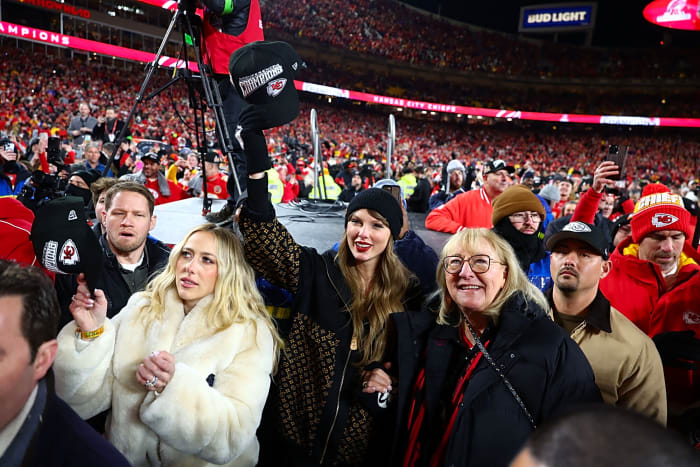
The GameChanger deal didn’t exist in isolation. Donna Kelce had already built a diverse business portfolio spanning entertainment through “The Traitors,” ongoing brand collaborations and advertisements, and active promotion of the New Heights ecosystem with her sons. Each venture fed the next. Reality TV built the personal brand. The personal brand attracted corporate partners. The corporate partners validated the business model. One former banking executive, operating across multiple sectors, proving the platform could generate real commercial gravity beyond a single deal.
The New Rule of Reinvention

Once you see it, you can’t unsee it: grandparents equal market. Every youth sports platform, every family-focused app, every brand chasing the weekend-tournament demographic had been marketing to parents and coaches while ignoring the people who actually buy the snacks, drive the minivans, and pay for the travel teams. Donna Kelce’s career shift set a precedent. This wasn’t a celebrity endorsement. It was proof that an entire consumer segment had been overlooked, and the first person to claim it was a 70-something former banker.
What Travis’s Future Means for Mom
Travis Kelce’s future with the Chiefs generated massive media coverage throughout the 2026 offseason, with Travis projected to earn another $12 million in 2026. That uncertainty didn’t threaten Donna’s business momentum. It amplified it. Every headline about Travis’s future doubled as free advertising for his mother’s ventures. If he eventually retires, the Kelce family brand doesn’t shrink. It redistributes. Donna Kelce built her portfolio precisely so it wouldn’t depend on any single family member staying on a football field.
The Empire Nobody Expected
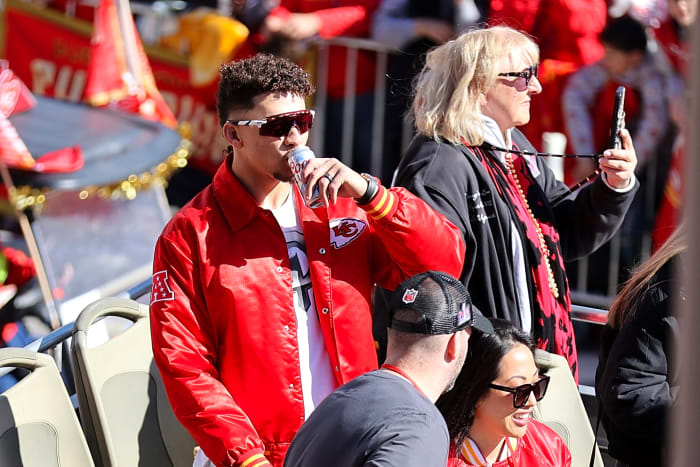
The sports tech world is dominated by twenty-something founders pitching algorithms. Donna Kelce walked in with a banking career, a reality TV résumé, and a grandmother’s understanding of who actually shows up to little league. She built a meaningful business footprint across multiple sectors during a single NFL offseason. The next wave of brands chasing youth sports dollars will have to answer a question Donna Kelce already answered: are you marketing to the people who actually spend the money, or just the ones you assumed did? Would you nominate your grandparent for the Gran Cave — or do you think Donna Kelce’s reinvention is the blueprint every retiree should be studying? Tell us in the comments.
More must-reads:
- Rams' Ty Simpson sends message to critics, discusses watching film with Matthew Stafford
- Rams give Matthew Stafford contract extension just after drafting his replacement
- The 'NFL's active 1K-rushers' quiz
Breaking News
Trending News





Customize Your Newsletter
 +
+




Get the latest news and rumors, customized to your favorite sports and teams. Emailed daily. Always free!
PRIVACY POLICY COOKIE POLICY CONTACT US
ABOUT YARDBARKER TERMS OF SERVICE


By using this site, you agree to our Terms of Service and Privacy Policy.
This site is for entertainment purposes only.
There is no gambling offered on this site.
Gambling Problem? Call 1-800-Gambler.
