
-

-


Follow Us
-

 On Facebook
 On Flipboard


Late December in Miami. Sun-bleached stadium, visiting sideline, a familiar face calling plays for the wrong team. Mike McDaniel stood where he once ran the show, except now he wore Chargers blue and answered to Jim Harbaugh. The Dolphins had fired him less than a year earlier. They were still paying him. And every offensive snap he dialed up for Justin Herbert felt like a receipt Miami never wanted to see. The man they cut loose had landed on his feet, and he brought the whole playbook with him.
The Firing That Funded Everything
On January 8, 2026, Dolphins owner Stephen Ross told McDaniel he was done. The timing mattered. Miami had extended McDaniel through 2028 in August 2024, locking in multiple years of guaranteed salary at a reported $3.5 million per year before the bottom fell out. The Dolphins stumbled to a 7-10 finish, missed the playoffs for a second straight year, and benched Tua Tagovailoa late in the 2025 season after he threw a career-high 15 interceptions. Ross pulled the plug on McDaniel but couldn’t pull back the money. With three seasons remaining on his deal, roughly $12 million in guaranteed obligations followed him out the door.
A Scholarship, Not a Severance

Most fired coaches scramble for the best-paying gig available. McDaniel didn’t have to. That $12 million buyout from Miami kept hitting his account regardless. Analysts called it less a severance and more a scholarship, buying him freedom to be picky. He didn’t need long-term security from his next employer. He needed a stage. So when Harbaugh came calling with a franchise quarterback and a mandate to build the offense around McDaniel’s system, the choice was obvious. Miami paid for the freedom. Los Angeles got the benefit.
The Chargers Bet on a Fired Coach
Harbaugh wanted a “head coach of the offense.” He got one collecting checks from two NFL teams simultaneously. The Chargers reshaped their roster around McDaniel’s scheme, retooling through free agency and the draft to maximize Herbert. Every game McDaniel scripts in 2026 doubles as audition tape. League insiders already project him as a leading head-coaching candidate in the 2027 cycle, and he’s been selected for the NFL’s accelerator program designed to expose top assistants to ownership groups. One year of play-calling for Herbert. One year of national visibility. One year bankrolled by the team that didn’t want him anymore. That’s not a demotion. That’s a launchpad.
Miami Built the Opposite Machine

While McDaniel built an offense around Herbert, the Dolphins gutted everything. New general manager Jon-Eric Sullivan. New head coach Jeff Hafley. New quarterback Malik Willis on a three-year, $67.5 million deal. The entire leadership structure turned over in a single offseason. Miami bet that McDaniel’s culture-reset efforts and late-season collapses were symptoms of a deeper problem, not just bad luck. Sullivan and Hafley represent the opposite philosophy: defense-first, structure-first, no more gambling on offensive wizardry to paper over roster holes. Two franchises, two competing theories about how to win football games.
The Numbers Miami Can’t Escape

Here’s what makes the financial picture sting. The Dolphins owe McDaniel roughly $12 million to not coach their team. They also released Tua Tagovailoa on March 9, 2026, eating an NFL-record $99.2 million dead-cap hit on the four-year, roughly $212 million extension he signed in 2024. Miami still owed Tua $54 million guaranteed for 2026 even after cutting him, while signing Malik Willis to take over. That’s a franchise paying a quarterback it released, a coach it fired, and a new starter at the same position, simultaneously, while trying to rebuild the entire operation.
Week 16 Becomes a Referendum

The late December 2026 game in Miami pits these competing visions against each other on the same field. McDaniel’s offense, now armed with Herbert instead of the released Tagovailoa, against the Dolphins’ new defensive identity under Hafley. If the Chargers roll into South Florida and torch Miami’s rebuilt roster, the optics are devastating for Ross. He paid $12 million to send his offensive architect to a different conference, and that architect could show up with a better quarterback and a grudge.
The Precedent Nobody Talks About
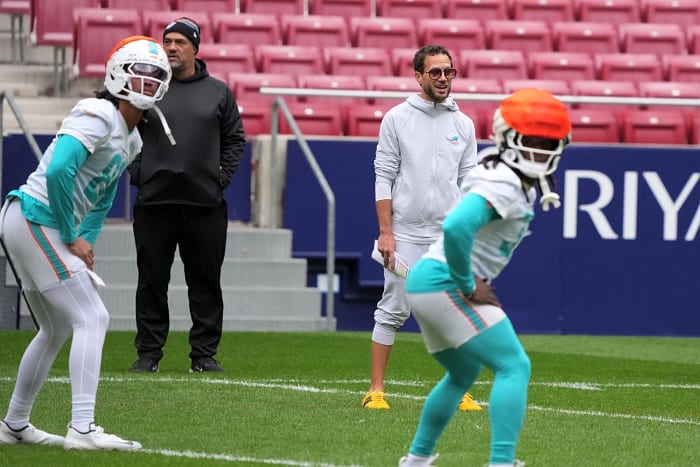
Step back from the Week 16 drama and a bigger pattern emerges. McDaniel’s situation is becoming a blueprint. A fired head coach with guaranteed money uses that financial cushion to pick the most strategically advantageous coordinator job, not the most secure one. He treats one season as an audition, builds tape with an elite quarterback, and reenters the head-coaching market from a position of strength. Reporting already places him atop 2027 coaching shortlists. If this works, every fired coach with a buyout will try to replicate it.
The 2027 Clock Is Already Ticking

The Chargers hired McDaniel knowing full well that, if things go right, his reward will eventually be an exit to a bigger job. Harbaugh accepted that trade-off because one elite season of offense could push Los Angeles deep into the playoffs. But the moment the 2026 season ends, the interviews start. Teams hungry for offensive overhauls will come calling. McDaniel’s buyout from Miami keeps paying through 2028. He can afford to wait for the perfect job. The Dolphins are literally funding the patience of the man they fired.
Who Pays When the Move Happens
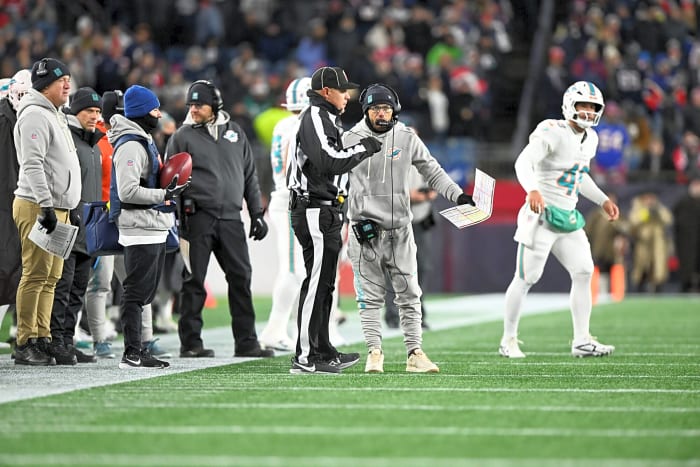
When McDaniel lands his next head-coaching gig, Miami’s buyout doesn’t vanish. Those guaranteed dollars keep flowing, offset only by what his new employer pays, while a third team pays him on top. The Dolphins will have financed a coach’s career rehabilitation while getting nothing back on the field. Meanwhile, the Chargers stand to lose their offensive coordinator to a promotion they helped create. The only winner is McDaniel, collecting from multiple franchises while climbing back to the top. Every game he calls between now and 2027 is another inch forward, paid for by the team that let him go. Did Miami make the right call cutting bait, or are they about to watch McDaniel hand them the most expensive “I told you so” in NFL history? Sound off in the comments — and tell us which fired coach you’d bet on next to pull the same playbook.
More must-reads:
- Vikings reportedly want J.J. McCarthy to make these improvements amid competition with Kyler Murray
- NFL insider shares why Ravens' Lamar Jackson will 'most likely' be traded soon
- The 'NFL's active 1K-rushers' quiz
Breaking News
Trending News




Customize Your Newsletter
 +
+




Get the latest news and rumors, customized to your favorite sports and teams. Emailed daily. Always free!
PRIVACY POLICY COOKIE POLICY CONTACT US
ABOUT YARDBARKER TERMS OF SERVICE


By using this site, you agree to our Terms of Service and Privacy Policy.
This site is for entertainment purposes only.
There is no gambling offered on this site.
Gambling Problem? Call 1-800-Gambler.
