
-

-


Follow Us
-

 On Facebook
 On Flipboard
[Editor’s note: This article is from The Spun’s “Then and Now” magazine, featuring interviews with more than 50 sports stars of yesteryear. Order your copy online today, or pick one up at retail racks and newsstands nationwide.]
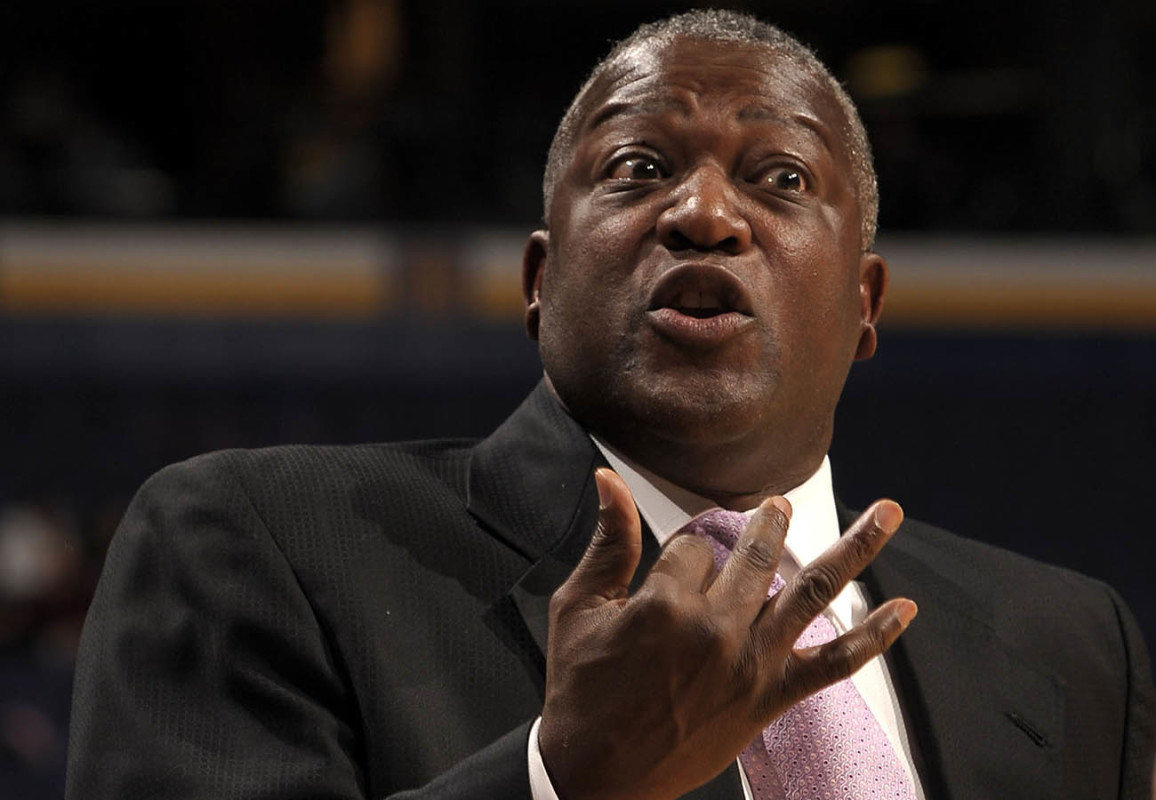
Dereck Whittenburg said there hasn’t been one day in the past few decades that someone hasn’t brought up North Carolina State’s dramatic 1983 NCAA Tournament championship game win over Houston.
“Everybody was watching, and everybody remembers that game,” he said.
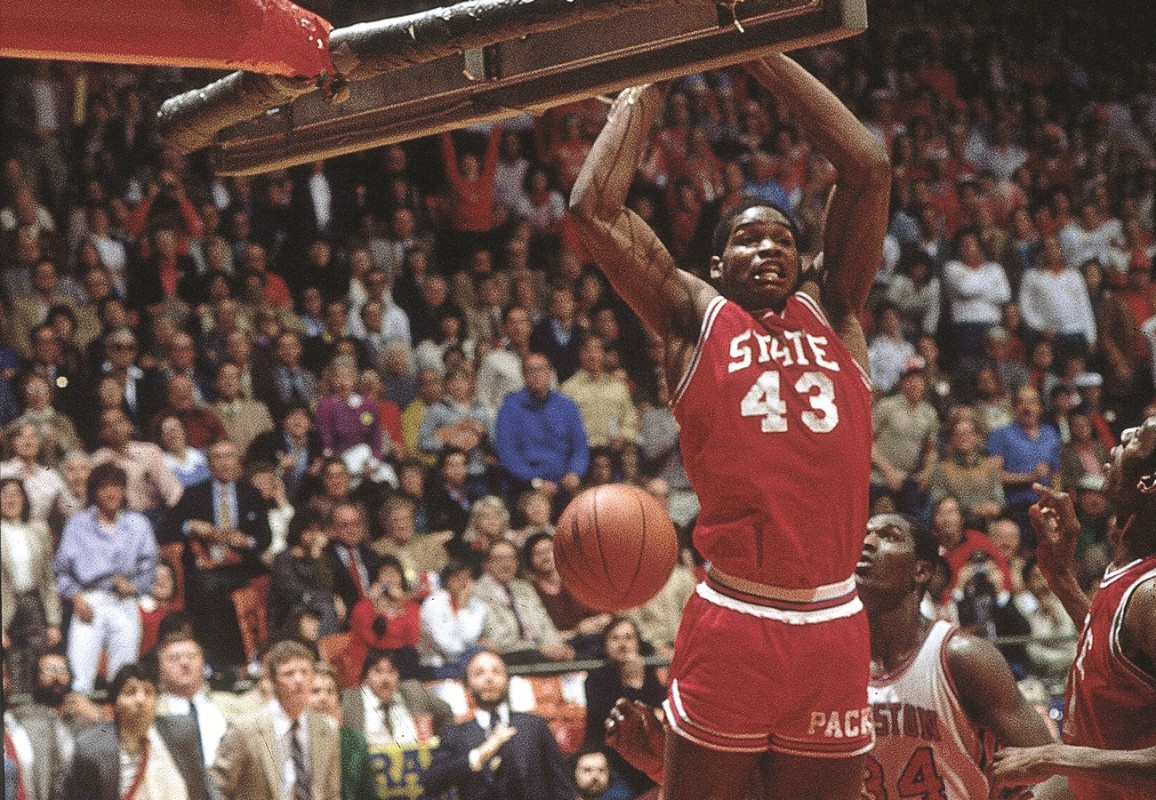
It was Whittenburg who chucked the shot from 30-plus feet that teammate Lorenzo Charles caught just short of the basket and flushed home at the buzzer to give the Wolfpack a wild, improbable 54-52 win over the Cougars. Fans still share with Whittenburg what the win meant to them — and sometimes, how much money they won betting on it.
“Nobody ever gave me a return on the money they won,” he said, laughing.
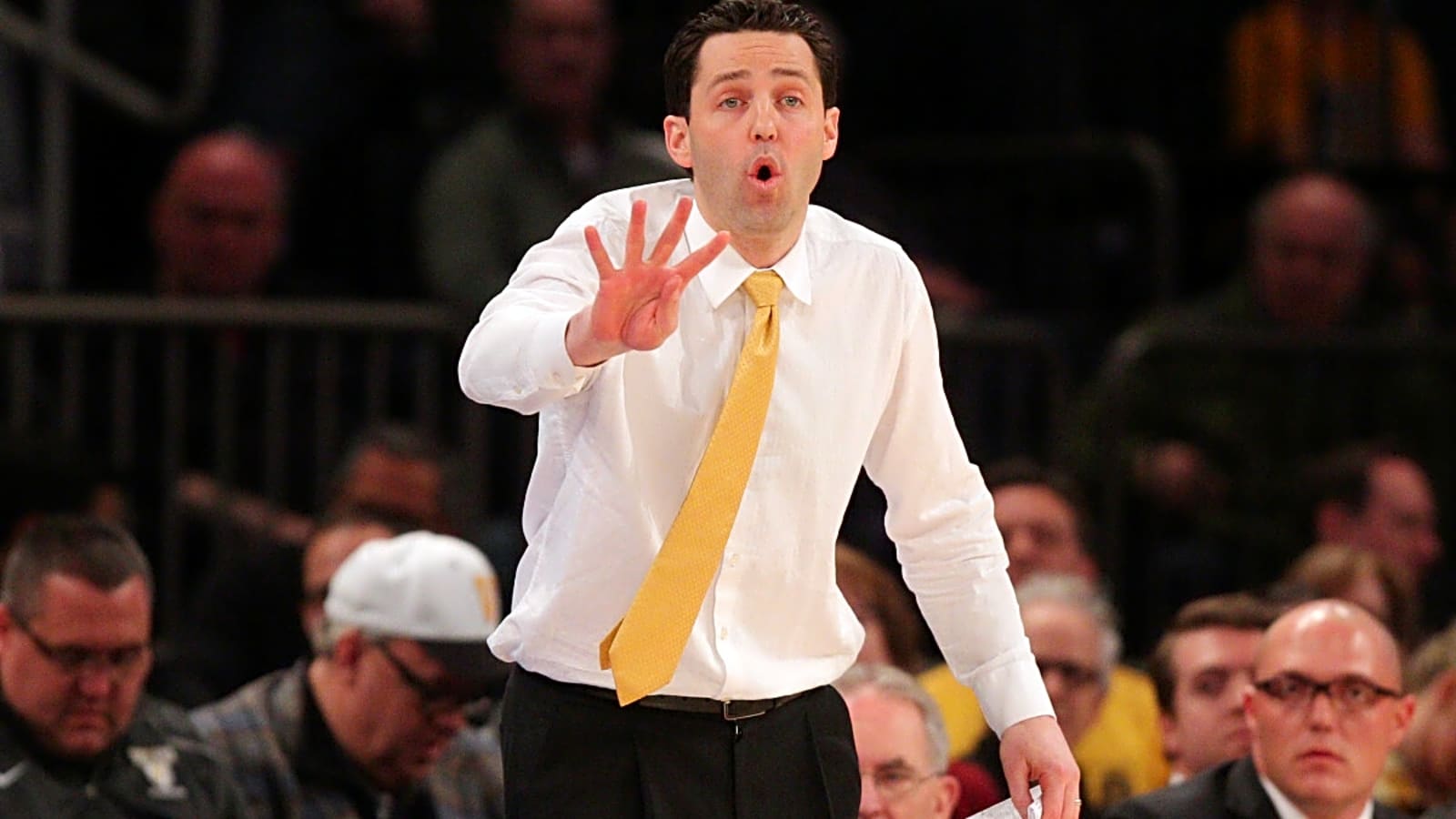
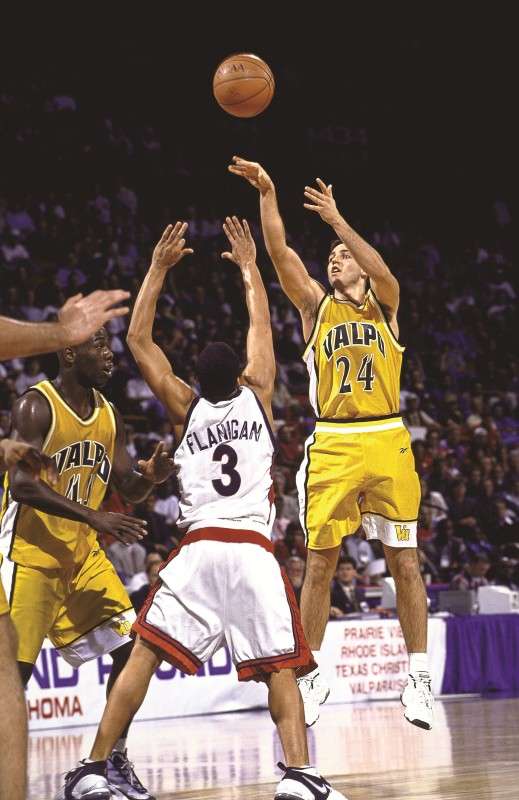
Bryce Drew can relate. His last-second three-pointer in 1998 lifted 13th-seeded Valparaiso to a 70-69 first-round upset of No. 4 Mississippi.
“I never got anything from that, either,” Drew said.
What the two men did receive — just as many others have — is a lifetime of college basketball fame. They join the likes of UCLA’s Tyus Edney, Villanova’s Kris Jenkins, Duke’s Christian Laettner and many others who have hit NCAA Tournament buzzer-beaters to win games and championships. Their clutch shots are replayed every March and live on in the hearts of their teams’ fans, who have made them heroes — even if they haven’t given them a share of their winnings.
NC State: True Believers
Before Lorenzo Charles made his shot. Before North Carolina State coach Jim Valvano ran around the court looking for someone to hug. And before the Wolfpack won 10 straight games to conclude the 1982–83 season, Dereck Whittenburg and backcourt mate Sydney Lowe knew they were part of a championship team.
“Sydney and I played on [legendary DeMatha High coach] Morgan Wooten’s first national championship team in 1978,” said Whittenburg, now an assistant athletic director at NC State. “We didn’t know anything about losing. We didn’t have fear or panic.”
The Wolfpack were 16-10 when they hosted Wake Forest in the regular-season finale and looked nothing like a team capable of capturing a national title. But NC State routed the Deacons 130-89, then won the ACC Tournament to earn an automatic NCAA bid. Their first five wins of the tourney were mostly close — save a 75-56 rout of Utah — and they entered the championship game as underdogs against Houston and its fearsome Phi Slamma Jamma juggernaut.
As the nation watched, surprised, the Wolfpack not only stuck with Houston, they went right at the Cougars. At halftime, NC State had a surprising 33-25 lead.
“We came out pretty loose,” Whittenburg said. “That’s what Valvano wanted.”
After intermission, Houston got going. A 17-2 run put them in control of the game. But NC State had come back so many times during the postseason that the deficit meant nothing. A jumper by Whittenburg with 1:54 left tied the game at 52. Houston got the ball and stalled (there was no shot clock at the time). With 1:05 left, Whittenburg fouled Alvin Franklin, who missed the front end of the one-and-one free-throw opportunity. State rebounded, and with 0:44 left, Valvano called timeout to set up the last play.
NC State worked the ball around, and with five seconds left, Houston’s Benny Anders tipped the ball away from Whittenburg, who recovered it, turned and heaved the shot.
“I always have a clock in my head,” he said.
The shot was short, but Charles was there to dunk the ball — and NC State — into March Madness lore.
But that wasn’t the end of his basketball résumé. Charles was a first-team All-ACC performer in 1984 and 1985 and had a 16-year professional career that included international stops in Italy, Sweden and Uruguay. Following his retirement, he worked as a bus driver throughout North Carolina.
Charles died in 2011 at age 47 in a bus crash in Raleigh. But every March, his memory comes alive.
“He was a sophomore coming into his own,” Whittenburg said. “He was 6-8, strong and a good midrange shooter. You could see the talent he had.”
In 1983, for one second, no one in college basketball was better.
Valparaiso: “Pacer”
The 1996–97 Valparaiso team won the Mid-Continent Conference regular-season and tournament titles but dropped a first-round NCAA game to Boston College, 73-66.
A core of six seniors returned for the 1997–98 campaign, and Valpo again won both Mid-Continent championships. The Beacons entered the first-round matchup with Mississippi on an 11-game winning streak, but few expected them to challenge the Rebels, who boasted the SEC’s Player of the Year, forward Ansu Sesay, and had posted a 12-4 conference record.
“That was our third straight trip to the NCAA Tournament, and our mindset was we were going to win the game,” said Drew, now the coach at Grand Canyon University. “We had a lot of senior experience, and that gave us confidence.”
Drew has guided the Antelopes since 2020 to four 20-plus-win seasons and three NCAA Tournaments, with the 2023–24 squad earning a first-round win. After a seven-year professional career that included stops in Houston, Chicago, Charlotte and New Orleans, along with a season abroad, Drew transitioned into coaching. Aside from GCU, he has coached at his alma mater and Vanderbilt and has reached the NCAA Tournament six times.
Valparaiso was “physically and mentally tough,” according to Drew, but suffered some early-game jitters and trailed 38-34 at the half. Still, as the game wound down, Valpo remained close, and the fans in attendance were rooting for the underdog.
With seven seconds left and Mississippi leading 69-67, Drew missed a three-point shot to the left of the key. Sesay was fouled and had two shots that could have secured the victory. Sesay missed the first, and Valparaiso called timeout.
If Sesay made the second, Valpo would have run a play that featured players crossing upcourt while Jamie Sykes inbounded the ball.
But Sesay missed again, and the ball was tipped out of bounds by Mississippi’s Keith Carter, giving Valpo a chance to win.
“We audibled and called ‘Pacer,’” Drew said. “We all knew what to do. My dad [Valpo coach Homer Drew] said his job was done because everybody knew what to do.”
Drew estimated “Pacer” worked about 45% of the time in practice.
Sykes heaved an overhand pass from under the Valparaiso basket to forward Bill Jenkins, who dished to Drew running down the right sideline. His jumper was perfect, and Valpo had an improbable 70-69 victory.
Few remember that Valparaiso won its next game over Florida State to advance to the Sweet 16. They don’t forget Drew’s shot.
“One of the cool things about it is I’ll get an email or a text from a coach who said, ‘We ran Pacer in a junior high or high school game and won,’” Drew said. “That’s cool.”
His shot was cooler.
Villanova: Bang!
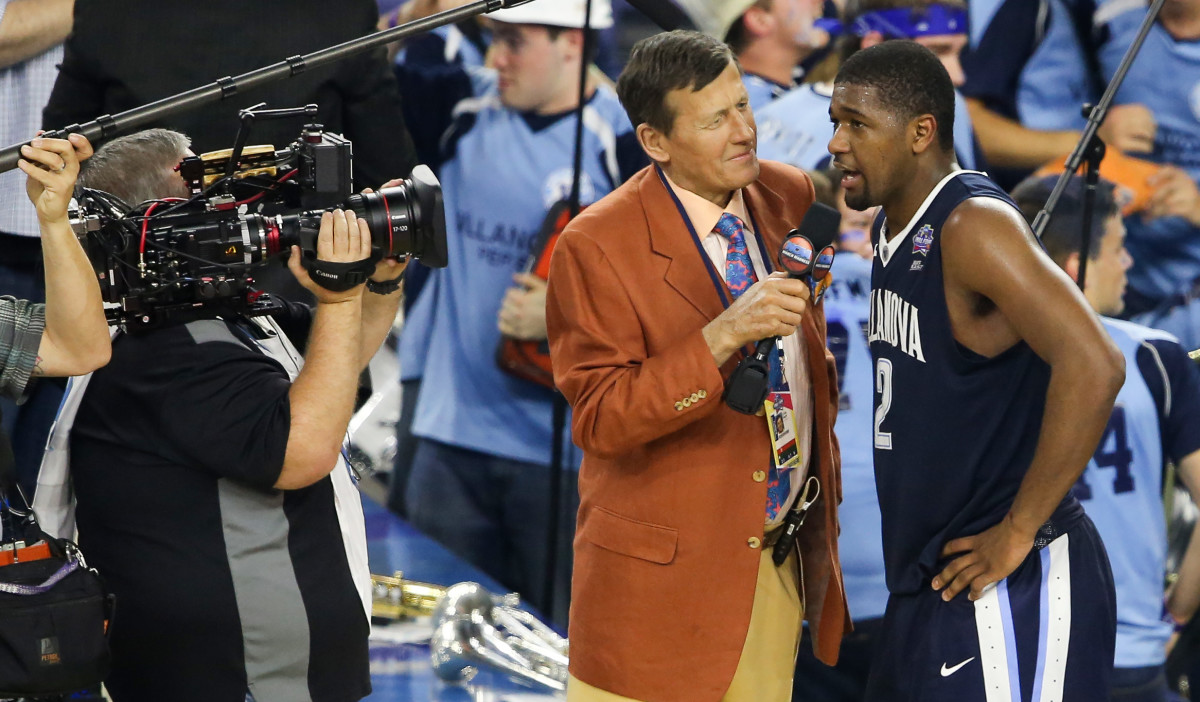
Kris Jenkins didn’t see Ryan Arcidiacono run in front of him. He didn’t see the North Carolina defender closing out.
“When you’re a shooter, especially when you’re on a hot streak like I was, all you see is the rim and the basket,” Jenkins said.
With 4.7 seconds left in the 2016 NCAA final between Villanova and North Carolina, Tar Heels guard Marcus Paige hit a double-clutch three-pointer to tie the score at 74. Villanova coach Jay Wright took a timeout and called a play requiring Arcidiacono to push the ball upcourt. If North Carolina collapsed, he was to shoot it. If not, someone would be open.
“That was definitely something we practiced daily,” Jenkins said. “Coach Wright did a good job putting us in tough end-of-game situations.”
Arcidiacono drove toward the top of the key, drawing two defenders, then shoveled the ball backward to Jenkins trailing the play. Jenkins caught it, rose, released and won the NCAA title.
“I absolutely thought it was going in,” Jenkins said. “I don’t know if it was extreme confidence or delusion, but I had put so much time into my shooting that if anyone was going to believe it was going in, it was me.”
Officials confirmed Jenkins released the ball before the buzzer. It was good. Villanova was the NCAA champion.
“You don’t think about history when you’re playing,” Jenkins said. “But afterward, you can appreciate it. It was humbling. I never thought it would be this big, but I love it.”
In April 2025, Jenkins sued the NCAA over restrictions on his ability to profit from his name, image and likeness during his time at Villanova, particularly from the shot that generated revenue for both the school and the NCAA.
Wright, standing calmly on the sideline as the ball floated toward history, summed it up simply:
“Bang.”
UCLA: Coast-to-Coast
It looked like another bitter disappointment. In 1994, fifth-seeded UCLA had been stunned 112-102 by Tulsa in the NCAA Tournament’s first round. One year later, the top-ranked, top-seeded Bruins trailed Missouri 74-73 with 4.8 seconds left in the second round.
“The ’94 loss was a nightmare,” said Tyus Edney, UCLA’s point guard on both teams. “It fueled us. That season started in the locker room after that loss.”
Missouri scored again, and UCLA coach Jim Harrick called timeout. He drew up “1-4 Low,” requiring Edney to take the inbounds pass, race the length of the court and score.
“I knew we had enough time,” said Edney, now an assistant coach at Pepperdine.
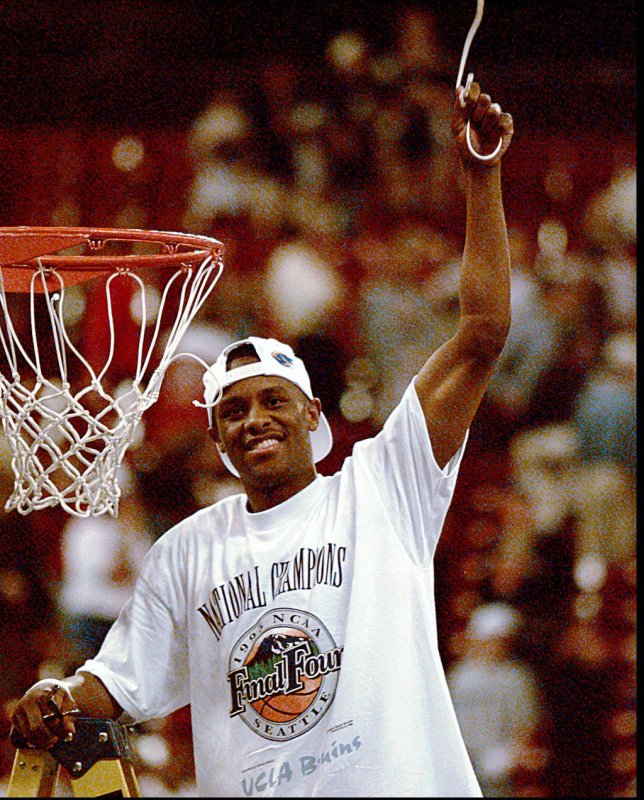
Edney dribbled up the left side, crossed midcourt, split defenders, drove into the lane and pulled up over Missouri forward Derek Grimm. His right-handed three-footer banked in as the buzzer sounded.
UCLA went on to win its final four tournament games by double digits, capturing the program’s 11th national title.
“I’m biased, but there’s no better experience for a college player than winning at UCLA,” Edney said. “It was like having a key to the city.”
Edney was selected 47th overall in the 1995 NBA Draft and played in the NBA and Europe, including leading Žalgiris Kaunas to the 1999 EuroLeague title. He later returned to UCLA in coaching and administrative roles before joining Pepperdine in 2024.
For 4.8 seconds, he was where few others have ever been.
Duke: The Shot
The Shot. College basketball fans know exactly what that means.
With 2.1 seconds left in overtime of the 1992 East Regional final, Kentucky’s Sean Woods hit a runner for a 103-102 lead. Duke appeared finished.
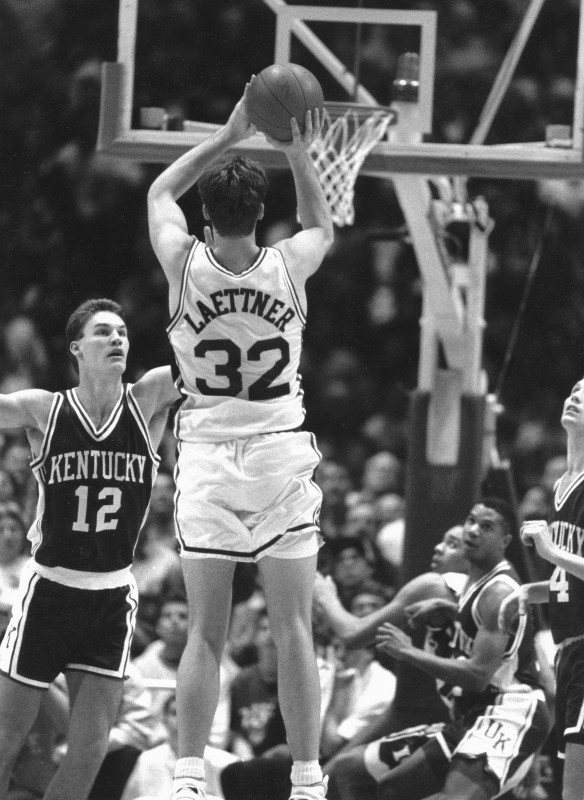
Grant Hill launched a perfect full-court pass to Christian Laettner, who caught it at the foul line, dribbled once, turned and hit a jumper as time expired.
“I can still remember the feeling when Christian caught it,” Duke guard Bobby Hurley said in a 2021 Sporting News interview. “All of a sudden, hope was injected into my body.”
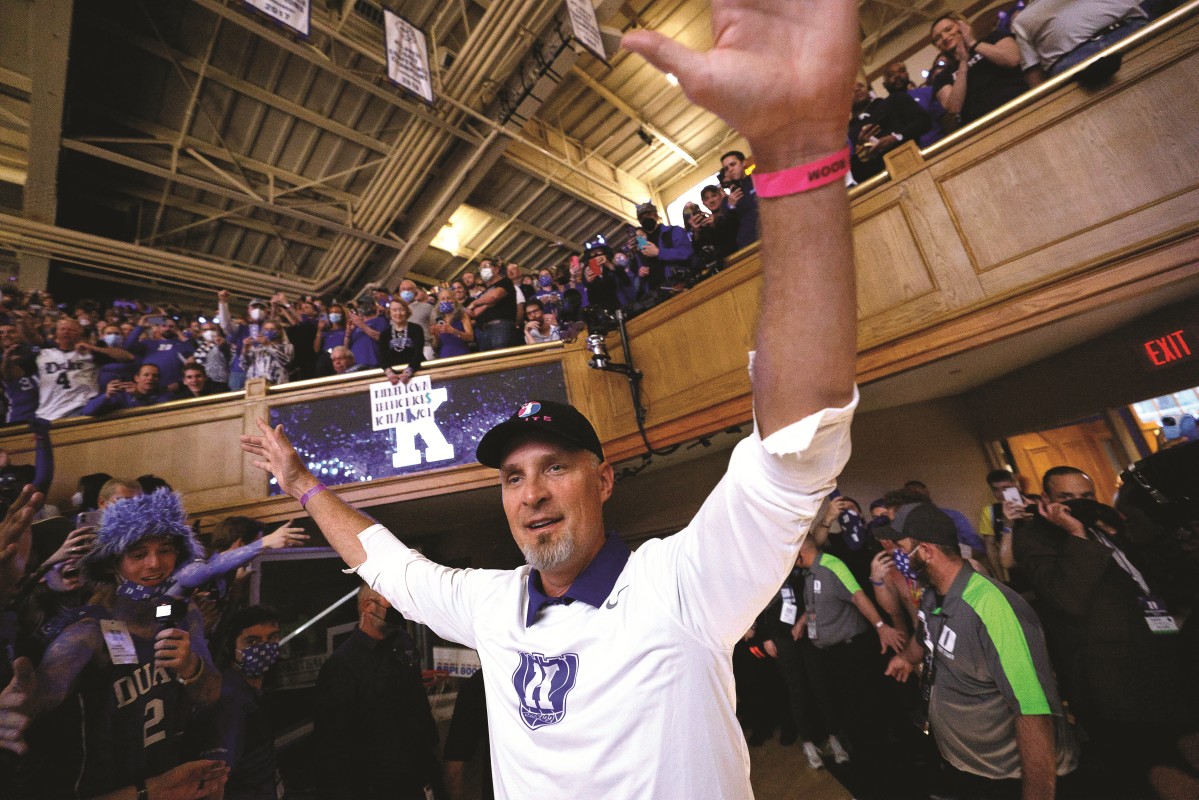
Duke went on to win the national title. That summer, Laettner joined the Dream Team as the only college player and won Olympic gold in Barcelona. He played 15 NBA seasons and later pursued business ventures, coaching and basketball development programs.
But nothing ever topped that afternoon in March — when Christian Laettner hit The Shot.
More must-reads:
- What Eagles reportedly will get from Patriots for A.J. Brown
- Packers have one obvious replacement for Josh Jacobs
- The 'Active playoff double-doubles' quiz
Breaking News
Trending News


Customize Your Newsletter
 +
+




Get the latest news and rumors, customized to your favorite sports and teams. Emailed daily. Always free!
PRIVACY POLICY COOKIE POLICY CONTACT US
ABOUT YARDBARKER TERMS OF SERVICE


By using this site, you agree to our Terms of Service and Privacy Policy.
This site is for entertainment purposes only.
There is no gambling offered on this site.
Gambling Problem? Call 1-800-Gambler.
