
-

-


Follow Us
-

 On Facebook
 On Flipboard
 On Twitter
Remember how much hatred the Bowl Champion Series had for having computers determine who got to play for the national championship? It drove many in the sport nuts, especially in some years where there were more than two teams worthy of playing for the sport's top prize.
The biggest years of contention were 2003 (Oklahoma over USC), 2004 (three undefeated teams), and 2006 (Florida over Michigan) were all serious debates both before and after. In fact. Oklahoma had lost the Big 12 championship game the day before the final BCS rankings were released.
The idea was that having people pick the College Football Playoff participants would make things better, because the computers didn't do a good enough job. Now that we have over a decade of playoff rankings and two years of the 12-team playoff, it raises the question: is it better?
College Football Playoff committee continues to contradict itself
We've seen some crazy things over the course of the playoff rankings. An Alabama Crimson Tide team that didn't end up playing in the SEC Championship Game in 2017 got in over Big Ten champion Ohio State Buckeyes, which was controversial at the time. It wasn't because the Buckeyes lost to Oklahoma in the beginning of the year, but rather a 31-point loss to the Iowa Hawkeyes on the road.
Last season, the biggest snub from the final rankings was a 10-2 Miami team who, not only finished behind a 9-3 Alabama that was also left out, but were in position for that to happen once again this year.
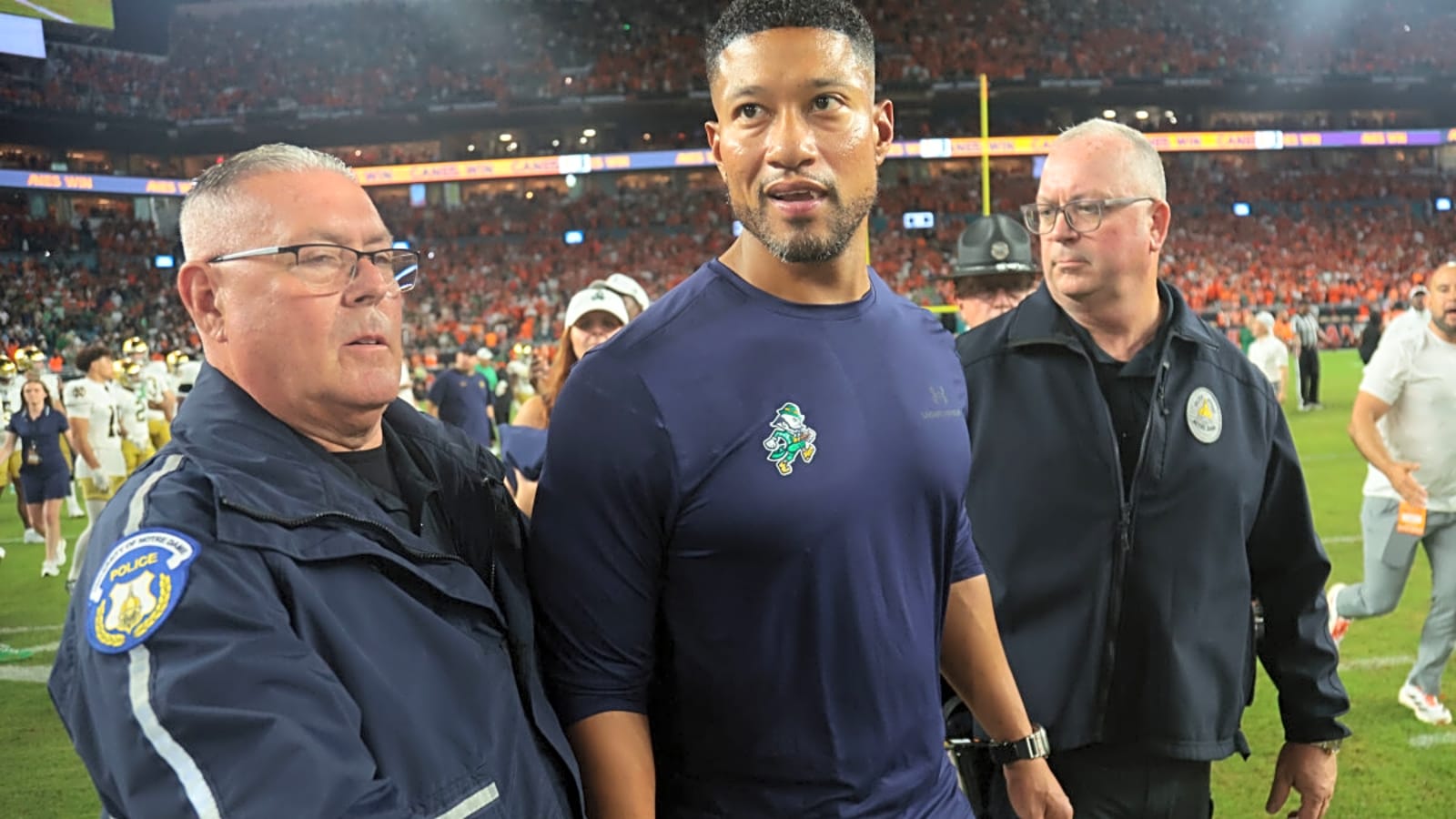
The committee decided to not be consistent in any way, shape, or form throughout the process. Let's get this out of the way. The committee put in Alabama and Miami with the final two spots, leaving out the Nortre Dame Fighting Irish. In a vacuum, it's not that of a deal, as Notre Dame lost their two best matchups. However, it was how they got there that was a problem.
Throughout the course of the process, the Committee chair Hunter Yurocheck has led a group that continues to cotradict itself. Let's start with the criteria. They are supposed to follow certain criteria, but there are no real guidelines on what matters more than the others.
The committee will select the teams using a process that distinguishes among otherwise comparable teams by considering:
- Strength of schedule,
- Head-to-head competition,
- Comparative outcomes of common opponents (without incenting margin of victory), and,
- Other relevant factors such as unavailability of key players and coaches that may have affected a team’s performance during the season or likely will affect its postseason performance.
They don't seem to take their own criteria seriously, but rather pick their favorite teams and try to justify their picks. The selection of Alabama is going to be a controversial one, and for good reason. They are the first three-loss team in the history of the playoffs, and they tried everything to "justify" their inclusion.
The week prior to the conference championship games, Yuracheck said that Tennessee wasn't viewed as a quality win for the Vanderbilt Commodores, but now it all of a sudden is for the Crimson Tide because they got in the playoff. On top of that, they were the only conference champion loser to stand pat in the rankings, with the Buckeyes dropping from one to two and the BYU Cougars dropping from 11 to 12. Why is Alabama getting preferential treatment? Would they be getting the same treatment if it were Vanderbilt in that spot? We know the answer there.
The other painful aspect that doesn't make sense is the handling of the Miami Hurricanes and Notre Dame Fighting Irish. In Week 1, the Hurricanes got the 27-24 win over the Fighting Irish. It feels easy enough to put Miami in there due to the head-to-head victory, but both teams are so much different from what they were back in August. Redshirt freshman quarterback C.J. Carr was getting his first start, and Notre Dame figured things out pretty quickly, while Miami came back to earth as the season went on, including two poor losses to the Louisville Cardinals and SMU Mustangs.
If you wanted to put in Notre Dame over Miami, who is the only ACC representative but didn't make the conference title game, that's fine, but how they got there is insanity.
Last week, the committee had:
- 9th: Alabama
- 10th: Notre Dame
- 11th: BYU
- 12th: Miami
Bama didn't drop a spot despite being blown out in the same way as BYU, who dropped a spot, but Miami all of a sudden jumped up two spots over Notre Dame when neither team had their resume change? It makes no sense whatsoever.
Putting Miami over Notre Dame is fine, but just have it that way to begin with. Believing that Notre Dame is better than both Miami and BYU when there is a gap between the two teams, but not side by side?
CFP Chair Hunter Yurachek:
— Pete Thamel (@PeteThamel) December 7, 2025
“Once we moved Miami ahead of BYU, we had that side-by-side comparison (with ND) that everyone had been hungering for.”
Called Miami and Notre Dame’s resumes “almost equal.”
He added: “The one metric we had to fall back on was the head-to-head.”
It's obvious that the committee isn't in the business of trying to do things the right way, but justifying whatever agenda they have. If Notre Dame was going to be the one team left out, the rankings should have reflected it from the jump. It needs to be fixed before next season; otherwise, there will be people clamoring for either a bigger playoff or the computers to come back.
Once again, here's where a computer average (40% Résumé SP+, 40% SOR, 10% SP+, 10% FPI) would agree/disagree with what I'm guessing the committee comes up with today.
— Bill Connelly (@ESPN_BillC) December 7, 2025
ND, Miami and Vandy would be in, Bama and OU would be out. pic.twitter.com/Z9Iex3fzXR
window.addEventListener('message', function (event) {if (event.data.totalpoll && event.data.totalpoll.action === 'resizeHeight') {document.querySelector('#totalpoll-iframe-1246').height = event.data.totalpoll.value;}}, false);document.querySelector('#totalpoll-iframe-1246').contentWindow.postMessage({totalpoll: {action: 'requestHeight'}}, '*');
This story was originally published by A to Z Sports on Dec 7, 2025, where it first appeared in the College Football section. Add A to Z Sports as a Preferred Source by clicking here.
More must-reads:
- One pressing issue each SEC football team must address this spring
- Likely No. 1 overall pick Fernando Mendoza evaluates his Indiana pro day
- The 'Active 2K-point NBA seasons' quiz
Breaking News
Trending News








Customize Your Newsletter
 +
+




Get the latest news and rumors, customized to your favorite sports and teams. Emailed daily. Always free!
PRIVACY POLICY COOKIE POLICY CONTACT US
ABOUT YARDBARKER TERMS OF SERVICE


By using this site, you agree to our Terms of Service and Privacy Policy.
This site is for entertainment purposes only.
There is no gambling offered on this site.
Gambling Problem? Call 1-800-Gambler.
