
-

-


Follow Us
-

 On Facebook
 On Flipboard

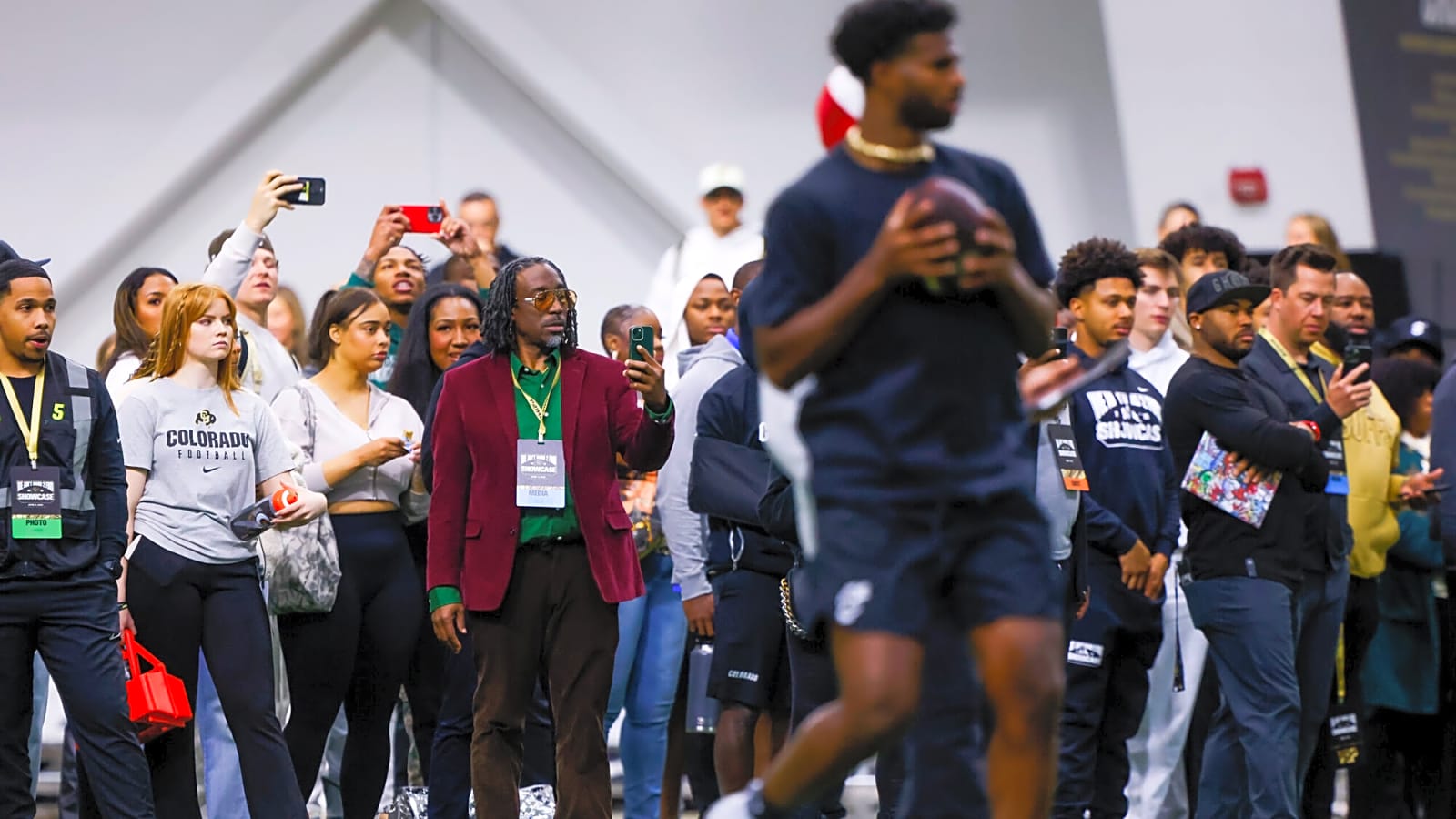
The fine schedule leaked from a January team meeting in Boulder. Up to $5,000 for a social media violation. $2,500 for missing practice. $500 for showing up late. Deion Sanders stood in front of a roster where 42 faces were brand new and dozens had already walked out the door, and his answer to a collapsing program was a price list. Colorado had just finished 3-9. The 2026 NFL Draft had just finished without a single Buffalo’s name called. And the head coach reached for his wallet instead of his whiteboard.
From Nine Wins to Rubble
Rewind to 2024, and Colorado looked like a program reborn. Shedeur Sanders led the Buffaloes to a nine-win season and a bowl game, resurrecting a squad that had managed a single victory the year before Deion arrived. That 2024 peak produced four draft picks the following spring: Travis Hunter at second overall, Shedeur at 144th, LaJohntay Wester at 203rd, and Jimmy Horn Jr. at 208th. Four names on NFL rosters. Proof of concept. The assumption was simple: more were coming. That assumption had about twelve months to live.
The Recruiting Myth Cracks
Here is what everyone missed behind the draft-night celebration. Colorado also produced zero picks in 2024, following zero picks in both 2022 and 2023. The four selections in 2025 came almost entirely from star talent, not program depth. Strip out Travis Hunter and Shedeur Sanders, and you are left with two late-round picks. One analyst observed that the zero-pick outcome did not speak well of the recruiting efforts, either from the high school ranks prior to the 2023 season or from the transfer portal. The pipeline was never a pipeline. It was two guys.
The Star Who Fell to Earth
Shedeur Sanders revived the Buffaloes from a one-win season to a nine-win season and a bowl game. Then he entered the draft as a projected top-three pick. He waited. And he waited. Fox Sports called it as big a draft fall as perhaps there has ever been. Top-three projection to 144th overall. Fifth round. A roughly 140-pick swing from expectation to reality. The quarterback who proved Colorado could compete slid into the late rounds, and every recruit watching got a very different message than the one Deion had been selling.
The Five-Game Freefall

Colorado’s 3-9 final record obscures how the season actually ended. The Buffaloes closed the year on a five-game losing streak, a stretch in which they were outscored 105-24. The last win came on October 11 against No. 22 Iowa State, Sanders’ first victory over a ranked opponent in over a year, achieved shortly after he underwent surgery. From that peak, the offense vanished. Five straight losses averaging roughly a 21-5 scoreline is not a slump. It is a program running out of answers in real time.
The Quarterback Carousel

Colorado did not just lose Shedeur. They lost offensive identity. Kaidon Salter started the 2025 opener, then shared snaps with Julian Lewis, with Sanders at one point benching both in favor of third-string Ryan Staub during the Delaware stretch. Three quarterbacks, zero rhythm, and one offensive coordinator trying to build continuity on shifting sand. Salter is now among the five Buffaloes publicly tagged as under the most pressure entering 2026.
The Portal Revolving Door

After Shedeur’s exit and the 3-9 collapse, Colorado’s roster became a turnstile. Dozens of players left through the transfer portal and 42 new ones came in. That volume mirrors a struggling business replacing large portions of its workforce in a single quarter. This was not strategic repositioning. Players lost confidence in the program’s direction and voted with their feet. Sanders welcomed over 50 new faces to spring camp, building a team where almost nobody had played together before.
The Numbers Behind the Collapse

Four draft picks to zero. That is a 100 percent loss of draft capital in one year. And it gets worse in context. Colorado also had zero picks in the 2024 draft cycle, and none in 2022 or 2023. Three years of Deion Sanders. Two of his three draft cycles ended with zero Buffaloes selected. The lone exception, 2025, was powered almost entirely by players who arrived with Deion and left immediately after. Six Buffaloes did sign as undrafted free agents after the 2026 draft, but the program developed nobody from within who heard their name called on draft weekend. For a Power Five school, that pattern signals something deeper than a bad season.
The Full Fine Schedule
The leaked structure extends well beyond the $5,000 headline. Tardiness to treatment runs $1,000. Breaking team rules carries $1,000 to $2,500 depending on severity. Missing a meeting or film session is set at $2,000. Damaging university or team property costs repair plus $3,000. Losing team-issued technology or equipment is replacement cost plus $1,000. It is a full NFL-style ledger, imported wholesale into a college locker room where NIL income varies wildly player to player.
Fines Won’t Fix a Broken Foundation
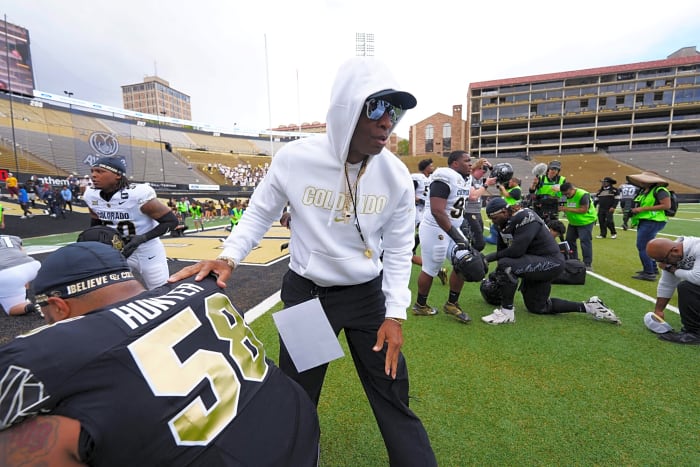
The fine system tells you everything about where the program actually stands. Sanders announced penalties after the season collapsed, not before. Public or social media misconduct carries penalties ranging from $2,500 up to $5,000 depending on severity, figures that can exceed what many college athletes earn monthly through NIL deals. Legal analysts have questioned whether the fines could even be legally collected from student-athletes. Meanwhile, the real problem sits untouched. No bench depth, no position coaching continuity, no retention infrastructure. Fining a college kid $500 for tardiness while the roster churns dozens of players a year is treating a symptom while the disease spreads unchecked.
The Legal Question Nobody Wants to Answer

Legal analysts flagged the fine system within days of its reveal. The core issue is straightforward. Student-athletes are not NFL employees covered by a collective bargaining agreement, and it is unclear whether a public university can legally collect cash penalties from unpaid or NIL-paid amateurs. The fines push a simmering question, namely whether college athletes are employees, directly onto the national stage. If the NCAA, the Big 12, or a state labor board decides to probe the structure, Colorado’s discipline tool becomes a liability.
A New Rule, Not an Exception

Colorado’s collapse is not a fluke. It exposed a model. Recruit stars, extract one peak year, watch them leave, scramble to refill through the portal, and repeat. Deion’s third season produced worse results than his first. The trajectory points down, not up. Other Power Five programs are watching closely. The cautionary tale is not about losing talent. Every program loses talent. The cautionary tale is about never building anything underneath the talent, so when the stars leave, there is nothing holding the structure together. Once you see that pattern, you cannot unsee it.
The Recruiting Damage Ahead

Zero draft picks sends a specific message to every high school prospect in America. Colorado is not currently getting players drafted to the NFL. Competing programs can now recruit directly against the Buffaloes with a pitch about stable development infrastructure rather than annual roster churn. NIL companies may pull back spending on Colorado athletes because zero draft picks means reduced NFL leverage. Donor confidence can erode. Agent interest can fade. The 2026 season becomes pivotal for Deion’s tenure, and if this largely new roster stumbles again, the coaching seat will not just be hot.
What 2026 Actually Has to Prove

The 2026 roster enters as one of the most untested in Power Five football. 42 new faces, and over 50 players on campus for spring camp who were not there in December. Sanders’ contract and credibility now depend on a group that has not played a snap together. Five returning Buffaloes, Kaidon Salter among them, have been publicly identified as under maximum pressure to deliver. If the Buffaloes do not clear six wins and bowl eligibility, the fine schedule will not be the lead story a year from now. The coaching search will be.
Charisma Has an Expiration Date

The fine structure may also face closer outside scrutiny, creating institutional risk on top of on-field failure. But the bigger story is simpler than compliance questions. Deion Sanders built a program on visibility, celebrity, and one transcendent quarterback. The visibility remains. The celebrity remains. The quarterback is gone, the draft board is empty, and the response is a fine schedule topping out at $5,000 for public or social media misconduct. Anybody who watched that January team meeting and understood what they were seeing did not see discipline. They saw a distress signal dressed in a suit.
Is Deion Sanders the right coach to rebuild Colorado, or has the Prime Time era already peaked? Tell us where you stand in the comments.
Sources:
Brent Schrotenboer, “Deion Sanders shows NFL-style system of fines for Colorado players,” USA Today, Jan. 26, 2026.
Shehan Jeyarajah, “Deion Sanders institutes team fines, new rules ahead of Colorado’s 2026 season,” CBS Sports, Jan. 25, 2026.
Pete Thamel, “Deion to fine Colorado players $500 for being late to practice,” ESPN, Jan. 26, 2026.
“Six Buffs Sign With NFL Teams Saturday After NFL Draft Concludes,” University of Colorado Athletics (CUBuffs.com), April 25, 2026.
“2025 Colorado Buffaloes Football Team,” official season record and statistics, Colorado Athletics, December 2025.
Darren Heitner, “Newsletter, Image, Likeness Vol. 169: Deion Sanders’ Fines,” LinkedIn Pulse, Jan. 29, 2026.
More must-reads:
- Sabres continue historic season with first playoff series win in 19 years
- Russell Wilson may reject Jets via career-altering decision
- The 'Playoff scoring record by team' quiz
Breaking News
Trending News




Customize Your Newsletter
 +
+




Get the latest news and rumors, customized to your favorite sports and teams. Emailed daily. Always free!
PRIVACY POLICY COOKIE POLICY CONTACT US
ABOUT YARDBARKER TERMS OF SERVICE


By using this site, you agree to our Terms of Service and Privacy Policy.
This site is for entertainment purposes only.
There is no gambling offered on this site.
Gambling Problem? Call 1-800-Gambler.
