
-

-


Follow Us
-

 On Facebook
 On Flipboard

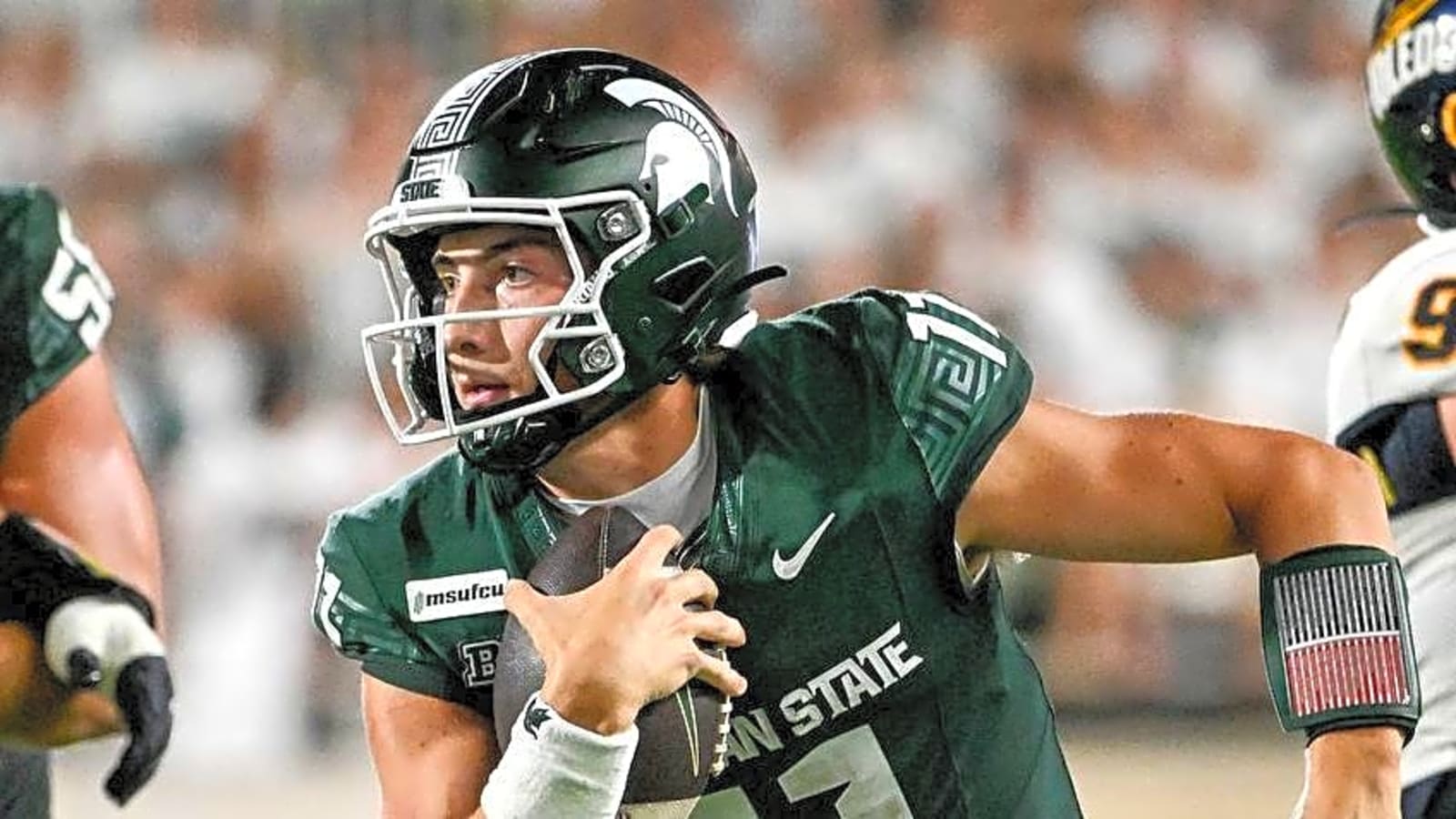
Michigan State's offense has looked a bit overwhelmed in the last two weeks.
The Spartans mustered just 23 total points in their losses against No. 3 Notre Dame and Nebraska, MSU's first two legitimate opponents on the 2026 schedule. Following Week 4, Michigan State's offense ranks dead last in the Big Ten at 323.3 yards per game. It's the third-worst offense in the Power Four, yardage-wise, only ahead of Clemson and Oklahoma.
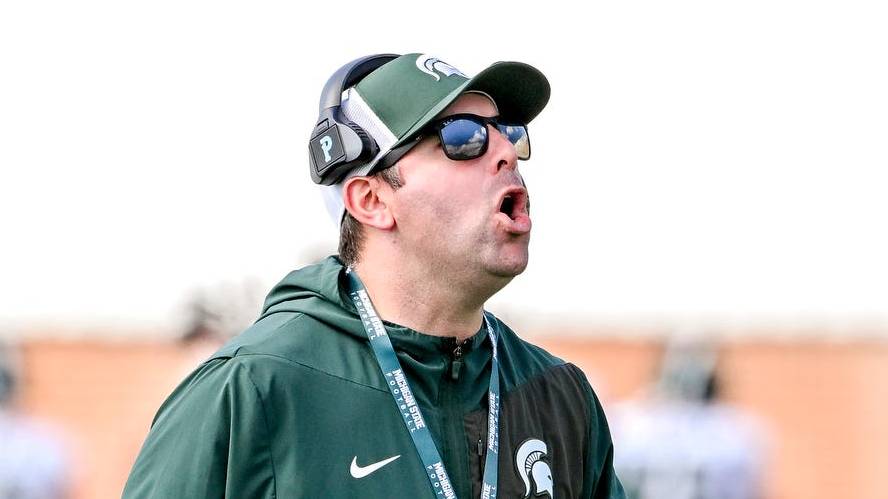
MSU's 4.99 yards per play is also comfortably last in the conference (Michigan is second-to-last, but the Wolverines are still at 5.73 yards per play). The Spartans have scored just nine offensive touchdowns this year; everybody else in the Big Ten has at least 12.
Obviously, there's a serious problem here. Let's take a closer look at what seems to be going wrong for Michigan State on this side of the ball.
Analyzing Milivojevic's Play
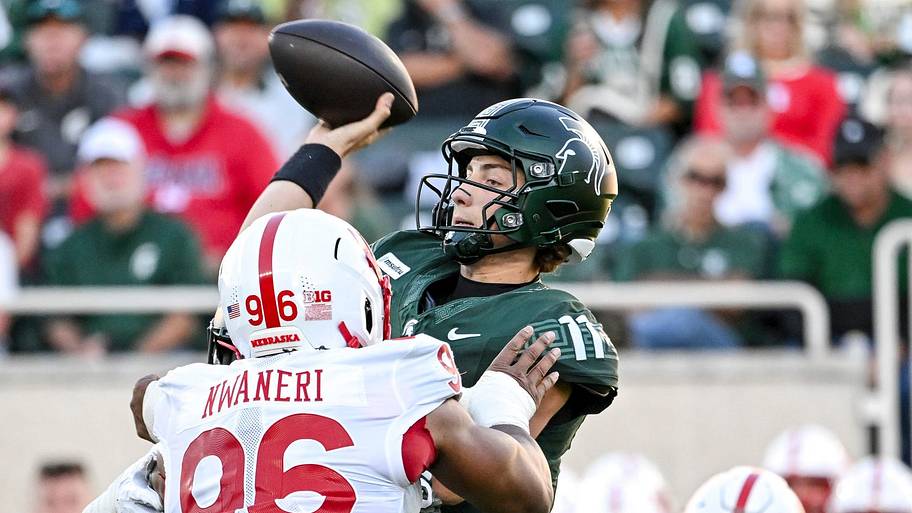
Alessio Milivojevic hasn't played well in the last two weeks, turning the ball over four times without any touchdowns. Quarterbacking is a lot more than just yards, touchdowns, and interceptions, though, and some of the advanced stats paint an interesting picture.
Ironically enough, even though Michigan State's 15 allowed sacks are the most in the Big Ten, the pass protection might be the strongest part of this offense right now. Pro Football Focus has blamed only six of those sacks on MSU's offensive line and two on tight ends, which means the onus has sometimes fallen on Milivojevic.
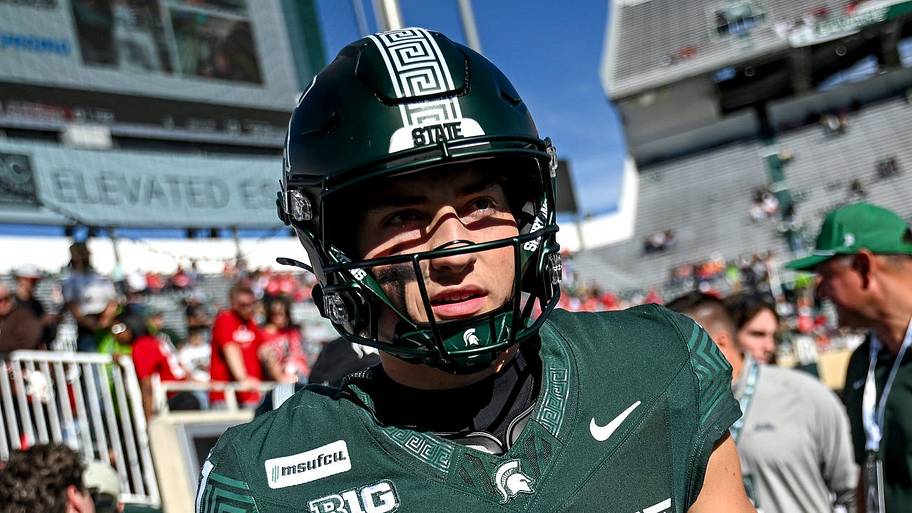
Other statistics add context. PFF also says, on average, it takes Milivojevic 2.97 seconds after the snap to get rid of the football. That is the 13th-highest in the Power Four (min. 50 dropbacks) and the third-highest in the Big Ten. Already here, there's a bit of an issue with the quarterback holding onto the ball too long, but what makes that 2.97-second figure worse is simply the fact that Milivojevic is a pocket passer and not a consistent running threat.
All the Power Four names in front of him are dual-threat quarterbacks who simply might be taking longer to throw because of their ability to extend plays with their legs. Of the 12 Power Four quarterbacks with longer "time to throw" metrics, Texas' Arch Manning has the fewest rushing yards so far this year, at 82. Milivojevic has minus-35 rushing yards for the year.
PFF also keeps track of the percentage of pressures that turn into sacks. The higher the percentage, the worse one would imagine the quarterback's escapability or pocket presence is. Milivojevic has the seventh-highest percentage in the Power Four at 31.8%. Only Indiana's Josh Hoover (38.5%) is higher in the Big Ten, but some of that could be a sample-size issue for Hoover. He's only been sacked five times, compared to the 14 times Milivojevic has gone down.
None of those stats make Milivojevic look great, but the offense's problems run deeper than the quarterback. His "time to throw" last year as a redshirt freshman thrust into action late in 2025 was a little bit better at 2.88, and the pressure-to-sack rate was also better at 20.2%. Milivojevic is taking longer to throw for a reason, and some of the responsibility falls on the wide receivers.
MSU's Receiver Problem
One gripe I have with how television broadcasts work is that they hardly ever show receivers and the routes they run beyond maybe 5-10 yards downfield. All the focus is on the pocket, and when Milivojevic isn't getting the ball out, it's easy to yell, "Throw the ball!" at him.
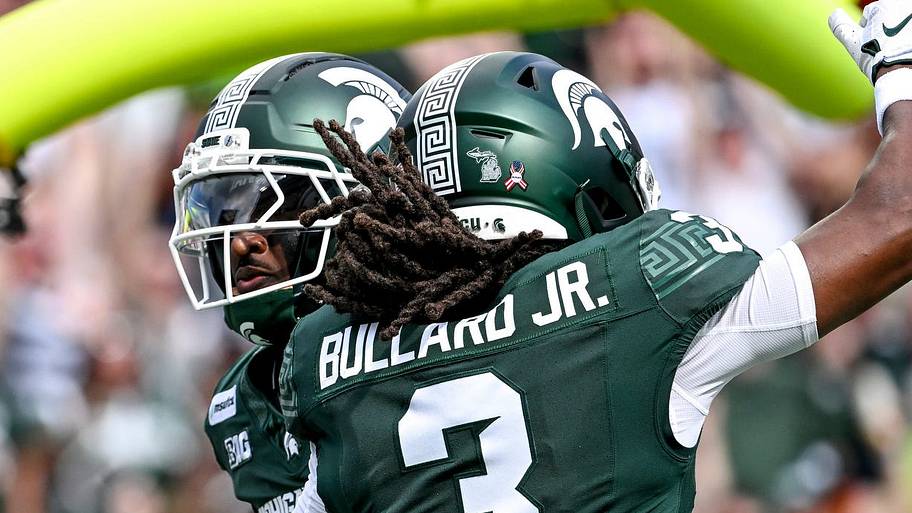
Having seen the first four games of Michigan State's season in person, it's frequent that Milivojevic doesn't have anybody to really throw to. Receivers were pretty consistently blanketed near or beyond the sticks against Notre Dame and Nebraska, with the main exception being Rodney Bullard Jr.'s 53-yard reception against the Irish.
Rodney Bullard Jr. makes Michigan State's longest play of the season!
— NBC Sports (@NBCSports) September 20, 2026
Notre Dame Football: Michigan State @ Notre Dame on NBC + Peacock pic.twitter.com/z7IyUcb5WE
Bullard's catch actually illustrates the point here a little bit. There were two guys around him when he made the catch, but they were both safeties, and Bullard had maybe a yard or two of separation. The most impressive part of the play was Milivojevic's throw.
Michigan State had four pass plays of 20-plus yards against Nebraska (none longer than 24 yards), and only one of them was to a receiver. Brennan Parachek had the longest play of the day on a third-and-nine when he found a soft spot in Nebraska's zone while the play was running off-script a bit. The second-longest play was a 23-yard screen pass to Cam Edwards, which was the play on which he got injured.
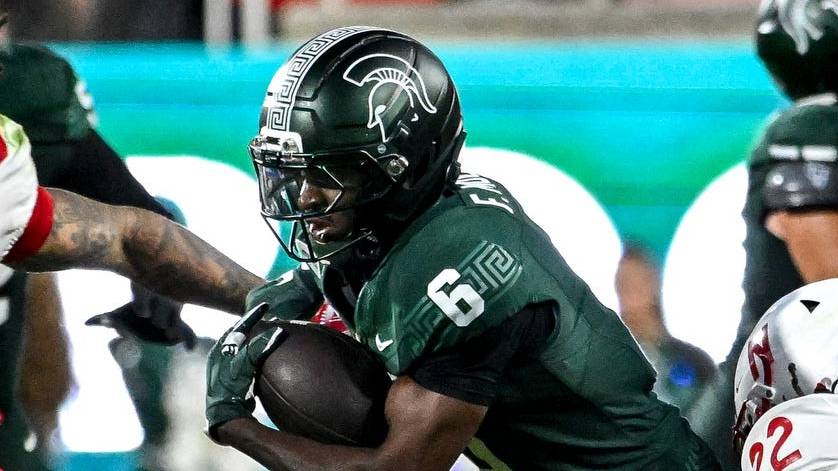
Then, it was a 22-yard throw up the seam to sophomore tight end Jayden Savoury against zone coverage (this was actually perhaps Milivojevic's best throw of Saturday's game). Chrishon McCray was the receiver with the longest play, making a sweet one-handed grab for 21 yards. This, too, was against zone.
Bullard, Fredrick Moore, or McCray don't seem to be beating man coverage. Separation already seemed like an issue against Toledo and EMU, but it's easier to brush that aside when a "W" goes by that game. Notre Dame's and Nebraska's secondaries exposed it a bit.
Run Game Limitations
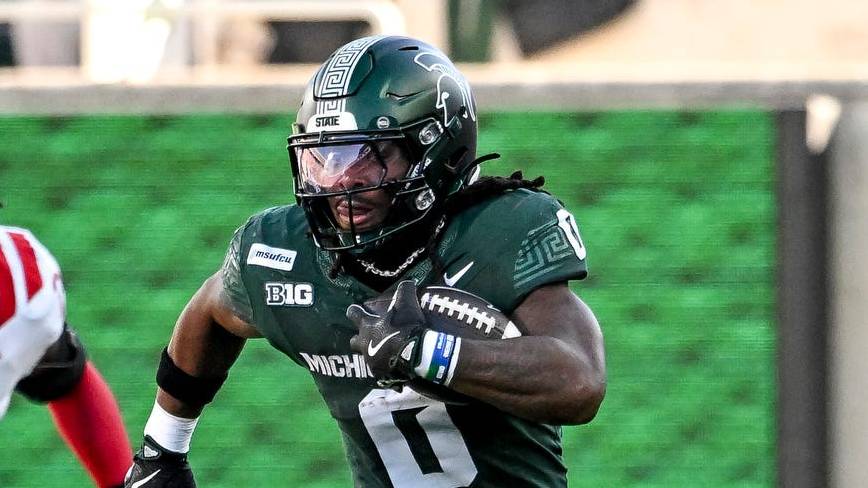
We'll have to see what Edwards' status is for the rest of the season after he was carted into the locker room on Saturday, but Michigan State's run game didn't exactly flex its muscles against either Notre Dame or Nebraska. MSU had just 83 yards on the ground TOTAL against the Fighting Irish and the Cornhuskers.
Sacks do have a real effect on that number, but even with those excluded, that number is still just 168 yards on just 3.43 yards per carry. Michigan State's rushing offense for the season ranks 114th in the FBS and 15th in the Big Ten at 122.8 yards per game. The Spartans' 3.21 yards per rush is second-to-last in the conference.
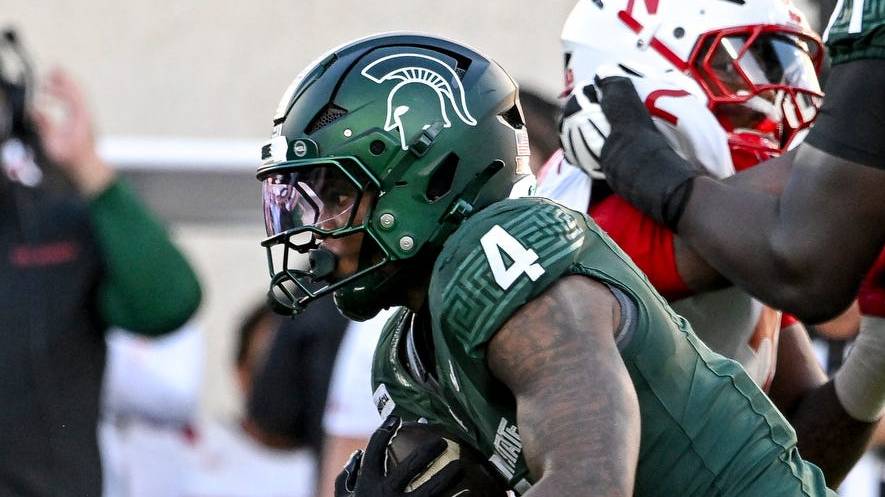
The problem here feels partly like an offensive line issue, but the weak wide receiving corps also has a real impact. Notre Dame and Nebraska often had seven players stacked in the box, or the traditional six plus a nickelback close to the line of scrimmage.
MSU's opponents seem more willing to sell out and stop the run because that's where Michigan State's best offensive player was, and it's less risky with no wide receivers that seem to be scaring anybody.
The run game just hasn't really "popped" as much as many hoped heading into the year. MSU is one of 13 Power Four teams that have had just two 20-plus-yard rushes this season or fewer.
Edwards' injury, which very well could be long-term, may only make things harder. It feels like he's been able to maximize his output with his lightning-quick jump cut that has turned losses into decent gains. None of Michigan State's other running backs have a move like that. Jaziun Patterson ran tough while filling in as RB1 on Saturday, but there is still a bit of a drop between him and Edwards.
What Now?
It's tough to say what the solution is here. The offensive line looks better than last year's, but it's probably still below average in the Big Ten. The wideouts are definitely worse than last year's. The running back room upgraded this offseason, but what's going to happen without Edwards? Milivojevic's decision-making and confidence seem to have actually gotten worse this year. Tight ends feel about the same in effectiveness -- Savoury has been a nice revelation.
Regardless, some solutions are very much needed. Notre Dame and Nebraska boast two of the better defenses that Michigan State will see this year, but offensive coordinator Nick Sheridan and his players need a good week soon from both a confidence and momentum standpoint.
More must-reads:
- College football rankings: AP Top 25 Poll results ahead of Week 5
- South Carolina HC Shane Beamer takes action after Dylan Stewart’s chaotic night at Alabama
- The 'FBS animal nicknames' quiz
Breaking News
Trending News




Customize Your Newsletter
 +
+




Get the latest news and rumors, customized to your favorite sports and teams. Emailed daily. Always free!
PRIVACY POLICY COOKIE POLICY CONTACT US
ABOUT YARDBARKER TERMS OF SERVICE


By using this site, you agree to our Terms of Service and Privacy Policy.
This site is for entertainment purposes only.
There is no gambling offered on this site.
Gambling Problem? Call 1-800-Gambler.
