
-

-


Follow Us
-

 On Facebook
 On Flipboard

For filmmakers working inside the Marvel machine, secrecy is not just part of the job. It is the job. Scripts are locked down, sets are guarded, and every casting reveal is handled like a diplomatic operation. So when Joe Russo says spoiler culture can sometimes be overdone, it lands with a little more weight than the usual internet debate.
Russo Weighs The Cost of Modern Spoiler Culture
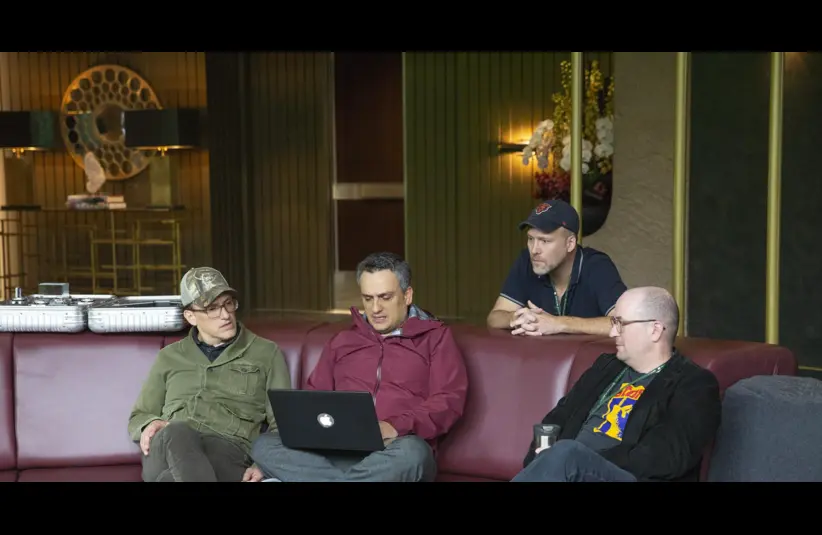
Russo, who is back in the Marvel fold directing “Avengers: Doomsday” with his brother Anthony Russo, is helping steer one of the most heavily guarded blockbusters on the calendar. And yet, even with that pressure, he is making a distinction that feels surprisingly grounded. Yes, audiences want surprises. Yes, studios have every reason to protect major plot turns.
But somewhere along the way, the fear of spoilers has become so intense that it can suck the air out of fandom itself. The Russo approach is not casual. Far from it. Even with the sworn secrecy that workers in Marvel Studios does their best to fulfill, multiple rumors of supposed plot have apparently leaked online. In the age of leaks, burner accounts, and set photos that can cross the globe in seconds, that is no small feat. Still, Russo appears less interested in paranoia than in perspective.
In an interview with Metro UK, Russo said, “On one hand, audiences want to be surprised, and that’s part of what makes the theatrical experience exciting. On the other hand, it can become a little over-policed, where people are anxious about engaging with anything.” That tension is at the center of the current Hollywood blockbuster model. Studios want fans talking, speculating, posting, and obsessing.
But the second that conversation gets too close to the actual material, alarms go off. What follows is a kind of cultural whiplash: marketing campaigns that ask for total attention, then fandom rules that punish curiosity. Russo seems to be arguing for a middle ground. Not a free-for-all. Not surrender. Just a reminder that stories should be sturdy enough to survive the loss of surprise.
Why Russo Believes Story Must Matter More Than Shock
That may be the most important takeaway from Russo’s comments. A great film cannot live or die on a reveal alone. Surprise is powerful, but it is not the same thing as substance. If all a movie has is one secret, then once that secret gets out, the whole structure collapses. Russo appears to understand that risk clearly, especially after years inside the Marvel universe, where post-credit scenes, shock cameos, and long-range setup have trained audiences to hunt for twists like sport.
Russo continues on, “You have to focus on making something that holds up beyond the initial surprise.” It is a simple line, but it cuts through a lot of noise. Although many viewers perfer the element of surprise, the best theatrical experiences are not memorable just because nobody spoiled them. They are memorable because they hit emotionally. They leave people stunned, moved, thrilled, or heartbroken. The spoiler matters less when the storytelling actually lands.
That point feels especially relevant now, as social media has changed the pace of film culture. Audiences no longer encounter movies in the same shared rhythm. Some viewers show up opening night. Others wait a week. Others wait until streaming. The result is a fragmented experience, where spoiler etiquette has become messy, emotional, and often impossible to enforce.
What Russo’s Comments Really Mean for Marvel Fans
What makes Russo’s remarks stand out is that they do not read as dismissive. He is not mocking fans who care about spoilers. He is acknowledging a truth many moviegoers already feel: spoiler culture has become exhausting, and its ruined the element of surprise, a key factor for moviegoers enjoying films. There is a difference between protecting a story and turning every scrap of information into forbidden material.
There is also a difference between surprise and value. Russo seems to be asking fans, and maybe studios too, to remember that one should not replace the other. That is a useful message at a moment when blockbuster fandom can feel strangely joyless. Every rumor becomes a battlefield. Every trailer is dissected like legal evidence. Every discussion risks crossing an invisible line. Somewhere in all that, the basic pleasure of being excited for a movie gets lost. Russo, perhaps because he has seen the machinery from the inside, sounds like someone trying to pull the conversation back to earth.
The stakes around “Avengers: Doomsday” are enormous. The Russos are returning to the MCU after years away, re-entering a franchise that looks bigger, messier, and more scrutinized than ever. The cast is stacked. The anticipation is brutal. The pressure is obvious. But if Russo is right, then the answer is not to build the whole experience around secrecy alone. The answer is to make a film that still means something after the secrets are gone. That is a harder standard. It is also the right one.
More must-reads:




Customize Your Newsletter
 +
+




Get the latest news and rumors, customized to your favorite sports and teams. Emailed daily. Always free!
PRIVACY POLICY COOKIE POLICY CONTACT US
ABOUT YARDBARKER TERMS OF SERVICE


By using this site, you agree to our Terms of Service and Privacy Policy.
This site is for entertainment purposes only.
There is no gambling offered on this site.
Gambling Problem? Call 1-800-Gambler.
