2025 was an unusual year for pop music in general. The charts reflected existing listening habits, meaning that songs over a year old still hung around in the Top 10 (we're looking at you, Teddy Swims!). New albums came quickly and then left, meaning it was a bit surprising that "KPop Demon Hunters" took the world by storm in the way that it did. A 1962 Connie Francis track went viral, Taylor Swift continues to go supernova, Doechii won the Grammy then split her fans by giving them "Anxiety", we received one too many musical biopics, Beyoncé finally won that Album of the Year Grammy, AI music frustrated and confounded, Kendrick Lamar pulled of the most talked-about Super Bowl halftime show in ages, and the world mourned the passings of legends like Roberta Flack, Brian Wilson, D'Angelo, and Ozzy Osbourne. Everything changed, and yet it felt like it remained the same – a fitting descriptor of 2025 as a whole. Regardless, great albums came out that didn't always chart. From experimental pop to thrilling rap returns and everything in between, these are the 25 Best Albums of 2025.

When "Angel of My Dreams" dropped in the middle of 2024, fans of the former Little Mix member Jade Thirlwall were a bit taken aback: for her opening salvo into pop stardom, she put out a song this strange and bizarre, switching tempos and modes with such reckless abandon? It was bolder than her fellow bandmates (especially Jesy, whose 2021 P. Diddy-assisted single all but tanked her solo prospects), but it showed she was willing to take more risks than the other Little Mixers, and her efforts have been rightly rewarded.THAT'S SHOWBIZ BABY! could've easily been another in a long line of fluffy pop releases, but Jade and her team pushed for everything from Tove Lo co-writes to production assists from the likes of MENK, Cirkut, and Raye (to say nothing of a cheeky little cameo from "Doctor Who" himself: Ncuti Gatwa). The result? A surprisingly kaleidoscopic pop record that felt fresh without feeling over-labored. Despite its title, a majority of the album is about love and heartbreak, with "Headache" being a slinky little track about loving someone even when they're annoying, and the Robyn-esque "Self Saboteur" about crashing a relationship for reasons the narrator is still trying to figure out. There are a lot of complicated feelings on Jade Thirlwall's debut, and by not taking the easy route with her artistry, she is going to be staying in SHOWBIZ for a very long time.
The thing about Earl Sweatshirt's album titles is that he wears his heart on his sleeve. Sure, 2018's Some Rap Songs and 2022's Sick! were interpreted by some as dripping with irony, but Live Laugh Love isn't playing by those same rules. Following a recent period when he married and welcomed his second child into the world, he's genuinely happy, and on the opening track "Gsw vs. Sac", you can audibly hear him smiling on the other side of the mic. Through sparse chopped throwback beats provided by Theravada, Earl blazes through casually poetic musings over 11 tracks that don't even add up to 25 minutes. It's brisk, it's nostalgic, it's honest, it's open. On the dreamy "Infatuation", he reflects on his journey: "Like rain and heat raise a seed into a plant / Stone throwers, glass homes, keep hiding hands / Terse reminders of the rocky path / Gleaning what I can from what I have amassed." He remains a dynamic lyricist as ever, and even with more joy in his delivery, each new LP reminds us why he's one of our best rappers out there.
You know the band is going to be great when one of the members' only jobs is to work the alto sax. For Manchester-based Maruja, having a distinctive instrument in such a specific genre (which, in their case, is noise rock) can make you either stick out or be written off as a novelty. Yellowcard managed to get some mileage out of having a violinist, but for Maruja, it's not about having a distinct sound so much as weaponizing it effectively. Think John Zorn's "Naked City" project from the early '90s, and you're in the right wheelhouse. While singer Harry Wilkinson's spoken-sung vocals are an acquired taste for some, hearing him belt out pained and sustained notes in the middle of the nearly ten-minute "Lood Down On Us" as string sections surge and Joe Carroll's infectious sax lines match him note-for-note, one can't help but be overwhelmed by the epic sense of musicality on display. "Eyes to your phone and scornful in person / Feeding to feelings are always misleading," Wilkinson rants over the tight "Break the Tension", and the paranoid wailings of the band behind him nearly justifies his lyrical Satanic panic. What's most remarkable about the band's Pain to Power is that this is their full-length debut after years of releasing EPs and stray singles, and their identity feels fully fleshed out. Given the reaction to this record so far, Maruja has quickly set themselves up as a Power-ful force to be reckoned with.
Over the last several years, Australia has been making major inroads as an electronic music mecca. While Flume very much made himself a household name in the early 2010s, Rüfüs Du Sol was quick to follow. Recent years have shown color, joy, and whimsy in the sounds of Alice Ivy, Confidence Man, and, as of late, Ninajirachi. On her debut album I Love My Computer, the 26-year-old Nina Wilson fires on all cylinders, taking the stutter-y, overstuffed vibes of Max Tundra and updating them for a funky glitch-core present. Yes, "F--- My Computer" is the funky song getting all the attention, but a track like "Delete" embraces glittery synth arpeggios to create a vibe that is closer to early 2000s Big Beat club music than anything in the contemporary space. The lyrics are minimal, but when you get into the trance-y drops of "All I Am" and the Iglooghost-styled flow track "Infohazard", it's clear that Ninajirachi is not just a student of electronic music history but, quite obviously, the future of it. Down Under is just giving us the best downloads.
Over the years, Chicago-based guitarist Eli Winter has become increasingly confident and adventurous with these sounds. His early records featured him just picking strings in a room with a mic, but 2022's eponymous release saw him expand his sonic palette to include a full band. Now that he is in control of everyone in the studio, A Trick of the Light shows him going wild with it. Opening with the wide, sprawling, and daring cover of the standard "Arabian Nightingale", Winter let his intentions be known: there's drumming, there's pedal steel, there's tenor sax, there's controlled chaos. It's an audacious opener, but the rest of Light features his original compositions, where his real spirit soars. "Cracking the Jaw" features some downtrodden guitar lines that later turn into an electrified full-band explosion, while closer "Black Iris on a Burning Quilt" rides an almost folk-pop bent with some clarinet added in for good measure. Winter's playing has never been in question, but the fact that he can record songs both explosive and self-contained, wild and palatable, shows that he's only getting better and bolder with time.
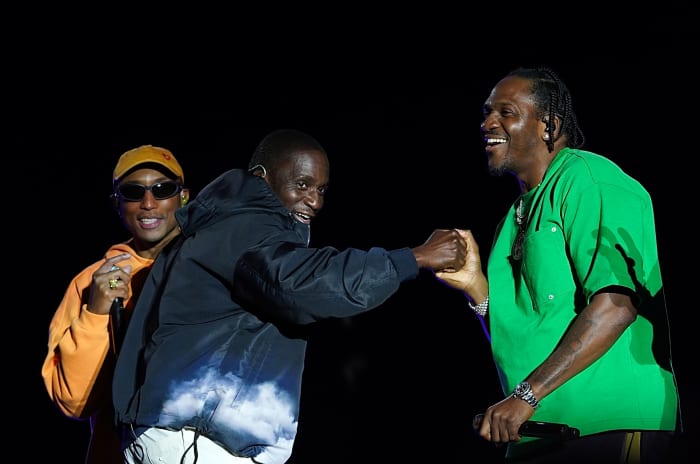
"Lost in emotion, mama's youngest / Tryna navigate life without my compass / Some experience death and feel numbness / But not me, I felt it all and couldn't function," raps Pusha T on "The Birds Don't Sing", the powerful emotional centerpiece from Let God Sort Em Out, the fourth album from Clipse and their first full-length in 16 years. After going their own way for so long, with Pusha T releasing a litany of dynamic solo albums, the very prospect of them returning seemed neigh impossible. Yet with Pharrell Williams in tow and serving as the record's sole producer, Let God Sort Em Out felt like a minor miracle. The chemistry between Pusha T and Malice remains unrivaled, as "The Birds Don't Sing" reveals new emotional depths to their brotherly bond, openly discussing the feelings they processed as they worked through the passing of their parents. There are still classic Clipse-isms throughout (as ridiculous as it is, the line "Yellow diamonds look like peepee" from "Ace Trumpets" sticks in your head), as Pharrell doesn't go for easy hits but instead something hewing to the hard street sounds of their first two records. There's an ebb and a flow to the album, giving fans exactly what they've been missing while also breaking new emotional grounds. For a full-length that could've easily been swallowed up by the controversy surrounding Kendrick Lamar's verse on "Chains & Whips", the headline story is as it always has been: Pusha T & Malice are one of the best rap duos ever to do it.
Frequently on lists like this, the aim is to highlight not just the best music of the year, but the most explosive, the most boundary-breaking, the most daring. Yet there's something to be said about pure songcraft on its own, which is a skill that Olympia, Washington's LAKE has been honing for the past two decades. Bucolic Gone is their 10th album proper, and their first for larger indie label Don Giovanni Records. If there was any hint that the group was feeling the pressure of meeting new expectations, they don't show it on this languid, gorgeous, beautiful indie-rock fantasia. With keyboards and guitars as the primary instruments, Bucolic Gone evokes the feeling of driving under an overcast sky in the afternoon, while tracks like "Blue Horizon" don't drift so much as murmur, confidently bringing the listener into a world of quiet bliss. At times the record hews closer to more direct sadness – the acoustic fairytale "My Dear Brother" was written on the day when singer Ashley Eriksson lost her brother to COVID – but it's blissful tracks like "Ferrari" that depict the strong undercurrents of being drawn to someone's "sexy" car but feeling unsafe in the passenger seat, all while slowly building horn sections swell and sway. Bucolic Gone might be an understated affair, but the craft and joy that went into making it radiate out the speakers. This is a LAKE worth taking a dip into.
When Little Simz dropped the music video for "Young", many fans were confused. Dressed up as a bitter old lady getting in trouble across town, many were wondering what if everything was okay with one of the U.K.'s most visionary rappers. Real ones got it, however: this was her at her most parodic, satirical. If anything, she was trying to do her own twisted iteration of Blur's Parklife, giving fans a deliberate red herring for the introspective world she presents on Lotus, her sixth album proper. Having dropped her long-standing collaborator Inflo over financial conflicts, Lotus finds new life with producer Miles Clinton James, who had worked with the likes of Kali Uchis and Simz before but was largely an unknown quantity. He gets the assignment: thick and dirty basslines, occasional flirtations with bongo percussion and lush string sections, acoustic guitars run through filters — all elements that work well within Little Simz's cinematic universe. As always, Simz is making sense of an increasingly uncaring world. "Minimalism don't mean you spend less / Love is the currency and it's endless," she intones on the thoughtful "Peace" before treating rapper Wretch 32 as her brother during a long-overdue catch-up phone call on the affecting "Blood". Whatever changes she's had to make with her collaborators, her vision is still as crystal clear as ever, and throughout Lotus opens her personal life in ways she's only hinted at before—another stunner from a rapper who is incapable of making a bad album.
In a very short amount of time, Joshua Karpeh has amassed quite a career under his Cautious Clay moniker. While his blending of contemporary R&B with an indie-pop bent has earned him a few streaming hits, the industry has taken notice of his talents, leading to his name appearing as a co-writer on tracks by the likes of John Legend and even Taylor Swift. On the brief and astoundingly effective The Hours: Morning, Karpeh tries to capture the vibes of the first eight hours of any day with eight snappy, potent, and extremely well-executed songs. Clocking in at under 20 minutes, Karpeh wastes zero time, giving slinky come-ons during "Amber (11am)", throaty mid-tempo growls during "Traffic (7am)", and one of the best falsetto-driven choruses of the year in the glorious "Promises (9am)". As is common with Karpeh's work, relationships are a driving force behind his lyrics, and lines like "You say there's so much strength in your flaws / So we're staying on, chained to the cause" reverberate well beyond this record's quirky concept. Not a single track is longer than three minutes long, meaning that none of these songs overstay their welcome. While we also loved the different flavors of the "Evening" follow-up, you could easily catch yourself listening to these immaculate confections for, well, hours.
For those unfamiliar with Babe Rainbow, this Australian psych-pop outfit boasts some of the best member names in the music industry. How could you not be intrigued by a group that features Jack "Cool-Breeze" Crowther, Elliot "Dr. Love Wisdom" O'Reilly, or the since-departed member Lu-Lu-Felix Domingo? Signed to the label of fellow oddball countrymen King Gizzard & the Lizard Wizard, Slipper Imp and Shakaerator is perhaps their most joyful record to date. Opening up with the stellar "What is ashwagandha", the group has bouncy basslines and liquid guitar progressions aplenty, all while singer Angus Dowling, through an ocean of filters, ponders on the futility of existence: "Swing around like yin and yang / Plunge into oblivion." Before long, you're hit with bouncy piano chords on "Long Live the Wild", quietly stoned acoustic guitar licks on "Apollonia", and amp up the Elephant 6-esque indie-pop vibes on the excellently-titled "Aquarium Cowgirl". It's the rare indie-pop album that could only be described as properly kaleidoscopic, and is one of the most joyful listens that 2025 has to offer.
Rochelle Jordan's 2021 full-length Play with the Changes catapulted the British-Canadian songwriter and alternative-dance thought leader into a new realm of fame, one where critics fawned over her new record, and even her older songs began to have random little viral moments. Yet Through the Wall is something else entirely: a full-bore love letter to '90s R&B and house music that sounds like a club-ready breath of fresh air in 2025. From the silky rapping of closing number "Around" to the groovy soul-pop vibes of "Doing It Too", Jordan doesn't cosplay as a throwback dance songstress so much as she inhabits the era, aided by a superstar run of producers ranging from actual Chicago house legend Terry Hunter to Kaytranada and DāM FunK. Through the Wall radiates effortless charm and maintains a consistent vibe, but only because of the mountains of work that went into creating something so beautiful. Whether it be "Close 2 Me" giving off trance-lite vibes or "Words 2 Say" transforming into a U.K. garage break finale, Through the Wall keeps the tradition of house music alive and well, alluring and exciting. Few records have energy quite like it.
This San Francisco black metal powerhouse surprised some with the 2021 release of Infinite Granite, which deviated from their signature sound to incorporate more alternative rock and shoegaze influences. Some fans and critics loved it, while others felt like it was the sound of a great group selling out for a wider audience. The group ultimately left the label that released the record to sign with long-standing rock warhorse Roadrunner Records, and Lonely People with Power, their sixth full-length, returns with a pummeling force. The alt-rock vibes are gone, as George Clarke's caterwaul vocals are again being met with Kerry McCoy's blazing guitar and Daniel Tracy's thundering percussion. Deafheaven are in full control of their sound, playing with death metal melodics and chugging thrash licks in equal standing. Bringing in Boy Harsher's Jae Matthews for the simmering mood piece "Incidental II" is a genius move (moreso than Interpol's Paul Banks speaking through "Incidental III"), but the star of the show is the band's clearly articulated flurry. Quiet acoustic strums are the calm in a furious metal storm, and the group can switch up styles and tempos as cleanly as they did on their now-legendary 2013 effort "Sunbather". On the seven-minute "Winona", the group spends the first 90 seconds building up a cinematic preamble before unleashing a song that is as intimidating as it is anthemic, proving that no matter how often they may stray from the sound that made them famous, they can come back to it at any time, harder than ever.
At the end of 1978, Marvin Gaye released Here, My Dear, an album that was a commercial disaster by design: knowing his divorce from Anna Gordy Gaye was proceeding, and she'd get the royalties, he turned a "regular" album into a poison pill of a record, with lyrics so bitter and invasive that she threatened to sue. We wouldn't be surprised if a similar thing happened with its clear 2025 counterpart, Lily Allen's bracing West End Girl. Unflinching in its lyrical details, Allen has claimed the record was "partially" based on her divorce from actor David Harbour, but many have read the lyrics as cutting to the point of invasive. Tracks like opener "West End Girl" document her compartmentalizing her life for her partner's needs, only to realize they won't do the same for her, and she turns down a role in a play to bring more stability to their household. The whole LP is surprisingly accessible and sometimes even spritely, dropping her usual go-to collaborator Greg Kurstin for a litany of chiller electronic artists like Chrome Sparks and Leon Vynehall. Tracks like "P---y Palace" drip with blissed-out vibes, even as the lyrics depict uncovering her partner to be something of a pure sex addict. It's a striking album that, at times, feels like something we, the listeners, are complicit in abetting — but for some reason we just can't quite stop playing it ...
It's no surprise that KILN was formed out of the ashes of a group that used to focus on ambient music, 'cos this post-rock collective's vibe is one built on grooves and the pure mechanics of chord changes. While KILN still dabbles in ambient works on occasion, one listen to "Brutalist Desk Object" off their eighth album, Lemon Borealis, shows just how far their artistry has grown, bringing in drum loops and guitar licks to craft a sound that is nothing short of dynamic. Signed to the great A Strangely Isolated Place label — who are known for turning out excellent ambient records year-round — Lemon Borealis are more interested in grooves than they are in being groovy, using bell xylophones and a solid bassline on "Cadmium Lounge" to create a vibe that is lowkey but not necessarily relaxing. Their sonic sculptures are built on familiar beats and tropes but cross a panoply of styles. Sometimes it sounds like they're aping Air's soundtrack to Lost in Translation, and at others (like on "Ptarmigan"), you can't help but wonder if some indie artist would have a hit by singing over such a distinctive stoner groove. Lemon Borealis is unassuming upon first listen but slowly reveals its many gifts and detours over time, a curious and delightful record that doesn't slot into any easy genre categorization. Glossed over by many, it contains some of 2025's most intriguing sonic detours—a must-hear.
You know you're onto something special when Justin Bieber decides to hire you as a producer for not one but two full-length albums heavily based on your work. While Bieber in fact scored an Album of the Year nomination at the Grammys for said album Swag, the truth of the matter is that the better iteration of all those sonic ideas stems from the source: Dijon's exemplary sophomore effort Baby. More experimental and daring than his 2021 debut Absolutely, Dijon is fascinated by negative space, creating bracing tracks like "Automatic", which runs along a familiar funk-pop melody line but with drums and synths that pop in and out of their own thumps, leaving so much breathing room between the notes. It's a wild thing to experience, as Dijon bends the shape and format of contemporary R&B into wild new forms, stacking his vocals while also running them through filters all the same. Prince would've loved that synth-drenched closer "Kindalove" straight-up, but there's a difference between hearing synths polished in the studio and hearing them through layers of speaker reverb where it sounds like they're echoing through time. Baby breathes with the sounds of a new era while clearly pulling from soul music's storied past. It's a record that demands multiple re-listens because new details emerge every time. While his work with Bieber and Bon Iver has pushed him into the mainstream, Baby shows his wild spirit of discovery will never dim—a masterwork.
Kintsugi is a Japanese art form in which broken pottery is mended with a golden lacquer, deliberately highlighting the break and creating a new piece of art in the process. For the London-based guitarist and producer Sheldon Agwu, he seeks to fuse genres, blending jazz and ambient in a way that is evocative and memorable. On his debut album, he resolutely achieves this, as waves of canyon-sized synthpads run up against his tremolo guitar lines and some downrite trip-hop beats. While vocalist Ylenia Tilli swings by to speak during "Meditation Ribbon Dance", the rest of the record is all Agwu, evoking solo guitar ballads of yore on "Unsung Heroes" and crafting cacophonous instrumental soundscapes with the likes of the eight-minute closer "Archean". There are many moods and grooves contained within his world, wherein his dusty sonic palette can be refitted as a soundbath ("Providence") or sax-driven jazzy detour (the title track), but in the end, every part of Kintsugi makes sense within his established language. Kintsugi is a surprisingly welcoming album given its ambitious bridge-building between musical styles, but Agwu does so effortlessly, making a record that is as pleasing to listen to on the first time as it is on the 50th.
Everyone focused on the frog, and rightly so. "Toad Concho" — the mascot for Bad Bunny's sixth studio full-length Debí Tirar Más Fotos — represents a crested toad, an endangered species from the rapper's native Puerto Rico. His love for his home country has always been a driving force in his work, but as both his breakup ballads and sex jams grow more intricate and exploratory, he's finding ways to bend and stretch his sound in ways few of his contemporaries could hope to. Tracks like the lovelorn "Weltita" showcase his blending of contemporary pop production with simple acoustic chords, crafting a distinctive sonic hybrid that sounds as effortless as it does inventive. It's no surprise that the title track, which translates into "I Should've Taken More Photos", grounds its yearning sense of heartbreak with raw, handheld bongos and instruments directly associated with Puerto Rico. Yet as tracks like "Pitorro de Coco" bounce with elaborate acoustic guitar solos and "Turista" finds sadness in its samba, he never forgets what gave him his audience in the first place, as "El Club" and the almost parodic "Eoo" play with reggaeton tropes but throw in enough twists, beat-changes, and other sonic surprises to keep listeners engaged. As personal as it is experimental, as nuanced as it is party-starting, Debí Tirar Más Fotos contains multitudes, resulting in not just the single best full-length Bad Bunny has ever put out, but one of the greatest records the decade has to offer. No wonder he's playing the Super Bowl.
Geese is a full-fledged quartet filled with dynamic musicians, but 2025 was the year of Cameron Winter. The frontman quietly released his debut solo album, Heavy Metal, in December 2024, and as 2025 slowly unfurled, critics began rediscovering his unique voice and distinctive songwriting. Thus, Geese had a decent amount of buzz going into the release of Getting Killed, but few were prepared for how ready they were to meet the moment. With a surprising production assist from rap producer Kenny Beats, Getting Killed is a rock squall, with songs twisting, turning, and pivoting on a dime, recalling everything from Captain Beefheart to The Flaming Lips in the span of album opener "Trinidad". The jazzy riffs on "Bow Down", meanwhile, build to a surprising climax where the band then pivots into a Grateful Dead-styled guitar-and-keyboard riff-off. Throughout, Winter's lyrical worldview beguiles and confounds in the best ways ("I've met angels so deep undercover / That they'd sit on Solomon's throne," he intones), but three albums in, it feels like Geese are now at the peak of their powers, frequently folding the whole of rock history into itself to craft songs that are wild, wily, hard to pin down, and even harder to forget. If this is the album that kills us, it's a hell of a way to go out.
Kim Ji-woo, better known as Chuu, had a disappointing run on the second season of The Devil's Plan, Korea's high-stakes reality show where extremely intelligent people play twisting and inventive new games that require maximum mental acuity. She was first to be eliminated, but that didn't keep her down. Several cast members were already familiar with her, as her first two releases following her explosive exit from beloved K-pop girl group LOONA established her as a respectable solo star. Perhaps surprised to see her bestie Yves conquer charts with her own solo career, Only Cry in the Rain, Chuu's third EP in as many years, is a smart pivot to slinky dance-pop, eschewing her overly cutesy early work in favor of something more immediate and playful. It's a mere five songs, but there isn't a throwaway in sight, as the slinky bassline of the funk "Back in Town" and the retro synth throwbacks of the title track create a unique vibe not just in her own discography but in K-pop overall.
Immaculately produced and delivered with her trademark brand of effervescence, Chuu does more than bring her music to the clubs: "Kiss a Kitty" plays with entendres in a nearly shocking way while resting on a New Jack Swing groove that is full of both bounce and swagger. The multifaceted acoustic pop track "Je t'aime" proves that she is still discovering new dimensions of her sound and, by challenging herself to be more commercial, has found a winning formula that sounds like nothing else in the industry right now. Chuu was always going to be a solo star, but with Only Cry in the Rain, she is finally putting out music that extends her influence far outside of her dedicated fanbase—a genuine must-listen.
Every subculture has its sonic peculiarities, from anime fans who love heavy metal soundtracks to the Vocaloid community, which continues to expand and innovate on this very specific sonic quirk. Yet the furry community has had its own revolution, with artists like rockers WHSPRS, indie-pop dude Betu, and the explosive (and controversial) dance producer Russelbuck putting out songs that have racked up millions of views in short order. Yet Los Angeles-based duo Passengerprincess came out of nowhere in 2025 to put out not only one of the best furry-coded albums to ever exist, but one of the best electronic records of the year. Blending the manic energy of modern hyperpop with a surprising amount of lyrical nuance, Passengerprincess is close to a flawless dance record as you'll hear, cutting out the fat and getting right to the good parts of any banger with little hesitation. The slightly downtrodden "Credit Card" captures millennial ennui succinctly over its Sega Genesis-indebted beatscape: "'I'm too broke to move out / And I'll never afford a house / So what's a credit score to me now? Let's max this f----r out!" Members Neanderthal & Lizzy Liznerd oscillate between horror-themed motifs ("Prey") and lovelorn pleas ("Tummy") with remarkable ease, all while keeping the beats fresh and immediate; their eight-song debut clocks in at barely over 21 minutes but leaves a breathtaking impact. One doesn't have to attend a Furcon to acknowledge that "4K Carpet" is one of the year's best club bangers or that the lovelorn Toby Fox-indebted "Puppy 4Ever" is as sweet as it is hopelessly devoted. Every subculture has its masterworks, and in the case of Passengerprincess, they launched their career with an album that deserves an "awoo" all on its own.
Yves Jarvis has always been playing around with his identity. He's released albums under multiple monikers, ranging from Un Blonde to Faux Fur to Darren Wantz to the collaborative Lightman Jarvis Ecstatic Band. Yet on All Cylinders, Jarvis' umpteenth album, the Montreal-based psych-rock master stripped it all down, using the free audio-editing software Audacity and zero plugins to craft a record where every sound and instrument is made by him and him alone. Viewing his sonic through a vinyl-crackled '70s filter, tracks like "The Knife In Me" alternate from garage-disco posturing to Crosby, Stills & Nash-styled vocal harmonizing in real time. "Warp and Woof" bounces on vintage rubber synths, "With a Grain" plays with rock guitar at its own casual chugging pace (and what tempo shifts!), and the light funk of "One Gripe" finds the narrator sharing his tales of romantic woe with a best friend who fully understands it. Jarvis' lyrics are always concise but full of quiet character moments ("She asked me if I got a plan / I think I do / Make money and take care of you"), but love of classic retro production makes All Cylinders feel like an album that could've easily existed in the '70s and only just now has been discovered. Winner of Canada's prestigious Polaris Music Prize, All Cylinders is aptly named 'cos it's exactly what Yves Jarvis is firing on, now fully sure of who he is and how he's presenting himself. Retro-pop perfection.
The best thing about being a fan of Sudan Archives is that each new record is riskier than the last. For Brittney Parks, the blending of her beautiful violin work in an R&B space could've easily been misconstrued as a gimmick, slotting her as the next Miri Ben-Ari ("The Hip-Hop Violinist"), but Parks was always smarter than that. Her 2022 breakout record, Natural Brown Prom Queen, was a stunning blend of electronic textures and soul-pop songwriting, but her breathtaking The BPM takes things even further, delving headfirst into digital club music and providing her own distinct twist on it. Lead single and album opener "Dead" merges dramatic orchestrations with pounding synths and lyrics about finding one's identity (which may or may not be attributed to her new character Gadget Girl traversing the digital cosmos), but the result is more than mere mashup: The BPM feels like it's circling something wild, something new, something daringly original. The whooping backing vocals on "Come and Find You" need to be heard to be believed, while the dramatic "Noire" evokes powerful emotions from low bass tones and a single piano key pluck repeated into the digital archives. It's a stunning work, one with detours and side quests, hit songs and boundary-shattering experiments. Sudan Archives isn't moving to the beat of her own drum, but instead her own BPM.
Everything old is new again, and in the hands of Momma, it's '90s alternative rock. While bands like Everclear and Fuel rarely make their way onto those Greatest Albums of All-Time lists (which, in our opinion, Harvey Danger actually should), Momma has been working on taking this beloved genre and converting it into something bolder, grander, and more emotional in the 2020s. On Welcome to My Blue Sky, the accessible rock riffs and lush acoustic guitar work cover up profound, deep, and striking lyrics. The title track covers the immense regrets of those who have passed, while "My Old Street" addresses the traumas of revisiting the home you grew up in. "Last Kiss", which goes heavier than nearly any Momma song that has come before, is brutal is a poison-inked tell-off to a lover who didn't make the cut. While '90s alt-rock has always found an audience among suburban kids, Welcome to My Blue Sky brings a much more mature sense of ennui to the moment, resulting in a record as profound as it is overlooked, as compelling as it is so readily accessible. You've heard rock records like this before, but when you get your ninth listen of the shoegaze-touched "How to Breathe", and its heavy theme about finding peace in the comfort of a new lover, you'll wonder how you ever lived without this album.
In a 2023 interview, Victoria Beverley Walker, also known as PinkPantheress, quipped that "The songs that are not my greatest are the ones that do better," in light of the breakthrough success of "Boy's a Liar" and the remix with rapper Ice Spice. Walker later clarified she only didn't like the original version, but it's clear that she didn't want to be pigeonholed as some blog-pop crossover one-off. Fancy That, her latest mixtape, destroys any one-hit wonder narratives by being not only her strongest release to date, but also the clear frontrunner for the year's best dance album. Having spent a lot of time listening to the great U.K. Big Beat duo Basement Jaxx, she uses a litany of unexpected samples (the Jaxx themselves, Underworld, Panic! At the Disco) to craft a defiantly '90s-hued world full of dynamics, dramatics, surprises, and plain-old thumping beats. "Nice to Know You" could very well double as a great lost early B-side by U.K. garage-dance legends The Streets, and the stunning slapper "Girl Like Me" keeps the energy humming. Could you mistake "Stateside" as a long-lost Kylie Minogue lead single? Absolutely, and that's the point: throughout nine tracks and a lean 20 minutes, PinkPantheress not only unleashes a new side of her personality but some of the year's most immaculate and compelling house productions. The remix album she released after the viral success of "Illegal" felt akin to Charli XCX's Brat expansions, as the entire industry (Kylie Minogue, Groove Armada, Anitta, K-pop kingpins Seventeen) showed up to expand the original record's nine tracks into 22 explosive new iterations. She may have worried about having fluke success, but now Victoria Walker is writing her own narrative.
Earlier in 2025, Jeff Tweedy of Wilco released his first-ever triple-album, the sprawling Twilight Override, to decent-to-positive reviews. Yet more songs do not equal more musicality, because no album released in 2025 is as full, ornate, elaborate, or dense as Rosalía's fourth full-length and instant masterwork, Lux. Recorded over two years and filtered through 14 languages, Rosalía explores themes of love and religion, saints and sinners, across four movements, where each song is centered on a particular saint or prominent figure in history. "La Rumba Del Perdón" tells the story of an absentee family – the struggles, the heartbreak, the forgiveness – over horn sections, tympanis, acoustic guitar, and descending choral lines, finding extraordinary, even opulent expressions of the drama and passion contained in the lyrics. Even this written summary feels paltry in light of this record's sheer emotional density; an unexpected operatic classical record from a Latin pop star who pushed back on boundaries whenever she could. Rosalía co-wrote the lyrics to one song but otherwise wrote every line of every other one herself, all while extending her voice to exemplary, stunning new operatic heights. Her pivot to pop star made sense, but few could've guessed just how far her artistry would take her, as this is the sound of an artist in full control of their power. With Lux, Rosalía hasn't just crafted the best album of 2025, but also a document that will endure for decades.
Evan Sawdey is the Interviews Editor at PopMatters and is the host of The Chartographers, a music-ranking podcast for pop music nerds. He lives in Chicago with his wonderful husband and can be found on Twitter at @SawdEye
More must-reads:
+
Get the latest news and rumors, customized to your favorite sports and teams. Emailed daily. Always free!