
-

-


Follow Us
-

 On Facebook
 On Flipboard
 On Twitter
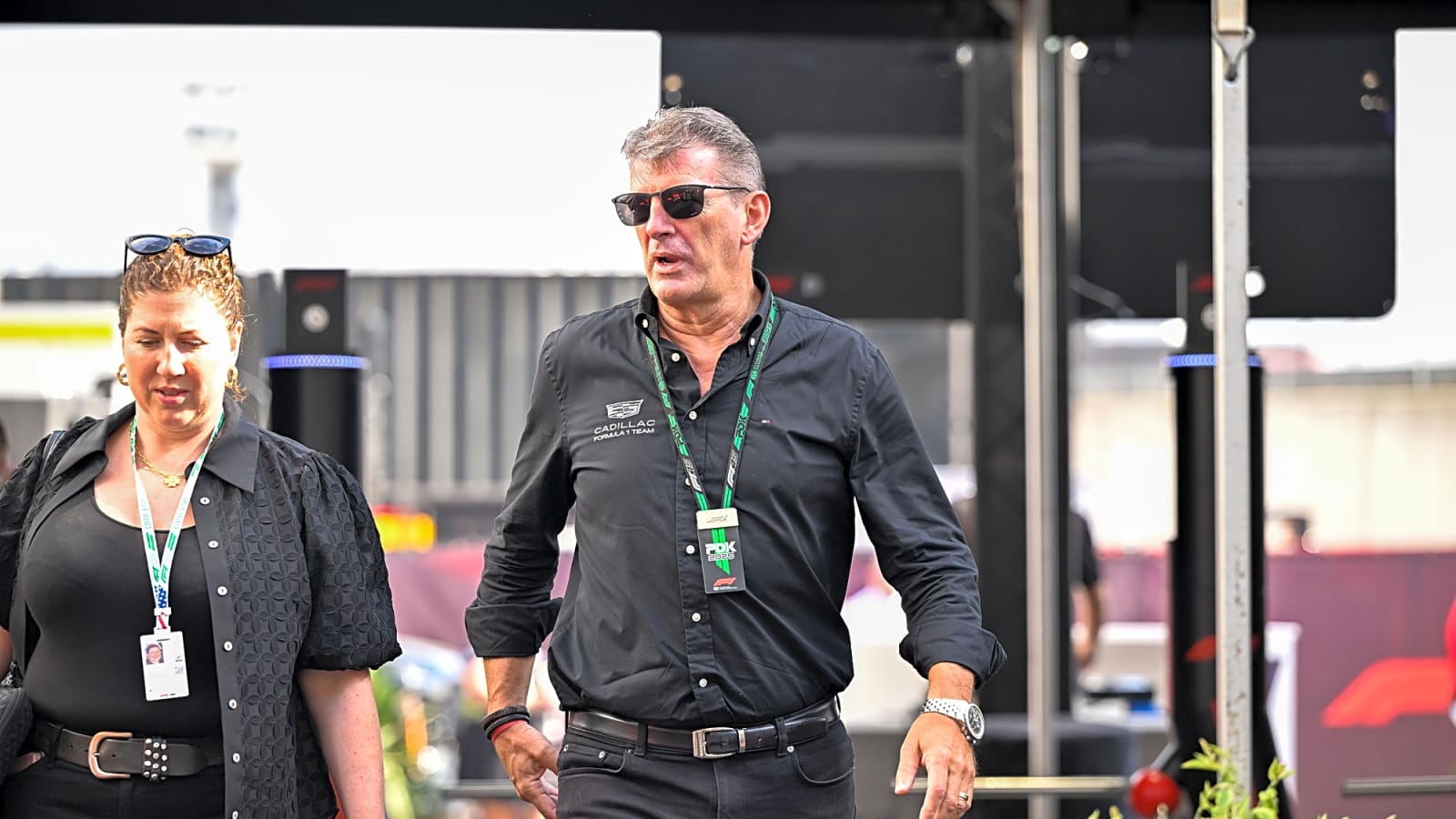
Last night during the Super Bowl, F1’s newest team, Cadillac revealed its 2026 livery. Unlike basically every other team that released theirs with a social media post or a video, this was a massive statement by the team. Spending money to launch in the most expensive advertising window of the year isn’t accidental- it points to a major strategic move by the new F1 team.
The Super Bowl reveal: What does it signal for Cadillac?
Cadillac has gone big for their reveal- and why wouldn’t they, on their first introduction into Formula 1? However, it’s surprising that they have gone this big.
On top of an ad in the Super Bowl, they also had an installation in Times Square in New York City, featuring a replica car in a frosted-glass box. Once the ad aired, the glass became clear, revealing the car and its livery.
Cadillac also dropped a teaser ad before the weekend, featuring former US President John F. Kennedy’s famous “We choose to go to the moon” speech.
An ad at the Super Bowl costs anywhere from $7 to $8 million for a 30-second ad, not including any of the marketing to actually create the content that is aired. Add in the cost of the second ad and the display in Times Square, and you are looking at a budget of somewhere in the $15 million range.
Compare this with teams typically spending maybe $50k on their releases; this is a massive statement.
Why does this matter?
This was a show of force by Cadillac on several fronts. To the other teams in F1, they signalled that they are not a small market underdog team- they’re here to play.
Unlike Haas, an underdog small-budget team, Cadillac’s emergence is a direct threat to the bigger teams in F1, as they are there to compete. Even if they struggle in year one with the regulations, they are positioning themselves as a top team in F1.
On top of that, they pitched themselves to the American F1 fans as America’s team.
America’s F1 Team
Cadillac has specifically branded itself as “America’s New Home Team” in F1, outlined by CMO Ahmed Iqbal, and specifically spoke to launching at the Super Bowl as the “pinnacle moment of sports media entertainment in American culture”. This specifically speaks to the team’s branding.
Across F1, different teams have appealed to national identity in their branding, and none moreso than Ferrari, which has actively positioned itself as Italy’s team.
Mercedes has long leaned into German manufacturing and engineering in their marketing, however, more subtly. Williams and McLaren, to a lesser degree, have both also prided themselves on their British heritage and history.
America is one of the fastest-growing markets for F1 fans, but no team has really centred itself as “America’s team”. Haas’ entry in 2016 could have done this at the time, but with its limited budget and poor results, it has never really appealed to the American consumer.
Launching at the Super Bowl wasn’t a play to appeal to hardcore F1 fans- they already support teams. Instead, it was to appeal to more casual fans and give them a team to root for.
Many newer fans of F1 who have become invested through Netflix’s Drive to Survive or The F1 Movie may not have a deep investment in any team. Giving them a team with a story that connects to their national identity is a smart gamble.
Cadillac, backed by GM, has a massive budget and can really capture this market. The American automaker is reported to be investing one billion dollars in the team, including a new facility in the United States and engine development, expected to be ready in 2029.
What is in the Cadillac F1 team for GM?
GM has a branding problem at the luxury level. They simply aren’t competitive in the luxury space with BMW, Mercedes, and Audi. F1 is a premium market, one that they can likely use to turn their higher-end line, Cadillac, into a global luxury brand.
On top of that, by being competitive in F1, they can show that American automotive excellence can compete in the global marketplace with European, German, and other car designers.
With F1 moving towards more hybrid and electronic components, this is also an opportunity for GM to showcase their own electric lines. With three races in the US, this is a natural market fit for GM, and Cadillac is the right brand for them to use for F1.
GM President Mark Reuss was clear about this when he said, “The excitement only grows as we get closer to showcasing GM’s engineering expertise on the prestigious global stage of F1.”
Winners and losers from Cadillac entering the F1 grid
Adding one more team to the grid is a direct threat to everyone on the grid. There are now two more drivers competing for the same number of points on the line in each race. It will be harder now to score points than ever before.
For the teams in the middle and bottom of the grid, the competition for points is going to be even fiercer. Teams like Williams, Audi, Haas, and Racing Bulls are going to need to push even harder to pick up points on race weekends.
From a brand standpoint, Haas is under even more threat than ever before. Being backed by billionaire Gene Haas in the American market is not enough now that Cadillac is here. Their relevance will increasingly be questioned if they end up at the bottom of the grid this year.
Given their size, Cadiallc may also be able to muscle sponsors away from other teams, as they look to become the dominant force in the American market. Being able to position themselves as America’s team could be an angle that sponsors prioritize in the coming years. While a smaller issue for bigger teams, it poses a big issue for mid-sized teams.
If they do succeed on and off the track, this is a major win for Formula 1, Liberty Media, and the FIA. It shows that with the right financial backing, any team can succeed in the sport, and could open the door to more teams in the future. With the major regulation changes this year, everyone is starting on a similar level, and it is the right time for a new entry into the sport.
What if Cadillac finishes poorly this year?
Cadillac is spending a ton of money this season to make an entry, but what if it doesn’t work out? What if they finish right at the bottom of the grid and struggle to make an impact in the points?
The short answer is it doesn’t matter. Cadillac isn’t expected to do what the Vegas Golden Knights did when they joined the NHL and become an immediate success. Realistically, Cadillac is going to end up somewhere in the bottom this season, competing with the likes of Sauber, Haas, Racing Bulls, and Alpine.
The key is going to be scoring points, particularly at home this season. If Sergio Perez and Valtteri Bottas can score points in Miami, Vegas, and COTA this year, Cadillac can market that to the American fans in the stands at the Grand Prixs.
From there, they need to move up the standings, challenging Williams and others in the midfield for points before really going for the throat to cement itself as a top-four team.
The key is that they cannot look like they are falling apart in year one. If Cadillac struggles to do anything in F1 on the track and looks like a mess off the track, they alienate all of the new fans that they have converted from this big Super Bowl stunt.
This is a major moment for Cadillac
Fans care about winning, and American fans don’t know sports with the concept of a tie. No American sports game ends in a draw; there is always a winner and a loser, and the sports world knows that its fans care about winning.
Cadillac revealing its 2026 F1 livery at the Super Bowl isn’t about the livery at all. It’s making a statement. F1 is an American sport, and Cadillac is America’s team.
Will this work? It depends on what happens on the track when the season starts at Albert Park. Will they be able to convince those fans from the Super Bowl to tune in, and will they be able to show success on the track? That’s going to be the key to watch.
One thing is certain: Cadillac put on a show last night with their livery reveal. They have shown themselves to be a player on the track, and that’s what GM paid $15 million to accomplish.
More must-reads:
- Pirates' Konnor Griffin makes immediate impact in MLB debut
- Steelers' QB plans revealed if Aaron Rodgers doesn't return
- The 'NBA two's leaders by season' quiz
Breaking News
Trending News



Customize Your Newsletter
 +
+




Get the latest news and rumors, customized to your favorite sports and teams. Emailed daily. Always free!
PRIVACY POLICY COOKIE POLICY CONTACT US
ABOUT YARDBARKER TERMS OF SERVICE


By using this site, you agree to our Terms of Service and Privacy Policy.
This site is for entertainment purposes only.
There is no gambling offered on this site.
Gambling Problem? Call 1-800-Gambler.
