
-

-


Follow Us
-

 On Facebook
 On Flipboard
 On Twitter
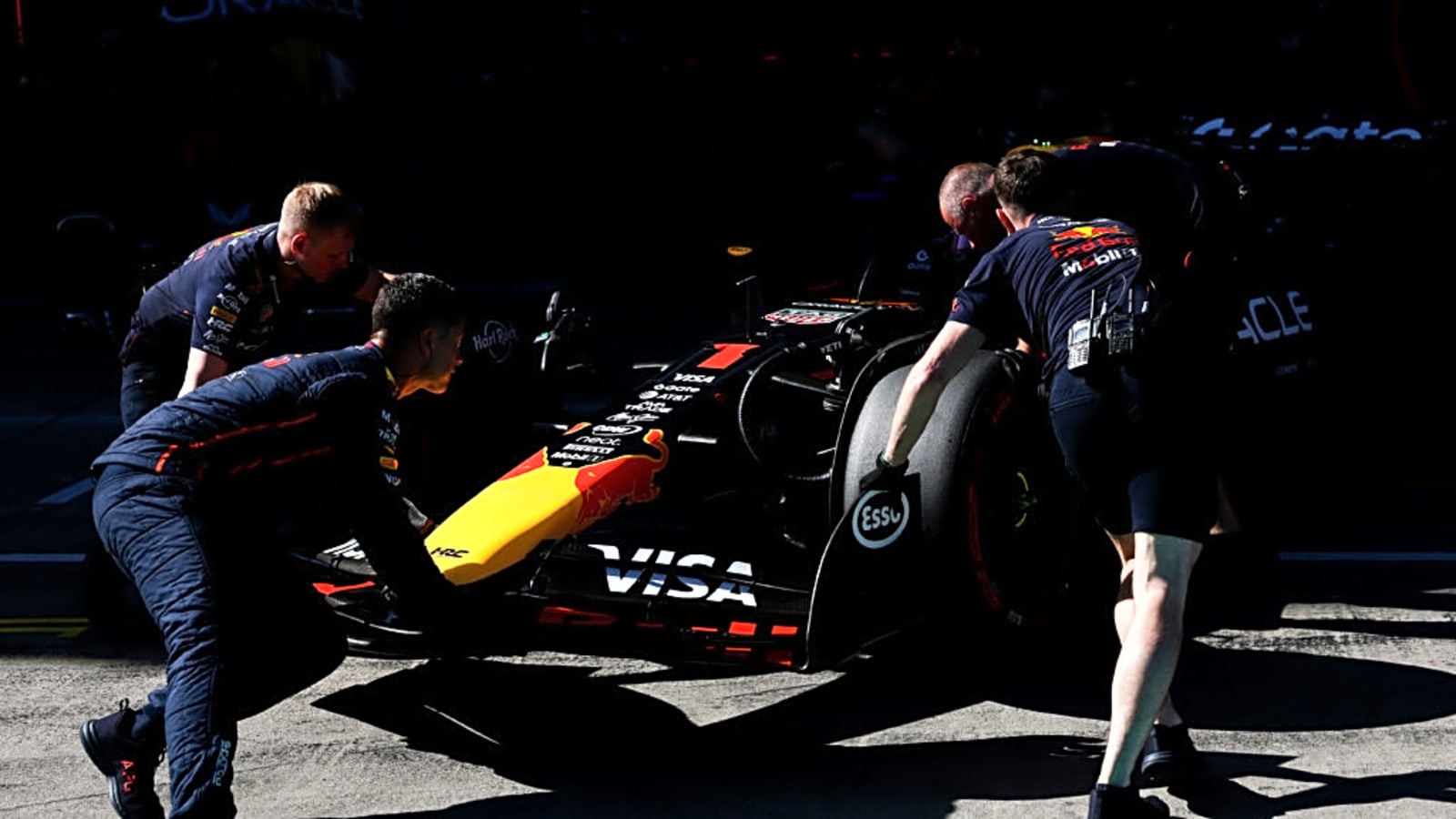
The F1 2026 regulations represent perhaps the most comprehensive changes to the sport in recent history. These new rules carry a genuine risk of some teams being well of the mark when the season begins.
Both on the engine and design front, engineers will hope pre-season testing does not reveal any fundamental blunders.
This nervousness is why most teams, at least initially, have committed to taking a conservative approach in testing.
Establishing reliability will be the first priority across the field, before more demanding and specific programmes can be conducted.
Ahead of the first tests in Barcelona, many teams are expected to bring very basic versions of their 2026 cars – with more advanced upgrades set to arrive in later tests.
However, Red Bull are understood to have opted for a distinctly more high-risk approach.
Red Bull pursue their own path ahead of 2026
Fred Vasseur was one of the first to warn of the reliability risks presented by these 2026 cars. The Ferrari team principal has insisted the first priority in testing is to ensure all basic systems work as expected.
For a manufacturer team like Ferrari, this means establishing certain benchmarks on both the engine and aerodynamic side.
Vasseur went even further, suggesting that the performance seen in the first few rounds of the season will not be especially relevant. He argues there will be a very high volume of upgrades and alterations in specifications in the first part of the season.
The Frenchman is not the only person to suggest this measured approach.
Audi CTO Mattia Binotto, partly to manage expectations, has warned that reliability is the first order of business. Only from here can the German manufacturer begin taking steps forward and focus on performance.
Speaking of Audi’s reliability, yesterday they completed 200km of running at a private test in Barcelona.
As previously reported on LWOS, Binotto’s personnel used one of their ‘filming days’ to get some early mileage on their 2026 car.
Even then, Audi only brought a basic version of their 2026 design to the Spanish circuit. Their primary objective was to test the car’s basic functions and, perhaps more importantly, collect data on their new engine.
On this front, the small test was a success, with no major issues arising throughout their Barcelona running.
Other teams are scheduled to have 200km tests before pre-season testing begins officially in Barcelona. Generally speaking, the philosophy of slow and steady will reign supreme.
However, according to racingnews365, this consensus is rejected at Red Bull.

Red Bull’s challenge of balancing risk and reward
It is being reported that Red Bull will be extremely aggressive in pre-season. Unlike rivals, the Milton Keynes outfit are working on a testing programme that will push their 2026 car from the beginning.
To clarify, this does not mean Red Bull are the only team striving to understand their 2026 cars.
Nevertheless, it is understood that Laurent Mekies’ personnel will bring a far more advanced aerodynamic specification to Barcelona than other teams.
Red Bull will therefore spend less time than rivals on collecting more basic data. Instead, their emphasis quickly focus on a more intense and complex iteration of their 2026 challenger.
Of course, it is not unusual for the Austrian team to push the limits on the development front.
At the end of 2021, Red Bull were predicted to enter 2022 a few steps behind Mercedes. This is because Mercedes prioritised the new regulations far sooner than Red Bull, who invested more heavily in the title battle.
Ultimately, despite starting later than other teams, Red Bull’s concept put them in an advantageous position.
This season, Max Verstappen’s team again aspire to push the limits. An intense and vigorous development plan to start the year is being finalised, with many upgrades anticipated after the first race in Melbourne.

An intense pre-season
Partly because of this, Red Bull feel it necessary to be bold and start the first Barcelona tests with a sophisticated package.
By doing this, they aim to more quickly establish a baseline with their 2026 car. Assuming the data from the circuit correlates accurately to the simulator and wind tunnel, this will allow Red Bull to push ahead with their development programme.
Of course, Formula 1 is a relative game, and there is no guarantee such an approach will be effective.
For example, much like in 2024/2025, Red Bull could find themselves struggling to understand a concept they pushed too far. In this sense, a more high-risk approach could backfire.
In any case, it is hardly a surprise this aerodynamic juggernaut is doing things differently.
After all, one of Red Bull’s biggest assumptions for 2026 is that their engineering department can compensate for any engine deficit they may suffer.
READ MORE: Manufacturers push the FIA to clampdown on Mercedes engine
More must-reads:
- Body cam footage from Tiger Woods' arrest has been released
- Kon Knueppel, Collin Gillespie make franchise history in Hornets win
- The 'Active 2K-point NBA seasons' quiz
Breaking News
Trending News








Customize Your Newsletter
 +
+




Get the latest news and rumors, customized to your favorite sports and teams. Emailed daily. Always free!
PRIVACY POLICY COOKIE POLICY CONTACT US
ABOUT YARDBARKER TERMS OF SERVICE


By using this site, you agree to our Terms of Service and Privacy Policy.
This site is for entertainment purposes only.
There is no gambling offered on this site.
Gambling Problem? Call 1-800-Gambler.
