
-

-


Follow Us
-

 On Facebook
 On Flipboard
 On Twitter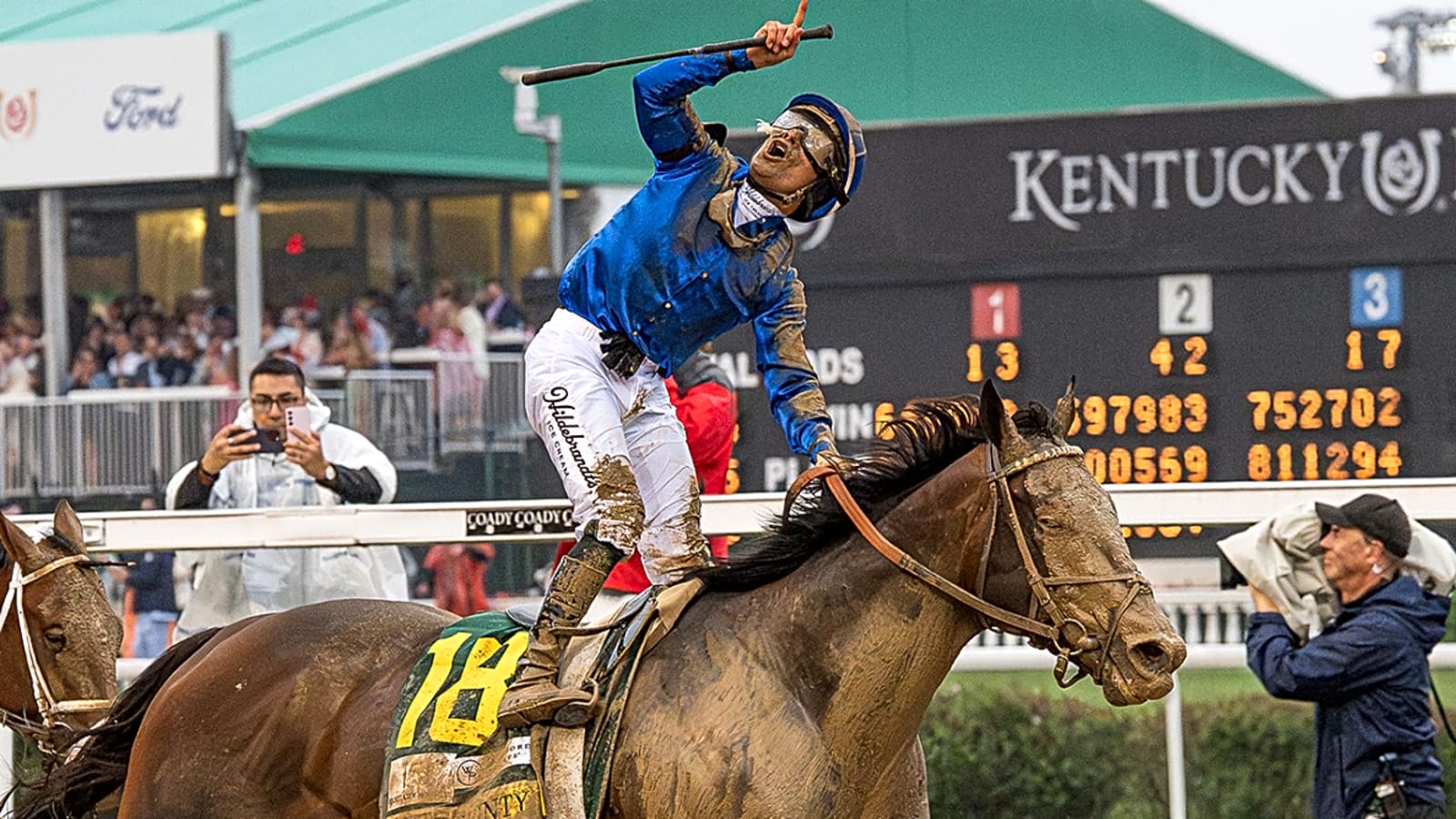
[Editor’s note: This article is from Athlon Sports’ 2025 “Year in Review” magazine, which celebrates the year’s champions and relives the biggest moments from across the world of sports. Order your copy online today, or pick one up at retail racks and newsstands nationwide.]
By the time Sovereignty crossed the finish line at Churchill Downs, the question wasn’t whether he was the best horse in the Kentucky Derby — it was whether he might be the best of a generation.
The 3-year-old chestnut had just stormed to victory in the 151st Run for the Roses, passing race favorite Journalism with an effortless surge that left no doubt. He looked like a horse built for history. Even Preakness Stakes officials seemed to believe it, posting moments later on the track’s social media platforms:
“Sovereignty wins the 2025 Kentucky Derby! Congratulations to jockey Junior Alvarado, trainer Bill Mott, and connections for winning the first leg of the Triple Crown.”
There was just one problem: Sovereignty was never going to Baltimore.
Mott and Godolphin Racing, the powerful global stable owned by Sheikh Mohammed of Dubai, announced their decision within days: The Derby winner would skip the Preakness. In one stroke, horse racing’s grandest storyline — the pursuit of the Triple Crown — vanished.
But Sovereignty wasn’t a fluke. He had been nearly flawless since breaking his maiden in stakes company the previous October, winning the Grade 3 Street Sense by five lengths from the far outside post. In seven career starts leading up to the Derby, he’d won six — the only blemish a runner-up finish in the Florida Derby.
Going into Louisville, Journalism — polished, powerful and unbeaten in his last four — was the talk of the track. But on Derby Day, Sovereignty made him look mortal. Swinging wide into the six path, he glided past the favorite and left the rest of the field chasing shadows. He crossed the wire as if on rails — ears pricked, stride unbroken — the kind of effortless dominance that makes even jaded racing fans lean forward and whisper, this one’s different.
And yet, Mott was already cooling expectations.
“The goal is always to do what’s best for the horse,” he told reporters the next morning. “Of course you think about the Triple Crown, but we’re looking at a career. We want it to last more than five weeks.”
That was the explanation — and, to many, the provocation.
To longtime racing fans, skipping the Preakness felt sacrilegious.
NBC’s Steve Kornacki, who covers horse racing, summed up the frustration. “I was disappointed, like everyone else,” he said. “But what frustrated me was when Mott said there was no reason physically for them not to run [Sovereignty]. The tradition of the Triple Crown has deep meaning to so many fans. I can definitely understand why they might feel slighted when the connections of a Derby winner of Sovereignty’s caliber communicate indifference to the Preakness.”
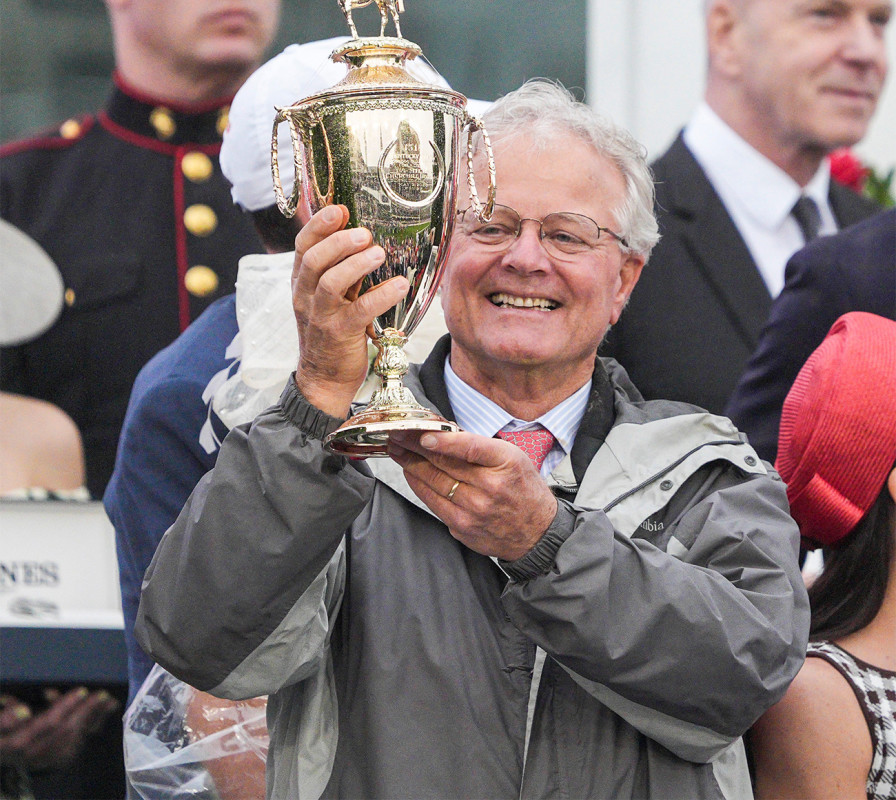
The criticism didn’t faze Godolphin. The global racing empire measures success differently — by longevity, by global trophies, by the careful preservation of bloodlines. The Triple Crown’s grueling five-week sprint didn’t fit that model.
“Spacing these horses out gives you the opportunity to make them last longer,” Mott said later. “We’re looking at a career.”
Translation: The horse was healthy. The tradition just wasn’t worth the risk.
When Sovereignty stayed home, Journalism carried the torch, overcoming traffic in the stretch to win the Preakness and keep the dream alive. His victory set up the rematch everyone wanted: Sovereignty versus Journalism in the Belmont Stakes at Saratoga — Sovereignty’s home track and the heart of Mott’s long career.
It wasn’t close. On a bright June afternoon, before a sold-out crowd that came looking for answers, Sovereignty gave them a masterclass instead. He broke smoothly, settled perfectly behind the early speed, and when Alvarado tipped him out at the top of the stretch, the race was over. Sovereignty won by three lengths without ever feeling the whip, striding through the wire like a horse that had more to give.
The crowd roared, then sighed — equal parts awe and regret. The same Derby exacta had just played out again, only this time, the victory felt both conclusive and incomplete.
Would he have won in Baltimore, too?
Over the summer, Sovereignty did nothing to quiet the speculation. He dominated the Grade 2 Jim Dandy and then the Grade 1 Travers, looking every bit the superstar his trainer believed he’d become. By season’s end, he wasn’t just the best 3-year-old in America — he was the standard. His rise culminated with a spot as the morning-line favorite for the Oct. 31 Breeders’ Cup Classic, but a fever forced his scratch on race day.
For Mott, the campaign represented something bigger. A Hall of Famer at 71, he has long been known as the sport’s quiet perfectionist — cautious, cerebral and relentlessly patient. This was his masterpiece: a horse trained not for hype, but for history.
Even skeptics like Dan Issel, the Naismith Hall of Famer and longtime Kentucky horseman, found themselves conceding the point. “If I ever had a horse win the Derby, his next start would be in the Preakness,” Issel said. “But after he won the Belmont and the Travers, I think they felt vindicated. They did right by the horse. And after those wins, they were probably right.”
Those closest to the sport worry that Sovereignty’s decision might signal a broader shift — a kind of “load management” creeping into horse racing, where elite stables run their stars less often to preserve them for the biggest stages. It’s a trend that could alter how future champions are campaigned, and how fans connect to them.
For Mott and Godolphin, the answer may not matter. They played the long game — and may have built a horse for the ages, not just a month of headlines. But for everyone else — fans, bettors and even old-school horsemen — one question will always hover over those roses, carnations and Saratoga shadows.
Would he have won all three?
Issel didn’t pause. “Probably.”
Just another what-if.
More must-reads:
- Bubble watch: Assessing 10 teams' cases as men's CBB regular season winds down
- Jazz center Jusuf Nurkic's season to end after nose surgery
- The 'Most NHL goals by an American' quiz
Breaking News
Trending News



Customize Your Newsletter
 +
+




Get the latest news and rumors, customized to your favorite sports and teams. Emailed daily. Always free!
PRIVACY POLICY COOKIE POLICY CONTACT US
ABOUT YARDBARKER TERMS OF SERVICE


By using this site, you agree to our Terms of Service and Privacy Policy.
This site is for entertainment purposes only.
There is no gambling offered on this site.
Gambling Problem? Call 1-800-Gambler.
