
-

-


Follow Us
-

 On Facebook
 On Flipboard
 On Twitter
Oregon quarterback Dillon Gabriel and Indiana’s Kurtis Rourke have had good seasons leading their teams to solid records. But in recent games against Penn State and Iowa, respectively, both offenses struggled for long stretches before finding their rhythm when it mattered most.
Fox Sports analyst Joel Klatt noticed one thing in particular that set Oregon’s Fernando Mendoza and Indiana’s Dante Moore apart after long stretches of offensive struggle.
According to Klatt, the two-minute drill provided something simpler but more valuable. Each quarterback saw success late in his game when he put his offense into hurry-up mode; the simplification eliminated the complexity that made their offenses sputter earlier.
Mendoza battled through adversity against Penn State, just as Moore did against Iowa, before each found their footing at the most important times.
Klatt broke down exactly why this shift made such a difference on his show, offering insight into what separates base offense from the two-minute approach.
Why Two-Minute Offense Gives Quarterbacks Freedom From Defensive Complexity
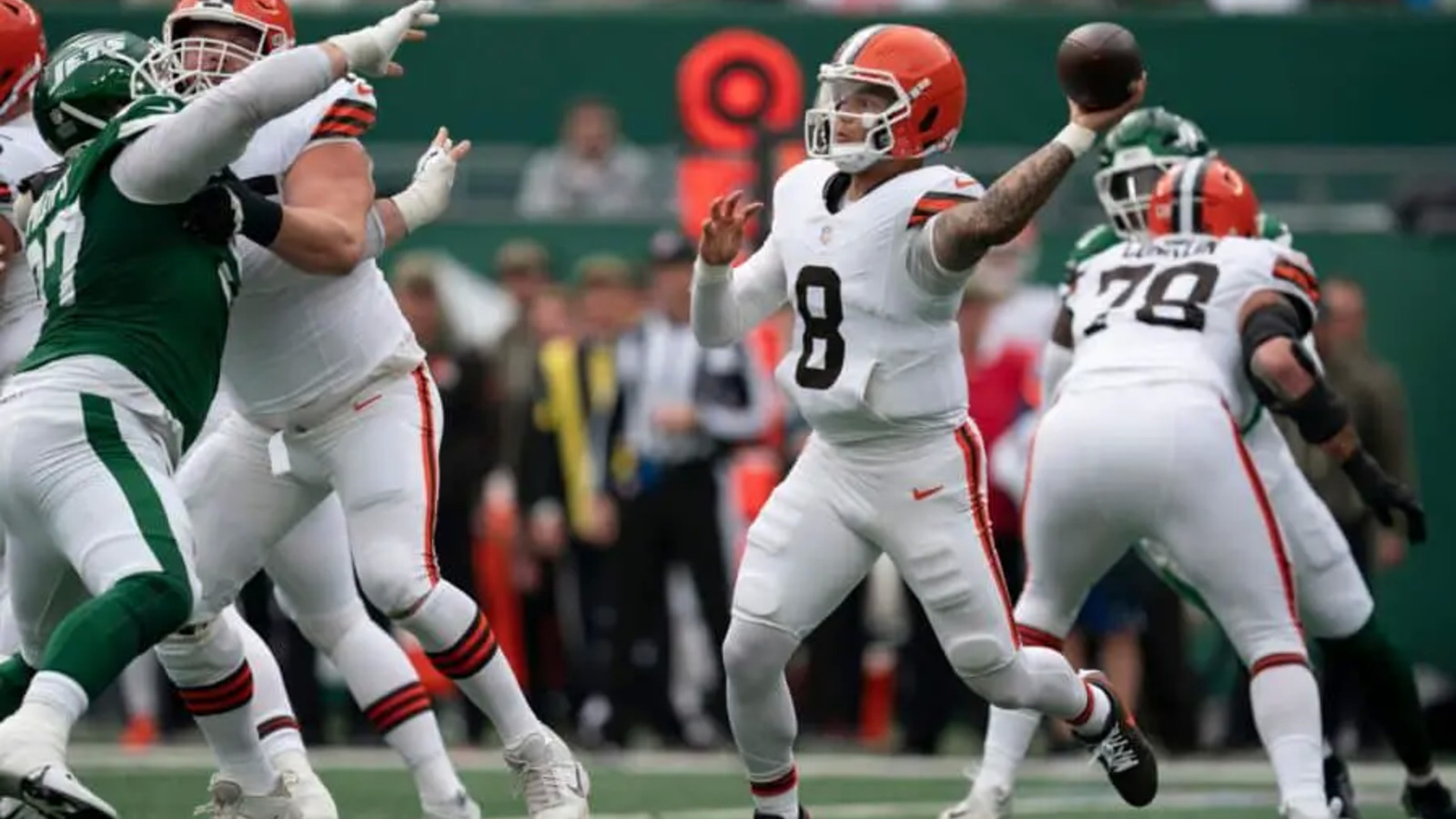
Klatt explained that struggling offenses often create their own problems in trying to execute their base game plan. When the run game does not get going early, teams find themselves quickly in predictable passing situations, which is where defensive coordinators can really turn up the pressure.
“If you’re just going out there and trying to run base offense, there’s a good chance if your offense is struggling that you’re going to be in an obvious passing situation really quick,” Klatt said. “A lot of times what happens when a defense is dominating for the first half or for majority of the game, all of your pass attempts are occurring when you have to throw into a two-minute drill and the pass rush starts to get going.”
“Because of the tempo of a two-minute drill, they are what I would call black and white decisions.”@joelklatt breaks down how getting back to basics in crucial moments sealed late wins for both Oregon and Indiana. pic.twitter.com/0fknwcffKR
— The Joel Klatt Show: A College Football on FOX Pod (@JoelKlattShow) November 10, 2025
The two-minute drill changes this dynamic completely. Instead of methodically building drives through the run game and working through complicated pre-snap adjustments, offenses can spread the field immediately and attack from first down.
This eliminates the predictability that comes from falling behind the chains. Klatt described this approach as making “black and white decisions” rather than processing multiple defensive looks and adjustments.
“The concepts in a two-minute drill generally speaking are things that you work on a lot so they’re more a part of you than specific to any one game plan,” Klatt explained. “You can come out and because of the quick tempo of a two-minute drill they’re what I call black and white decisions so the rhythm is a little bit different than let’s say base offense when you’re out there trying to orchestrate shifts in motions and get people on the right position and then run the football and maybe try to play action here.”
“You’re not substituting they’ve got to keep their 11 on the field that started the drive. You’re tempoing. And so what you get is base vanilla looks, base black and white progression style reads on your end,” Klatt said. “And guess what? There’s a lot of freedom in that for a quarterback.”
The thing is, when offenses struggle, coaches often search for elaborate solutions. Sometimes the answer is simpler. Give the quarterback familiar concepts, clear progressions and a tempo that limits what the defense can throw at him. That’s when quarterbacks can play freely instead of thinking their way through every snap.
More must-reads:
- Tiger Woods stepping away from golf to 'seek treatment' in wake of DUI arrest
- Cowboys' Jerry Jones reveals 'long-term plans' for George Pickens; Brian Schottenheimer comments on situation
- The 'Most Elite Eight appearances' quiz
Breaking News
Trending News







Customize Your Newsletter
 +
+




Get the latest news and rumors, customized to your favorite sports and teams. Emailed daily. Always free!
PRIVACY POLICY COOKIE POLICY CONTACT US
ABOUT YARDBARKER TERMS OF SERVICE


By using this site, you agree to our Terms of Service and Privacy Policy.
This site is for entertainment purposes only.
There is no gambling offered on this site.
Gambling Problem? Call 1-800-Gambler.
