
-

-


Follow Us
-

 On Facebook
 On Flipboard
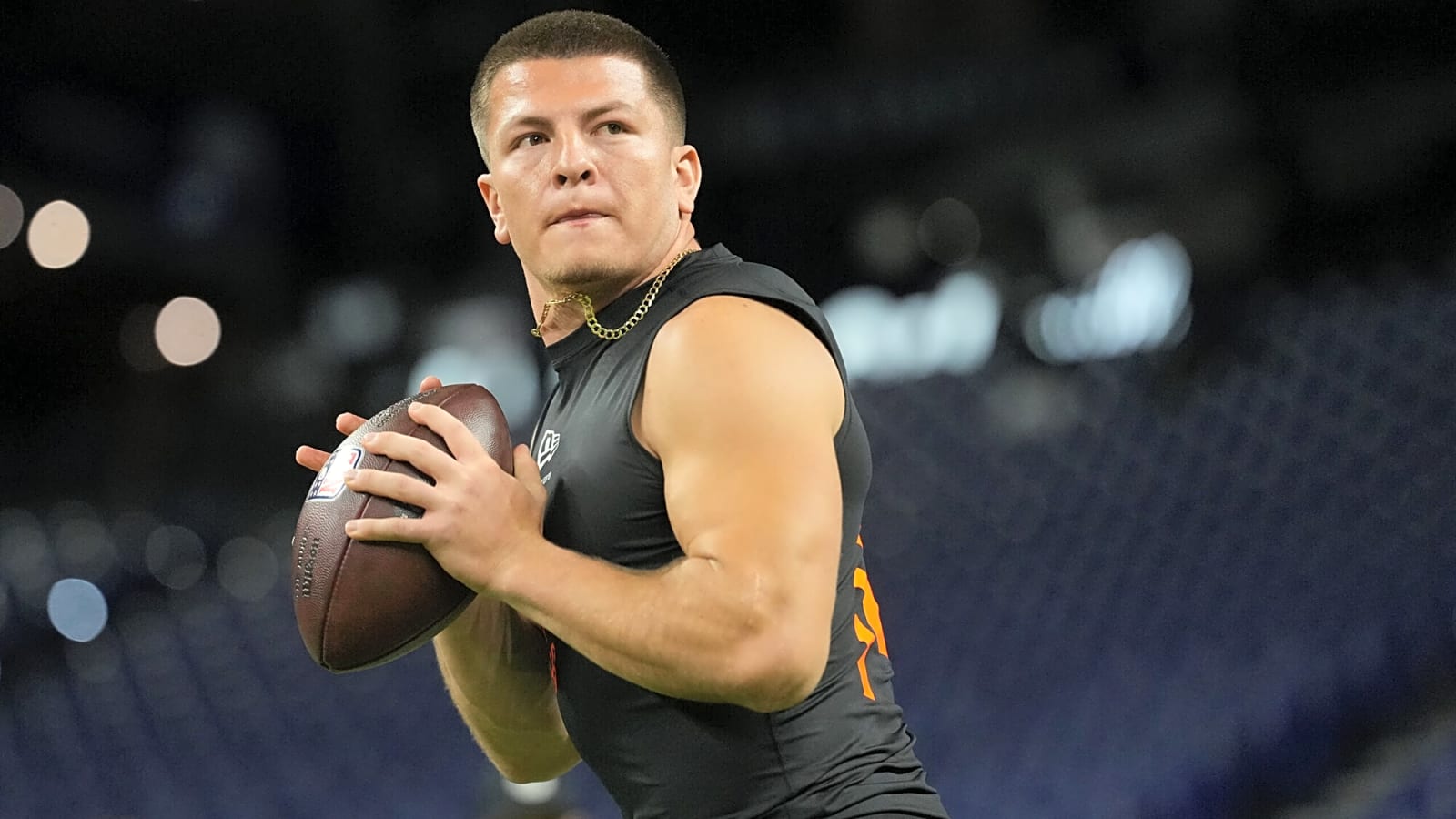
Somewhere in Baltimore’s front office, a phone rang for a quarterback nobody in the NFL wanted. Joe Fagnano had just watched all 257 draft picks scroll by without his name. Not a single one of 32 teams bit. This for a guy who threw 28 touchdowns against one interception in 2025, posting a 161.03 passer rating. The Ravens called the morning after the draft ended. By then, they had already locked up a far more famous quarterback who also went unclaimed. The famous one had a Heisman problem.
The Heisman Runner-Up No One Touched
Diego Pavia finished second in Heisman voting with 1,435 points, led Vanderbilt to a 10-win season, and won SEC Offensive Player of the Year. He became the first Heisman finalist to go undrafted in more than a decade. Vanderbilt listed him at 6-foot-0. Pre-draft measurements had him closer to 5-foot-10, and every scout noticed. Height alone did not sink him.
The Heisman-to-Undrafted Math Is Almost Nonexistent

Across the last 21 Heisman winners, 19 were first-round picks and 16 went in the top 10. Only one Heisman winner in roughly three decades went undrafted at all. Finalists fare slightly worse than winners, but the floor for a runner-up who also won a Power Five Offensive Player of the Year award is historically the late rounds, not the UDFA pile. Pavia’s fall is not a normal outcome. It is a once-in-more-than-a-decade anomaly that makes Baltimore’s aggressive post-draft move more defensible.
365 Days to Grow Up

At the Combine, Pavia addressed the maturity concerns head-on, referencing his head coach’s line that the frontal lobe is not fully developed until age 25 and joking that he had roughly a year to go. Teams laughed. Scouts wrote it down. In the weeks after losing the Heisman to Fernando Mendoza by 927 points, Pavia posted and appeared in social media content that critics said mocked rival programs and voters. His own timeline betrayed him.
The Prophecy Fulfilled Itself

Pavia told every NFL decision-maker he needed time to mature. He then spent the next several months appearing to validate red flags on his scouting report. The Combine joke became the setup. The off-field posts became the punchline. Draft weekend arrived and no team called. Not in the first round. Not in the seventh. The Ravens offered a minicamp tryout invitation. That is the bottom rung.
Signed Without a Single Practice Rep

Baltimore then did something strange. They signed Pavia to a three-year contract before he ever stepped on their practice field. No live reps. No on-field evaluation. Film study alone drove the contract. That reveals how the post-draft market actually operates. Teams with conviction in their scouting move before competitors can bid. Baltimore was locking in optionality before another franchise could snatch a Heisman-caliber arm at UDFA prices.
Scheme Fit: Why Pavia Actually Works in Baltimore

Post-draft UDFA analysis flagged Pavia’s improvisational, mobile style as a reasonable stylistic match for the Ravens’ Lamar Jackson era offensive identity. Baltimore runs the NFL’s most quarterback-dependent rushing scheme. A backup who can execute designed runs, extend plays, and read option looks has real developmental value behind Jackson, even at third string. Fagnano profiles differently, as a pocket passer with pro-caliber efficiency. The Ravens essentially bought two different QB archetypes at the same price.
Jesse Minter’s Clean-Slate Policy

Ravens head coach Jesse Minter publicly signaled he was ready to give Pavia a clean slate in Baltimore. That matters. A front office can sign a polarizing player, but the coaching staff still decides who gets reps, who gets meeting-room trust, and who gets cut. Minter’s framing tells the locker room that prior off-field noise will not define the evaluation. It also tells the market that Baltimore sees reputational risk as coachable, not disqualifying.
The Numbers That Did Not Matter

Fagnano completed 69 percent of his passes for 3,448 yards, with 28 touchdowns and one interception. That touchdown-to-interception ratio was among the best efficiency markers in college football. He was a seventh-year senior with starting experience at both Maine and UConn. None of it generated a single draft call. Meanwhile, Pavia set single-season Vanderbilt records with 3,539 passing yards and 29 touchdowns and accounted for a dominant share of the Commodores’ total offense. Both produced at elite levels. The narrative got the faster contract.
Fighting for a Job That Barely Exists

Baltimore already employs two-time MVP Lamar Jackson and an established veteran backup. Fagnano and Pavia compete for a third-string role that almost never sees game action. Rookie minicamp follows in early May. Both face a typical UDFA survival rate of roughly 5 to 10 percent. The three-year contracts sound permanent. In practice they are instantly jettison-able at minimal cap consequence.
What Other Undrafted QBs Got, and Did Not Get

The 2026 UDFA quarterback class included several experienced college starters, most of whom received only tryout invitations rather than contracts. Baltimore gave both Pavia and Fagnano three-year deals, bypassing the tryout stage entirely for Pavia and converting Fagnano’s opportunity within days. That is unusually aggressive. It quantifies how wide the gap is between “invited to camp” and “signed before camp,” and it shows the Ravens chose to pay the premium twice in the same weekend.
Baltimore’s 11-Pick Draft Set the Stage

The Ravens made 11 selections in the 2026 draft, one of the largest hauls in the league. A team that just added 11 rookies usually does not also spend three-year deals on UDFA quarterbacks. Baltimore had the roster flexibility to spend, not the scarcity that forces desperate moves. That sharpens the optionality thesis. The front office saw two players the consensus missed and treated the minimal cost as cheaper than the risk of another team scooping them later.
The New Rule for Getting Paid

This story looks like two quarterback signings. It is actually a case study in how NFL scouting values prospects. Pavia’s Heisman pedigree, Vanderbilt brand, and polarizing personality created a curiosity premium that survived his off-field noise, his height deficit, and his undrafted status. Fagnano’s elite efficiency at a smaller program created nothing comparable. The draft often rewards narrative potential over statistical floor. Once you see that, every future UDFA signing reads differently.
Every Mistake Gets Magnified Now
If Pavia throws one bad interception in minicamp, every scout who passed on him feels vindicated. If Fagnano’s efficiency translates to NFL reps, the uncomfortable question surfaces. Why did 32 teams ignore a quarterback with a 161 passer rating? The escalation path runs both directions. Other teams may now move faster to pre-sign polarizing UDFAs before tryout weekends, accelerating a post-draft market that already moves faster than fans realize.
The Invisible Machine Keeps Running

Most people think the draft is where talent gets sorted. A lot of real sorting happens in the 72 hours after, when teams with film conviction grab players the consensus missed. Baltimore bought two lottery tickets at near practice-squad cost. If both fail, the cost largely vanishes. If either succeeds, the Ravens acquired a future contributor for nothing. UDFA contracts are not firm commitments. They are options trades. The next Heisman finalist with a viral off-field moment is already wondering which team will call first.
So who wins the Ravens’ third-string job by Week 1, the Heisman runner-up or the 28-to-1 efficiency machine? Tell us in the comments.
Sources:
Robertson, Justin, and Clifton Brown. “Rumor Mill: Ravens Sign Two Undrafted Quarterbacks.” BaltimoreRavens.com, April 28, 2026.
Florio, Mike. “Ravens agree to sign UDFA QB Joe Fagnano.” NBC Sports Pro Football Talk, April 27, 2026.
“Ravens Sign Diego Pavia to Three-Year Deal, Bypassing Rookie Minicamp Tryout.” Sports Illustrated, April 27, 2026.
“2026 NFL Draft picks by team: Full list of all 257 picks.” CBS Sports, April 24, 2026.
“Ravens head coach Jesse Minter ready to give QB Diego Pavia clean slate in Baltimore.” NFL.com, April 28, 2026.
“Joe Fagnano 2025 Stats per Game.” ESPN, 2025 season.
More must-reads:
- Sabres continue historic season with first playoff series win in 19 years
- Russell Wilson may reject Jets via career-altering decision
- The 'Playoff scoring record by team' quiz
Breaking News
Trending News




Customize Your Newsletter
 +
+




Get the latest news and rumors, customized to your favorite sports and teams. Emailed daily. Always free!
PRIVACY POLICY COOKIE POLICY CONTACT US
ABOUT YARDBARKER TERMS OF SERVICE


By using this site, you agree to our Terms of Service and Privacy Policy.
This site is for entertainment purposes only.
There is no gambling offered on this site.
Gambling Problem? Call 1-800-Gambler.
