
-

-


Follow Us
-

 On Facebook
 On Flipboard
 On Twitter
The FIFA World Cup 2026 marks the 23rd edition in the tournament's glorified history, which dates back nearly a century.
Uruguay was crowned the first World Cup champion, defeating Argentina 4-2 on Wednesday, July 30, 1930, at Centenario Stadium in Montevideo in the final.
A world rematch, a classic that affirmed the best soccer was played in the Rio de la Plata, a thrilling match, and also the breaking of a relationship between two national teams. That was the 1930 final, where a goalkeeper was struck by a stump, a son-in-law by several stones, and the champion team received some complaints and the Jules Rimet trophy.
More on that below.
Teams With the Most World Cups in History
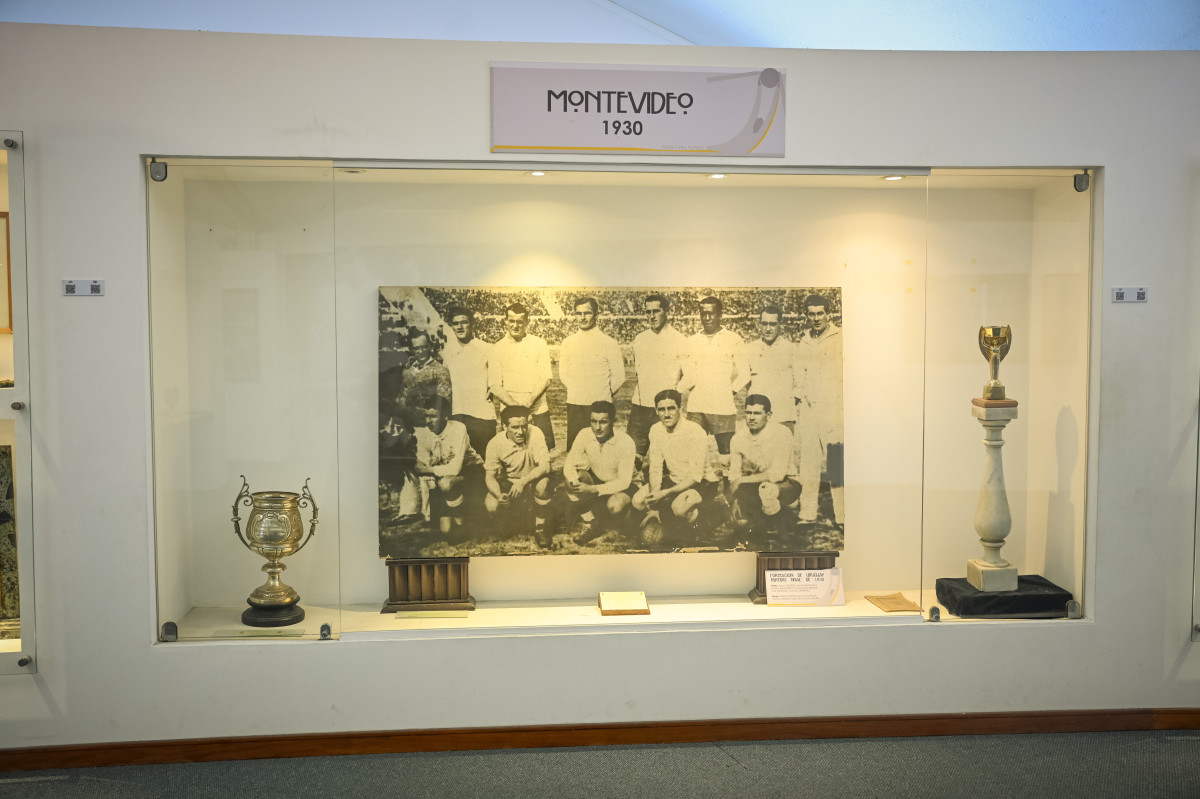
- Uruguay: 2 (1930 and 1950)
La Celeste became the first world champion and the second to repeat the feat, after Italy. The Uruguayans organized the first major soccer event in 1930, when they defeated Argentina 4-2 in the final.
Twenty years later, in a new format with a final group stage to determine the winner, Uruguay staged the "Maracanazo" in Rio de Janeiro, defeating Brazil 2-1 in the final match.
- Argentina: 3 (1978, 1986, and 2022)
Three stars, led by three key names in each. Indeed, Argentina is one of the few countries to have won the World Cup on at least three occasions.
- Germany: 4 (1954, 1974, 1990, and 2014)
The always formidable Mannschaft is part of an exclusive club of only three national teams to have emerged victorious in four World Cups (and have lost four finals), having claimed honors in the 1954 tournament in Switzerland, 1974 as host, 1990 in Italy, and 2014 in Brazil.
- Italy: 4 (1934, 1938, 1982, and 2006)
Despite missing the 2018 and 2022 tournaments and now having to seek its ticket to the 2026 Mexico-United States-Canada tournament via a playoff, the Squadra Azzurra remains one of the traditional dominant forces in the international landscape. It is no coincidence that it was the first two-time world champion and one of three national teams to have won the most important tournament four times.
- Brazil: 5 (1958, 1962, 1970, 1994, and 2002)
The icons of "jogo bonito" also lead the ranking of World Cup crowns; in fact, they are the only ones to have reigned on five occasions.
Reliving Uruguay's First World Cup Win in 1930
When at 2:10 p.m. the Argentina national team took the field, entering through the Olympic grandstand, Carlos Gardel had already sung at both finalist training camps and had decided not to attend the Centenario. The sky-blue side appeared immediately afterward, and an exchange of floral bouquets took place between the captains.
After the coin toss and the whistle from Belgium's Jean Langenus, Uruguay began defending the goal at the Amsterdam grandstand and was superior to its rival, according to journalist Carlos Martínez Moreno in issue No. 13 "The 1930 World Cup" (from the magazine 100 Years of Soccer, 1970).
La Celeste fed its forwards and, attacking down the right side, took the lead at the 12th minute. The 1-0 lead for Uruguay generated euphoria among the local crowd, but also a response from the Argentine side, which equalized through Peucelle.
"We didn't think he was very clever," El País described the weak response from Uruguayan goalkeeper Ballestrero.
MORE: Who Has Scored the Most World Cup Goals?
Argentina took a 2-1 lead with a goal from Stábile, the tournament's top scorer with eight goals; José Nasazzi protested for offside, but the officiating crew dismissed the local captain's complaint and, minutes later, ended the first half.
However, at the 57th minute came the 2-2 equalizer thanks to a goal from "Vasco" Pedro Cea, who, after leveling the score once again in a key match (he had already done so in the semifinals of the 1924 and 1928 Olympic Games), earned the nickname "Olympic Equalizer."
The home team improved its performance, with Lorenzo Fernández standing out as he began to dominate the midfield (Martínez Moreno described his play as "strong and virile"; Argentine journalists and players described it as violent and very aggressive). Therefore, it was no surprise that Uruguay took a 3-2 lead at the 68th minute, following the "blow" (as described in the aforementioned issue) from Santos Iriarte.
After the powerful shot, the ball became trapped between the support and the net, so Héctor Castro rushed to "free it" following a superstition about which there are few references.
Near the end of the match, Castro headed in the final 4-2 goal despite the effort of goalkeeper Botasso, who, in addition to conceding a fourth goal, watched as a rival forward (visible in the audiovisual recordings of the match) grabbed and threw his beret to the back of the net to mock the goalkeeper's latest fall.
More must-reads:
- Lakers' Austin Reaves out for remainder of season
- Buffalo Sabres clinch playoff spot, end longest postseason drought in NHL history
- The 'Most Elite Eight appearances' quiz
Breaking News
Trending News








Customize Your Newsletter
 +
+




Get the latest news and rumors, customized to your favorite sports and teams. Emailed daily. Always free!
PRIVACY POLICY COOKIE POLICY CONTACT US
ABOUT YARDBARKER TERMS OF SERVICE


By using this site, you agree to our Terms of Service and Privacy Policy.
This site is for entertainment purposes only.
There is no gambling offered on this site.
Gambling Problem? Call 1-800-Gambler.
