
-

-


Follow Us
-

 On Facebook
 On Flipboard
 On Twitter
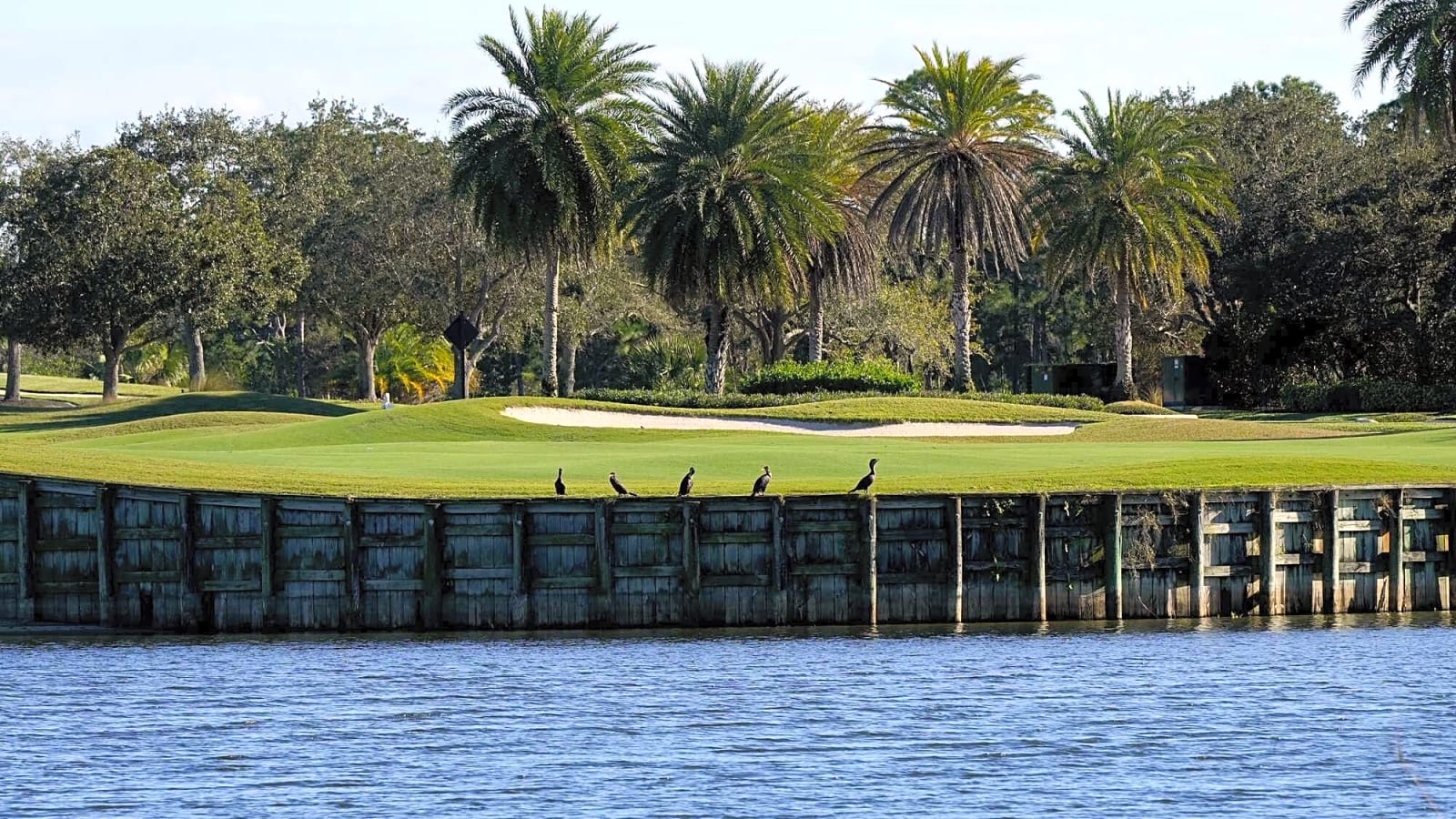
Walk the grounds at Bay Hill Club during Arnold Palmer Invitational week and you’ll see them everywhere. They’re holding up scoring standards inside the ropes. They’re directing traffic in the parking lots. They’re managing galleries along the fairways and keeping the driving range running smoothly. They’re the 1,500 volunteers who transform a golf tournament from a logistical impossibility into one of the PGA Tour’s signature events.
And most fans never think twice about them.
That’s exactly how it’s supposed to work. When volunteers do their jobs well, the tournament feels effortless. The scores update seamlessly. The crowds move efficiently. The players get what they need. But pull back the curtain and you’ll find an operation that rivals any professional workforce, powered entirely by people who aren’t getting paid a dime.
The Scale of It All
The Arnold Palmer Invitational isn’t unique in its reliance on volunteers. It’s the norm across professional golf. The PGA Tour estimates that more than 100,000 volunteers work tournaments annually. At the WM Phoenix Open, that number swells to 3,500 volunteers during tournament week. The Players Championship depends on 2,000 volunteers contributing more than 66,000 hours. The RBC Heritage needs 1,700. The FedEx St. Jude Championship requires 1,500-plus.
These aren’t symbolic roles. Volunteers work real shifts with real responsibilities. Many tournaments require a three-day commitment during tournament week, with shifts running six to eight hours. Some volunteers clock four-hour blocks, others work longer. Add up the pre-tournament meetings, training sessions and post-event wrap-up, and you’re looking at a significant time investment.
Want to put a dollar figure on it? Independent Sector, a nonprofit research organization, values volunteer labor at $34.79 per hour nationally (2024 data). In Florida, where the API takes place, that number is $33 per hour. Apply that to The Players Championship’s 66,000 volunteer hours and you’re looking at roughly $2.3 million worth of labor. That’s not a feel-good estimate. That’s real economic value being donated to make these tournaments happen.
What They Actually Do
The volunteer structure at PGA Tour events is surprisingly sophisticated. Most tournaments organize volunteers into committees, each with specific responsibilities. At the Arnold Palmer Invitational, there are 31 different volunteer committees covering everything from scoring and operations to security and parking.
Standard bearers walk inside the ropes carrying and updating score standards. Walking scorers track shots and capture data. Gallery management volunteers keep crowds safe and orderly. Transportation teams move people and equipment. Hospitality committees take care of players, caddies and officials. It’s a mini workforce operation disguised as volunteerism.
Mary Ann Stead knows this world as well as anyone. She started volunteering at what’s now the Arnold Palmer Invitational in 1992, back when updating the leaderboard in the media tent meant doing it by hand. The following year she became a walking scorer, a role she held for 25 years. Along the way, she kept score for Tom Watson, Greg Norman, Ernie Els, Davis Love III, Tom Kite, Rory McIlroy and Tiger Woods (eight times). Her favorite? Arnold Palmer himself.
These days, Mary Ann has retired from walking scoring but she hasn’t retired from volunteering. She’s served on the Player Services and Driving Range committees and for the past six years has been part of the Caddie Hospitality committee. This year, she’s the API’s Volunteer of the Year.
Why They Keep Coming Back
Here’s what’s remarkable: 62 volunteers at the Arnold Palmer Invitational have been doing this for more than 20 years. That’s not a typo. More than five dozen people have been showing up year after year, decade after decade, to make this tournament work.
Why? The easy answer is that they love golf. Mary Ann grew up in Iowa, earned a master’s degree in English education and spent more than 25 years as a teacher. She never played golf herself, but she married into a family that lived and breathed the sport. She walked 18-hole courses alongside her in-laws (who played into their 90s), her husband Tom and later her son, an accomplished junior golfer who played Division I college golf. These days, her favorite golfer to watch is her 15-year-old grandson.
But there’s more to it than just loving the game. Tournaments have engineered a volunteer culture that makes people want to return. The API’s volunteer program includes a reward system tied to hours served. Work 20 to 39 hours and you earn a gift card. Hit 40-plus hours and you unlock a Volunteer Golf Day. There are volunteer-only breakfasts, committee trainings and a sense of belonging to something bigger.
Mary Ann will tell you that volunteering at the API is one of the best weeks of her year. It’s where she reconnects with friends, supports the Arnold and Winnie Palmer Hospitals (where three of her grandchildren were born) and participates in an event that honors Arnold Palmer’s legacy. After losing her husband to cancer at just 56, she embraced the belief that life is still filled with blessings and every day matters. Volunteering at Bay Hill is part of how she lives that out.
The Charity Connection
There’s another reason volunteers matter so much: they’re the engine that drives the PGA Tour’s charitable impact. The Tour has surpassed $4 billion in charitable giving, and volunteers are a critical part of that equation. Many tournaments are structured to return net proceeds to local charities and community beneficiaries. The Arnold Palmer Invitational provides more than $400,000 annually for community groups whose members help make the tournament possible.
At the FedEx St. Jude Championship, volunteers have taken it a step further. Through an initiative called Hours for St. Jude, which started in 2013, volunteers have raised nearly $3.4 million through fundraising tied to their participation. That’s volunteers not just donating their time but actively raising money on top of it.
This is the model Arnold Palmer believed in. The tournament that bears his name exists to create community impact, and volunteers are central to that mission. They’re not just helping run a golf tournament. They’re helping fund hospitals, youth programs, educational initiatives and countless other causes.
The Invisible Workforce
This week, when the Arnold Palmer Invitational tees off at Bay Hill, 1,500 volunteers will fan out across the property. They’ll arrive early, work long shifts and do jobs most fans will never notice. They’ll make sure the tournament runs smoothly, the players are taken care of and the experience feels seamless.
They won’t be on TV. They won’t get autographs or prize money. But they’ll be there, doing the work that makes professional golf possible. They’re the heartbeat of the PGA Tour, and tournaments like the API simply couldn’t exist without them.
Mary Ann Stead and the 61 other volunteers with 20-plus years of service understand something the rest of us should remember: the best events aren’t just about the stars on the course. They’re about the people who show up, year after year, to make sure the show goes on.
More must-reads:
- Tiger Woods provides update on his Masters plans
- Aaron Judge bombed in 2026 debut, but a silver lining remains for Yankees in win over Giants
- The 'Active MLB 3+ 30-homer seasons' quiz
Breaking News
Trending News







Customize Your Newsletter
 +
+




Get the latest news and rumors, customized to your favorite sports and teams. Emailed daily. Always free!
PRIVACY POLICY COOKIE POLICY CONTACT US
ABOUT YARDBARKER TERMS OF SERVICE


By using this site, you agree to our Terms of Service and Privacy Policy.
This site is for entertainment purposes only.
There is no gambling offered on this site.
Gambling Problem? Call 1-800-Gambler.
