
-

-


Follow Us
-

 On Facebook
 On Flipboard

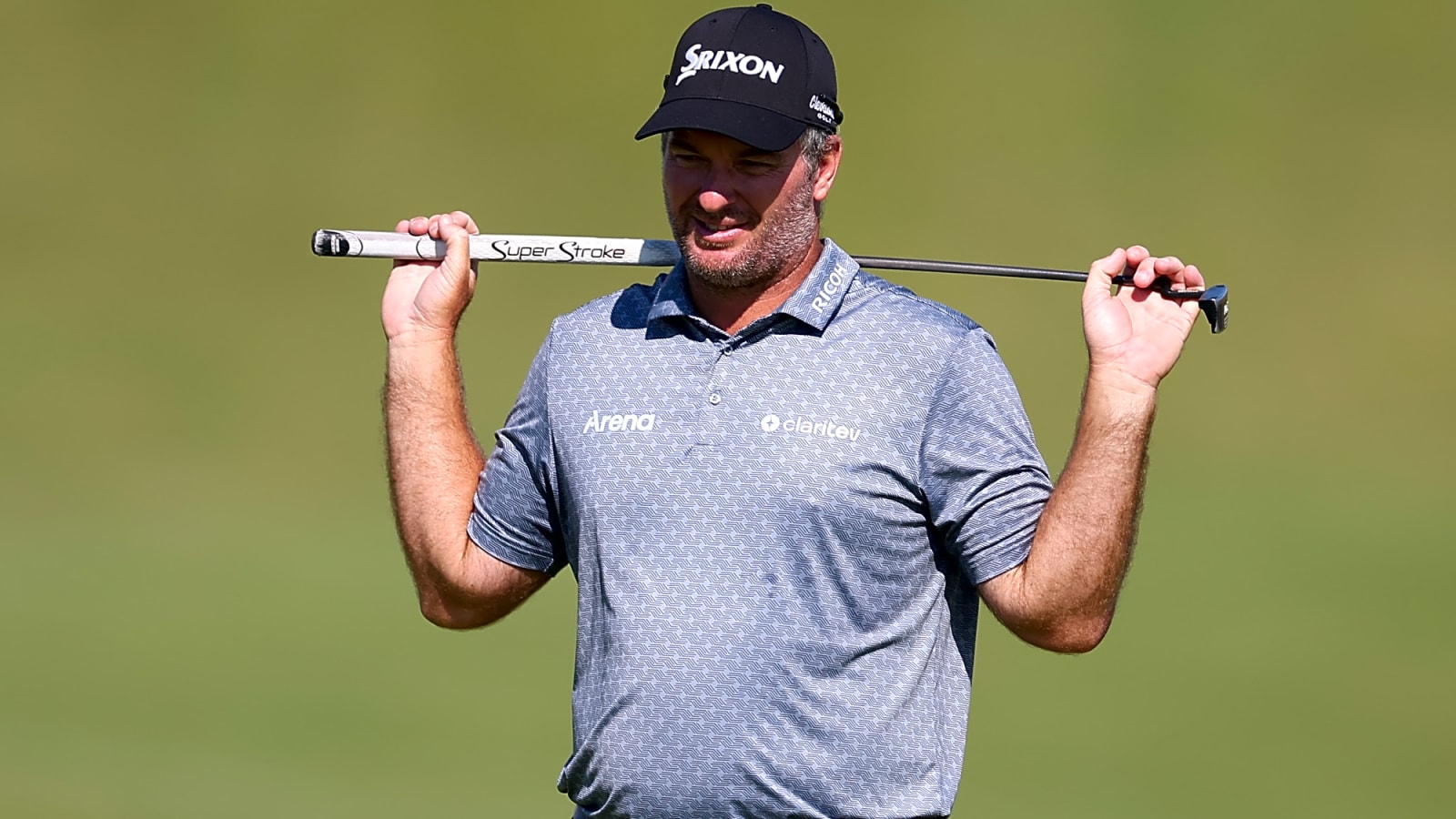
Ryan Fox could not feel his hands on the 18th green at Royal Birkdale. He was tied with Cameron Young at 9 under, standing over a 12-foot birdie putt on the toughest hole on the course, and trying to do what only four players had managed there all Sunday. The polished version of the moment came when the ball caught the left edge and Fox threw both arms into the air. The more useful version came in the interview that followed.
“Well, you can’t feel your hands, I know that,” Fox said. He later admitted he was shaking and could not explain how he kept the putter face square enough to start the ball on line. That is a considerably more honest description of pressure than the calm, fearless language we often attach to champions after the putt goes in.
A few minutes earlier, Fox had stood on the 18th tee and told caddie Dean Smith, “We’re going to try to win this.” Par would have sent him into a playoff with Young, who had been waiting for more than two hours after shooting 64. Fox drove into the fairway, hit his approach below the hole and made the putt for a closing 68, a 10-under total and a one-stroke victory.
The neat version says Fox stared down the pressure. The real version is that he carried the pressure with him and kept it from making the decision. His hands were shaking, his nerves were “all over the place,” and the shot still had to be hit.
Week's End | The Next Job
How Two Winners Kept the Moment Manageable
Neither player waited for the nerves or uncertainty to disappear. Each reduced the finish to one clear task.
Ryan Fox | Royal Birkdale
“We’re going to try to win this.”
- Tied for the lead on the 18th tee
- Used a deep breath and a clear line
- Made a 12-foot birdie to win The Open
Stefano Mazzoli | Corales
“One more birdie.”
- Started the final round four strokes back
- Double-checked the final putt’s line
- Made birdie to secure PGA Tour membership
Fox Did Not Need the Nerves to Leave
Fox’s week had not been a steady march toward the Claret Jug. He opened with a 72 and stood tied for 85th, seven strokes behind. After 36 holes, he was tied for 52nd and eight back. His Saturday 62 changed the tournament, but even that historic round did not spare him from having to rebuild momentum Sunday.
The most difficult moment came at the par-3 15th, where his tee shot caught the face of a bunker and finished beneath the back lip. Fox had no reasonable play toward the green, so he hit backward and accepted the bogey. He responded with a birdie at the 16th, missed a chance to take the lead at the par-5 17th and walked to the final tee still tied with Young.
Fox explained his approach with the same simplicity he brought to the final hole. He has always tried to “see a shot, hit a shot” because additional thought allows bad possibilities to enter. With the putter, his focus all day had been to take a deep breath, choose a line and make the stroke.
I hear golfers ask how they can stop getting nervous, and the question makes sense. The problem is that it gives them another outcome to chase, as if the body must feel calm before the swing can be trusted. Most players would be better served by giving the nerves less authority, keeping the target clear and protecting the routine they built before the pressure arrived.
Fox did not defeat the nerves on the 18th green. He kept them from changing his line, speeding up his process or talking him into a safer intention. At 39, in his 29th major start and without a previous top-10 finish in one, he became the Champion Golfer of the Year.
Mazzoli Changed What Was Around Him
There was no Claret Jug waiting at the Corales Puntacana Championship, but there was no small consequence either. Stefano Mazzoli began Sunday four strokes behind Todd Clements and closed with a 6-under 66. His final-hole birdie produced a one-stroke victory, his first PGA Tour title in only his third start and membership through 2027.
Mazzoli described the final round as a chase rather than an exercise in managing pressure. Because he was behind, he kept returning to the same thought: “One more birdie, one more birdie, one more birdie.” When he reached the 18th green with a chance to win, he asked his caddie to double-check the line and tried to make “a putt as committed as possible.”
The ball fell on its final roll. Mazzoli finished at 20 under, one stroke ahead of Clements and Gordon Sargent, and became the first Italian to win the Corales Puntacana Championship. The final putt changed his professional future, but another part of his interview explained what had changed before the result.
Four weeks earlier, Mazzoli had brought his childhood friend Frederico onto the bag. They had grown up playing golf together, and Mazzoli was direct about what he needed from the arrangement. He wanted someone who could help him have fun, maintain his rhythm and keep smiling when the round began moving against him.
Golfers are trained to respond to poor play by adding something. They hit more balls, study more video, search for another drill and introduce another thought. Mazzoli’s useful change was not technical. He put someone beside him who helped create a competitive environment in which he could remain himself.
That did not eliminate the difficult parts of his season. Mazzoli said he had struggled, missed previous opportunities and doubted himself “quite a lot.” His career had developed one step at a time, and the four weeks with his new caddie did not suddenly remove every uncertainty. They helped him manage those uncertainties well enough to remain present when his opportunity arrived.
Commitment Is Not a Bargain With Golf
This is the point where golf writing can wander into bad territory. Two made putts do not prove that courage always wins, or that the player who commits hardest receives the trophy. Golf does not sort competitors according to virtue, preparation or who deserves the best ending.
Young shot 64, held the clubhouse lead for more than two hours and lost by one after Fox birdied the final hole. Clements had led or shared the lead after 18, 36 and 54 holes at Corales before closing with a 71 and also losing by one. Their results do not tell us that they lacked commitment any more than the victories prove Fox and Mazzoli had conquered fear.
A routine is not a bargain with the game. It cannot guarantee the drive will find the fairway, the putt will hold its line or the bounce will be kind. It gives the player the best available chance to make the shot he intended before the outcome begins rewriting the story.
That may be the most useful connection between two tournaments played on very different stages. Fox was trying to place his name on the Claret Jug, while Mazzoli was trying to secure the PGA Tour future he had pursued since deciding as a teenager that professional golf was what he wanted. The history, attention and rewards were not equal, but both men reached the final hole with something important still unresolved.
The older I get, the less convinced I am that readiness arrives as a feeling. More often, it looks like Fox taking a deep breath with hands he could barely feel, or Mazzoli asking a trusted friend to confirm a line before making the most committed stroke available. The doubt may remain, the nerves may remain and the result may still go the other way.
Fox’s hands were shaking when he stood over the putt. Mazzoli’s difficult season had not been erased before his ball took its final roll. Neither man waited for the feeling to change. They chose the line, made the stroke and let the result arrive afterward.
PGA of America Golf Professional Brendon Elliott is an award-winning coach and golf writer who serves as Athlon Sports Senior Golf Writer. Read his recent “The Starter” on R.org, where he is their Lead Golf Writer. To stay updated on all of his latest work, sign up for his newsletter or visit his MuckRack Profile.
More must-reads:
- Packers catch a break with Josh Jacobs' potential suspension
- Ian Rapoport gives injury update on Bengals' Joe Burrow for Texans game
- The 'Most lefty-homers in a season' quiz
Breaking News
Trending News




Customize Your Newsletter
 +
+




Get the latest news and rumors, customized to your favorite sports and teams. Emailed daily. Always free!
PRIVACY POLICY COOKIE POLICY CONTACT US
ABOUT YARDBARKER TERMS OF SERVICE


By using this site, you agree to our Terms of Service and Privacy Policy.
This site is for entertainment purposes only.
There is no gambling offered on this site.
Gambling Problem? Call 1-800-Gambler.
