
-

-


Follow Us
-

 On Facebook
 On Flipboard

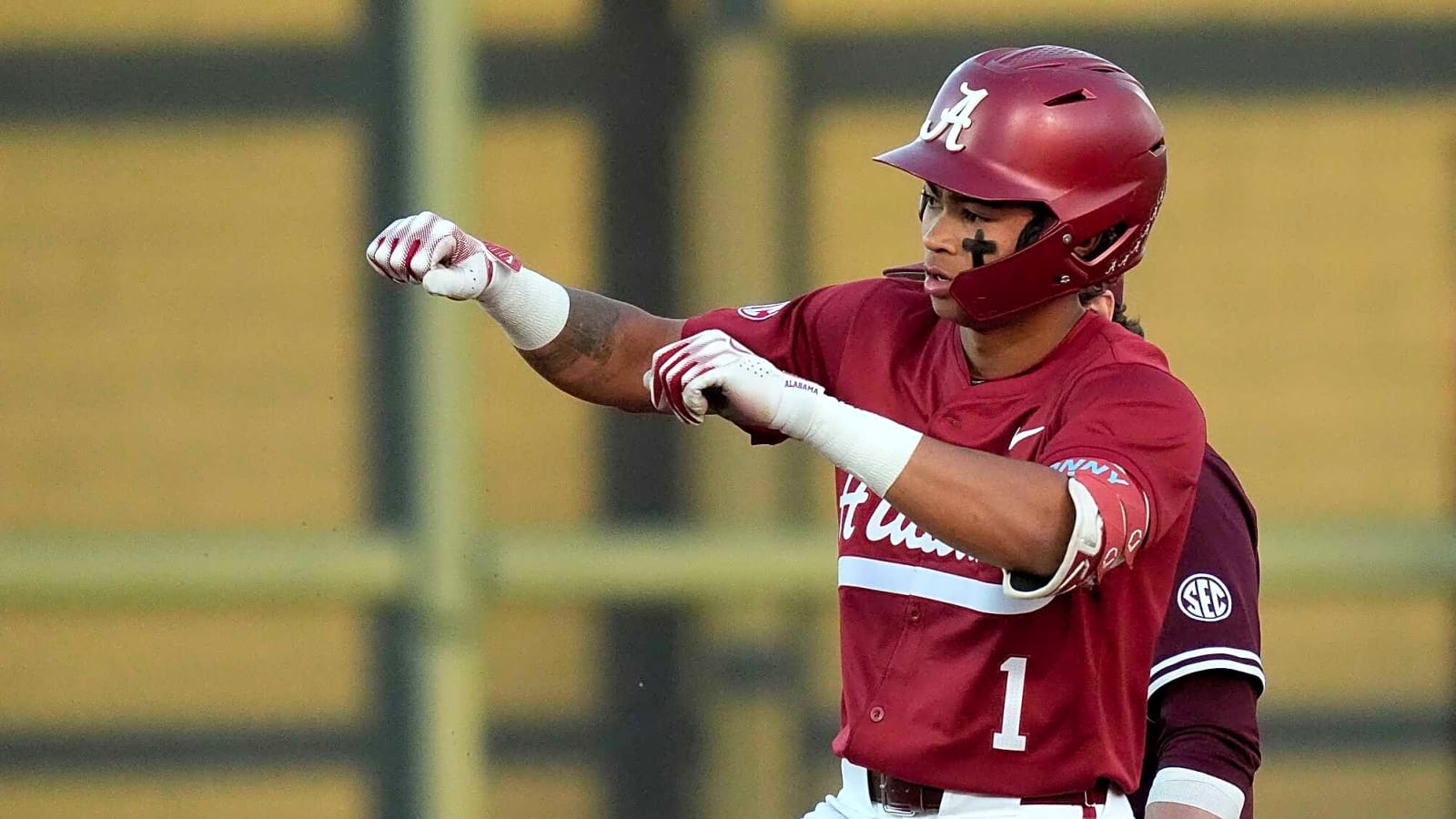
Life comes at you fast in amateur baseball. Roch Cholowsky has cemented himself as the favorite to be selected number one overall in the 2026 draft after a 2025 season for the ages.
If we rewind a year, though, it was Justin Lebron, not Cholowsky, who was the frontrunner for number one overall. What changed? What should we make of Lebron’s 2025 season? Does he still have a shot to push Cholowsky for top spot? Let’s dig in.
- Age at Draft: 21.7
- B/T: R/R
- HT: 6’2″
- WT: 180 lbs
- Hometown: Miramar, FL
- 2025 Stats: 59 G, 281 PA, .316/.421/.636 (1.058), 60 R, 18 HR (37 XBH), 12.5 BB%, 24.2 K%, 127 wRC+, 17 SB (94%).
Lebron wasn’t a renowned prep prospect, albeit in a high school class in 2023 loaded with middle infield talent.
Still developing physically and adding strength to a lean 6-foot-2, 180-pound frame, Lebron looks the part at the plate. He starts in a wide base with his handset just above his back shoulder. There’s minimal pre-load movement. His swing is punctuated by a very short stride that gives way to lightning-quick hands and bat speed.
Lebron made strides in his sophomore campaign, particularly in adding more slug to his profile. He hit .316/.421/.636 with 18 more extra base hits, six more home runs, and 10 more stolen bases than he managed as a freshman. He increased his walk rate from 7.9% to 12.5% and managed a 127 wRC+, up from 119 in his debut collegiate season.
We know that teams value age-adjusted performance in draft models, so all of these markers of improvement bode well for Lebron entering his draft-eligible junior season, but what are the areas of opportunity?
Lebron’s outstanding hand speed gives him a knack for finding the fat part of the bat, posting a barrel rate that was 94th percentile in D1 baseball in 2025. He also added more damage on contact to his game in his sophomore season.
In 2024, he didn’t surpass the 106 mph exit velocity threshold. In 2025, he upped his max exit velocity to 110.5 mph. There’s even more juice in the tank; the key is accessing it with enough regularity.
In 2025, Lebron was particularly effective up in the strike zone. He performs well against fastballs, especially when he can get extended, averaging an exit velocity north of 92 mph on pitches up and away.
Down and away is a bit of a hole in his swing currently, particularly against secondary offerings. Lebron has a propensity to chase, doing so at a rate above average in D1 baseball.
Despite his knack for finding the barrel, there’s also some swing and miss in his profile. In 2025, Lebron fielded overall and in-zone whiff rates well below average. All this added up to a strikeout rate of ~24%. Typically, a mark above 20% is a bit of an orange flag for a first-round bat. In short, there’s some refinement needed to his hit tool.
One of the aspects of Lebron’s profile that may separate him from his peers is his supplementary tools. He has a great chance to stick at shortstop, with a quick first step and outstanding lateral movement that leads to great range.
Lebron also has a plus arm and can make all the throws demanded of the position, maintaining outstanding body control as he does so.
Finally, he’s a plus runner. Although he’s barely scratched the surface of this skillset. Lebron went 17-for-18 (94%) in stolen base attempts in 2025.
So, where does this leave us in evaluating Lebron against his peers in the 2026 draft class and a deep pool of high-impact college bats?
Lebron has a shot at having four tools with a 60 grade (power, field, arm, run). That’s going to be a high-impact player, regardless of some of the offensive warts. The tool with the most variance remains his hit tool.
If Lebron can develop a more disciplined approach at the plate and mitigate some of the swing and miss in 2026, it’s superstar upside and top-three pick potential. He’ll undoubtedly be one of the bats most worth following in college baseball in 2026.
More must-reads:
- What do other teams think Tigers will do with Tarik Skubal?
- Teams interested in trading for catcher can cross A's Shea Langeliers off wish list
- The 'Most 40-HR MLB seasons' quiz
Breaking News
Trending News


Customize Your Newsletter
 +
+




Get the latest news and rumors, customized to your favorite sports and teams. Emailed daily. Always free!
PRIVACY POLICY COOKIE POLICY CONTACT US
ABOUT YARDBARKER TERMS OF SERVICE


By using this site, you agree to our Terms of Service and Privacy Policy.
This site is for entertainment purposes only.
There is no gambling offered on this site.
Gambling Problem? Call 1-800-Gambler.
