-

-


Follow Us
-

 On Facebook
 On Flipboard

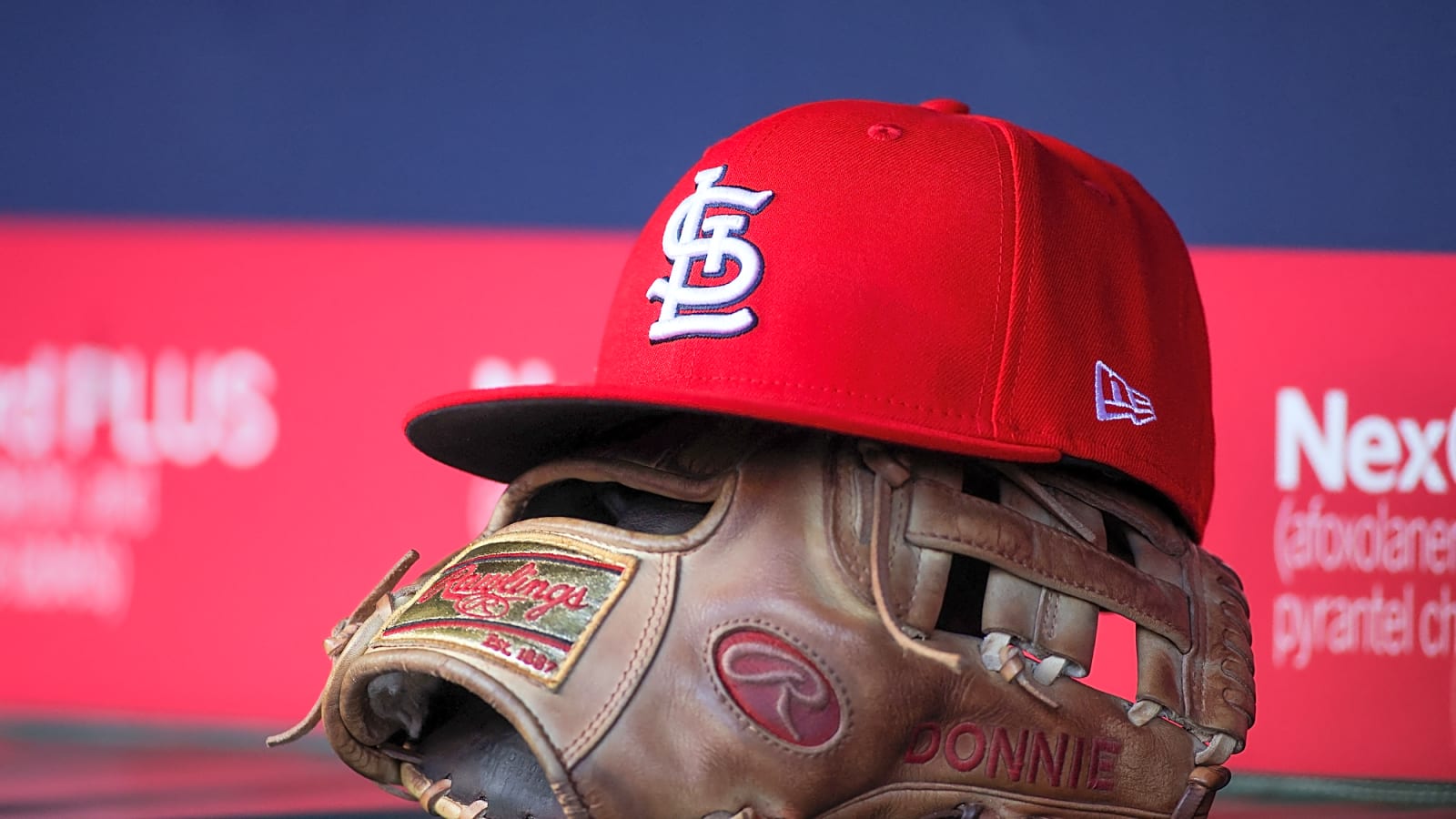
On paper and without context, one would think that the St. Louis Cardinals took a step back in 2026. St. Louis won 77 games in 2026, one fewer than the club’s total from 2025. However, after the Cardinals transformed in the winter, trading away Nolan Arenado, Willson Contreras, Brendan Donovan, and Sonny Gray, the win total is pretty good. Some youngsters are to thank for that.
The Offense
| Stat | Number | Rank |
|---|---|---|
| Runs Scored | 720 | 16th |
| Home Runs | 167 | 24th |
| OPS | .691 | 28th |
| Whiff% | 24.6% | 10th |
| Hard Hit% | 41.1% | 4th |
The Pitching
| Stat | Number | Rank |
|---|---|---|
| Starters’ ERA | 4.17 | 12th |
| Relievers’ ERA | 4.40 | 20th |
| Strikeouts | 1278 | 25th |
| Whiff% | 23.3% | 25th |
| Chase% | 28.2% | 30th |
The Good
Yes, it was somewhat of a strange offensive season for the Cardinals. St. Louis’ team offense had a lower OPS in 2026 compared to 2025. Yet, the Cardinals had more home runs and scored 31 more runs.
While the Cardinals didn’t have a high team on-base percentage (.313, 22nd in MLB), the club finished 15th in terms of that stat in the leadoff spot, and eighth in the #2 spot at .349. That would explain why the middle of the lineup did so well for the Cardinals in 2026.
At the front of the Cardinals’ run production was Alec Burleson. A year removed from an NL Silver Slugger Award and in his first full season as a primary first baseman, Burleson led all MLB players in total RBI (116). Plus, the Cardinals infielder finished with 26 home runs and 64 total extra-base hits, tying for 15th in the Majors.
The power’s always been there for Burleson, and the same can be said for Jordan Walker.
In Walker’s fourth MLB season, the former first-round pick finally had that breakout season. Walker posted career-bests in home runs (29) and extra-base hits (62), translating all of that bat speed & raw pop into results.
What helped those were mostly full seasons from Ivan Herrera and JJ Wetherholt, the two who populated the 1-2 spots in the Cardinals’ lineup for much of 2026.
Herrera’s bat, on its own, was important. The catcher/DH hit 19 home runs and 46 extra-base hits. But on top of that, he walked 76 times (10.6% BB%) and was hit a league-high 31 times. That helps.
Wetherholt, meanwhile, made the team out of camp and was phenomenal. As a rookie, Wetherholt hit 17 home runs, posted a sub-20% K%, and a 10.3% BB%. When he was a Minor Leaguer, Wetherholt showed immense polish at the plate, and pop at that plate. Cardinals saw him do the same at the big-league level.
He didn’t win a Gold Glove in 2026. But Wetherholt’s +25 Outs Above Average was tops among all infielders in baseball this past year.
The youth movement didn’t stop there. Joshua Baez, after a monstrous season in Triple-A, hit seven home runs over the final six weeks of 2026. Leo Bernal, who was promoted in September, hit five over the last month.
As for the pitching staff, there were positives, even though there were downsides in other areas.
Starting with the rotation, four Cardinals made at least 29 starts: Andre Pallante, Kyle Leahy, Matthew Liberatore, and Michael McGreevy. Dustin May, the other regular in that rotation for much of 2026, logged 109 innings before he was traded alongside JoJo Romero to Milwaukee.
Pallante, despite low strikeout numbers, has generally been a tough at-bat for hitters thanks to the uniqueness in his stuff & delivery, in part. The right-hander posted a sub-4.00 ERA and had the ninth-lowest HR/9 (.67) among starters (min. 100 IP) this season.
He was one of four pitchers for St. Louis to rank above the league median in said category, joining May, Leahy, and the sinkerballer McGreevy.
That’s a key reason why, despite so few strikeouts, the Cardinals’ starter ERA ranked in the top half of the league.
As for the bullpen, it looked virtually the same for almost the entire season. Riley O’Brien, George Soriano, Ryne Stanek, Gordon Graceffo, and Justin Bruihl each appeared in at least 60 games in 2026. Bruihl, a stingy lefty acquired in January, appeared in a team-high 73 games.
O’Brien established himself as an All-Star closer. The hard-throwing right-hander finished with 38 saves, tied for most in the National League and third overall, and 64 strikeouts over 64 innings. As for Graceffo, the former starting pitcher prospect converted nicely into relief work. A sub-3.00 ERA and a tidy .262 wOBA for a top-40 finish among relievers.
The Cardinals also saw Luis Gastelum make his first appearance in the Majors. Gastelum came into 2026 as one of the most exciting relief pitcher prospects in baseball. The right-hander, known for that unique changeup, struck out 44 over 36 and posted the best Chase% on the team.

That changeup, by the way, was one of the best in terms of inducing chase outside of the zone among all MLB pitchers.

The Bad
Matthew Liberatore had, perhaps, the toughest year out of all starters on the Cardinals’ roster.
The left-hander gave up a lot of contact — some of that hard, particularly on his breaking balls — and finished with an ERA north of 5.00, plus a .356 opponents’ wOBA that ranked among the bottom 20 in the Majors (min. 100+ IP, primary starting pitchers).

The one saving grace, in a sense, was that he had one of the higher swing-and-miss rates among Cardinals pitchers. Although it wasn’t all that high, and when you combine that with the hard contact, it’s easy to see why Liberatore didn’t have as much success compared to McGreevy or Pallante.

Another pitcher who took a big step back was Matt Svanson. Svanson was one of baseball’s best relievers in 2025. But that wasn’t the case in 2026, as Svanson allowed a lot of contact and averaged almost a walk every other inning. The latter can be tolerated as a reliever. The former, when combined with the latter? That’s a problem.
Speaking of swings-and-misses, it was another tough season for Nolan Gorman.

Again, some, and in other cases, a lot of swing-and-miss can be tolerated. Unless a whiff leads to a third strike, a hitter is still in the at-bat. But for Gorman, it’s been complicated mathematics.
Gorman’s always had that pop that made him an elite prospect many years ago. The problem is trying to put it all together. This season, Gorman didn’t do that, as he slashed .184/.272/.308 (.580 OPS) in 85 games. That production pushed Gorman down the depth chart in St. Louis.
Early Projected Lineup for 2027
- C: Leo Bernal/Pedro Pages
- 1B: Alec Burleson
- 2B: JJ Wetherholt
- 3B: Blaze Jordan/Thomas Saggese
- SS: Masyn Winn
- OF: Joshua Baez (LF), Nathan Church (CF), Jordan Walker (RF)
- DH: Ivan Herrera
- SP: Michael McGreevy, Andre Pallante, Quinn Mathews, Kyle Leahy, Hunter Dobbins, Matthew Liberatore
- RP: Riley O’Brien, Luis Gastelum, Eduardo Rivera, Gordon Graceffo, George Soriano, Justin Bruihl, Ryan Fernandez
Thanks to several youngsters establishing themselves in 2026, things in St. Louis are looking up. Now, the next stage of that retool is on the way.
Namely, all of those pitching prospects accumulated over the past two years. Those pitchers, like Liam Doyle, Tanner Franklin, and others, could wind up being true difference makers in St. Louis.
More must-reads:
- Good health was key to Yordan Alvarez's MVP season
- 'Nearly everybody' expects Tarik Skubal will join Mets, who 'are downplaying their chances of signing' the ace
- The '35 passing TD NFL seasons' quiz
Breaking News
Trending News
Customize Your Newsletter
 +



Get the latest news and rumors, customized to your favorite sports and teams. Emailed daily. Always free!
PRIVACY POLICY COOKIE POLICY CONTACT US
ABOUT YARDBARKER TERMS OF SERVICE


By using this site, you agree to our Terms of Service and Privacy Policy.
This site is for entertainment purposes only.
There is no gambling offered on this site.
Gambling Problem? Call 1-800-Gambler.