
-

-


Follow Us
-

 On Facebook
 On Flipboard

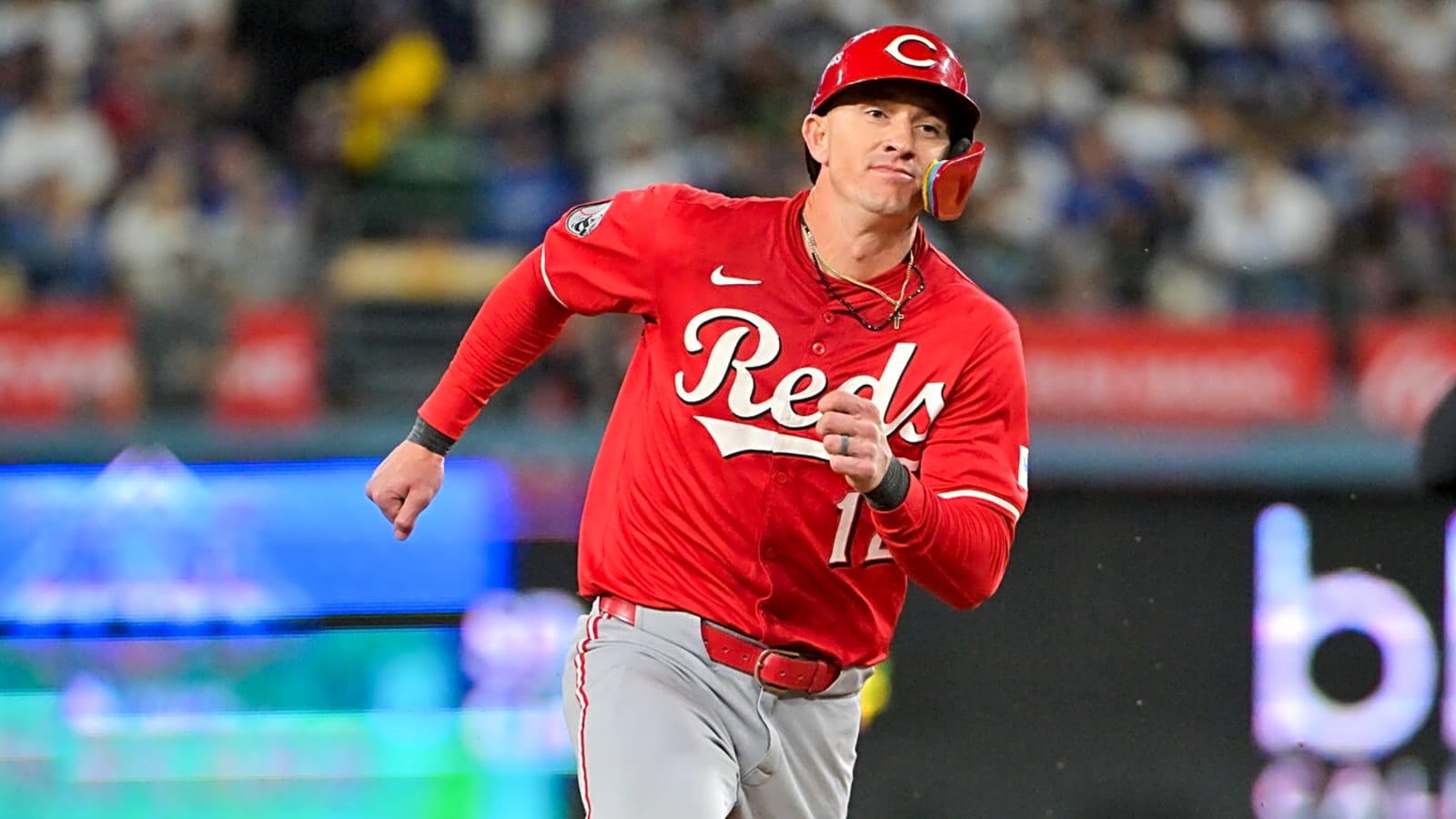
For most of the winter, the Chicago White Sox needed outfield help and roster stability, but they also needed the market to cooperate.
Saturday morning brought resolution. Austin Hays was nearing a decision on where he would sign when Jon Heyman reported that multiple teams had either made offers or expressed interest, with the White Sox among those involved.
Sixteen minutes later, that process concluded. Jesse Rogers of ESPN reported that Chicago had reached an agreement with Hays.
Had Hays landed elsewhere, his role likely would have been more platoon-oriented. His production against left-handed pitching stood out among the remaining outfield options on the free-agent market, and the timing of the reports suggested a player ready for closure after a long winter of uncertainty.
Instead, in a market where patience has repeatedly worked in Chris Getz’s favor, another free agent lingered long enough to fall into Chicago’s lap on a deal that fits with both his role and cost.
The move reflects how the White Sox have handled the offseason. They did not rush into early spending just to fill roster holes. Instead, they waited for the board to thin and for prices to settle.
When the opportunity emerged, they moved quickly, adding a veteran right-handed bat with a stable role and a track record of above-average production.
Hays does not solve the roster on his own. He does, however, give the outfield a more credible baseline than what Chicago would have carried into camp otherwise. Since trading Luis Robert Jr., the White Sox have used their flexibility deliberately, reallocating both roster space and payroll into targeted additions.
Hays is the latest position-player example of that approach as the calendar turns to February.
Contract Details
Hays agreed to a one-year deal that guarantees $5 million and includes a mutual option with a $1 million buyout. The contract also contains $375,000 in plate appearance-based incentives, pushing the total value beyond $6 million if the thresholds are reached.
Hays was seeking regular playing time, and the incentive ladder aligns with that objective while limiting long-term risk for Chicago. The base guarantee mirrors last season’s salary, reinforcing that this is a bet on his health and role rather than an escalation in the allocated commitment.
The signing remains pending a physical. Chicago’s 40-man roster is full, so a corresponding move will be required once the deal becomes official.
Market Fit
By the time Hays came into sharper focus, the outfield market had already narrowed. Early interest spanned a wide group of clubs, with Jon Heyman connecting Hays at different points to teams such as Cincinnati, Texas, Detroit, St. Louis, San Diego, Chicago, and the Cubs.
New York interest existed earlier in the offseason as well, but both the Yankees and Mets reshaped their outfields through other moves, thinning the field behind them.
With fewer clean everyday roles available, most remaining landing spots pointed toward part-time usage. Hays’ value against left-handed pitching made him appealing in those scenarios, but it also pushed him toward platoon fits that offered limited runway.
Chicago presented a different alignment. The White Sox had been surveying the veteran outfield market even before the Luis Robert Jr. trade, and the turnover from last season’s group created a clearer path to real at-bats. In that context, Hays fit less as a specialist and more as a workable regular within a still-fluid mix.
The takeaway is not that Hays resolves the outfield picture. It is that his market availability intersected with how the White Sox chose to operate. Rather than forcing a move in a thinning pool, Chicago waited until roles sharpened. When they did, the club added a player who fit within its remaining structure without dictating how the rest of the roster must fall into place.
Scouting Report
Hays entered free agency after Cincinnati declined his $12 million mutual option for 2026, opting instead for a $1 million buyout. The Reds had signed him to a one-year, $5 million deal last winter, and, when healthy, he delivered the type of rebound season they were seeking. Over 103 games, Hays hit .266/.315/.453 with 15 home runs, 64 RBIs, and a 105 wRC+.
His season was interrupted by multiple injuries, largely to his lower body, but his production held steady whenever he was on the field. The underlying contact quality supports that outcome. Hays posted a 10.4% barrel rate, and both his expected slugging percentage (xSLG) and expected weighted on-base average (xwOBA) improved from 2024.
Those gains were driven in part by added lift and more consistent damage against right-handed pitching. Thirteen of his home runs came in same-side matchups, and the broader context of his profile offers more flexibility than a strict platoon label would suggest. That versatility matters for a club still sorting through outfield roles.
Defensively, Hays brings a clear arm-strength upgrade to the corner outfield. His arm strength ranks in the 88th percentile, a meaningful asset for a White Sox team that struggled to generate consistent outfield defense. That value becomes more pronounced as the organization manages Andrew Benintendi’s workload and looks for added stability on the corners.
There is also built-in familiarity. Hays spent multiple seasons in Baltimore while current White Sox hitting director Ryan Fuller was part of that organization, including Hays’ 2023 All-Star season.
That year, Hays earned a starting nod in the outfield over then-White Sox center fielder Luis Robert Jr., and the separation has shown up in the production since. Over the past two seasons, Hays has been the steadier offensive presence, posting a 102 OPS+ compared to Robert’s 85 and staying closer to league-average output with fewer prolonged downturns.
At this price point, the fit is straightforward. Hays aligns with Chicago’s budget and short-term timeline, offering dependable corner outfield production without blocking Braden Montgomery once he enters the picture. As a mid-tier option, he checks enough boxes on both performance and cost to justify the bet.
Roster Outlook
From a roster standpoint, Hays’ presence stabilizes the corner-outfield mix while giving the White Sox more options in how they distribute playing time across the outfield and designated hitter.
Most immediately, it opens the door for Andrew Benintendi to get off his feet more often as the club manages his Achilles. A heavier share of time at designated hitter helps preserve Benintendi over the course of the season while allowing Chicago to field a more stable defensive alignment on the corners.
Hays’ arrival also clarifies Brooks Baldwin’s role. Rather than being locked into everyday right field reps, Baldwin can slide into a true utility usage pattern, filling a bench role that had remained unsettled for much of the offseason. That versatility improves overall roster function without removing Baldwin from the at-bat mix entirely.
Even with Hays in place, the outfield remains far from settled. Internally, the group is built more on opportunity, with former top prospects and reclamation bets occupying overlapping outfield roles as camp approaches.
One of the more notable in-house additions is Jarred Kelenic, whose arrival has already been explored along with the internal outfield mix in detail by James Fox at FutureSox. The former top-five prospect joins the organization on a non-roster deal, but his presence carries more weight than a typical spring invite.
Chicago believes mechanical adjustments could unlock more consistent production, and the current outfield picture gives Kelenic a real chance to force his way into the conversation.
Behind him, the competition continues to widen. Baldwin and Derek Hill are expected to factor in some capacity, while the organization added Dustin Harris, Everson Pereira, and Tristan Peters over the winter.
Pereira enters camp out of options, and his ability to cover all three outfield spots, combined with the cost paid to acquire him and the language used by Chris Getz, suggests more than a depth-only role.
Peters and Harris provide additional left-handed depth, while Hill profiles as a defensive safety net capable of shuttling between Chicago and Charlotte. None of the options are without questions, which underscores how fluid the competition remains beyond the top of the depth chart.
Longer-term variables still shape the picture. Braden Montgomery looms as a potential midseason answer once his development timeline allows, and Benintendi’s role remains flexible. Taken together, the outfield remains a moving puzzle, with Hays adding stability but not finality.
A Busy Turn into February for the White Sox
Viewed through that lens, the Hays signing fits the offseason need cleanly.
The White Sox entered the winter encouraged by a lineup that showed real second-half growth, but still aware of where the margins fell short. After the All-Star break, Chicago ranked eighth in home runs, tenth in runs scored, and tied for 12th in isolated power, finishing with a 102 wRC+ as the offense began to stabilize around its young core.
That stretch raised the floor. It also clarified the gap between late-season improvement and sustaining league-average production across a full season.
Hays does not overhaul the lineup, but he addresses one of those pressure points directly. His right-handed power and track record against left-handed pitching add a layer of reliability to a group still leaning heavily on internal growth. Rather than asking younger hitters to absorb every variable, the White Sox used this portion of the calendar to insert a known offensive contributor into a role that had remained unsettled.
There is also a subtle contrast to last winter. A year ago, Austin Slater was viewed internally as a “top target” in this same corner-outfield lane, a reflection of both a thinner market and where the organization sat in its timeline.
This time, the White Sox landed the cleaner version of that profile. Same name, similar role, but a more complete hitter — at a more measured price — with a clearer plan attached. That shift says as much about how Chicago is operating now as it does about the player himself.
As February arrives and spring training comes into view, the broader theme is momentum. Since moving on from Luis Robert Jr., the White Sox have actively reallocated both roster space and payroll, adding Luisangel Acuña in that deal while reinforcing the pitching staff with Seranthony Domínguez for late innings and Jordan Hicks and David Sandlin for rotation and bullpen depth.
Hays represents the latest position-player addition in that sequence, joining Munetaka Murakami as part of a lineup reshaped through targeted, short-term bets rather than splashy commitments.
The offseason is no longer theoretical. With pitchers and catchers set to report in the coming days, roles are beginning to take shape, and evaluations are tightening. There is still room to maneuver, whether that means using the remaining flexibility from the Robert trade to pursue a reliable, innings-eating starter in the mold of Zack Littell, or adding an opposite-handed corner outfield complement such as Michael Conforto or a familiar presence like Mike Tauchman.
That flexibility also leaves room for internal answers.
The fifth rotation spot and final outfield role can remain fluid early. The pitching side could be handled through swingman or opener usage, and the outfield can be supplemented by a stopgap bat holding space until prospects like Tanner McDougal and Braden Montgomery are ready to factor in. The approach reinforces how intentionally adjustable the roster remains entering the season.
Hays may not be the final answer, but he is a more optimistic one than what framed last spring.
More must-reads:
- Dodgers clinch fifth straight NL West title, move to top of all-time list
- Dodgers provide encouraging Shohei Ohtani injury update
- The 'Active 150-yard NFL rushers' quiz
Breaking News
Trending News






Customize Your Newsletter
 +
+




Get the latest news and rumors, customized to your favorite sports and teams. Emailed daily. Always free!
PRIVACY POLICY COOKIE POLICY CONTACT US
ABOUT YARDBARKER TERMS OF SERVICE


By using this site, you agree to our Terms of Service and Privacy Policy.
This site is for entertainment purposes only.
There is no gambling offered on this site.
Gambling Problem? Call 1-800-Gambler.
