
-

-


Follow Us
-

 On Facebook
 On Flipboard


It’s getting less noisy in here.
Around Week 5 of the fantasy baseball season is when the early season noise begins to morph into useful and reliable data. When a player has a hot week, for example, it usually signals the underlying stats we’ve been seeing result in improved performance. On the opposite side, continued bad data acts as a red-flag for the next portion of the season.
As we continually say, the managers who separate skill growth from stat-line luck are the ones who gain the edge heading into May. This is the month in which your fantasy team will tell you who they really are. By the Memorial Day weekend, your team’s identity will be established and the work that is needed will be clear.
Let’s dive into some winners and losers from Week 5 who can stabilize or harm your team this month.
Week 5 Winners: Players Gaining Value Fast

Some early-season breakouts are little more than a hot stretch dressed up as a trend, but the best Week 5 winners give you something sturdier than surface stats. They show improved quality of contact, better plate discipline, or a skills bump that the market has not fully priced in yet.
Carlos Cortes (OF, A’s)
Cortes knocked a couple of HR this week and hit .500 overall. Small sample size, but we’ve been eyeing him for much of April and now belongs in the Week 5 waiver-wire conversation. On the season, he’s hitting .387 with 4 HR, 13 RBI and 10 runs. Most impressively, over the season his K rate is only 8.3 percent. A hitter with a nice gauge of the strike zone who is displaying good power should always be on your dashboard.
Josh Jung (3B, Rangers)
Josh Jung’s Week 5 momentum lines up with the type of roster growth fantasy managers want to chase in early May. He is not only producing, but he has entered the broader pickup and buy-low discussion, which usually means the market is starting to recognize the change in value. With 4 HR and 19 RBI on the season, he might not be available in your league, but after a week of 2 HR, 7 RBI while hitting .407 it is time to give him a home on your roster.
Brad Keller (SP, Pirates)
Brad Keller is a sneaky addition here, especially in deeper formats where pitching value can come from innings, ratios, and role stability as much as loud strikeout totals. He is the kind of Week 5 riser who can matter more in context than he does on a casual box-score scan. In 2 of his last 3 starts, he lasted 7 innings, is striking out about one hitter per inning, and has continued a season-long stretch that so far is better across the board. Like many mid-career pitchers, Keller adopted a lower arm slot this season and it seems to be reviving his success so far.
Week 5 Losers: Players Already Showing Regression Signs
The loser side is where advanced fantasy managers can create real value, because inflated surface stats often hide the warning lights. If a player’s Week 5 production is being driven by unsustainable BABIP luck, shaky command, or a skills dip underneath the results, that is exactly where the market correction usually starts.
Nate Eovaldi (SP, Rangers)
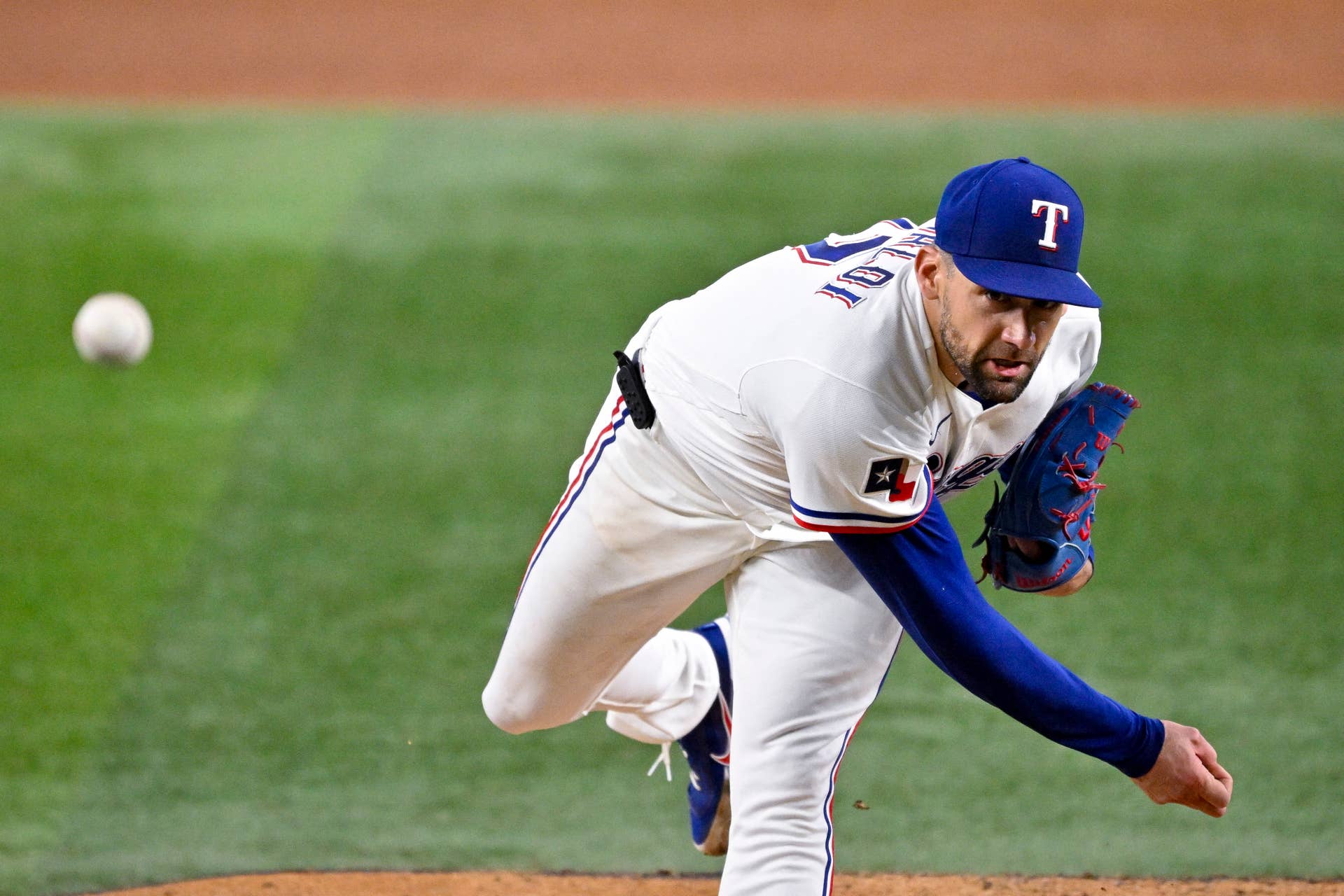
Eovaldi is a cautionary example in which the underlying performance has not always matched the headline results. When the ERA looks better than the skill indicators, it is usually time to think in terms of sell-high or at least sharp monitoring rather than assuming the run will continue. Eovaldi did shut out the Yankees over 7 innings this week, but don’t be fooled. Over the last 3 starts including the Yankee start, he owns a 4.00 ERA and just 13 strikeouts in 18 innings. Most of his pitches have below average stuff but he locates the ball well, which make a pitcher subject to lucky spells. At age 36, though, I see more of those lucky spells being of the bad luck variety.
Bryan Woo (SP, Mariners)
Woo threw two clunkers this week and over the last 3 starts owns an 8.44 ERA with modest-at-best K totals. His stuff and location is still well above average, though hitters are making more contact than they did a year ago at both pitches in and out of the zone. His velocity is holding steady so his dip to 6.37 K/9 (9.55 last year) looks more like an anomaly than an injury. Be a bit wary, but I would keep rolling Woo out for his starts unless he gets clocked one or two more times in weeks 6 and 7.
Cole Ragans (SP, Royals)
Another starter came up short this week as Ragans gave up 4 runs in 5 innings versus the Mariners. Just two starts before that he allowed 7 earned runs. The story of his season is he’s using very good stuff to generate significant strikeouts, but very poor location to drive his BB tendencies off the charts. We noticed a higher arm angle this season, which goes against the trend, and perhaps need to be studied more. His fastball velocity is down about 0.5 mph over last season but he is stranding more runners on base. He might need to start pitching to more contact and toying with his arm angle a bit to find the right combo, because fantasy managers won’t be patient for long.
Actionable Week 5 Takeaways

For early May, the best move is to treat Week 5 as a filter, not a verdict. Buy or hold the players whose skills growth looks real, then sell or fade the ones whose production is running ahead of the underlying profile.
If you are building a trade market, use names like Cortes or Jung as the type of risers worth exploring, while treating Eovaldi-style cases as the sort of arm you can move before the numbers cool. The sharper the league, the faster the correction, which is why this is the right time to act rather than wait for the standings to force your hand.
The practical takeaway is simple: Week 5 already gives you enough information to stop reacting like it is April and start managing like it is May. The fantasy managers who buy the right skills and sell the wrong stats are the ones who usually win that next trade, not just the next week.
Questions About Winners and Losers, Answered
Who were the biggest fantasy baseball winners in Week 5 2026?
Players who posted elite Statcast metrics (hard-hit rate, barrel percentage, velocity gains) that far exceeded their surface-level production.
Which players were the biggest losers after Week 5?
Those whose strong Week 5 numbers were driven by unsustainable BABIP luck or poor command, setting up regression in May.
How should I use the Week 5 winners & losers report for roster moves?
Target the winners as buy-low or hold candidates and consider selling high on the losers before their regression becomes obvious.
Are Week 5 stats reliable for the rest of the 2026 fantasy season?
Surface stats alone are noisy, but when paired with fast-stabilizing Statcast metrics, Week 5 performance provides strong directional signals.
When does the fantasy market typically correct Week 5 winners and losers?
Most repricing happens by mid-May once sample sizes grow and advanced metrics become more widely accepted.
Should I make trades based solely on Week 5 performance?
No — always combine surface results with underlying Statcast data and rest-of-season projections.
More must-reads:
- Tigers star Tarik Skubal to undergo surgery on left elbow
- On deck: Shohei Ohtani's aims for Cy Young, Braves-Dodgers, Jose Soriano an unknown ace
- The 'Active 30-point playoff games' quiz
Breaking News
Trending News





Customize Your Newsletter
 +
+




Get the latest news and rumors, customized to your favorite sports and teams. Emailed daily. Always free!
PRIVACY POLICY COOKIE POLICY CONTACT US
ABOUT YARDBARKER TERMS OF SERVICE


By using this site, you agree to our Terms of Service and Privacy Policy.
This site is for entertainment purposes only.
There is no gambling offered on this site.
Gambling Problem? Call 1-800-Gambler.
