
-

-


Follow Us
-

 On Facebook
 On Flipboard

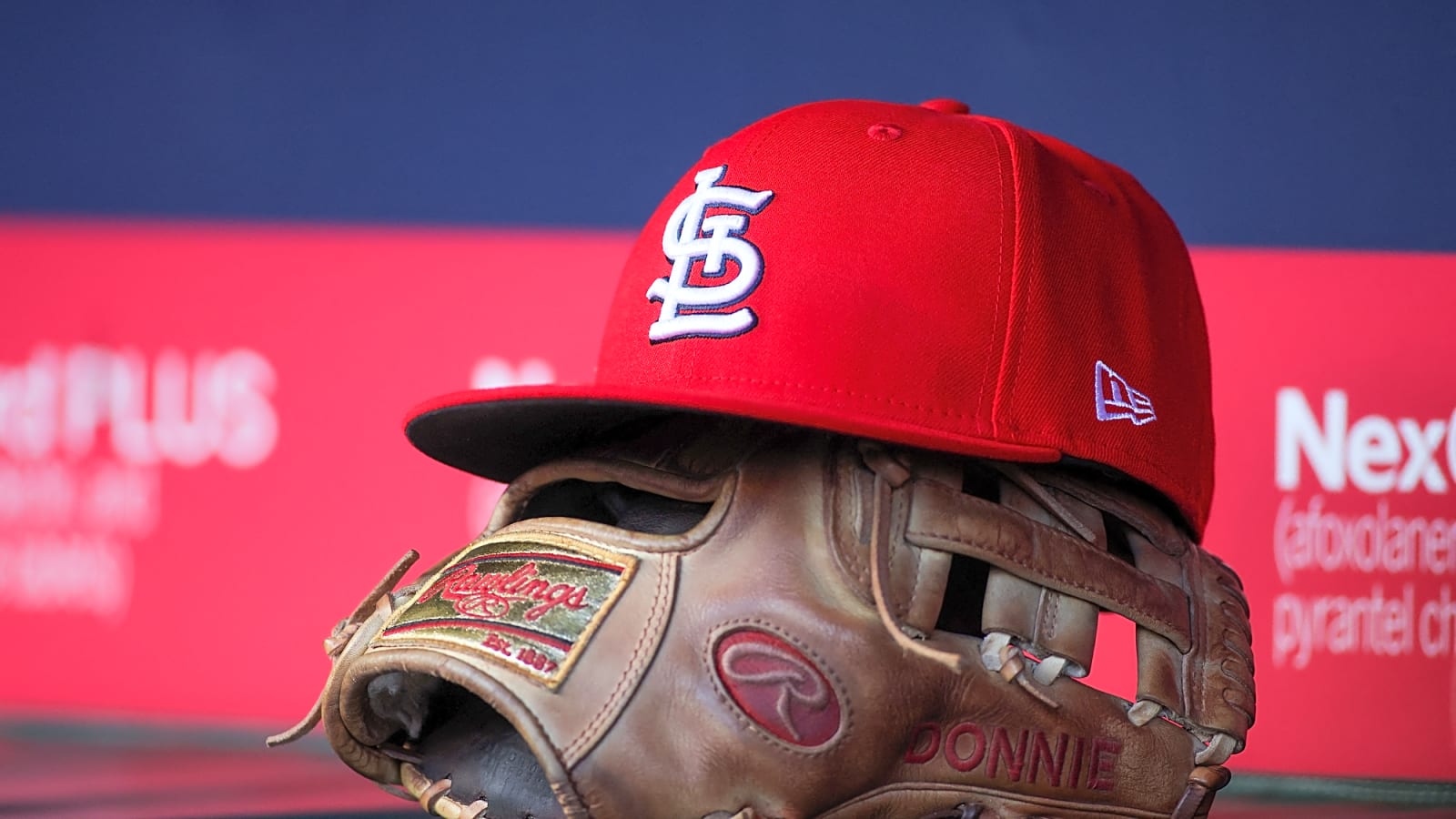
Welcome back to the third and final part of my analysis of the St. Louis Cardinals’ 2026 MLB Draft! Over the course of the past few weeks, I’ve covered the Cardinals’ Day 1 draft picks, along with a deep dive into their early Day 2 selections.
Today, I’ll be covering the team’s selections in rounds 11 through 20, as there is plenty of intrigue among this group of players.
324. Jacob Haley, RHP | University of South Alabama
The former Jaguar is a nifty find in the middle rounds, showcasing a rare three-pitch mix with average-or-better offerings and solid command at this point in the draft.
His heater sits 94-95 mph, reaches 97, and produces roughly 18 inches of induced vertical break from a 5.7-foot release point.
Haley pairs it with a low-80s curveball that features around 10 inches of drop and a mid-80s gyro slider. The two pitches give him a solid pair of breaking balls and a strong midpoint in his pitch mix, complementing his premium velocity and command.
While he doesn’t quite fit the fastball trait threshold from last year, it’s still a high-rising heater with velocity and solid strike-throwing ability. The bonus here is the two power breaking balls and an overall 8.1 BB%, so even without a refined offspeed pitch, it’s easy to buy into the mold.
354. Drew Horn, RHP | Middle Tennessee State University
Horn is one of my favorite selections from the weekend due to his elite fastball and strike-throwing ability.
His heater sits 93-94 mph, touches 98, and produces around 19 inches of induced vertical break from a 5.9-foot release point. He also throws a mid-80s slutter, a high-70s sweeper, and a mid-80s changeup.
This arsenal immediately gives him the ability to handle a starter’s workload, given his ability to change speeds and attack multiple planes before ever making his debut with the organization.
Pitch mix aside, when you consider his 8.4 BB%, it’s clear why he’s one of the higher-value selections at this point in the draft.
384. Matthew Thomas, OF | California State University, Northridge
Equipped with thunderous pull-side power, Matthew Thomas represented one of the best available sluggers in the 13th round.
The Cal State Northridge outfielder posted a 172 wRC+, a 109 mph EV90, and a 113 mph maximum exit velocity. He already does a good job optimizing his power toward the shorter field, but the risk comes with his approach, as shown by his 78.8% zone-contact rate and 27.9% chase rate.
Thomas is also not a standout athlete and likely ends up near the bottom of the defensive spectrum. He primarily played right field during his time with the Matadors.
Still, Thomas is only 20 years old, and projectable power is always worth taking a chance on. Even a modest improvement in his swing decisions could unlock a much more dangerous hitter.
414. Jaden Alba, RHP | Arizona State University
Right up there with Drew Horn as one of my favorite Day 2 picks, Jaden Alba has the ingredients of a starter’s arsenal with a three-pitch mix, but he struggles to limit walks.
He cuts his fastball at four inches of horizontal movement, but it still sits 93-94 mph and touches 96 with 16 inches of vertical ride. He pairs it with a low-to-mid-80s slider, a mid-70s curveball, and a mid-80s changeup that kills spin down to around 1,000 RPMs. The latter produces only about three inches of vertical movement, and while it’s an intriguing offspeed offering from a stuff standpoint, he only throws it for strikes 44% of the time.
There is enough here to continue developing him as a starter, but his command will need to take a major step forward.
444. Brian Garmon II, RHP | University of South Alabama
St. Louis’s scouts must enjoy the Mobile, AL area, as they selected two pitchers from Southern Alabama in the same draft.
Garmon II’s heater sits 94-95 mph, touches 97, and comes from a 5.5-foot release point. He throws a high percentage of strikes and shows strong command.
The rest of the arsenal is less convincing. His mid-80s cutter and high-80s changeup have good shapes, but neither is consistently thrown for strikes, and he lacks a true breaking ball. The fastball and overall strike-throwing ability provide a sturdy enough foundation to continue experimenting.
Late-round pitchers with command and solid velocity can move quickly if one secondary offering clicks (see Brandt Thompson), so it’s worth taking a flier on BGII.
474. Dallis Moran, RHP | Stetson University
Another one of my favorite selections, Dallis Moran is another demon whose fastball drives his profile. It’s one of the biggest reasons why he fanned 32.3% of hitters for the Hatters this season.
It sits 92-93 mph, touches 95, and produces about 18 inches of induced vertical break. He complements it with a low-to-mid-80s slider, a deep mid-70s curveball, and a low-to-mid-80s changeup with strong vertical separation off the fastball.
Strike-throwing is a major issue for him, as shown by his 13.5 BB%. Even so, the strikeout rate and pair of breaking balls make him an interesting find in the 16th round.
504. Jacob Johnson, 3B | Saint Mary’s College of California
I love it when teams take chances on outlier data points at this stage in the draft. Jacob Johnson represents exactly that, with one of the best AirPull capabilities in Division I this season.
The Saint Mary’s third baseman posted a 159 wRC+, an 84.6% zone-contact rate, and a 24% chase rate. He also recorded a 107 mph EV90 and a 112 mph maximum exit velocity.
As mentioned, the standout number was his 71.4% line-drive-plus-pull rate, which ranked in the 99.3rd percentile among Division I hitters.
It’s a solid all-around profile this late in the draft: enough contact, reasonable swing decisions, and well-optimized power. There is a lot to like here, in my opinion, and it reminds me a little of the Deniel Ortiz selection St. Louis made a couple of years ago.
534. Gabe Camacho, OF | University of California, San Diego
Mobile wasn’t the only city Cardinals’ scouts flocked to this spring; they also made their way to San Diego. They loved what they saw from Jayden Lobliner, and now they’ve poached another Triton with the selection of Gabe Camacho.
The UC San Diego outfielder posted a 150 wRC+ with an 88.6% zone-contact rate and a 23.6% chase rate. Even if he doesn’t control the strike zone particularly well, he does a good job putting the ball in play.
Camacho recorded a 104 mph EV90 and a 107 mph maximum exit velocity, but his 49.4% line-drive-plus-pull rate was not especially loud.
Camacho failed to build on his sophomore year, when he posted a 150 wRC+. He replicated that mark in 2026, but had he taken another step forward, it’s fair to wonder if he would’ve been selected much higher.
His path to success will depend on maintaining his bat-to-ball skills while adding enough game power and improving his swing decisions. For now, that contact foundation gives him something useful to build from.
564. Clayton Freshcorn, RHP | Texas A&M University
*Note: Clayton Freshcorn has stated he is returning to Texas A&M for the 2027 season*
The (not-so) former Aggie had early-round buzz heading into the draft process, and even if he’s heading back to College Station, the profile was more than worth taking a flier on to see if they could sway him away from his impending NIL deal.
Freshcorn’s fastball sits 93-94 mph, touches 96, and comes from a low 5.3-foot release point. He also features a cutter, a low-to-mid-80s sweeper with 13 inches of gloveside movement, and a changeup with strong vertical separation from his heater.
His biggest selling point is his command; Freshcorn walked only 2.7% of hitters across 54 innings.
The arsenal already looks like a starter’s mix, and the elite strike-throwing ability makes him an obvious candidate to stretch out as a starter.
594. Kollin Ritchie, OF | Oklahoma State University
*Note: Kollin Ritchie has stated he is returning to Oklahoma State for the 2027 season*
Like Freshcorn, Kollin Ritchie has stated he’s returning to school, but he was another player who slotted in as a fringe top-100 prospect in the draft.
The Cowboy center fielder posted a 163 wRC+, a 108 mph EV90, and a 113 mph maximum exit velocity. His 70.7% line-drive-plus-pull rate ranked in the 99th percentile among Division I hitters, making him another outlier AirPull hitter.
Ritchie chased on 21.2% of pitches, showing respectable swing decisions. The main concern is his 81.8% zone-contact rate, though his whiff rate improved drastically throughout the season.
He is a solid athlete and defender, and while he patrolled center field this past season, he likely fits better in a corner long-term.
Reactions
Day 2, Part 2 Grade: B/B+
As much as I loved the Horn, Alba, and Moran selections (since they fit my filter), the chosen pair of Jaguars is no slouch in its own right. They both throw hard with flatter approach angles, but they are less proven and threw fewer than 200 fastballs this past season.
Matthew Thomas is technically in his age-20 season, and even if he’s not an up-the-middle player, there’s plenty of pop to make the profile exciting in the 13th round. Jacob Johnson is my favorite hitter selected (who will sign) in this portion of the draft, simply because he’s a targeted outlier with his AirPull%.
Gabe Camacho was the only real headscratcher of this portion. He’s also in his age-20 season, but there’s no true standout skill here. The power, contact, and chase rates are all respectable, but there isn’t a clear carrying tool to dream on quite yet.
Freshcorn and Ritchie were never expected to sign, being selected in the part of the draft where teams usually make a Hail Mary attempt to buy a player away from a heavy commitment to return to school. Chalk this one up as a W for the colleges and their booster programs.
Overall, I came away encouraged by this portion of the class. The Cardinals, by and large, consistently targeted players with either a standout trait or a clear developmental path, which is exactly what should happen in the later rounds.
More must-reads:
- Mike Trout's response to Angels fire sale raises serious questions about his mentality
- Caleb Durbin plays hero for Red Sox in 13-inning thriller
- The 'Last five-hit game by MLB team' quiz
Breaking News
Trending News


Customize Your Newsletter
 +
+




Get the latest news and rumors, customized to your favorite sports and teams. Emailed daily. Always free!
PRIVACY POLICY COOKIE POLICY CONTACT US
ABOUT YARDBARKER TERMS OF SERVICE


By using this site, you agree to our Terms of Service and Privacy Policy.
This site is for entertainment purposes only.
There is no gambling offered on this site.
Gambling Problem? Call 1-800-Gambler.
