
-

-


Follow Us
-

 On Facebook
 On Flipboard

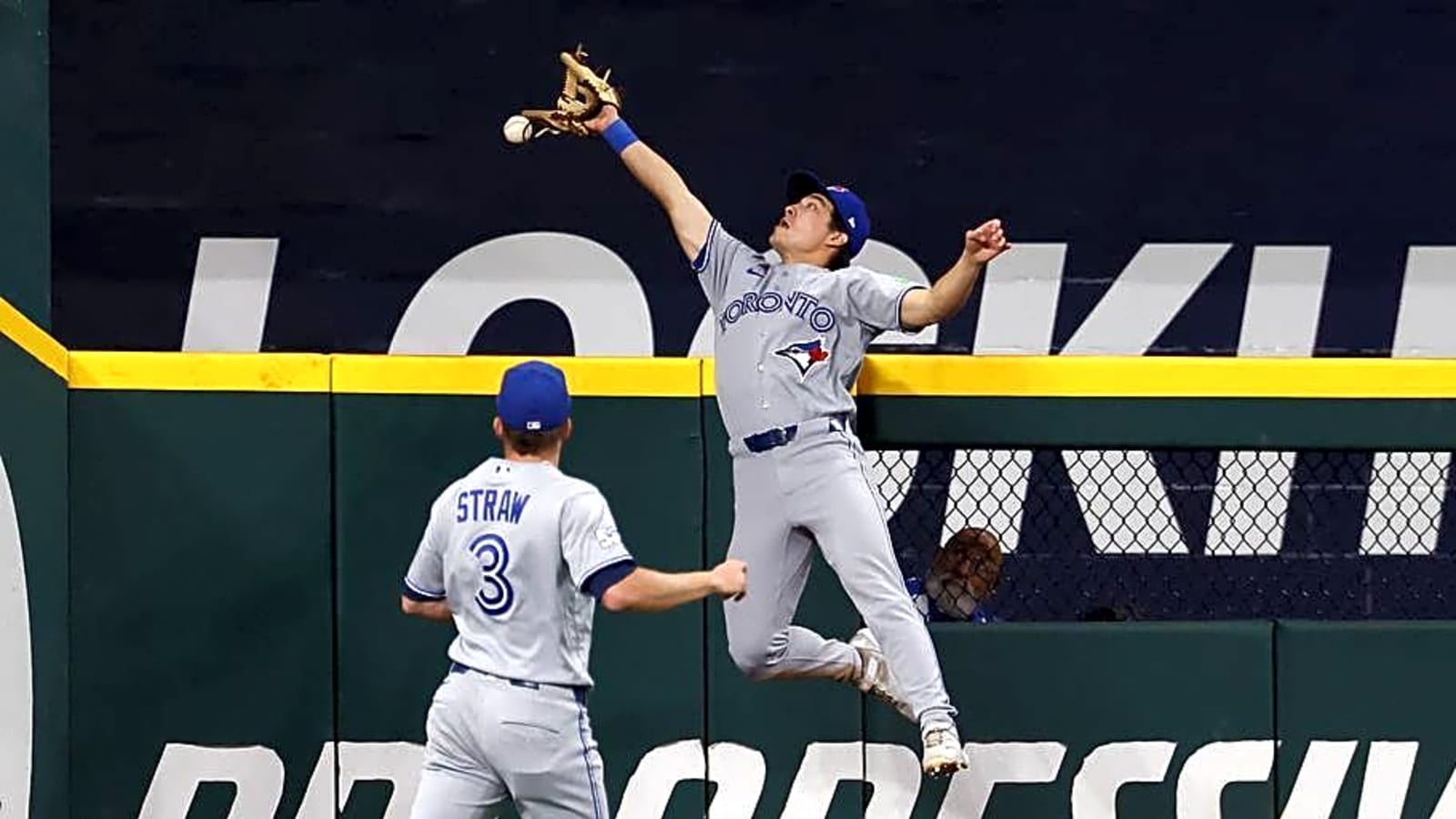
Brett Bateman’s ability and success became one of the most interesting stories of a disappointing season for the Toronto Blue Jays and, at the same time, part of the best they can take advantage of to focus on the off-season.
Acquired from the Cubs in the trade that sent Kevin Gausman to Chicago, the Blue Jays seemed like absolute losers after also giving up their starting center fielder, Daulton Varsho, who was traded to the Houston Astros. That feeling about the trade was reasonable, since, although Bateman brought a good pedigree as a contact hitter and had the ability to run the bases and play defense in the outfield, he had not yet made his Major League debut.
And that is how his career began, without high expectations, but Bateman took it upon himself in a matter of weeks to show all the ways he could impact Toronto’s lineup.
Since his debut on Aug. 7, Bateman hit .320/.394/.413 with a 133 wRC+ and 1.7 fWAR in 172 plate appearances, numbers that, combined with his defense and speed, quickly opened a path for him in a Blue Jays lineup in need of getting runners on base and producing runs.
Starting Aug. 14, he was the leadoff hitter in every game he played and, during that stretch, Toronto went 17-15. Bateman reached base 57 times in those 32 games, led the team’s outfielders with 1.7 fWAR, a .400 BABIP and a 133 wRC+, offensive consistency that made him the biggest revelation for the Blue Jays in this second half of the season.
That great offensive stretch from Bateman was interrupted after he injured his right hip in a game against the Baltimore Orioles on Sept. 21 while making a sliding catch in center field. Although the tests ruled out structural damage and only showed inflammation, Bateman could not continue at a time when Toronto was still hoping to maintain its chances of reaching the playoffs.
Bad news for the #Toronto #BlueJays: Brett Bateman had to leave today’s game against the Orioles after suffering an apparent right knee injury while making a spectacular catch in center field.
— Yirsandy Rodríguez (@Yirsandy) September 22, 2026
Bateman left the field with help from manager John Schneider and was replaced by Myles… pic.twitter.com/tqnwgXmRau
Now, the big question here is how much Bateman’s performance could change the Blue Jays’ approach heading into the offseason. Will they consider their problems in center field solved, move Bateman or be cautious with their projections for a full season as a starter?
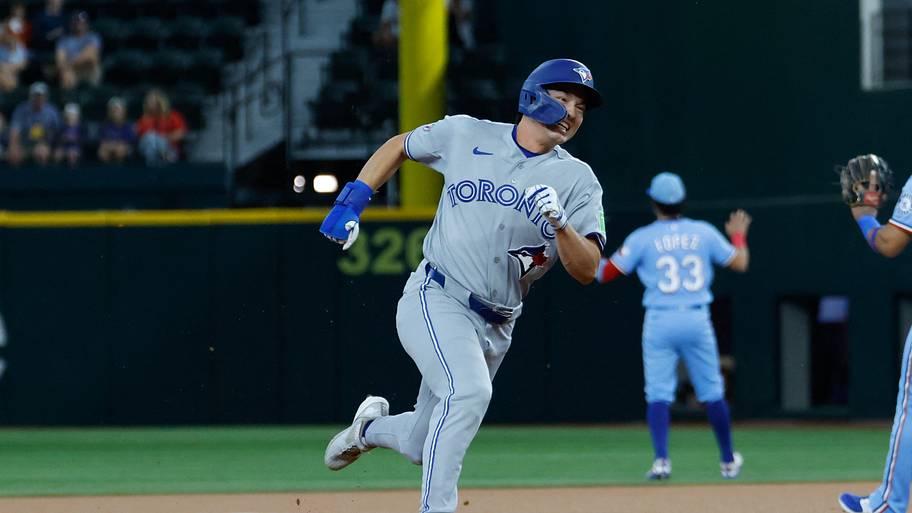
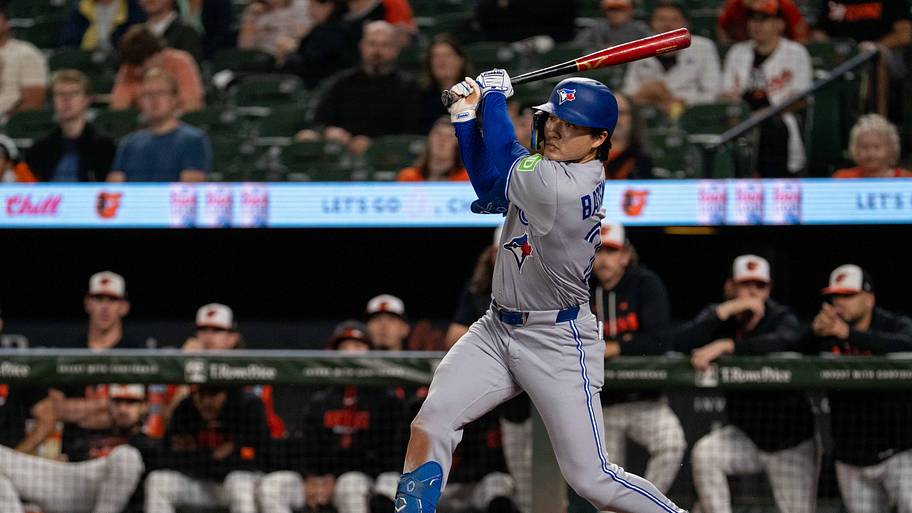
All of the questions make some sense, largely because Toronto should not measure its future by a sample of 172 plate appearances and only 38 games. Now, although some of the expected statistics do not favor Bateman when it comes to expecting his numbers to hold up over the long term, there is no doubt that his game fits the philosophy of these Blue Jays.
Toronto’s offense has stood out—even with its injuries this season—for its consistency in contact and, heading into 2027, if there is something they need, it is to find better consistency in that sense and add power.
It is never too early to discuss all of this, and I don’t think Bateman can sustain that offensive line when the league has a better plan against him and more plate appearances accumulate, especially as Toronto’s leadoff hitter. But I also have no doubts that he has the skills to hit and survive strikeouts, in addition to contributing with his speed and defense.
Bateman Changes the Value of the Pieces Toronto Already Has
If we talk about what Toronto has, and not what it should look for, Bateman also fits into the equation. Baseball Savant’s defensive metrics reveal it. Among all of Toronto’s outfielders, I would say Myles Straw has been the most flexible and balanced outfielder when it comes to doing his job: his defense is elite, he contributes on the basepaths and possesses a great defensive ability to record outs. Straw has provided value as a starter and a bench player without losing the impact of his abilities.
Lukes has provided more defensive value, leading the group of outfielders with 2.1 fWAR and +8 FRV (Fielding Run Value), and his bat maintained the usual contact that it tends to produce. In contrast, Bateman brings a combination that, before August, the Blue Jays did not have among their best options for center field following Varsho’s departure: above-average offensive production without sacrificing defensive value in the lineup. And in that sense, I don’t think we need to project the 133 wRC+ mark over a full season, because it is clear that Bateman has the tools to provide a different profile from Straw and Lukes.
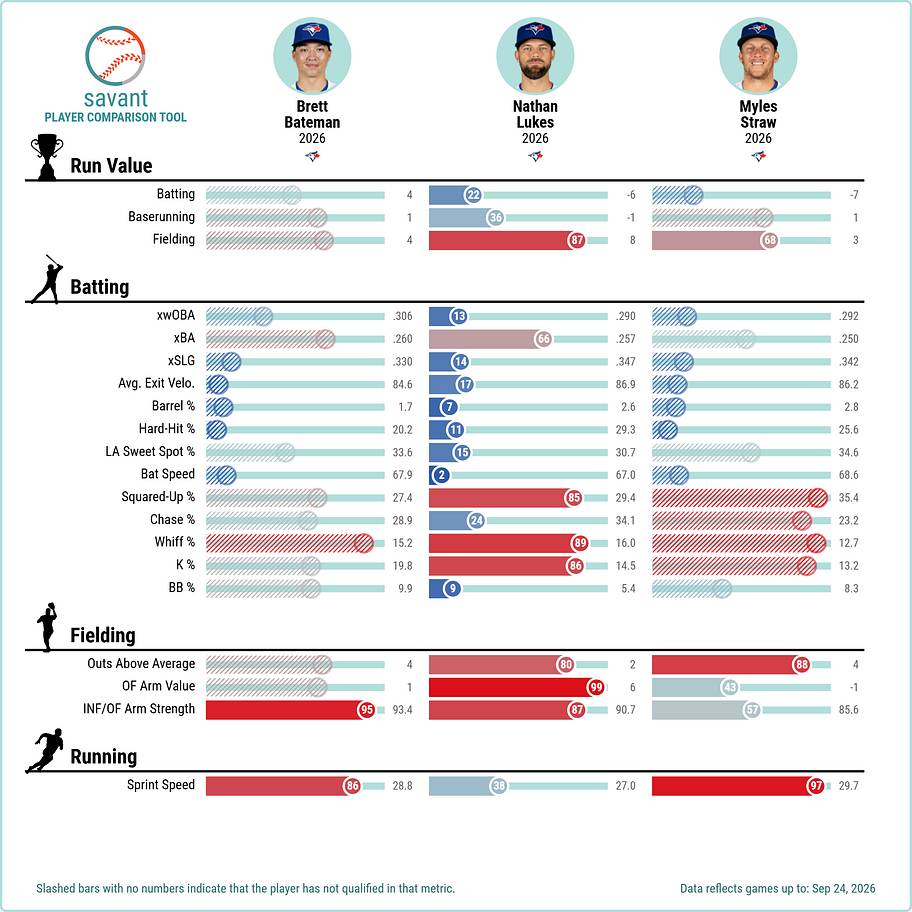
That could be much more important than deciding who will be the center fielder in the future. If Bateman is considered a real piece for 2027, then Toronto could try to complete its outfield with the return of Addison Barger and the presence of Anthony Santander, who missed the entire 2026 season.
So that could be Bateman’s role, becoming the starting center fielder, while Straw and Lukes would continue contributing with their respective potential.
If George Springer does not return to the team, Santander should be the designated hitter, while Lukes moves to left field and Barger returns to right field. Bateman would complete the defensive alignment in center field and as the leadoff hitter, which could offer great expectations for the Blue Jays, especially if each of them stays healthy.
More must-reads:
- Red Sox's Willson Contreras gives concerning injury update ahead of postseason
- Cam Schlittler caps impressive year by making Yankees history
- The 'Most lefty-homers in a season' quiz
Breaking News
Trending News





Customize Your Newsletter
 +
+




Get the latest news and rumors, customized to your favorite sports and teams. Emailed daily. Always free!
PRIVACY POLICY COOKIE POLICY CONTACT US
ABOUT YARDBARKER TERMS OF SERVICE


By using this site, you agree to our Terms of Service and Privacy Policy.
This site is for entertainment purposes only.
There is no gambling offered on this site.
Gambling Problem? Call 1-800-Gambler.
