
-


Follow Us

 On Facebook
 On Flipboard
 On Twitter
BLOOMINGTON, Ind. —
College football loves a good Cinderella story. It loves them so much, in fact, that it often refuses to let them grow up.
Indiana, under Curt Cignetti, has officially outgrown the label.
What began as an improbable rise has now evolved into something far more uncomfortable for the sport’s traditional powers: a program built to win — and built to last. No one saw Indiana’s breakthrough season coming. Fewer still saw a legitimate national title run following it. Yet here the Hoosiers are, on the brink of a national championship appearance in just Cignetti’s second season in Bloomington.
At some point, this stops being a feel-good story and starts being a case study in how college football is changing.
Winning Without the Stars
Recruiting rankings still dominate the sport’s conversation, and for good reason. Elite players tend to win elite games. But Cignetti has spent the past two seasons poking holes in that assumption with ruthless efficiency.
Indiana’s roster features a blue-chip ratio — the percentage of four- and five-star recruits on the roster — hovering around 8%, according to industry recruiting metrics tracked by 247Sports and referenced across ESPN platforms. That number places Indiana closer to the middle of the Big Ten than anywhere near its blueblood peers.
Ohio State and Alabama? Both sit north of 70%. Oregon checks in around 67%.
Indiana beat all of them.
That isn’t variance. That isn’t luck. That’s coaching.
Cignetti didn’t just survive a gauntlet of rosters stocked with NFL bodies; he controlled games against them. He did it with older players, yes — transfers, veterans, and guys taking advantage of COVID eligibility — but also with development, cohesion and clarity of purpose.
Old does not mean temporary. Old means ready.
The Myth of “Doing It With Someone Else’s Players”
The loudest criticism follows a familiar script: many of Indiana’s contributors arrived from James Madison or other programs, and many will soon move on. Therefore, this run can’t be sustained.
That argument misses the point entirely.
Cignetti’s success has never been about where players came from. It’s about what he turns them into. His track record — at every stop — reflects the same formula: identify undervalued talent, develop it relentlessly, and deploy it with precision.
Indiana’s defense, ranked inside the top 10 nationally in several efficiency metrics, is the clearest example. Despite that sub-10% blue-chip ratio, the Hoosiers consistently limit explosive plays, win on early downs and control the line of scrimmage. That doesn’t happen by accident, and it certainly doesn’t happen without elite coaching.
Stars matter. Systems matter more.
“I win, Google me.” A phrase many doubted at the time, has now become immortal in Bloomington.
Yes, the Heisman Helps — But Context Matters
Indiana has the Heisman Trophy winner. That sentence alone would have sounded absurd two years ago.
But even that individual brilliance fits the larger theme. The quarterback’s rise wasn’t the result of a plug-and-play five-star landing in Bloomington. It was the product of structure, confidence and offensive clarity — hallmarks of Cignetti’s approach.
According to analytics, Indiana ranks among the nation’s leaders in offensive efficiency, red-zone execution and situational football. Those are coaching stats. Those are preparation stats. Those are culture stats.
Cignetti didn’t stumble into a Heisman winner. He built the environment that allowed one to exist.
Redefining the Blueprint
There are plenty of good coaches in college football. There are several with more total wins. None have done more with less — not this quickly, and not at this level.
This isn’t a Sun Belt story anymore. This isn’t a cute disruption. Indiana didn’t sneak up on anyone this season. It walked through the front door, stared down rosters full of five-stars and dared them to blink.
They did.
Cignetti has shown that elite football can be built with alignment instead of accumulation, with development instead of hype, and with belief instead of branding. In an era dominated by NIL valuations and recruiting graphics, Indiana is winning with buy-in.
That’s sustainable.
Many people like to claim Kirby Smart invented football in Athens, Georgia with his recruiting-based approach, built on development and relationships. If there’s any current coach who truly invented the game, it’s Cignetti.
He may not have founded the sport, which started in 1869, but he sure is reinventing how to win at it, in this new age of NIL and the transfer portal.
Curt Cignetti
— Greg Berge (@GregBerge) January 1, 2026
"Not affected by success.
Not affected by failure.
On to the next play.
Never satisfied.
Playing to a standard, not the circumstances of the game…
First, you form your habits. Then your habits form you."
Elite leadership. Elite coaching.AFCA pic.twitter.com/Y7wjfZ4sYK

Respect the Helmet
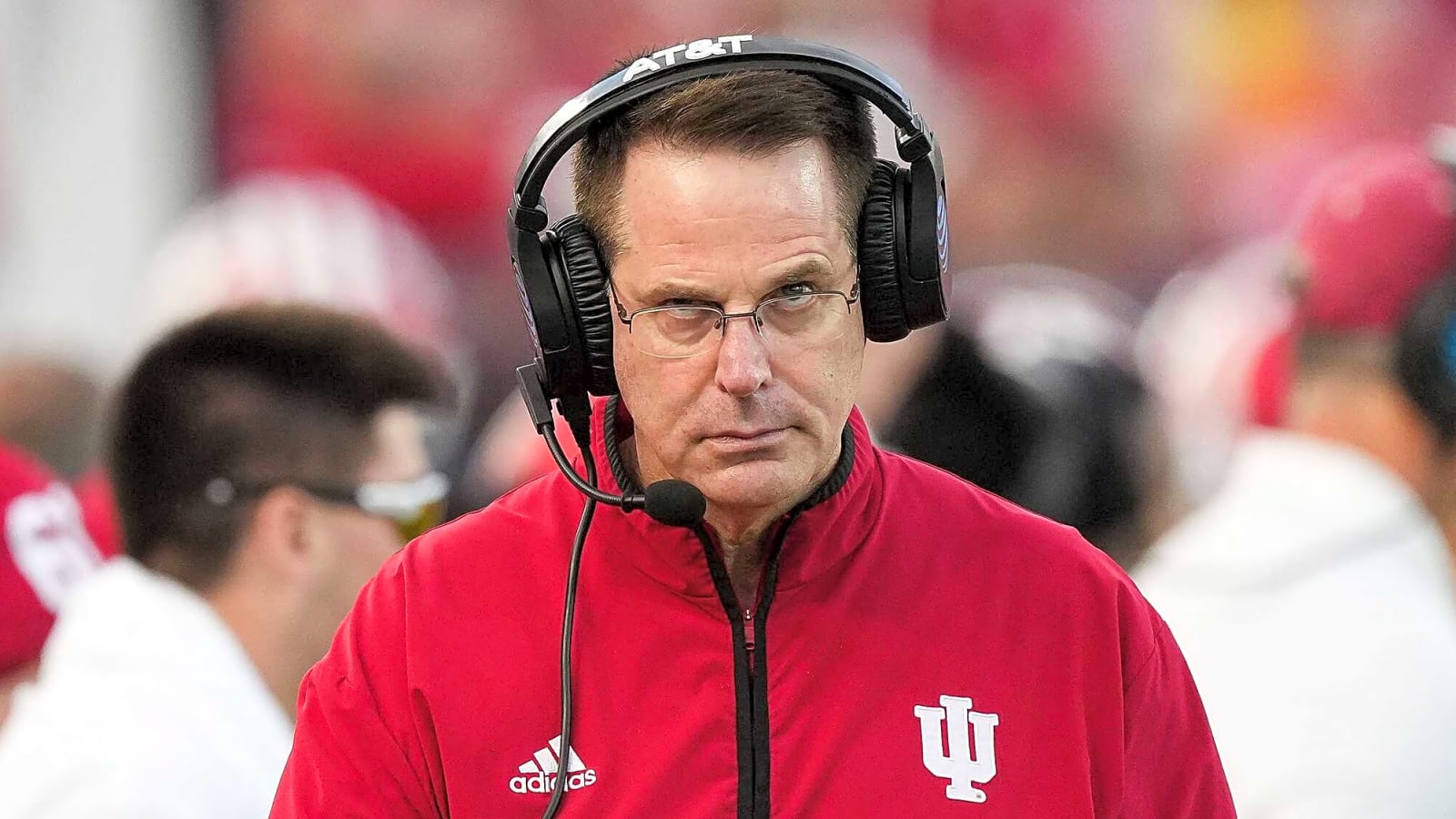
Indiana football may never recruit like Alabama. It may never spend like Texas. But as long as Curt Cignetti is stalking the sideline with that unmistakable stare — the one that suggests he’s already spotted your weakness — the Hoosiers belong in every serious conversation.
This is not a one-hit wonder. This is not borrowed success.
Indiana has changed the math, bent the model and proven that excellence doesn’t have to look the same everywhere. When you see that helmet now, you don’t smirk.
You respect it.
Because as long as Curt Cignetti is in Bloomington, Indiana isn’t going anywhere.
This is Billy Beane’s Moneyball A’s, but even better. Now, the Hoosiers are reaping the rewards and already reloading.
Monday, the Hoosiers wrapped up landing six transfers so far, amidst playing for the College Football Playoff. Josh Hoover will be the Hoosiers’ next quarterback, after putting up great stats at TCU. Wide receiver Nick Marsh arrives from East Lansing and Michigan State. Edge rusher Tobi Osunsanmi comes in from Manhattan and KSU. Meanwhile, running back Turbo Richard arrives from Chestnut Hill Boston College, plus two more standouts.
It’s not just a tip of the cap to Indiana. It’s a revolution of the sport.
More must-reads:
- Royals show faith in manager Matt Quatraro with three-year extension
- Hornets crush Thunder on boards in stunning upset
- The 'Last 4K-yard passer by NFL team' quiz
Breaking News
Trending News


Customize Your Newsletter
 +
+




Get the latest news and rumors, customized to your favorite sports and teams. Emailed daily. Always free!
PRIVACY POLICY EDITORIAL POLICY CONTACT US
ABOUT YARDBARKER TERMS OF SERVICE


Use of this website (including any and all parts and
components) constitutes your acceptance of these
Terms of Service and Privacy Policy.
This site is for entertainment purposes only.
There is no gambling offered on this site.
Gambling Problem? Call 1-800-Gambler.
