
-


Follow Us

 On Facebook
 On Flipboard
 On Twitter
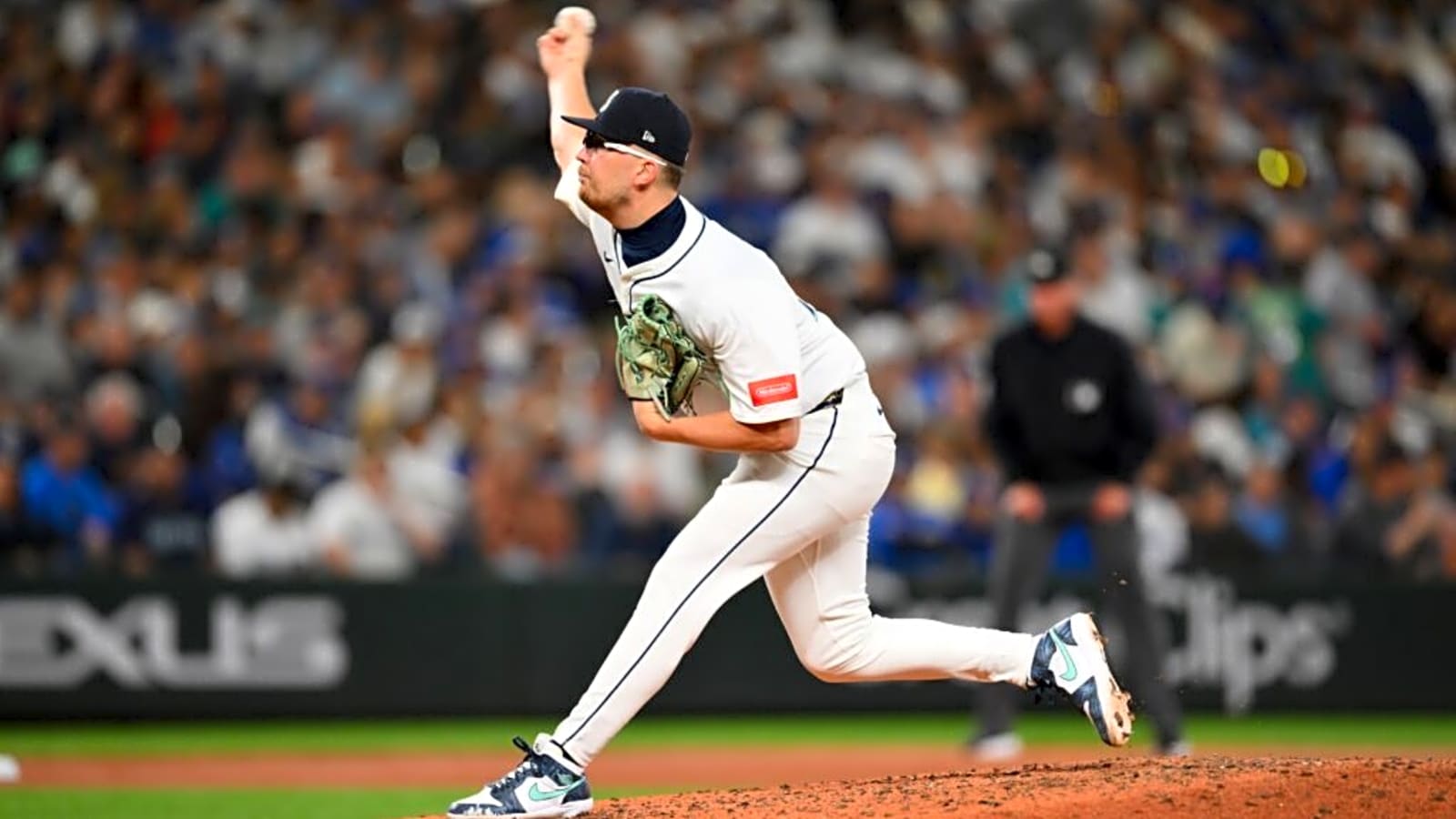
While the Seattle Mariners’ offseason has been quiet on the surface, the front office remains active behind the scenes. If Seattle is serious about upgrading the roster for 2026, it will almost certainly come at the cost of current roster pieces and high-end prospects. Here are five Mariners trade candidates, spanning three key roster decisions, who could realistically be wearing different uniforms by 2026.
Five Mariners Trade Candidates This Offseason
Luke Raley
Following the signing of Rob Refsnyder, the Mariners have a sudden logjam in right field, with Refsnyder filling the role of the platoon bat who hits left-handed pitching. Victor Robles is probably the main right-fielder with a plus glove. That leaves two players filling largely the same role, and one is likely to make way for the other. Both Dominic Canzone and Luke Raley have flashed high ceilings in their time in Seattle. Both have proven to hit with power in the notorious marine layer at T-Mobile Park. However, both are left-handed bats that are ineffective at best against left-handed pitching, and neither offers much value in the field.
Raley had an outstanding season in 2024, but injuries played a significant role in curbing his effectiveness in 2025. He will be hoping his 2024 version of himself returns in 2026. But his position as first baseman/outfielder does not platoon well with everyday first baseman Josh Naylor, and positionally, Refsnyder fills that gap much better.
Dominic Canzone
Canzone, on the other hand, would primarily DH as the roster stands, and fill in right field when needed. He finished the season with a high batting average of .300 on the roster and, despite an ineffective playoff run, was extremely productive throughout the season. He consistently demonstrated his raw power throughout the season.
While Raley has the longer track record, Canzone’s 2025 breakout comes at a more advantageous point on the aging and control curve, making him the more attractive trade asset for teams seeking immediate offensive upside with room for growth. While perhaps the Mariners front office would prefer to offload Raley of the two candidates, Canzone probably offers more value in a trade in 2026.
Emerson Hancock & Logan Evans
During periods when Logan Gilbert, George Kirby, and Bryce Miller were unavailable, the Mariners relied on Emerson Hancock and Logan Evans to absorb innings. Unfortunately, neither was consistent enough to put real pressure on the rotation once it returned to full health. Hancock, a former first-round pick, showed enough stuff to earn a bullpen role late in the season, while Evans spent most of the year bouncing between Seattle and Triple-A Tacoma.
Emerson Hancock put some FILTH on display tonight pic.twitter.com/LWw8kV7Z7c
— MLB (@MLB) September 26, 2025
Both pitchers ran into the same underlying issue. Neither missed enough bats, and the amount of hard contact they allowed led to uneven outings. Over 162 career innings, Hancock has posted a 4.81 ERA with a 15.6 percent strikeout rate. Evans has not fared much better, recording a 4.31 ERA and a 16.9 percent strikeout rate across 81 innings.
The key here is market context. Starting pitching is now at a premium, particularly for teams like the St. Louis Cardinals and Arizona Diamondbacks, two clubs linked to players the Mariners are reportedly targeting. Both Hancock and Evans have shown enough in short stretches to project as fourth or fifth starters elsewhere, even though Seattle offers limited opportunity for a long-term role. With the rotation essentially set for 2026 and Kade Anderson and Ryan Sloan nearing the picture, the Mariners could move one of the two to turn pitching depth into immediate upgrades.
Jurrangelo Cijntje
Jurrangelo Cijntje has been described as a unicorn pitcher, one of the Mariners’ top prospects, and a Top 100 name on MLB Pipeline. In a report for The Seattle Times, beat writer Ryan Divish alluded to the front office’s reluctance to give up major-league pieces in trade talks and named Cijntje specifically. As a result, he has increasingly been viewed by many in Mariners circles as a potential fall guy. With so much prospect talent in the system, the Mariners will eventually have to identify which high-upside piece they are willing to sacrifice.
Although the Mariners allowed him to develop pitching from both sides of the plate, they expect Cijntje to commit exclusively as a right-handed pitcher. His fastball has touched the upper-90s, and his secondary mix, particularly the slider and changeup, gives him a realistic path toward a starting role if his command continues to develop. That combination of upside and distance from the majors places him in a category of prospects that holds appeal on the trade market, particularly for rebuilding teams willing to wait on development.
That intent to keep him long term becomes harder to maintain when an organization produces more high-end arms than roster spots or payroll flexibility allows. With Seattle’s rotation largely set and additional pitching depth continuing to arrive, Cijntje may represent the type of future value the Mariners ultimately have to part with, making him a logical trade candidate if they want to truly move the needle in the market.
More must-reads:
- Anthony Rendon restructure will finally end Los Angeles' $245M mistake
- Yankees’ latest rumors point to a club in decline as AL East foes grow stronger
- The 'Top-50 all-time NFL rushers' quiz
Breaking News
Trending News






Customize Your Newsletter
 +
+




Get the latest news and rumors, customized to your favorite sports and teams. Emailed daily. Always free!
PRIVACY POLICY EDITORIAL POLICY CONTACT US
ABOUT YARDBARKER TERMS OF SERVICE


Use of this website (including any and all parts and
components) constitutes your acceptance of these
Terms of Service and Privacy Policy.
This site is for entertainment purposes only.
There is no gambling offered on this site.
Gambling Problem? Call 1-800-Gambler.
