
-

-


Follow Us
-

 On Facebook
 On Flipboard


A catcher bouncing through waivers rarely grabs attention in December. But sometimes the quiet moves tell you more about an organization than the loud ones.
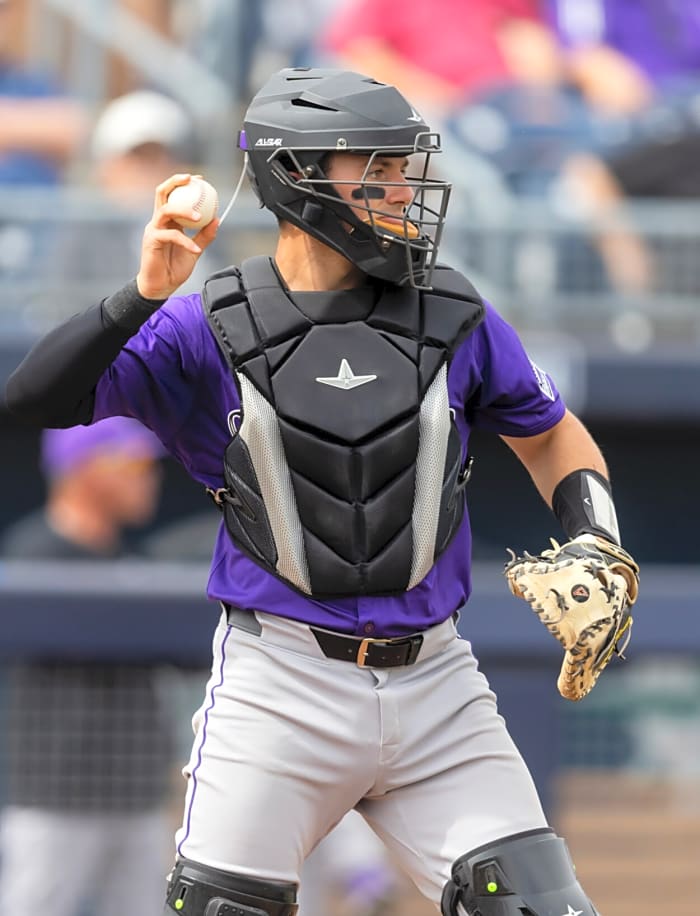
The New York Mets claiming Drew Romo off waivers from the Baltimore Orioles is not a headline grabber. It is, however, a reminder of how this front office views roster building. They hunt for upside in overlooked places, especially at positions where depth disappears fast.
Romo’s path here has been quick and a little unforgiving. Baltimore designated him for assignment about 10 days ago to clear 40-man space after making upgrades elsewhere. The Orioles had only just claimed him from the Colorado Rockies on December 5. Waivers move fast this time of year, and the Mets were ready.

Left-hander Brandon Wadell was designated for assignment to make room for Romo.
We have made the following roster moves. pic.twitter.com/ZnQTawTtda
— New York Mets (@Mets) December 17, 2025
A Prospect Once Meant to Matter
Not long ago, Romo was supposed to be more than roster filler. The Rockies selected him 35th overall in the Competitive Balance A round of the 2020 MLB Draft and backed that belief with a signing bonus north of $2 million. He was viewed as a polished defender with leadership traits and enough offensive upside to grow into an everyday catcher.
Colorado thought they had their catcher of the future. Development does not always follow the script.
The bat never fully took off in the Rockies system, and the elevation at Albuquerque did not turn him into a stat monster either. Still, context matters. Romo was 24 last season and spent 60 games in Triple-A, posting a 75 wRC+ that looks underwhelming at first glance.
The slash line tells a more interesting story.
What the Numbers Actually Say
Romo hit .264/.329/.409 in Albuquerque in 2025. That is not star production, but it is far from empty. He showed a feel for contact, worked his way on base at a reasonable clip, and flashed enough pop to suggest more could be there. In a full major league season, double-digit home runs are not out of the question.
The wRC+ reflects league context and park effects, but it does not erase the fact that Romo’s offensive profile is at least playable for a catcher. That matters. Catching is a thin position across baseball, and depth options with any offensive pulse are hard to find.
Defense and game-calling are harder to quantify, but Romo has never been viewed as a liability behind the plate. That alone keeps him relevant.
Why the Mets Make Sense Here
The New York Mets are not bringing Romo in to challenge Francisco Alvarez. That is not the point. Alvarez is the franchise catcher, and Luis Torrens gives the Mets a capable backup with big league experience.
What Romo provides is insulation.
Catching depth gets tested every year. Injuries happen. Development stalls. The Mets know this as well as anyone. Adding a 24-year-old former high draft pick with options left and some offensive upside is exactly the kind of low-risk move that pays off more often than it fails.
The Mets also have a track record of getting more out of players than their previous stops suggested. Sometimes that comes through mechanical tweaks. Sometimes it is usage. Sometimes it is simply a better developmental environment.
Romo does not need to become a starter for this to be a win. He just needs to be ready if the phone rings.
A Small Move With Clear Logic
This is not a flashy claim, and it is not meant to be. It is roster maintenance with intention. The Mets saw a young catcher with pedigree, experience, and enough tools to justify a second look, and they acted before someone else did.
Depth is boring until it saves you a season.
For the New York Mets, Drew Romo is not a solution. He is an option. And in a game where options disappear quickly, that alone makes the move worth making.
More must-reads:
- Bo Bichette reveals when he will make major career decision
- On deck: White Sox-Guardians, Red Sox-Rays, Yankees-Diamondbacks
- The 'Most yards through two NFL seasons' quiz
Breaking News
Trending News





Customize Your Newsletter
 +
+




Get the latest news and rumors, customized to your favorite sports and teams. Emailed daily. Always free!
PRIVACY POLICY COOKIE POLICY CONTACT US
ABOUT YARDBARKER TERMS OF SERVICE


By using this site, you agree to our Terms of Service and Privacy Policy.
This site is for entertainment purposes only.
There is no gambling offered on this site.
Gambling Problem? Call 1-800-Gambler.
