
-


Follow Us

 On Facebook
 On Flipboard
 On Twitter

The New York Mets can still sign big-money targets such as Cody Bellinger and Kyle Tucker, but on Tuesday, it was revealed that they are also looking at a cheaper option: Austin Hays. Meanwhile, they also signed Tyler Burch to a two-year minor league deal. Let’s review today’s news!
Cheap Gamble: Mets targeting former All-Star Austin Hays to fill critical lineup void
The Mets’ offseason has been defined by a delicate balance between loss and intention. High-profile departures like Pete Alonso, Brandon Nimmo, Edwin Díaz, and Jeff McNeil stripped away much of the team’s recent identity, but the front office has responded by building a roster centered on flexibility rather than star power.
Additions such as Marcus Semien, Jorge Polanco, Devin Williams, and Luke Weaver reflect a strategy focused on short-term commitments, depth, and optionality rather than splashy headlines. The approach signals a shift in philosophy under David Stearns: stay competitive while preserving future maneuverability.
That mindset is especially clear in the outfield, where the Mets still have a glaring need. With multiple options already off the board, Austin Hays has emerged as a logical fit.
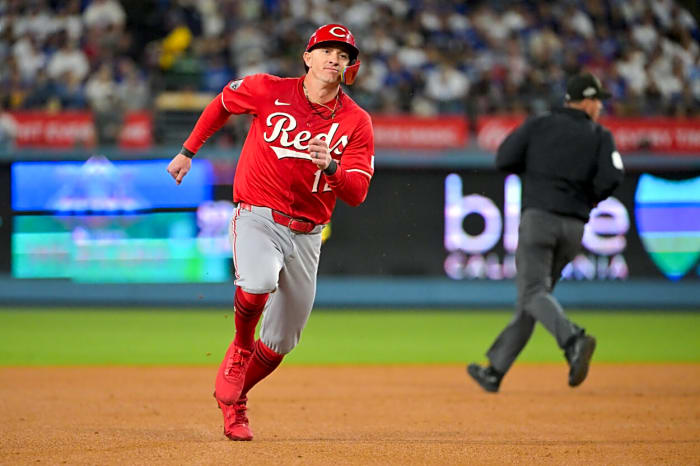
He offers steady, above-average offense, positional versatility in the corners, and a contract profile that aligns with the Mets’ cost-benefit priorities. Hays may not transform the lineup, but his reliability fits a roster being rebuilt quietly and deliberately. Sometimes progress is subtle, and this version of the Mets appears comfortable operating that way.
Mets sign right-hander Tyler Burch to two-year minor league contract
The Mets’ signing of Tyler Burch to a two-year minor league deal is the kind of move that rarely draws attention but often proves essential over a long season. With pitching depth historically unraveling by midseason, the front office continues to invest in low-cost arms that can stabilize the staff when injuries and fatigue inevitably hit. These moves are not contingency plans; they are a core part of how the Mets aim to survive 162 games without burning through their best pitchers.
Burch, a 28-year-old right-hander rehabbing from elbow surgery, brings intriguing traits despite the uncertainty. He features a mid-90s fastball and a plus slider, profiles best as a middle reliever, and has a solid minor league track record. The two-year structure gives the Mets patience to evaluate his recovery within their revamped pitching development system. It is a low-risk bet on usable innings down the line, reinforcing the idea that depth in Queens is now a priority rather than an afterthought.
The Mets have a 3-position plan for Jorge Polanco
In the aftermath of Pete Alonso’s departure, the Mets made a bold and unconventional move by signing Jorge Polanco to replace his offensive output at a fraction of the cost. Polanco’s two-year, $40 million deal is built around the belief that his bat—coming off a 26-homer season with strong underlying metrics—can anchor the middle of the lineup. From a pure offensive standpoint, the logic is sound, as his quality of contact and power indicators suggest the production is real.
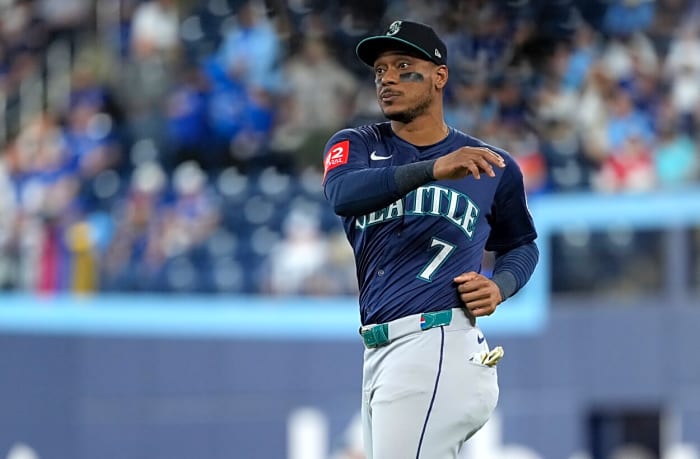
The gamble comes defensively, where Polanco is being asked to learn first base despite having no prior experience at the position. He will also play some second and third base. His declining range and arm strength raise legitimate concerns, turning the move into a calculated risk rather than a seamless transition. Still, the Mets are embracing versatility and financial efficiency, betting that any defensive shortcomings will be offset by offensive value and payroll flexibility. If Polanco’s bat holds up, this experiment could quietly become one of the offseason’s smarter bets.
More must-reads:
- Athletics add another piece to impressive lineup with Jeff McNeil acquisition
- Mets' roster moves may have common thread
- The 'NFL's active 300-yard passers' quiz






Customize Your Newsletter
 +
+




Get the latest news and rumors, customized to your favorite sports and teams. Emailed daily. Always free!
PRIVACY POLICY EDITORIAL POLICY CONTACT US
ABOUT YARDBARKER TERMS OF SERVICE


Use of this website (including any and all parts and
components) constitutes your acceptance of these
Terms of Service and Privacy Policy.
This site is for entertainment purposes only.
There is no gambling offered on this site.
Gambling Problem? Call 1-800-Gambler.
