
-


Follow Us

 On Facebook
 On Flipboard
 On Twitter

The number everyone keeps circling is $295 million.
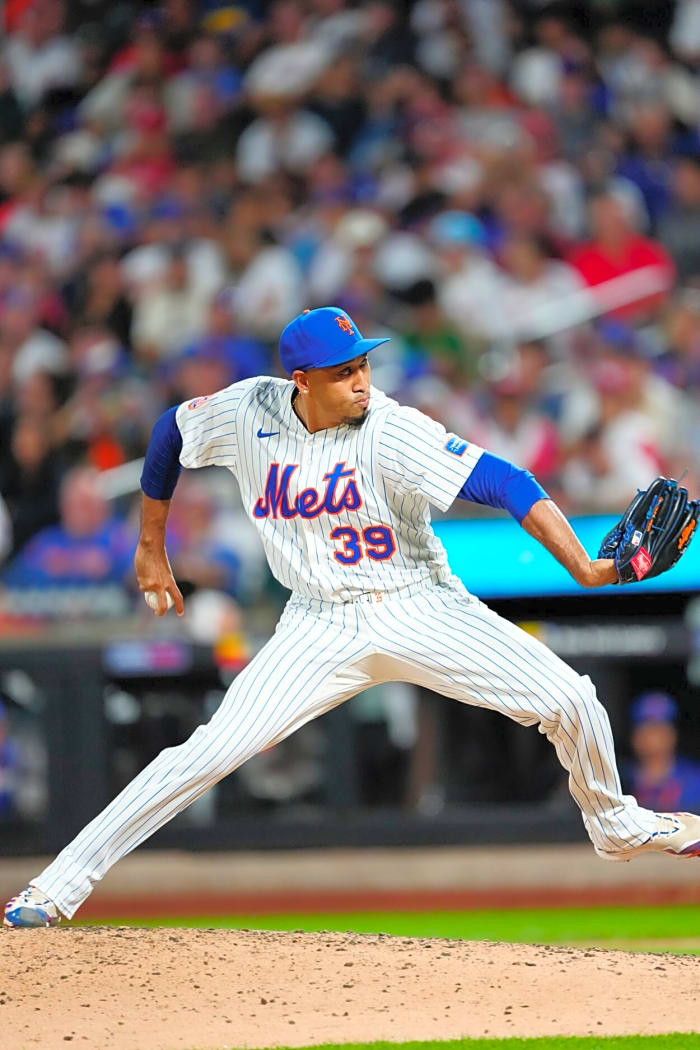
That is where the New York Mets currently sit, a few weeks into an offseason that has already felt heavier than most. Brandon Nimmo is gone. Pete Alonso is gone. Edwin Diaz is gone. Several bullpen arms are off to other teams. It adds up fast, and it leaves a roster that looks thinner than fans expected when last season ended.
And yet, this is not a teardown. Not even close.
A Roster That Is Losing Familiar Faces but Gaining Structure
The Mets have quietly done real work. Jorge Polanco arrives as a Silver Slugger finalist and solid bat with positional flexibility that matters more now than ever. Devin Williams gives them a late-inning weapon with track record and bite. Luke Weaver, while not flashy, brings innings, adaptability, and a steadiness the bullpen lacked at times.
These are not moves meant to grab headlines. They are moves meant to prevent collapses.
Still, the fan base is restless for a reason. When Diaz, Nimmo and Alonso walk out the door in the same winter, the absence is felt everywhere. In the clubhouse. In the lineup card. In the identity of the team.
The Payroll Reality and the Cohen Factor
According to Mike Puma of the New York Post, the Mets estimate their 2026 payroll to land between $310 million and $320 million. On its face, that sounds conservative. Steve Cohen did not see it that way.
The owner publicly pushed back, noting he cannot imagine the payroll dipping below last year’s $322.6 million figure, the highest in baseball. That matters. It signals intent more than comfort.
With the Mets currently sitting around $295 million, there is space. Not theoretical space. Real, actionable space. Enough to add a star. Possibly two, depending on structure.

Why the Pressure Is On to Add More
The Mets cannot sell patience when the rotation looks like this.
The second-half collapse exposed uncomfortable truths. Without Tylor Megill, the staff unraveled. Kodai Senga never found consistency. David Peterson and Sean Manaea struggled in the second half as workloads and injury issues piled up. Running that same group back and hoping for better health or better luck is not a plan. It is a gamble.
Starting pitching is the clearest need, and the Mets know it. They were in on Michael King before he landed in San Diego. Framber Valdez remains on the board. Tatsuya Imai offers upside and intrigue. This front office does not need all of them. It needs one anchor.
The Lineup Gaps Are Just as Real
Left field is suddenly vacant. Center field is unsettled. First base is unresolved unless the Mets are comfortable forcing Polanco into a defensive role that would stretch him thin over 162 games.
That is where Cody Bellinger fits so cleanly it almost feels obvious. He patches multiple holes, restores athleticism, and protects against cascading lineup issues. The Mets’ interest is real, and the logic behind it is hard to argue with.
Alex Bregman and Bo Bichette would change the lineup’s personality in different ways, but either would signal that the Mets are still operating from a position of strength rather than retreat.
This Offseason Is Still Being Written
The Mets have already lost more than most teams could absorb in one winter. They have also added quietly smart pieces that stabilize a fragile roster. Both things can be true.
They are still below last year’s payroll. They still have ownership willing to spend. And they still have obvious needs that demand answers.
What happens next will define not just the 2026 roster, but how seriously this organization views its own competitive window. The room is there. The pressure is there too.
More must-reads:
- Padres' Michael King re-signing helps alleviate significant losses
- Angels' possible plan for Mike Trout isn't the answer
- The 'AL and NL MVPs since 2000' quiz
Breaking News
Trending News







Customize Your Newsletter
 +
+




Get the latest news and rumors, customized to your favorite sports and teams. Emailed daily. Always free!
PRIVACY POLICY EDITORIAL POLICY CONTACT US
ABOUT YARDBARKER TERMS OF SERVICE


Use of this website (including any and all parts and
components) constitutes your acceptance of these
Terms of Service and Privacy Policy.
This site is for entertainment purposes only.
There is no gambling offered on this site.
Gambling Problem? Call 1-800-Gambler.
