
-

-


Follow Us
-

 On Facebook
 On Flipboard

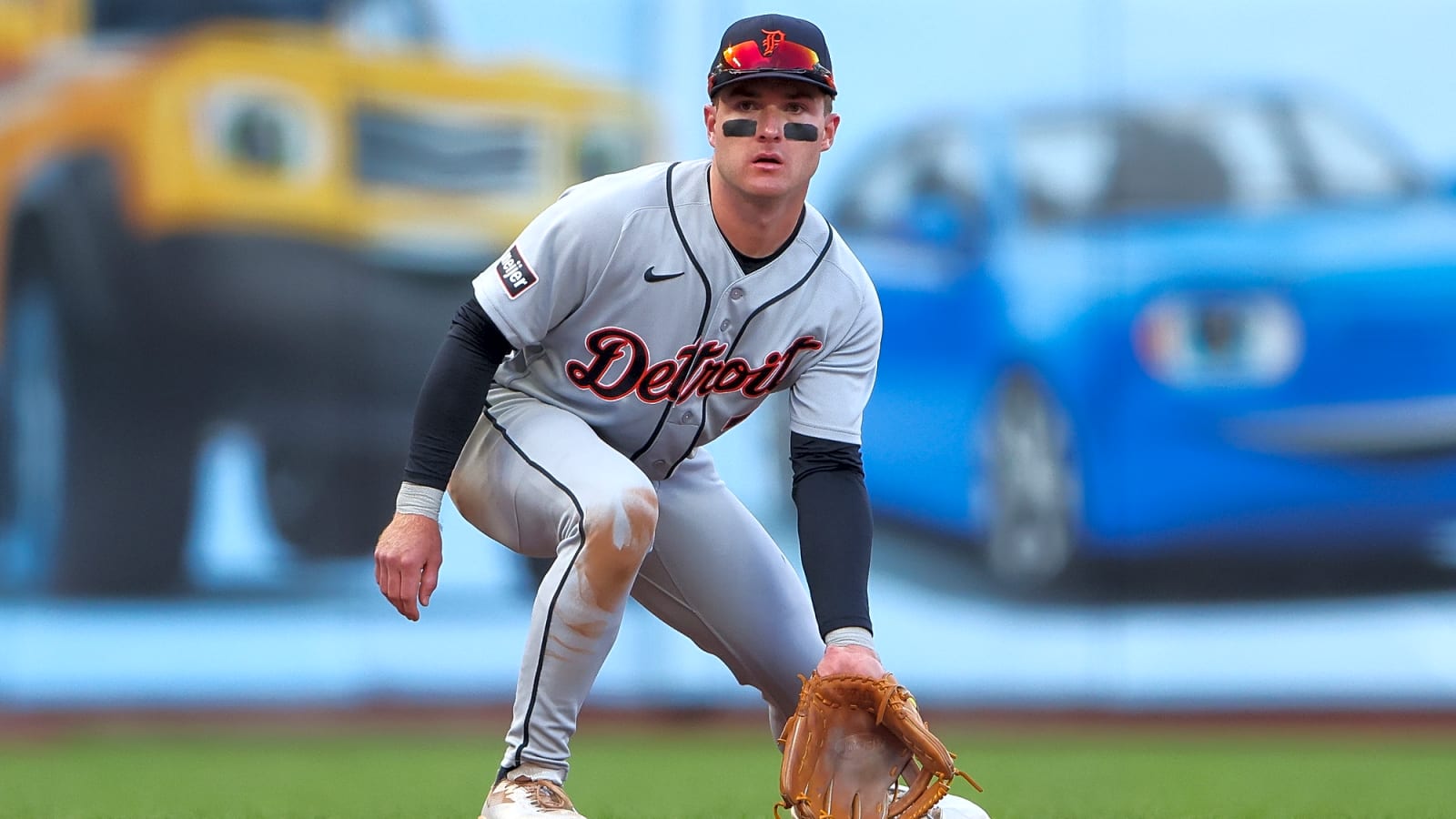
Coming into the season, the Detroit Tigers were seen as a true World Series contender in the American League. A rotation that returned a back-to-back Cy Young winner, added key veterans, and had enough young talent that projected to take a step forward made the Tigers a serious threat.
Detroit’s rotation was set with veterans Tarik Skubal, Framber Valdez, Casey Mize, Jack Flaherty, and Justin Verlander. A group of seasoned pitchers who were hungry for postseason success. The lineup lacked a notable offseason addition, but top prospect Kevin McGonigle was seen as an impact addition from within.
Then May happened.
The Tigers experienced an unprecedented number of injuries, which sent them into a 6-22 spiral. A season that started with hope quickly felt lost. Trade rumors and ideas began not only earlier than expected, but in the wrong direction, in terms of who was going where.
June was better, with Detroit finishing 15-11 before July’s 15-9 record made things much more interesting. Still, the hole was big enough that the Tigers still put emotions aside and made the baseball decision to move Casey Mize and Tarik Skubal ahead of the deadline. Veterans, leaders, and damn good baseball players were subtracted, and nothing was added to the major league club.
Holes have been filled with younger players. Other veterans who had half a season to get right were replaced with prospects. Yet, instead of faltering, the Tigers are surging.
An Offensive Boost
Kevin McGonigle going from Double-A to Opening Day starter for the Tigers was a roll of the dice. A 21-year-old stepping into a well-established lineup doesn’t usually lead to much success, but McGonigle is a different breed.
You saw it right off the bat in the first series at San Diego. Patient at-bats, laying off borderline pitches, and a four-hit debut was not settling in, it was a statement. He quickly worked his way into the leadoff spot and has been the table setter the Tigers have needed.
A balanced and advanced approach has resulted in a .286/.390/.428 slash with 12 home runs, 11 stolen bases, and a 14% walk rate compared to only a 13% strikeout rate. The Tigers added a player with a 135 wRC+ to the lineup without making a trade or signing a big-name free agent.
Oh yeah, they also locked him up with a long-term deal. I think McGonigle was the type of player everyone knew would be good from the jump, but this good? I don’t think so. He’s been a driver of offense and a big reason the Tigers are not out of this race. But, he’s not the only young player stepping up.
Detroit has seen a number of lesser-rated prospects fill roles over the past few months. Infielder Hao-Yu Lee filled in when Gleyber Torres was out and has carved out a role. A .267/.300/.421 slash and 99 wRC+ is a quality line from a rookie. He had a few massive hits, including a go-ahead double against the Angels, eventually leading to a win.
How about Eduardo Valencia? A career organizational depth piece broke out last season and earned a chance in Detroit this year. A feel-good story? Yes, but much more than just that. Four home runs in his first 15 games with a .390/.419/.805 line and 240 wRC+ has given the Tigers an offensive answer at times and allowed them to trust him as the backup catcher/DH, parting with long-time veteran Jake Rogers.
Colt Keith‘s power is probably not getting to where you want it to be, but he’s recently hit a hot streak, pushing his wRC+ to 107, giving the Tigers a high-floor bat throughout the season. Ben Malgeri, an 18th-round selection, was given a bench role due to the amount of injuries and has been great across a limited sample, slashing .286/.404/.405 with a 134 wRC+.
While a number of these players are depth pieces or platoon-limited, each has had big moments. They have been able to plug holes and play roles that have helped keep the Tigers afloat. No, they might not be the high-impact types that can be seen as surefire starters into the future, but Max Clark is.
Detroit added Clark to the roster roughly two weeks before the date when he could keep rookie eligibility for 2027. An oddly timed call-up showed the Tigers were not waiting for some type of loophole date. They were waiting for Clark to dominate his level, and he did just that.
In the short time he’s been in Detroit, he’s already made a significant impact. His defense in center has been a clear and noticeable upgrade, and his advanced approach at the plate exudes confidence and understanding of the strike zone. Maybe not to the extent of McGonigle, but you can tell Clark is going to be a lineup upgrade right away.
A .297/.381/.486 slash with a homer and a 145 wRC+ is quite the way to start your career. He’s striking out more than you would like, but considering his track record in the minors, I would wager that 31% will come down significantly. The Tigers do not need him to be an offensive juggernaut at age 21, they need him to be better than Matt Vierling and James Outman, which is about as sure of a thing as there is right now.
While the Tigers’ injection of younger talent into the lineup has been a lift, you could argue the younger arms have made an even bigger impact.
Pitching Depth Turned Into High-Upside Arms
We already outlined the Tigers rotation coming into the year. You know the names, and back in March, you probably did not think of the depth arms as your attention was turned to watching grainy old Justin Verlander highlights (as was I). Troy Melton was injured to start the year, and the conversation was more focused on him coming out of the bullpen or staying stretched out in Toledo.
Now the conversation is about him being the Tigers’ ace.
Melton has made 13 starts, pitching to a 1.46 ERA and 3.64 FIP. Since June 1, when the Tigers got hot, Melton has a 0.64 ERA with nine straight starts allowing two or fewer runs. We are reaching a point where the sample size clarification no longer has to follow whatever stats you put out. He’s been that good.
What has made Melton so dominant has been his ability to sequence six different pitches, all resulting in a 22% or higher whiff rate. Only his sinker (8% usage) has a batting average over .200 against it. He’s not striking out every batter because he doesn’t need to. Soft contact due to avoiding impact areas of the zone has led to Melton navigating lineups and finding outs.
We now have a career 125.2-inning sample at a 1.93 ERA and 0.94 WHIP. I’m sure moving on from Skubal and Mize was a difficult decision, but the emergence of Melton made that decision easier. So did having Keider Montero.
Montero has been a bit of a Swiss Army knife for the Tigers in recent years. Bouncing back and forth from Toledo and the bullpen to the rotation made him a valuable arm, but the production was roughly average. In 2026, his 3.38 ERA and 3.87 FIP have been huge while the Tigers have dealt with injuries. Now, Montero is a rotation fixture moving forward.
Another arm who relies more on weak contact and mixing pitches to keep batters off balance, Montero might not come with the upside of Melton, but should be a reliable back-end option heading into the future for the Tigers. It’s funny how a couple of young arms can make you forget about certain players that absorbed your attention just a few months prior.
Lastly, we need to talk about Jackson Jobe. He missed a year due to Tommy John surgery, and in all honesty, I did not have high expectations for the 2026 season for Jobe. I was not sure the swing-and-miss stuff would be there yet, and his command was rather shaky the last stint we saw him.
He’s only made one start, and it was against a weak Giants lineup, but I was left more encouraged than I was before the start. A 100 mph fastball for strike three against the first batter set the stage before his changeup danced and darted later in the outing. Five innings on one-hit, one-walk, four-strikeout ball was certainly encouraging.
We’ll see where Jobe goes from here. I don’t want to get too ahead of myself, but he did check a few boxes. The velocity was better than we saw in his last stint with the Tigers, his changeup looked great, and he avoided walks. If the Tigers are getting quality innings from Jobe, the rest of the season’s outlook, and the chances of a potential playoff push, feel much better.
I am not going to act like removing Mize and Skubal from the equation makes for a better team. There’s no world where the Tigers’ pitching is better without them. What can be true is that their pitching is good enough to make the playoffs. And from what I have seen, I think that is a real possibility.
Watching the Tigers’ young arms step up and fill bigger roles has been exciting and refreshing. After every Skubal and Mize start, having to go through the song and dance of if it would be their last or which team should trade for them was exhausting. It’s over, and we, and the team, can move forward and enjoy the game in front of us…finally.
Final Thoughts
The Tigers’ season has not gone according to plan. Back in March, when we visualized what the team would look like and where they would be in mid-August, it did not look like this. However, the Tigers are still very much alive in a playoff hunt and have been one of the best teams in baseball for over two months.
Who knows how the season will pan out. Anything short of a playoff appearance will wipe out the positive developments for most fans, and I understand that. But seeing several young players step up and become the new leaders of this team in real time has been a fun and unexpected development to watch this season.
More must-reads:
- Potential timelines for Aaron Judge return revealed
- 'I'm not surprised': Tigers executive reacts to Tarik Skubal's reunion comments
- The 'Last five-hit game by MLB team' quiz
Breaking News
Trending News


Customize Your Newsletter
 +
+




Get the latest news and rumors, customized to your favorite sports and teams. Emailed daily. Always free!
PRIVACY POLICY COOKIE POLICY CONTACT US
ABOUT YARDBARKER TERMS OF SERVICE


By using this site, you agree to our Terms of Service and Privacy Policy.
This site is for entertainment purposes only.
There is no gambling offered on this site.
Gambling Problem? Call 1-800-Gambler.
