
-

-


Follow Us
-

 On Facebook
 On Flipboard

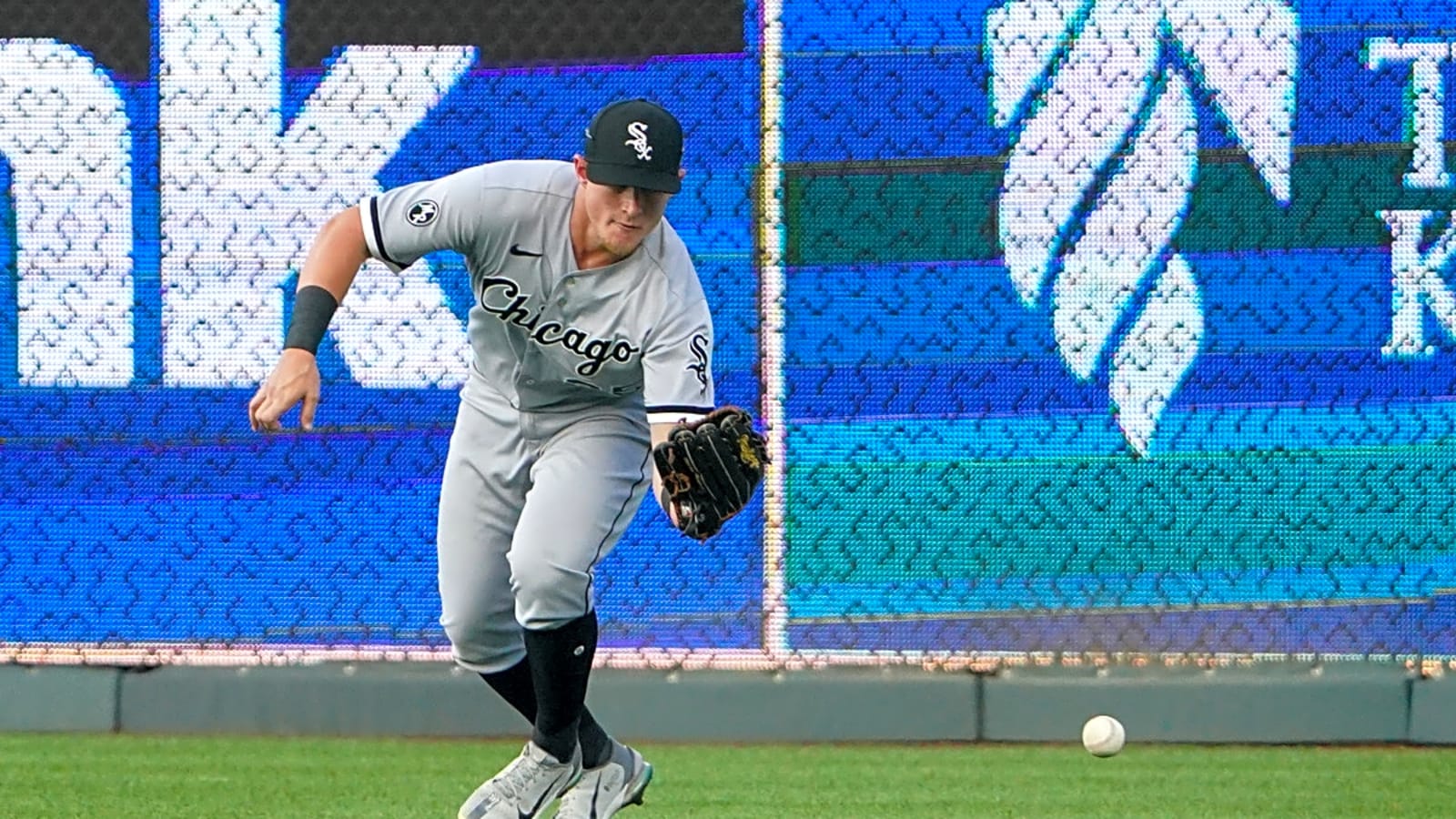
Whatever you do, do not go back and look at the 2019 MLB Draft. You'll be nauseous when you realize the newest Sox killer was taken one pick ahead of the Pale Hose, and you'll be equally disgusted when you see numerous All-Stars taken after the Sox picked at No. 3 overall. This draft will likely go down as one of the biggest organizational failures for the team in the last 30 years for a variety of reasons. The final chapter of this failed saga concluded today when the team shipped Andrew Vaughn 90 miles north to the Brewers in exchange for Aaron Civale.
Vaughn's tenure on the Southside can't be viewed as anything other than a failure, given where he was selected and what he was expected to be for the team, as it was supposed to be turning into a prolonged window of contention. We can unequivocally say at this juncture that the team's decision to invest so much of its hope for the future in Vaughn was misguided and played a pivotal role in the team's abrupt downturn that bottomed out with historic futility just a season ago.
The Decision
Heading into the 2019 draft, there were seemingly two very outspoken camps with strong feelings on what the Sox should do with the #3 pick in the draft. On one side, you had supporters of Andrew Vaughn, who was lauded as the most polished collegiate bat since Kris Bryant had been selected earlier in the decade. On the opposing side, you had believers that the team would be best served focusing on mega upside with an up-the-middle high school talent in CJ Abrams.
The debate seemingly raged on for months as nobody seemed willing to move from their positions. This was at a time when there was so much focus within the fan base being placed on prospects and the draft, and social media was ablaze with commentary daily on the topic. The team ultimately chose the "safe" play with Vaughn to the satisfaction of many who believed they were ill-suited to develop a "toolsy" player like Abrams. Just a year ago, that decision was front and center as the Nationals came to the corner of 35th/Shields, and Abrams was displaying the star potential that he garnered heading into that draft.
The team ultimately believed that Vaughn's bat was going to be enough to outweigh the absence of value he would provide with the glove and on the bases. That decision proved to be, well, faulty to say the least. There was always tremendous risk selecting a right/right bat only 1B at pick #3, but the team believed they had their next 1B cornerstone. I wasn't crazy about the pick at the time, particularly given the team had selected a low upside player at #4 just the prior year, so it felt like the team was being very short sighted in their thought-process focusing on the belief that Vaughn should be able to help the team quickly as the contention window opened.
This was supposed to be the final time the team would be picking in the Top 5 of the first round as Rebuild 2.0 was believed to be reaching its conclusion, so playing it safe with Vaughn only made sense if you were absolutely sure you could develop him into a middle-of-the-order masher. Right/right corner only players don't have a great history at the top of the draft but for some reason, the previous administration thought they would defy those odds, and it turned out to be one of the worst decisions that helped derail the organization.
Faulty Development
Once the decision was made to go with Andrew Vaughn at pick #3 in 2019, the team had to do everything in their power to ensure he would provide the impact with his bat that was needed given where he was selected and who he was selected in favor of. Here is where the Andrew Vaughn story took its first wrong turn. During his first season of pro ball following his selection, he put up rather unimpressive numbers across the complex league, Kannapolis and Winston-Salem. All together he slashed .278/.384/.449. The plate approach and discipline were on full display as those were calling cards for him during his time at Cal, but the lack of power raised the eyebrows of some. Plenty chalked it up to fatigue from the longest season he ever played in his life, entering into pro ball after a full collegiate season.
2020 was to be a pivotal year for the former Golden Spikes Award winner, but then the world stopped. Amidst the pandemic and the cancellation of the minor league season, Vaughn spent time at the team's development site in Schaumburg, where we were given glowing reports of his exit velocities and continued development. It was a lost season for Vaughn, as it was for everyone in the minor leagues, but what happened next was one of the most galling instances of organizational negligence ever seen.
The Sox were coming off a playoff appearance in 2020, and the following year was supposed to be all systems go. However, in classic White Sox fashion, they failed to insulate themselves with roster depth in case of injuries. When Eloy Jimenez tore his pec, inexplicably trying to rob a home run ball during a late March Cactus League game, the White Sox did the worst thing possible. They decided to move Andrew Vaughn to left field and break camp with the team. Vaughn had never played the outfield and had never stepped into a batter's box above High-A, yet they somehow thought in their contention window, asking him to play out of position against pitching far and above anything previously seen in his life was a winning strategy.
As you guessed, it didn't go well. He showed that he was not capable of handling an outfield position given his limited athleticism, and the bat was overmatched, which wasn't surprising given the circumstances. Pitchers had no fear challenging Vaughn as the power didn't materialize, and the plate discipline wasn't tapped into, given the aggressive nature of pitchers at the game's highest level. We'll never know if Vaughn would've developed had the team not made this inexplicable decision to rush him to the big leagues without being fully developed.
Standing On The Dirt
Following the disappointing 2022 season, and Jose Abreu's departure from the club (which he did play a part in no matter what loud, mouth-breathers on the internet will have you believe), we were told Vaughn could settle into his normal position at first base and the bat would blossom. I tried to caution people about this notion that merely moving positions would be the cure for what ailed the fledgling former first-rounder. There were very legitimate concerns that presented themselves about Vaughn going forward, but many within the fan base chose to summarily dismiss them.
Vaughn was supposed to be the next in line to carry the torch of dominant first baseman for the Sox, hence he was drafted in the spot he was. But that clearly never materialized, and by May of 2023, it started to become apparent there was a major problem here. Andrew Vaughn was supposed to be the linchpin of the White Sox lineup for a decade following his selection; he was supposed to be the heir apparent in the team's long-standing tradition of offensive prowess at first base. He was supposed to be fixed by not having to stand on grass anymore, and it never came to fruition. Simply put, he never came close to living up to the billing.
In many ways, Andrew Vaughn's White Sox tenure was emblematic of faulty organizational processes. His very selection at pick #3 in 2019 was one that many industry analysts and fans opposed because of the overall lack of upside and need for his bat to serve as a carrying tool. The organization's faulty development plan for Vaughn surely did him no favors in trying to harness the potential that did exist in the bat at the time he entered into the fold. Once he arrived in Chicago, he never showed significant improvement in any area of his game and, frankly, regressed in many.
Recent reports of his poor work ethic didn't endear him to fans as it has cast doubts about how much effort he put into his craft. A growing belief that he simply relied on his draft pedigree, why not try to fully maximize his potential, seemed to quiet even the few supporters he had left during the early part of his 2025 season. The hope was his recent demotion to Triple-A Charlotte would serve as a wake-up call and reset for the former first-rounder, but that hasn't proven to be the case. His time on the Southside concludes with a disappointing .248/.303/.407 slash line and just 77 home runs across 2,451 PA.
The Andrew Vaughn experiment is over on the Southside. Many of us wanted it to be over this past winter, but we don't have to worry anymore. The unrealized expectations will be the lasting memory of Andrew Vaughn. The organization didn't help him in any way, but he simply never lived up to the billing.
More must-reads:
- Yankees announce Game 1 starter for ALDS against Rays
- Kyle Schwarber makes feelings clear on Don Mattingly after Phillies season ends
- The 'Most 200-K MLB seasons' quiz
Breaking News
Trending News





Customize Your Newsletter
 +
+




Get the latest news and rumors, customized to your favorite sports and teams. Emailed daily. Always free!
PRIVACY POLICY COOKIE POLICY CONTACT US
ABOUT YARDBARKER TERMS OF SERVICE


By using this site, you agree to our Terms of Service and Privacy Policy.
This site is for entertainment purposes only.
There is no gambling offered on this site.
Gambling Problem? Call 1-800-Gambler.
