
-

-


Follow Us
-

 On Facebook
 On Flipboard


You have heard it since you started to like baseball. “Throw strikes.” It was simple. It said it all. You understood. Now when we show you FpK, it looks like a weird TLA (three letter acronym), but all it means is the percentage that a pitcher throws the first pitch in an at-bat for a strike.
If you are new to fantasy baseball, all this can feel overwhelming. FpK is the simplest stat you can learn. Everyone knows what it means.
What FpK Means in Fantasy Baseball
FpK is the percentage of first pitches a pitcher throws for strikes. If a pitcher faces 100 hitters and starts 60 with a strike, that pitcher has a 60 percent FpK. Sooooo simple.
How bad is it when a pitcher does not throw a first pitch strike?
When a hitter swings at the first pitch, he usually gets a good one and the average of all MLB hitters is .340. When the first pitch is a strike, hitters at an 0-1 count, will hit .265 and those at a 1-0 count will hit .355.
That is not all of it though as the count continues, 0-2 counts will hit just .160 and 1-2 counts only .180. So it is as much the first pitch as it is the next few pitches but the count starting off right gives pitchers a much greater chance to succeed.
As we said in previous articles, combining FpK with velocity, pitch mix, workload expectations, Expected Fielding Independent Pitching (xFIP), strikeout per walk (K-BB%) and swinging strike percentage (SwK) provides a good makeup for a pitcher.
The first pitch matters because it helps the pitcher take control of the at- bat. When a pitcher starts ahead in the count, the hitter has to change his approach and is more likely to fail. Also, FpK shows you that the pitcher has good “command” of his pitches that he can throw them for strikes.
As a beginner, here is the range to keep in mind. Average major league starters usually live around the mid 60 percent range. Pitchers who live near 62 to 65 percent are often stable and dependable. Only pitchers like Tarik Skubal live above the 70 percent line.
How FpK Helps You Evaluate Pitchers
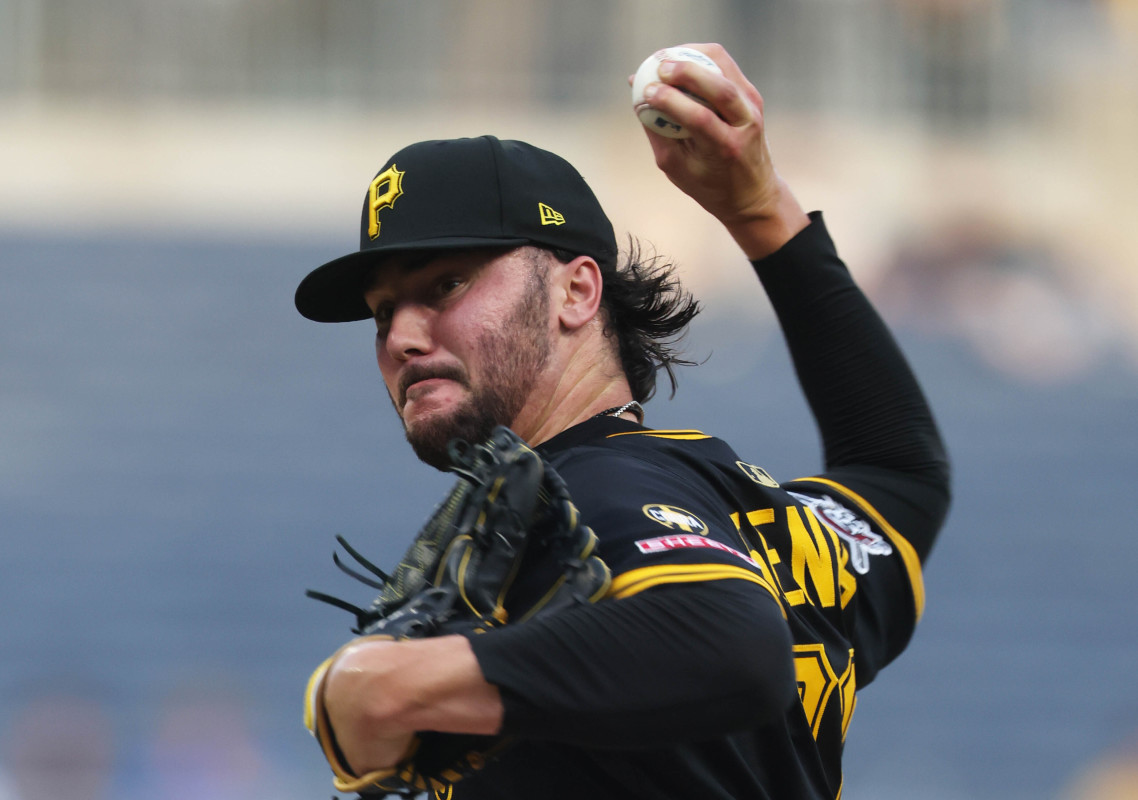
Again, it is critical not to use this alone. For instance Paul Skenes, arguably the best pitcher in the National League, had a 60 FpK. He had a 1.97 ERA and 216 strikeouts. FpK links to several categories that matter in fantasy baseball. Looking at a player’s makeup and then using this as a tiebreaker is the way to do it for this important metric.
For the most part, pitchers who throw first pitch strikes get ahead in the count more often, which helps them strike out more hitters being able to use their best pitches. When you see a pitcher with a high FpK, there is usually a strong chance their strikeout rate will be strong and remain strong.
FpK also ties closely to walk prevention. Walks hurt your WHIP and often lead to rallies. Pitchers with high FpK can throw more of their best pitches and force hitters to chase, limiting walks.
Another benefit of FpK is pitch efficiency. When pitchers get ahead early, their pitch counts are lower. Lower pitch counts help pitchers stay in games longer, which increases chances for wins and quality starts.
There are times when you should ignore FpK. Early in the year, sample sizes are tiny, so do not overreact. Relievers can have wild swings due to limited innings. Also, matchups matter. A pitcher facing a dominant lineup may naturally be more cautious and throw fewer first pitch strikes. Use FpK as a guide, not a rule.
Remember to combine FpK with velocity, pitch mix, workload expectations, Expected Fielding Independent Pitching (xFIP), strikeout per walk (K-BB%) and swinging strike percentage (SwK).
Conclusion
FpK is the easiest stat to understand. Every one who has ever picked up a ball has had their father or coach say “throw strikes.” That is a real thing and has real value even at the major league level. Greg Maddux, one of baseball’s best pitchers of all time, faced over 21,000 hitters. He only went to a 3-0 count 310 times and 177 of those were intentional walks. His success was clearly based on throwing strikes. His FpK was approximately 63.
People Also Ask
What is a good FpK in fantasy baseball?
Most solid starters sit near mid 60 percent. Anything above 70 percent is excellent.
Why does FpK matter for fantasy pitching?
It connects directly to strikeouts, walks, pitch counts, and deeper outings.
How can beginners use FpK in a fantasy draft?
Use it to compare similar pitchers, pick safe depth, and find breakout candidates.
Does FpK predict pitcher breakouts?
High FpK often shows improved command and rising strikeout potential.
Should I use FpK for relievers?
It helps, but sample sizes are small so focus more on strikeouts and walk rates.
More must-reads:
- Another White Sox prospect is one step from majors
- Twins lose another prospect to injury
- The 'Active 30-point playoff games' quiz
Breaking News
Trending News




Customize Your Newsletter
 +
+




Get the latest news and rumors, customized to your favorite sports and teams. Emailed daily. Always free!
PRIVACY POLICY COOKIE POLICY CONTACT US
ABOUT YARDBARKER TERMS OF SERVICE


By using this site, you agree to our Terms of Service and Privacy Policy.
This site is for entertainment purposes only.
There is no gambling offered on this site.
Gambling Problem? Call 1-800-Gambler.
