
-

-


Follow Us
-

 On Facebook
 On Flipboard

In an offseason that has already seen its fair share of fascinating trades, the Texas Rangers and New York Mets’ swap of their high-priced stars stands out as the most eye-catching deal of them all.
The one-for-one deal sent second baseman Marcus Semien to Queens to form a dynamic double-play combination with Francisco Lindor, while center fielder Brandon Nimmo headed to Arlington to try to boost a Rangers lineup that finished just 22nd in MLB in runs scored in 2025.
While this trade helps both teams upgrade glaring on-field deficiencies, the financial implications undoubtedly played a major factor as well.
The Rangers will save about $7 million as they look to cut payroll for 2026, while the Mets will free up nearly $20 million in both 2029 and 2030 by swapping the remaining five years of Nimmo’s contract for the last three years of Semien’s.
Though this Nimmo-Semien trade is unique in terms of the pedigree and name profile of the players involved, they will hardly be the last high-priced veterans to be moved this winter. Here are nine players on expensive contracts who could be traded this offseason.
Unlikely To Be Moved
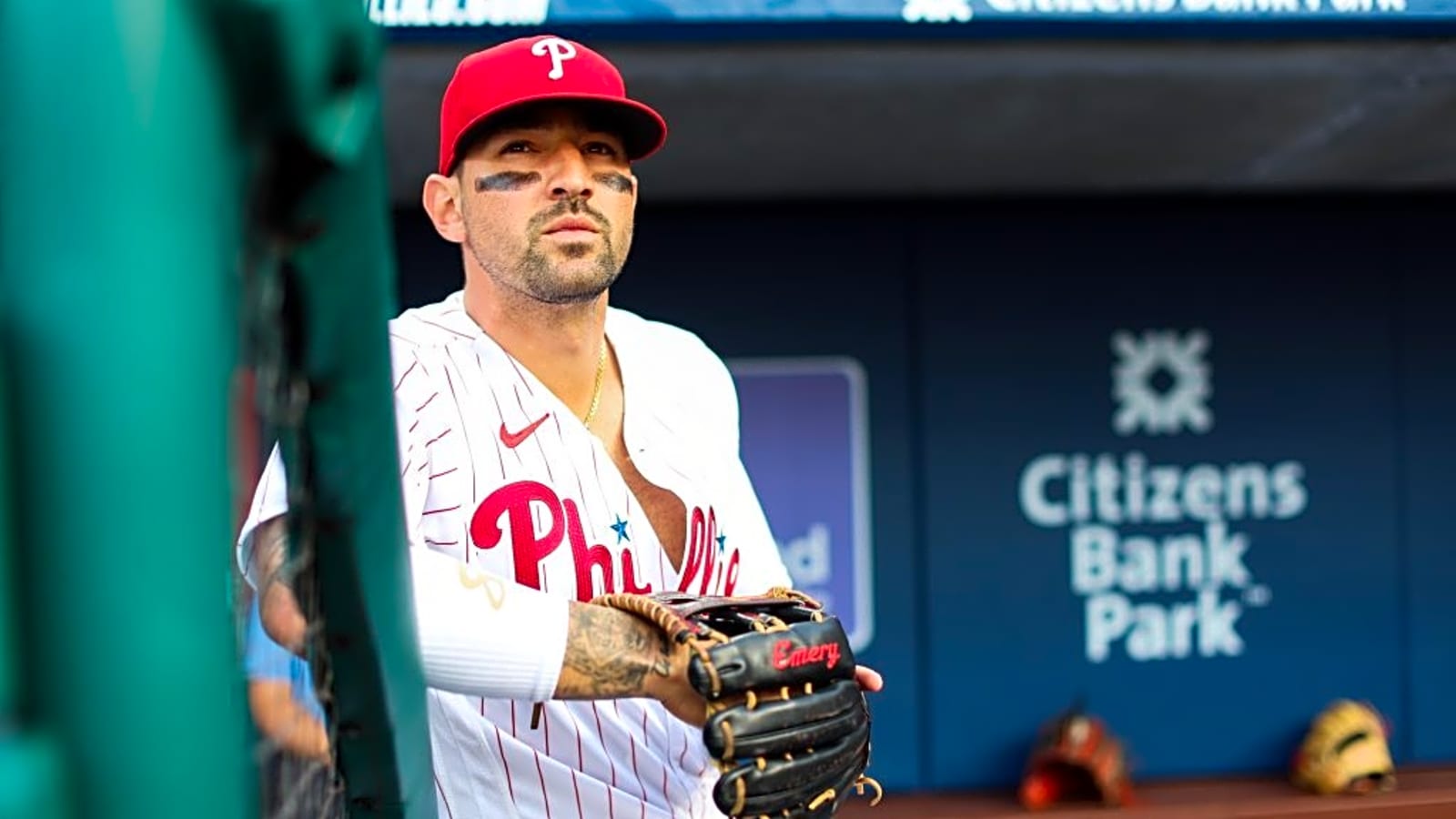
Nick Castellanos, OF – Philadelphia Phillies
- 2026 Age: 34
- Remaining Contract: 1 year, $20 million
Signed to a five-year, $100 million contract before 2022, Nick Castellanos’ Philadelphia Phillies tenure has been a mixed bag.
There have certainly been some big moments, such as his game-saving catch in Game 1 of the 2022 World Series and his four homers in the 2023 NLDS, but he hasn’t come close to replicating his 2021 walk year production with the Cincinnati Reds.
In four seasons in Philadelphia, Castellanos has accumulated just 1.3 bWAR, as his league-average offense has been offset by his woeful defense. The bottom truly fell out in 2025, as Castellanos posted a career-low 88 OPS+ and accumulated -12 Outs Above Average in the outfield.
At this point in his career, Castellanos’ name value far exceeds his on-field production. He is ill-suited for any position besides DH, and there is nothing in the underlying data to suggest an offensive bounce-back is imminent.
His 87.6 mph average exit velocity and 34.5% average exit velocity both ranked in the bottom 20% of all MLB hitters, and just seven qualified hitters exceeded his 40.3% chase rate. Castellanos also posted a higher OPS against right-handed pitching than left-handed pitching, dashing the possibility of him extending his career as a serviceable platoon bat.
Any scenario in which Castellanos is traded would involve the Phillies’ eating a significant portion of his $20 million contract and potentially including a prospect, meaning they may be better suited just cutting their losses and holding on to him for one more season.
Corey Seager, SS – Texas Rangers

- 2026 Age: 32
- Remaining Contract: 6 years, $189 million
The baseball world raised its collective eyebrows when the Dallas Morning News reported that the Texas Rangers ownership had a desire to cut payroll for the 2026 season and could explore trading high-priced stars Jacob deGrom and Corey Seager.
While deGrom, who enjoyed a bounce-back 2025 campaign after missing most of the last two seasons recovering from Tommy John surgery, would certainly garner interest on the trade market if made available, it was the inclusion of Seager that generated the most headlines.
The 32-year-old shortstop has lived up to the expectations of the 10-year, $325 million contract he signed before the 2022 season. Though injuries have cut his last three campaigns short, Seager has made three All-Star teams in his four seasons in Arlington, headlined by a remarkable 2023 campaign that saw him post a career-high 1.013 OPS and finish second in American League MVP voting.
Seager’s status as a Rangers legend was cemented during that year’s postseason, when he helped lead the club to its first-ever World Series title with six home runs and a 1.106 OPS in 17 playoff contests.
Though the Rangers will likely explore Seager’s trade market, it seems far-fetched that they would find a package worth moving their franchise icon for. While Seager has remained excellent when healthy, his bloated contract and lengthy injury history will diminish his trade value as he enters his mid-30s.
Moreover, the Rangers’ options are limited by Seager’s no-trade clause. Though the eight-team list isn’t publicly available, The Athletic‘s Ken Rosenthal reported that the Atlanta Braves, a team in dire need of a shortstop, are among the clubs that Seager will refuse to be traded to.
The more likely scenario is that the Rangers free up budget in other ways, which they have done in the early stages of the offseason. The swap of Semien for Nimmo freed up several million for 2026, while the non-tenders of Jonah Heim and Adolis García saved a projected $18.1 million, per MLB Trade Rumors.
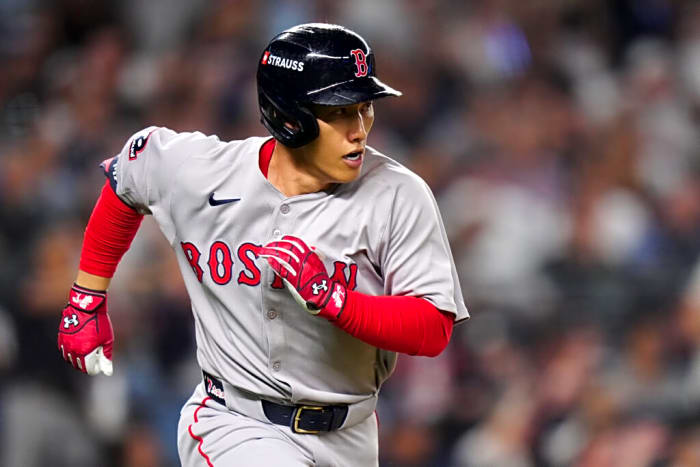
Masataka Yoshida, DH – Boston Red Sox
- 2026 Age: 32
- Remaining Contract: 2 years, $37.2 million
The Boston Red Sox made a strong push to trade Masataka Yoshida last winter, even reportedly offering him alongside Triston Casas to the Seattle Mariners for Luis Castillo. The fact that they were unable to find a trade partner speaks to how the league views Yoshida’s value compared to the five-year, $90 million deal he signed prior to the 2023 season.
The move was controversial even at the time of signing, with some executives saying that they viewed Yoshida as a fourth outfielder and believed he was worth half the contract he signed.
Though Yoshida’s elite bat-to-ball skills have translated from Japan, his lack of power, poor defense, and woeful baserunning have resulted in him accumulating just 3.0 bWAR over his first three seasons.
Injuries have also been a major part of Yoshida’s MLB story. He missed a month and a half in 2024 with a thumb issue and saw the first half of his 2025 season wiped out while recovering from offseason shoulder surgery.
With an already overcrowded outfield, the Red Sox will certainly explore moving Yoshida again this winter, but the market for an oft-injured DH with a sub-.400 slugging percentage doesn’t figure to be a strong one.
As is the case with Castellanos, any deal involving Yoshida would involve the Red Sox taking on a significant portion of his remaining $37.2 million salary and possibly including a prospect as well. The Red Sox might consider taking that route if Yoshida were completely overmatched at the MLB level, but he still has enough value as a hitter to warrant at least a spot as a bench bat.
The best course of action may be to hope that Yoshida can build on his strong finish to 2025 and rebuild enough value to flip him before the last year of his deal.
Up In the Air
Luis Severino, SP – Sacramento Athletics

- 2026 Age: 32
- Remaining Contract: 1 year, $25 million ($22 million player option for 2027)
It didn’t take long for Luis Severino’s record-setting three-year, $67 million contract with the Athletics to turn sour.
The veteran right-hander had revitalized his career after signing a one-year prove-it deal with the New York Mets, but the fit with the Athletics has not been nearly as fruitful. His strikeout rate plummeted to a career-low 17.6% and his erratic command resulted in a MLB-high 16 hit-by-pitches in his first year with the A’s.
At the heart of Severino’s issues with his new ballclub was his displeasure with Sutter Field. His woeful 6.01 ERA at the Athletics’ new home was nearly three runs higher than his mark on the road, and he often looked uncomfortable with his footing on the mound, even falling down multiple times during a July 29 start.
“It feels like a spring training kind of game every time I pitch,” Severino told The Athletic’s Brendan Kuty.
In a weird way, however, Severino’s wild home-road splits may help the Athletics facilitate a trade. The fact that he still looked like his old self away from Sacramento indicates that he could still be a capable mid-rotation starter if he pitched in a stadium he was more comfortable in.
While Severino’s overall numbers took a nosedive, his velocity and pitch shapes remained stable from his strong 2024 season. He also finished the season strong, posting a 3.10 ERA with a terrific 43-12 strikeout-to-walk ratio over his final nine starts.
Though the Athletics have indicated that they would not move Severino in a pure salary dump move, there are enough positive indicators in his performance to convince teams he can live up to his $25 million a year price tag with a change of scenery.
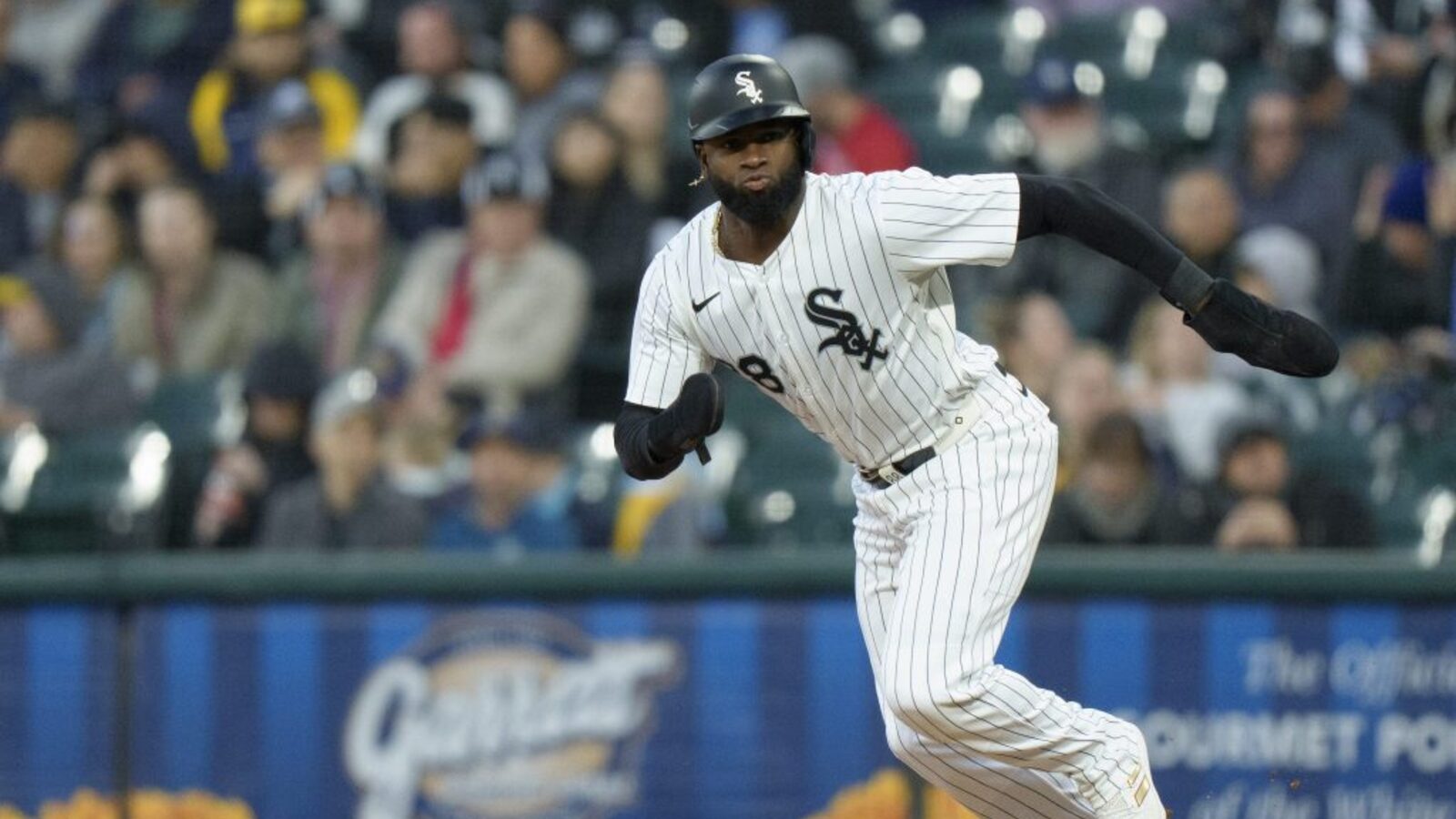
Luis Robert Jr., OF – Chicago White Sox
- 2026 Age: 28
- Remaining Contract: 1 year, $20 million ($20 million club option for 2027)
It’s hard to believe that Luis Robert Jr. is still just 28 years old, and it’s even harder to believe he is still on the Chicago White Sox. Robert is the last remaining member of the 2021 division championship squad, a result of both his lengthy injury history and tantalizing upside.
The six-year, $100 million contract Robert signed before ever appearing in an MLB game looked like a bargain after a breakout 2021 season in which he batted .338 and accumulated 3.7 bWAR in just 68 games. After an injury-shortened 2022 campaign, Robert rebounded in 2023 with 5.8 bWAR and 38 home runs, a performance good enough to garner down-ballot MVP votes.
In retrospect, the White Sox would have been wise to deal Robert after that standout season. A combination of hip, adductor and hamstring injuries has limited him to just 210 games over the past two years, while his sky-high chase rate and swing-and-miss issues have capped his offensive production.
After posting a .857 OPS in 2023, Robert has seen that number drop to .657 and .661 over the past two seasons, easily the two lowest marks of his six-year career.
Despite his offensive regression, Robert’s injury woes have not impacted his top-end athleticism. Both his sprint speed and bat speed ranked in the top 10 percent of MLB players, and his 33 stolen bases in 2025 blew away his previous career-high of 23.
Robert also turned in an encouraging bounce-back performance on defense, accumulating 7 Outs Above Average in 2025 after registering just 1 in 2024.
While Robert may never develop into the five-tool superstar many expected during his prospect days, his defense, baserunning and occasional power will make him well worth the $20 million price tag if he is healthy.
To that point, the White Sox had a chance to escape this deal by paying Robert a $2 million buyout instead of picking up his option for 2026. Still, that doesn’t mean they won’t be looking to trade him.
ESPN’s Jeff Passan placed Robert Jr. at a 60% chance of being moved this winter, an indication that the White Sox’s willingness to move their center fielder may have changed since this past deadline.
It still remains to be seen whether any team will meet what has been a hefty White Sox asking price, but the San Francisco Giants, Philadelphia Phillies and New York Mets are all center-field-needy contenders with the financial flexibility to take on Robert’s contract.
Willson Contreras, 1B – St. Louis Cardinals

- 2026 Age: 34
- Remaining Contract: 2 years, $36.5 million ($17.5 million club option for 2028)
Willson Contreras is yet another five-year contract on this list that hasn’t gone according to plan. To his credit, Contreras has been a steady offensive performer since jumping from the Cubs to the Cardinals, posting an OPS+ of at least 123 in each of his three seasons in St. Louis.
Those numbers would have made him one of the most productive offensive catchers in the league, but it quickly became apparent the Cardinals had no interest in keeping him behind the dish.
Just one month into his St. Louis tenure, the team announced that Contreras would begin to see less time at catcher and more time at left field and DH, a result of Cardinals starting pitchers telling management they no longer wanted to pitch to him.
Though he would return to catching duties just two weeks later, the club had shown its hand about its long-term plans concerning Contreras. After Contreras caught just 51 games in 2024, president of baseball operations John Mozeliak declared that he would move to first base in 2025, and he either DH’d or played first in all 135 games he appeared in last season.
Another factor in Contreras’ move to first base was his struggles to stay on the field. He played in just 209 of a possible 324 games over his first two seasons, landing on the injury list three separate times due to wrist tendonitis, a fractured forearm and a fractured finger.
Despite giving up the catcher’s gear in 2025, Contreras still couldn’t avoid the injury bug. He was shut down in mid-September with a right biceps strain, albeit only after the Cardinals were effectively eliminated from postseason contention.
Contreras has averaged just 108 games played in his 10 major league seasons and has topped the 130-game plateau just twice.
While Contreras still has a place in the middle of an MLB lineup, an oft-injured 34-year-old first baseman is not exactly the kind of player rebuilding clubs want to keep around. It appears the feeling is mutual, as The Athletic’s Katie Woo reported that Contreras has become increasingly open to a deal if he believes the new club is a good fit.
As opposed to Sonny Gray, for whom the Cardinals had to take on $20 million of his 2025 salary in order to receive just a modest prospect return, the $36.5 million Contreras is owed over the next two years is unlikely to be a roadblock to a potential deal. The bigger issue is how devalued the market for first basemen has become.
Many contending teams already have their first baseman in place; most recently, the Orioles secured theirs in Pete Alonso. Even if the Cardinals are able to find a deal to their liking, they will still have to hope that Contreras is willing to waive his no-trade clause.
St. Louis saw the difficulties of trading a player with a no-trade clause last season when Nolan Arenado struck down an agreed-upon trade to the Houston Astros. The pathway for a Contreras deal is certainly present, but the Cardinals will need a lot to break in their favor for a trade to get done this winter.
Likely To Be Moved
Nolan Arenado, 3B – St. Louis Cardinals

- 2026 Age: 35
- Remaining Contract: 2 years, $31 million
Speaking of Arenado, the future Hall-of-Fame third baseman figures to be back on the trade market after his rollercoaster saga last winter. Both the team and the player are eager to go their separate ways, and new president of baseball operations Chaim Bloom didn’t exactly mince words about Arenado’s future in St. Louis.
“It is clear to everybody that it would be best to find a different fit,” said Bloom.
Though the Cardinals’ front office said similar things last winter, there are reasons to believe that they will be more likely to find a trade partner this time around. For one, the fact that he only has two years left on contract rather than three will make him a far more attractive trade target as he enters his age-35 season.
While it remains to be seen if the Houston Astros circle back to their interest in Arenado, there are two ideal landing spots for Arenado that weren’t in the third base market last offseason.
The Arizona Diamondbacks are in need of a steady starter at the hot corner after trading Eugenio Suárez at the trade deadline, and the Los Angeles Angels could look to aggressively upgrade MLB’s worst third base situation with Anthony Rendon out of the mix.
Each of these teams has the financial flexibility to take on the remainder of Arenado’s deal, as could the Boston Red Sox or the Detroit Tigers if they lose out on the Alex Bregman sweepstakes.
Though Arenado is a far cry from the hitter he was in Colorado, he still possesses excellent bat-to-ball skills and can do damage against left-handed pitching. His offensive production could play up outside the unfriendly Busch Stadium dimensions, and his still-stellar defense (+3 Outs Above Average) will play in any ballpark.
After years of treading water in the middle of the National League, the Cardinals have a clear urgency to reshape the roster in the first season under Bloom. They traded Gray just weeks into the offseason, and are reportedly exploring trades for Contreras and second basemen Brendan Donovan.
With the Cardinals diving headfirst into a rebuild and Arenado desperate for a chance to finally play for a World Series contender, it would be a major surprise if the two sides aren’t able to come to a resolution regarding his no-trade clause this winter.
José Berríos, SP – Toronto Blue Jays

- 2026 Age: 32
- Remaining Contract: 3 years, $67 million (Opt-out after 2026)
The Toronto Blue Jays are testing the old adage that you can never have enough pitching. Just one month after their heartbreaking World Series defeat, the Blue Jays have already held on to Shane Bieber, inked ace Dylan Cease to a seven-year deal and signed KBO standout Cody Ponce to a three-year pact.
Those three additions will be part of a rotation that also includes two-time All-Star Kevin Gausman and standout rookie Trey Yesavage, giving the Blue Jays a full five-man staff and leaving José Berríos as the presumed odd man out headed into 2026.
The 32-year-old was already in a precarious spot with the organization after a subpar second-half got him sent to the bullpen in September, and an elbow injury kept him off the postseason roster.
Though Berríos was still able to eat up 166 league-average innings, his strikeout rate and average fastball velocity continued to veer in the wrong direction, and his 8.0% walk rate set a new career-high.
As he enters the fifth year of his seven-year, $131 million extension, Berríos has become obsolete on a Blue Jays team that suddenly looks like an American League powerhouse. Not only do they have a full starting rotation, but Eric Lauer and Bowden Francis represent solid depth options from both the left and right side, and top prospect Ricky Tiedmann is still looming at Triple-A.
With a rotation spot appearing off the table, Berríos looks destined for a bullpen role, but it is doubtful that his quantity-over-quality pitch mix will play up in shorter spurts. That leaves him as one of the game’s most expensive long relievers, which is a role that the veteran right-hander is unlikely to take kindly to.
Fortunately for the Blue Jays, Berríos’ durability and track record should still garner interest on the trade market. He is the only pitcher to make at least 30 starts in every non-COVID season since 2018 and has failed to post an ERA above the league average just once.
Though his days as a frontline arm are behind him, the 32-year-old should have enough left in the tank to be a capable back-end starter for the remainder of his contract. The Blue Jays should have no problem finding a trade partner, especially if they are willing to use their financial muscle to take on some of his contract.
Jeff McNeil, 2B/OF – New York Mets

- 2026 Age: 34
- Remaining Contract: 1 year, $15.7 million ($15.7 million club option for 2027)
Just as the Blue Jays’ starting pitching splurge has left Berríos on the outside looking in, the Mets’ swap of Nimmo for Semien has put Jeff McNeil’s Mets future in doubt.
The 34-year-old McNeil debuted with the Mets in 2018 and quickly became a fan favorite thanks to his pesky approach at the plate and defensive versatility. Yet after batting over .310 in four of his first five MLB campaigns, McNeil has seen that figure plummet to .238 and .243, respectively, over the last two seasons while being hampered by wrist and oblique injuries.
Though McNeil was hardly the main culprit of the Mets’ second-half collapse, his .234/.329/.358 line certainly didn’t help the club’s cause. The magnitude of the Mets’ free-fall has set the stage for a major roster shakeup, and the trade of Nimmo, the team’s longest tenured player, showed that the Mets front office is not interested in running things back as is.
While McNeil may be a better all-around hitter than Semien, the latter’s Gold Glove defense leaves little doubt that he will be the club’s everyday second baseman. McNeil will also be hard-pressed to find playing time at third base, as Brett Baty finally produced enough on both sides of the ball to garner everyday playing time in 2025.
McNeil’s only real avenue to playing time is left field, a position where he is far less capable defensively and where his league-average bat will be far less acceptable than at second base. Simply put, the addition of Semien cut off McNeil’s best and only chance at an everyday spot with the 2026 Mets, leaving him destined for a role as an oft-injured and expensive utility man.
Adding to McNeil’s complicated standing with the Mets is the recent revelation that he underwent thoracic outlet syndrome at the conclusion of last season. While this may affect the club’s ability to trade him, there are two things working in the Mets’ favor.
Though McNeil may not be the player he once was, he still stacks up well in a barren second base landscape. His .746 OPS ranked eighth among second basemen with at least 400 plate appearances this past year, while his +4 Outs Above Average in limited playing time still ranked 12th.
With Gleyber Torres accepting the qualifying offer from the Detroit Tigers, Jorge Polanco is the only everyday second baseman left on the free agent market. The number of teams in need of second basemen far exceeds the number of quality options available this winter, which could drive up interest in McNeil.
Also working in the Mets’ favor is McNeil’s contract. With just one year remaining of a four-year, $50 million extension he signed prior to the 2023 season, McNeil represents a short-term alternative to teams wary of giving the inconsistent Polanco a longer-term deal.
These two factors, along with the Mets’ desire for a roster shakeup, help explain why Passan put McNeil at an 80% chance of being traded this winter. Expect to see the veteran in another uniform come spring training.
More must-reads:
- Austin Wells makes MLB history in Yankees' blowout win over Red Sox
- Aaron Judge injury update fuels return speculation
- The 'Switch-hitter 35-HR seasons' quiz
Breaking News
Trending News






Customize Your Newsletter
 +
+




Get the latest news and rumors, customized to your favorite sports and teams. Emailed daily. Always free!
PRIVACY POLICY COOKIE POLICY CONTACT US
ABOUT YARDBARKER TERMS OF SERVICE


By using this site, you agree to our Terms of Service and Privacy Policy.
This site is for entertainment purposes only.
There is no gambling offered on this site.
Gambling Problem? Call 1-800-Gambler.
