
-

-


Follow Us
-

 On Facebook
 On Flipboard

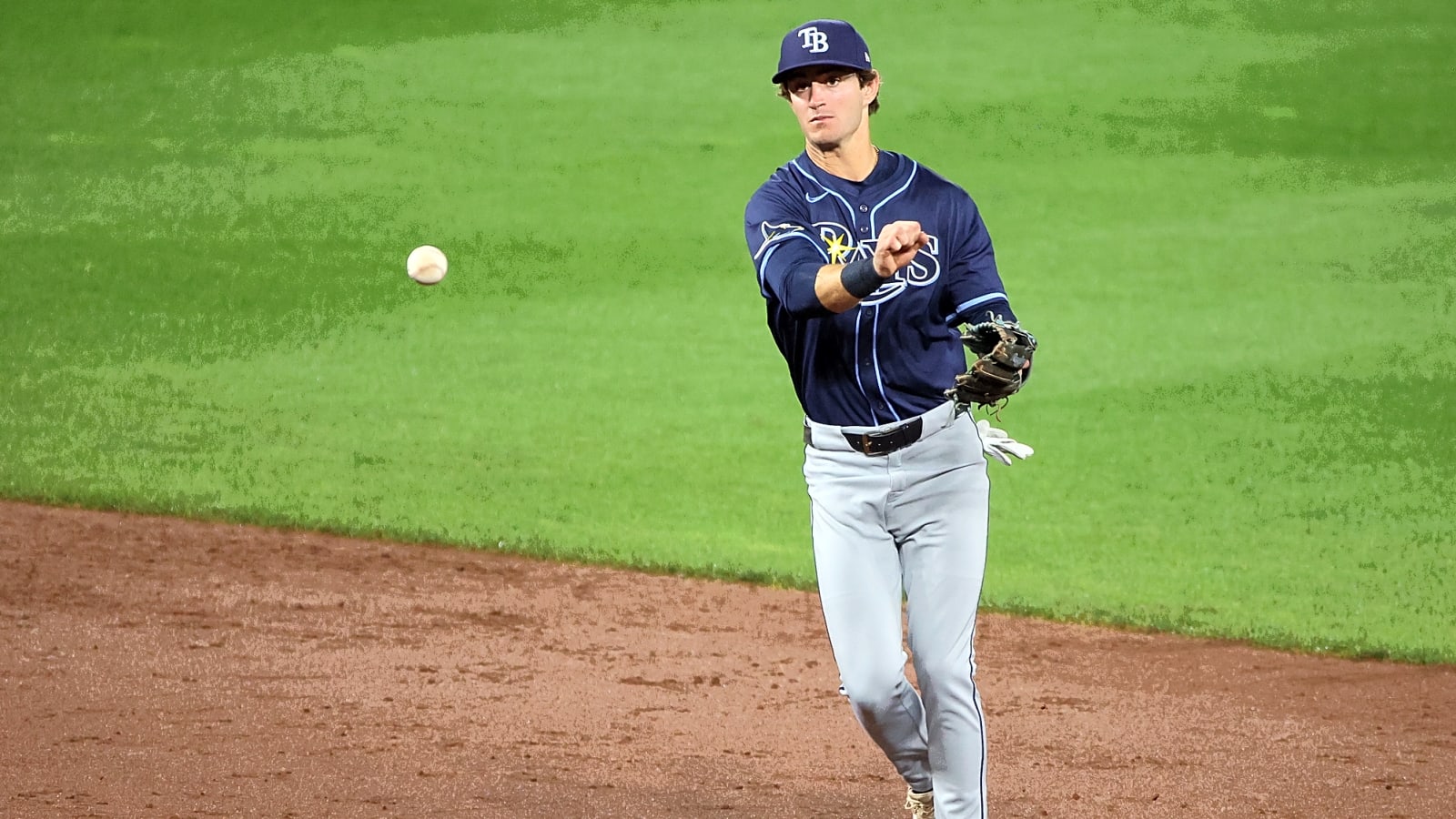
A shining light will soon cascade upon the Tampa Bay Rays’ infield in 2026.
Junior Caminero and Jonathan Aranda are among baseball’s best power hitters, while Gavin Lux looks to resurrect his career after a trade from the Reds.
Another stud will soon join them in the form of Carson Williams, who recently checked in as Just Baseball’s second-best prospect in the Rays’ system.
One of the more polarizing young shortstops in the minor leagues, he has “the mold” scouts want in a position player prospect: a physically projectible, up-the-middle talent possessing thunderous power.
If there were any youngster who fits the Bobby Witt Jr. starter-kit profile, Williams is arguably that guy.
Since being drafted, he’s flown through the minor leagues before hitting a road bump at Triple-A Durham. In 111 games last year, Williams posted a 98 wRC+, clubbed 23 home runs, and swiped 22 bags.
While the batting average is concerning (0.213), he provides enough thump and defense at a premium position to keep him atop prospect lists. Let’s take a closer look at his game.
Developing Offensive Profile
Williams’ bat-to-ball ability is the most significant question mark in his profile. His minor-league numbers have consistently reflected swing-and-miss concerns, with alarmingly high strikeout rates.
In Triple-A, he punched out in 34.1% of his plate appearances, backed by a 38.6% whiff percentage. Both were amongst the worst for qualified hitters.
Carson Williams 2025 Production by Pitch Type Group: Triple-A
| Pitch Type Group | Pitch% | Whiff% | wOBA |
| Fastball | 51.7% | 30.9% | 0.336 |
| Offspeed | 10.9% | 48.6% | 0.246 |
| Curveball | 6.4% | 39.7% | 0.407 |
| Slider | 31.0% | 45.8% | 0.344 |
One look at these numbers and it’s clear that he holds his own against heaters, but struggles against everything else.
A test of his aptitude against fastballs will be how he adjusts to big league velocity. At Triple-A, he had just a 0.262 wOBA against 95+ mph pitches. For reference, the league average was 0.335.
Major-league arms will have a field day throwing him anything but fastballs. Because of this, it’s imperative that he can better recognize spin and changes in velocity. These represent key swing factors in his development.
Overall, this translated to a putrid 75.6% Z-Contact%, a metric that ranked in the 10th percentile at Triple-A in 2025.
A redeeming factor is his feel for the barrel, as shown by his 39.7% sweet-spot percentage, ranking in the 87th percentile for the level. It’s also supported by his ability to pull fly balls at an 18% clip, ranking in the 81st percentile.
In the absence of true contact ability, at least he’s making the most of his raw juice toward a shorter field.
An Improving Eye at the Plate
Carson’s pitch selection has been steady, with walk rates consistently north of 10% at every level he’s played at.
In 2025, he had a 12.4% walk rate supported by a 30.3% chase rate. His success, however, heavily varied depending on what he was thrown.
Carson Williams 2025 Chase Rate by Pitch Type: Triple-A
| Pitch Type Group | Chase% | Chase%, Two Strikes |
| Fastball | 27.3% | 32.9% |
| Offspeed | 38.8% | 46.0% |
| Curveball | 27.0% | 30.0% |
| Slider | 32.2% | 36.2% |
We again see Williams’s proficiency against velocity. He may not be able to hit curveballs quite yet, but at least he can recognize them. A 27% clip is nothing to scoff at. Every other pitch type, however, is a clear work in progress.
This is no difference on two-strike counts; pitchers exposed his lack of zone awareness, especially against off-speed offerings and sliders.
For reference, Williams mustered a 0.216 wOBA on two-strike counts last year, while the Triple-A average was 0.246. Ideally, a top prospect would dominate the level.
Protecting the plate will be another key performance indicator as he adjusts to major-league pitching.
Elite Power Output
What truly makes Williams a blue-chip prospect is his raw juice, especially for a middle infielder. He’s shown this at every level, with at least 20 home runs at each level since high-A.
The in-game data wouldn’t quite suggest this, as his 39.2% hard-hit rate ranked in the 44th percentile at Triple-A, and his 111.7 mph max exit velocity is slightly above the MLB average.
It does, however, reflect in his bat speed, where his 49.6% fast swing rate at Triple-A would rank in the 84th percentile at the MLB level.
If he can combine his improving bat-to-ball skills with his stellar raw pop, I think he’ll be a 30-homer shortstop at peak.
Outstanding Athleticism
Another intriguing dimension to Williams’ profile is his speed. His home-to-first times won’t jump off the page (a personal best of 4.35 this season), but his sprint speed at the MLB level (28.1 ft/sec) ranks in the 69th percentile league-wide.
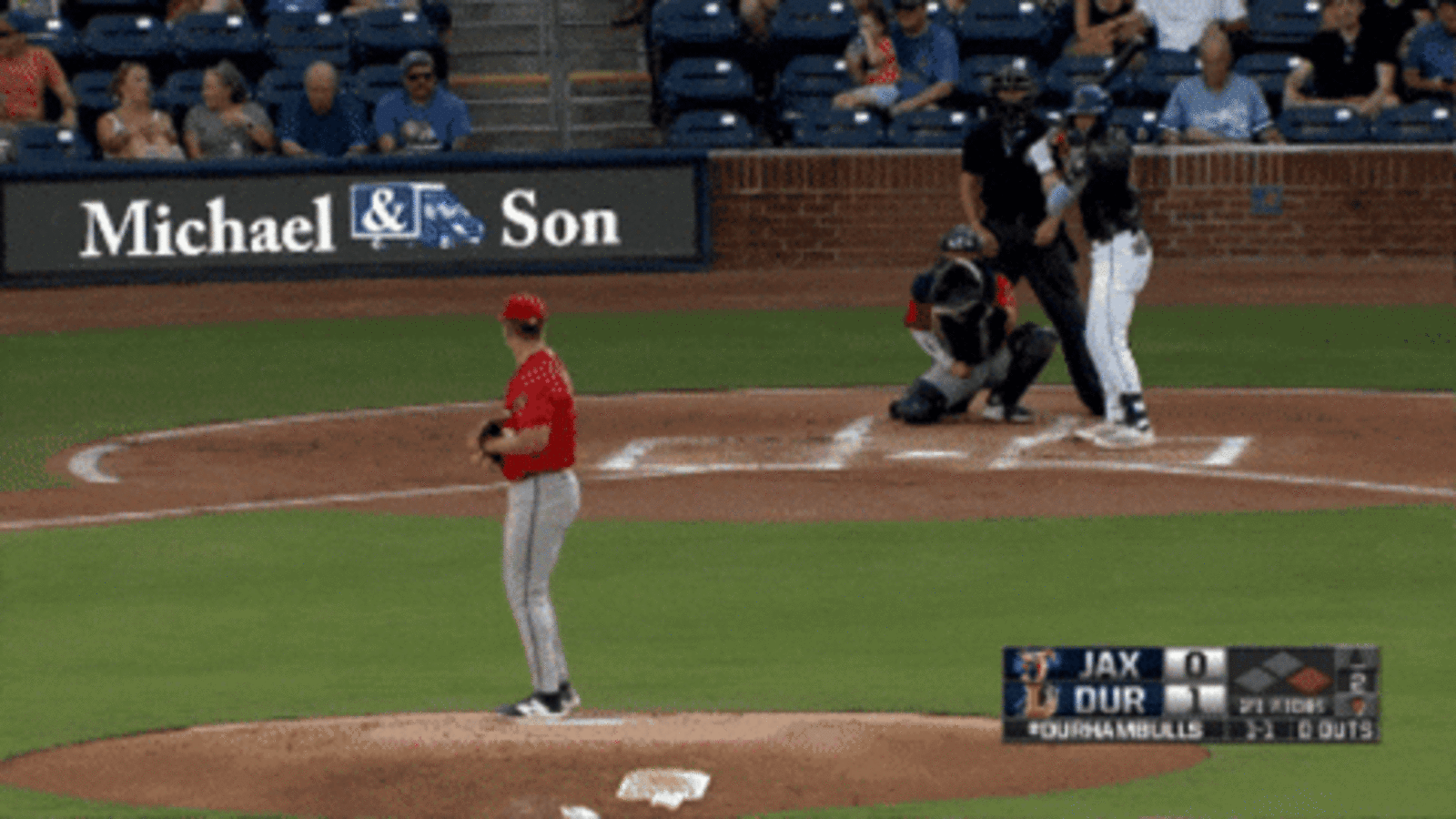
As a result, he’s become a very respectable thief on the basepaths, registering 20 or more stolen bases at four different levels. Coupled with his power, I think the ingredients for a 30-30 threat are there.
Like any zippy, young prospect, added physical maturity eventually will mean a dip in athleticism, though it shouldn’t be enough to hinder him as a baserunner or defender.
A Future Anchor at the 6
Carson’s third calling card is his stellar glovework. He’s already a great defender and should be a perennial Gold Glove candidate. Given the positional weight of shortstop, he could also contend for Platinum Gloves.
He already won a MILB Gold Glove in 2022 and continues to profile as an elite defensive shortstop.
Carson’s range, footwork, and athleticism allow him to make plays effortlessly in any direction. Even if his offensive profile has glaring red flags, his plus defense should buoy his status as a starter.
Were he to somehow fail at shortstop, Williams’s twitchiness should still lock him in at an up-the-middle position.
Complementing his range is his arm strength. As with many two-way amateur prospects, Williams has an arm that is the proverbial icing on an already-stellar defensive cake.
In a short sample size, his 84.8 mph average arm strength ranks in the 53rd percentile in MLB this season. This secures his future at shortstop while also providing him with the added flexibility to play multiple positions if needed.
Carson Williams’ Outlook
In all, Williams projects as an athletic power-glove shortstop, with his most significant swing factor being his overall bat-to-ball skills.
Because of this, he carries more risk than a guy with a more advanced approach, albeit with a higher reward due to the other average to plus traits across the board.
His current 50th-percentile outcome is a 2.5 WAR player each season during his first six years of team control. Direct player comparisons include a more patient Zach Neto and a younger, more zone-aware Javier Baez.
The correlation to Neto is strictly on offense. All three are legit 20-20 threats, though Carson and Baez are much more advanced with the leather. The latter two also provide plus arm strength and speed.
Similar perils in contact capabilities exist between Javy and Williams. If he puts it all together, Carson has the workings of a four-plus WAR shortstop who should contend for Gold Gloves through his 20s.
This is obviously a higher-percentile outcome, but it’s definitely within reach for Carson, given his raw, unteachable toolset.
Rays fans have a lot to be excited about with their left side of the infield. Caminero is already a superstar. Adding Williams into the mix gives Tampa Bay two franchise cornerstones ready to take the field together in 2026.
More must-reads:
- Brewers' bullpen delivers another knockout punch in World Series Game 2 win
- Brewers can taste first World Series title after Game 3 rout vs. Rays
- The 'World Series Game 1 starters' quiz
Breaking News
Trending News




Customize Your Newsletter
 +
+




Get the latest news and rumors, customized to your favorite sports and teams. Emailed daily. Always free!
PRIVACY POLICY COOKIE POLICY CONTACT US
ABOUT YARDBARKER TERMS OF SERVICE


By using this site, you agree to our Terms of Service and Privacy Policy.
This site is for entertainment purposes only.
There is no gambling offered on this site.
Gambling Problem? Call 1-800-Gambler.
