
-

-


Follow Us
-

 On Facebook
 On Flipboard

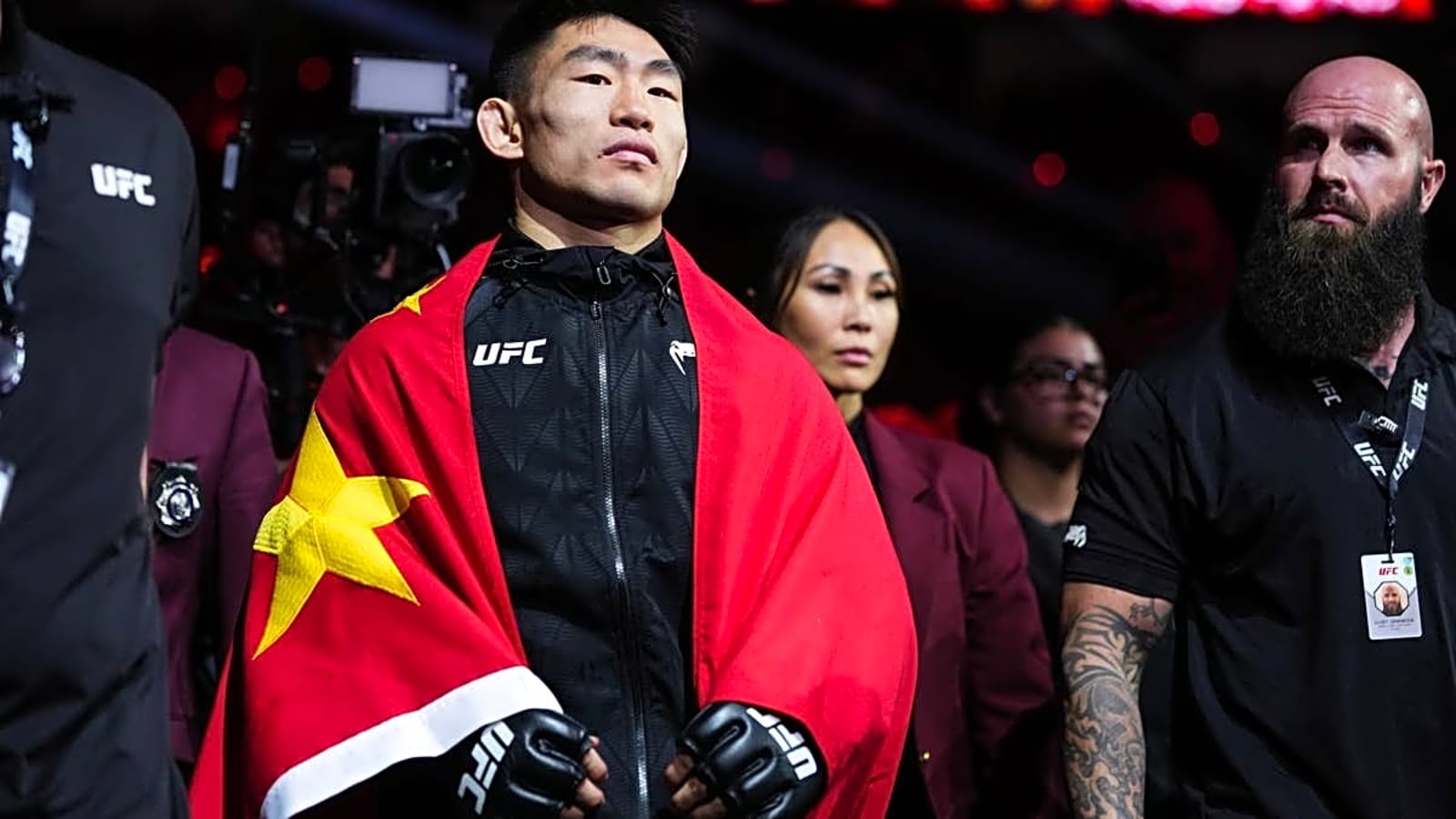
The UFC returns to China for a pivotal bantamweight clash that could reshape the division’s title picture. UFC Fight Night: Nurmagomedov vs. Song takes place this weekend at the Shanghai Oriental Sports Center.
With the event airing live in the early morning hours for North American viewers, here is everything you need to know to watch, including the full fight card and a breakdown of the main event.
How to Watch
Date: Aug. 29, 2026
Streaming: In the United States, the event will stream exclusively on Paramount+.
Main Card: 6 a.m. ET / 3 a.m. PT)
Preliminary Card: 3 a.m. ET / 12 a.m. PT
Full Fight Card
Here is the complete lineup for the event in reverse order. Please note that the bout order and number of fights are subject to change.
Main Card (6 a.m. ET / 3 a.m. PT)
- Umar Nurmagomedov vs. Song Yadong (Bantamweight)
- Yan Xiaonan vs. Denise Gomes (Women’s Strawweight)
- Aoriqileng vs. Kai Asakura (Bantamweight)
- Alex Perez vs. Sumudaerji (Flyweight)
- Liu Ce vs. Levi Rodrigues Jr. (Light Heavyweight)
- Bilal Hasan vs. Nilson Rojas (Flyweight)
Preliminary Card (3 a.m. ET / 12 a.m. PT)
- Namsrai Batbayar vs. Andre Lima (Flyweight)
- Rei Tsuruya vs. Kevin Borjas (Flyweight)
- Sean Woodson vs. Jack Jenkins (Featherweight)
- Xiao Long vs. Francesco Nuzzi (Bantamweight)
- Lawrence Lui vs. Hector Santiago (Bantamweight)
- Xiong Jing Nan vs. Julia Polastri (Women’s Strawweight)
- Ding Meng vs. Cam Nelson (Welterweight)
Main Event Breakdown
The main event pits two fundamentally different approaches against each other. Nurmagomedov has built his reputation on layered grappling, positional control, and increasingly polished striking, while Song is a naturally aggressive boxer who has developed enough takedown defense and opportunistic grappling to keep opponents from dictating the fight.
Umar Nurmagomedov
Nurmagomedov, in particular, can create problems without needing to rely on one aspect of his skillset. According to UFC statistics, Nurmagomedov’s grappling offense lands 4.03 takedowns per 15 minutes, while he averages 3.86 significant strikes landed per minute and absorbs only 1.86 significant strikes per minute.

This takedown threat can force opponents to react to level changes, opening opportunities for kicks and straight punches, while his ability to chain wrestle allows him to turn seemingly unsuccessful entries into extended control sequences.
His most recent performance against Deiveson Figueiredo at UFC 324 is a useful example.
Umar Nurmagomedov kicked off 2026 with a massive win over Deiveson Figueiredo! #UFCShanghai | Saturday, 9AM BST | Stream TNT Sports on HBO Max pic.twitter.com/4vserWn9TE
— UFC on TNT Sports (@ufcontnt) August 26, 2026
That fight revealed Nurmagomedov did not need a huge takedown total to dominate the overall grappling battle, which could be a very real possibility in his matchup with Song. He repeatedly threatened positionally, controlled Figueiredo for nearly five minutes, and limited the former flyweight champion to just 8 of 27 significant strikes.
Nurmagomedov’s clearest weaknesses, however, were exposed against Merab Dvalishvili at UFC 311. That fight demonstrated that Nurmagomedov can be forced into a more reactive fight when an opponent maintains relentless forward pressure and repeatedly contests his preferred grappling positions.
Song obviously does not fight with Dvalishvili’s wrestling volume, but his ability to punish predictable entries with counters could make Nurmagomedov think twice about entering recklessly.
Song Yadong
Song presents a different statistical profile. The 28-year-old Chinese contender averages 4.42 significant strikes landed per minute, compared with 3.94 absorbed. He has a 43% significant-strike accuracy rate, 55% significant-strike defense, and a strong 73% takedown-defense rate.

That 73% takedown defense could be one of the most important numbers in the fight. Song is not likely to win a prolonged grappling exchange against Nurmagomedov simply by matching him technique for technique, but stopping the initial attempts could keep the fight in the range where his boxing becomes increasingly dangerous.
His knockout of Ricky Simon in 2023 remains one of the clearest demonstrations of his offensive ceiling:
Song landed 105 of 228 significant strikes over the first four-plus rounds before finishing Simon with punches in the fifth, with 55 of his significant strikes landing to the head.
However, Song’s most recent victory provides a reminder that his game is broader than boxing. He submitted Figueiredo with a guillotine choke at 4:42 of the second round, landing 24 of 52 significant strikes and scoring one takedown before the finish.
That sequence matters because Nurmagomedov cannot simply assume Song will disengage whenever the fight reaches the grappling phase. Song’s ability to capitalize on an opponent’s neck exposure or a poorly timed entry gives him another layer of offense, particularly if Nurmagomedov becomes predictable with his takedown attempts.
Keys to Victory
The matchup comes down to a classic question of control versus disruption. Nurmagomedov has the statistical edge and stylistic tools to dictate the geography of the fight, but Song has the striking accuracy, defensive wrestling, and recent submission success to make every phase considerably more complicated than the numbers might suggest.
Nurmagomedov’s 69-inch reach gives him a two-inch advantage over Song’s 67-inch reach, while his 4.03 takedowns per 15 minutes provide a persistent threat that could force Song to fight more defensively than he normally prefers.
For Nurmagomedov, the ideal fight likely involves mixing kicks and straight punches with repeated level changes rather than immediately forcing a wrestling-heavy contest. If he can make Song react to strikes before shooting underneath them, he should have more opportunities to establish top control and dictate where the exchanges take place.
For Song, patience will be just as important as aggression. His best path to victory is likely to make Nurmagomedov pay during entries, force him to work for every takedown, and use his boxing when the Russian fighter tries to reset at range.
With both fighters sitting near the top of the bantamweight division, the Shanghai main event could have significant consequences for the next title picture. The matchup carries major divisional significance, with both fighters looking to position themselves for a future championship opportunity.
More must-reads:
- Ravens could get Lamar Jackson back sooner than expected
- Cowboys bring back Emari Demercado to add depth to backfield
- The '100-yard, 1-rushing TD games' quiz
Breaking News
Trending News


Customize Your Newsletter
 +
+




Get the latest news and rumors, customized to your favorite sports and teams. Emailed daily. Always free!
PRIVACY POLICY COOKIE POLICY CONTACT US
ABOUT YARDBARKER TERMS OF SERVICE


By using this site, you agree to our Terms of Service and Privacy Policy.
This site is for entertainment purposes only.
There is no gambling offered on this site.
Gambling Problem? Call 1-800-Gambler.
