
-

-


Follow Us
-

 On Facebook
 On Flipboard
 On Twitter
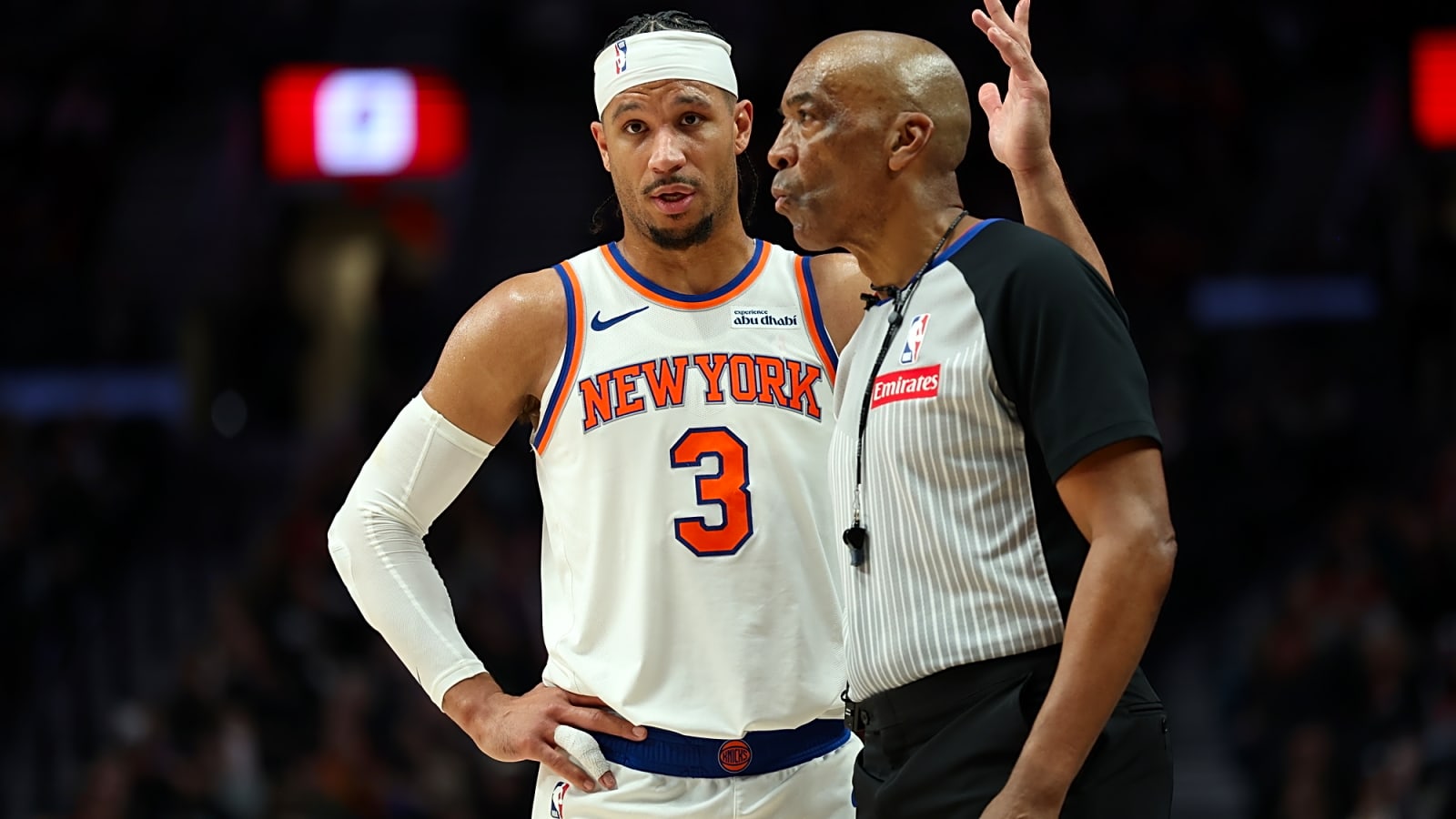
There have been moments over the past year when Josh Hart felt like a disposable piece of the New York Knicks’ plans.
Hart was benched in the 2025 Eastern Conference Finals, as his inability to attempt threes was detrimental when he played alongside the rest of the Knicks’ starters. New York’s five-man lineup of Hart, Jalen Brunson, Mikal Bridges, OG Anunoby, and Karl-Anthony Towns was routinely outscored, and Tom Thibodeau finally adjusted after hearing endless calls from fans.
To begin the 2025-26 season, new Knicks head coach Mike Brown kept Hart on the bench, adhering to the trends that emerged during the 2025 playoffs. Hart’s ugly shooting to start the year did little to convince Brown that he should be starting.
It wasn’t long, though, until Hart played his way back into the starting lineup. Following Brown’s decision to bring Hart into his starting five, New York began to surge.
That is, until Hart sprained his ankle on Christmas Day.
But as they say, absence makes the Hart grow fonder.
The Knicks struggled mightily over an eight-game stretch with Hart on the bench. Upon his return, Hart sparked the Knicks to a critical bounce-back victory on the road, taking down a red-hot Trail Blazers team.
Despite a tumultuous 2025 calendar year for Hart, his importance to the Knicks’ championship hopes has never been more apparent than it is today.
Hart is the Knicks’ engine
Throughout the first few months of the 2025-26 season, Hart’s impact on the Knicks’ success has been eye-popping.
Hart came off the bench in his first 14 games of the season. After a brutal first four games, which saw Hart shoot 21.1% from the field with an average plus-minus of -9.0, Hart’s play began to pick up.
Over his next 10 games, Hart averaged 12.0 points, 6.9 rebounds, and 5.0 assists off the bench, shooting 53.8% from the field and 41.7% from deep.
With Hart serving as their sixth man, the Knicks got off to a so-so start relative to their lofty expectations. Through November 22, the Knicks were 9-6. Their net rating was +4.9, ranking ninth-best in the NBA. This is when Brown decided to switch things up, searching for a spark that could allow the Knicks to reach their ceiling.
In a Nov. 24 game against the Brooklyn Nets, Hart made his starting debut under Brown. The move was influenced by injuries to OG Anunoby and Landry Shamet, but Hart played well enough that Brown kept him in the starting lineup after Anunoby returned.
Hart’s promotion paid instant dividends, as the Knicks won their next four games by double-digits. It kick-started a full month of elite play that had New York looking like the best team in the Eastern Conference, and perhaps in the entire NBA.
From Nov. 24 through Dec. 25, the Knicks had a league-best 12-3 record (11-3 with Hart in the lineup), while their net rating skyrocketed to +9.1, tying them with the Thunder for second-best, and just a hair behind the top-ranked Celtics (+9.2).
The run ended with Hart suffering an ankle injury on Christmas in a win over the Cavaliers. Hart’s ensuing absence directly coincided with the Knicks’ worst stretch of the season.
Across eight games without Hart, the Knicks went 3-5 with a net rating of -5.5, ranking 21st in the NBA.
On Sunday, Hart made his return in Portland against the team that traded him to New York, and his impact was immediately palpable. In 31 minutes, Hart scored 18 points on 7-of-15 shooting, including 3-of-5 from downtown, adding six assists, three rebounds, two steals, and a block.
Josh Hart in his first game back
— Teg (@IQfor3) January 12, 2026
18 points
3 rebounds (#washed)
6 assists
3-5 3P
pic.twitter.com/Gg7ti8Y77U
Coming off a stretch of five losses in six games, New York pulled out a much-needed 123-114 win, sparked by Hart’s return. Not only that, but they snapped Portland’s five-game win streak, the longest active streak in the NBA.
The Knicks are dominant with Hart as a starter
With the win over Portland, the Knicks improved to 12-3 with an average point differential of +9.8 with Hart in the starting lineup. Without Hart in the starting lineup, they are 13-11 with a +1.3 point differential.
That’s the difference between a premier title contender and a team bound for a first-round exit.
Hart has looked like a new player in Brown’s system. While he always made an impact with his energy under Tom Thibodeau, Hart usually felt like a liability within the offensive system. Under Brown, though, Hart is thriving as a core piece of the Knicks’ offense.
These are Hart’s numbers in 15 starts this season:
- 34.3 minutes per game
- 14.9 points per game
- 9.0 rebounds per game
- 5.7 assists per game
- 1.9 steals per game
- 50.6% field goals
- 43.1% three-point (4.8 attempts per game)
- 56.5% two-point
- 60.1% effective field goals
- 86.7% free throws
- 62.9% true shooting
- +10.4 net rating
When Hart starts, the Knicks outscore their opponents by 10.4 points per 100 possessions with Hart on the court. That’s mainly due to his impact on New York’s offense.
Since Hart’s promotion to the starting lineup on Nov. 24, the Knicks are scoring 124.6 points per 100 possessions with Hart on the court. That’s the fourth-best mark in the NBA among players to play at least 1,000 possessions over this span, trailing only Nikola Jokic and two of his Nuggets teammates.
Brown has made the creative decision to feature Hart as a playmaker, and it’s paying off. Hart has an assist percentage of 22.7% this season, the highest mark of his career, and two points above the career-high he set last year. As a starter, Hart is dishing out 5.7 assists per game.
Most importantly, Hart has been confident and effective as a shooter. In a Mike Brown system that encourages its players to launch threes, Hart’s three-point attempt rate has ballooned, making him more of a threat to opposing defenses. Hart is shooting 4.8 threes per 36 minutes this year, a 55% increase from his 3.1 mark last year.
Alongside the increased volume has been a spike in efficiency; Hart is shooting a career-best 39.8% from deep, up from 33.3% last year. Altogether, Hart is draining threes at nearly double the rate he did last year, hitting 1.9 per 36 minutes compared to 1.0 in the 2024-25 season.
Perhaps the most important effect that Hart has on New York’s offense is his ability to push the pace. For a Knicks team that plays its best basketball in transition, Hart’s knack for creating transition opportunities is a major boon for the offense.
The Knicks rank second-best in the NBA with an average of 1.20 points per possession in transition, trailing only the Thunder (1.22). However, they only get 21.0 transition possessions per game, ranking 15th. To maximize their offensive ceiling, they need to get that number up; and it happens when Hart is on the court.
Josh Hart
— Teg
Josh Hart
pic.twitter.com/Hm7LMQv3uI(@IQfor3) January 12, 2026
New York’s most commonly used five-man lineup (128 minutes) features Hart, Jalen Brunson, Mikal Bridges, OG Anunoby, and Karl-Anthony Towns. This is the starting lineup that Brown has trusted since Nov. 24, whenever all five players are available. And thanks to Hart, it’s running and gunning at a blistering pace.
With that lineup on the court, the Knicks operate at a pace of 103.7 possessions per 48 minutes. This is lightning-fast; it would rank second-best among NBA teams this year, trailing only the Miami Heat (104.5).
Simply put, Josh Hart is an integral part of the Knicks’ championship dreams. An eight-game slog without him made that abundantly clear, and the instant impact of his return served as confirmation.
The Knicks need a healthy, confident Josh Hart to win the 2026 NBA championship.
More must-reads:
- Things may only get worse for slumping Warriors after bad Stephen Curry news
- Wham, Bam, thank you, ma'am: How Heat center Adebayo scored 83 points in win
- The 'NBA 30-point game leaders' quiz
Breaking News
Trending News


Customize Your Newsletter
 +
+




Get the latest news and rumors, customized to your favorite sports and teams. Emailed daily. Always free!
PRIVACY POLICY COOKIE POLICY CONTACT US
ABOUT YARDBARKER TERMS OF SERVICE


By using this site, you agree to our Terms of Service and Privacy Policy.
This site is for entertainment purposes only.
There is no gambling offered on this site.
Gambling Problem? Call 1-800-Gambler.
