
-

-


Follow Us
-

 On Facebook
 On Flipboard
 On Twitter

[Editor’s note: This article is from The Spun’s “Then and Now” magazine, featuring interviews with more than 50 sports stars of yesteryear. Order your copy online today, or pick one up at retail racks and newsstands nationwide.]
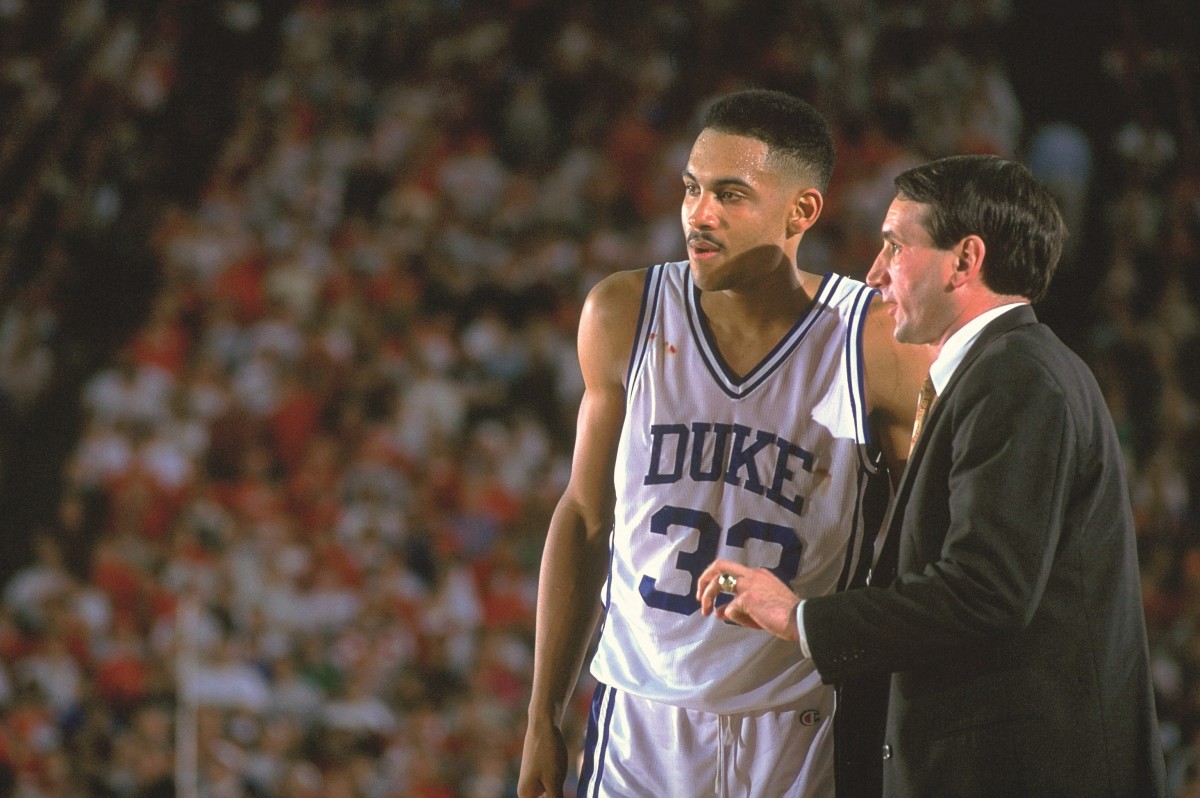
By the time he was selected No. 3 overall by the Detroit Pistons in the 1994 NBA Draft, the Duke standout had cemented his collegiate legacy, winning two national championships and leading the Blue Devils to three national title-game appearances under legendary coach Mike Krzyzewski.
Hill lived up to the NBA expectations, garnering All-Star Game selections his first four seasons and All-NBA bids in five consecutive years (1996–2000). He became one of the faces of the NBA as the star of Sprite’s commercials in the ’90s and was likened to the next Michael Jordan.
However, injuries derailed Hill’s promising career after he was acquired by the Orlando Magic during the 2000 offseason. Paired with budding young star Tracy McGrady, the duo was expected to lead the Magic into the NBA’s elite. But Hill was limited to four games during his first season in Orlando and played in just 47 games during his first four seasons with the Magic.
Five days after undergoing Hill’s fourth ankle surgery in March 2003, the incision reopened. He spiked a 104.5 fever and was convulsing. He was rushed back to the hospital. He had contracted MRSA, a potentially fatal staph infection. Hill underwent another surgery to graft skin and arteries from his left triceps to close the incision and restore circulation. He was hospitalized for a week and prescribed intravenous antibiotics for the following six months.
“Highest of highs and the lowest of lows,” said Hill. “It was hard. I was just trying to get through it — you’re trying to survive. You’re trying to overcome. You’re pushing through, you’re doing whatever you have to do. I don’t think I fully appreciated how hard and how difficult all of it was, until looking back and reflecting on it. But it was definitely difficult.”
While Hill never returned to his early-career heights, he did have a long and durable career. Hill clinched his last All-Star bid during his first full healthy season with the Magic in the 2004–05 campaign, appearing in 67 games while averaging 19.7 points on 50.9% from the field.
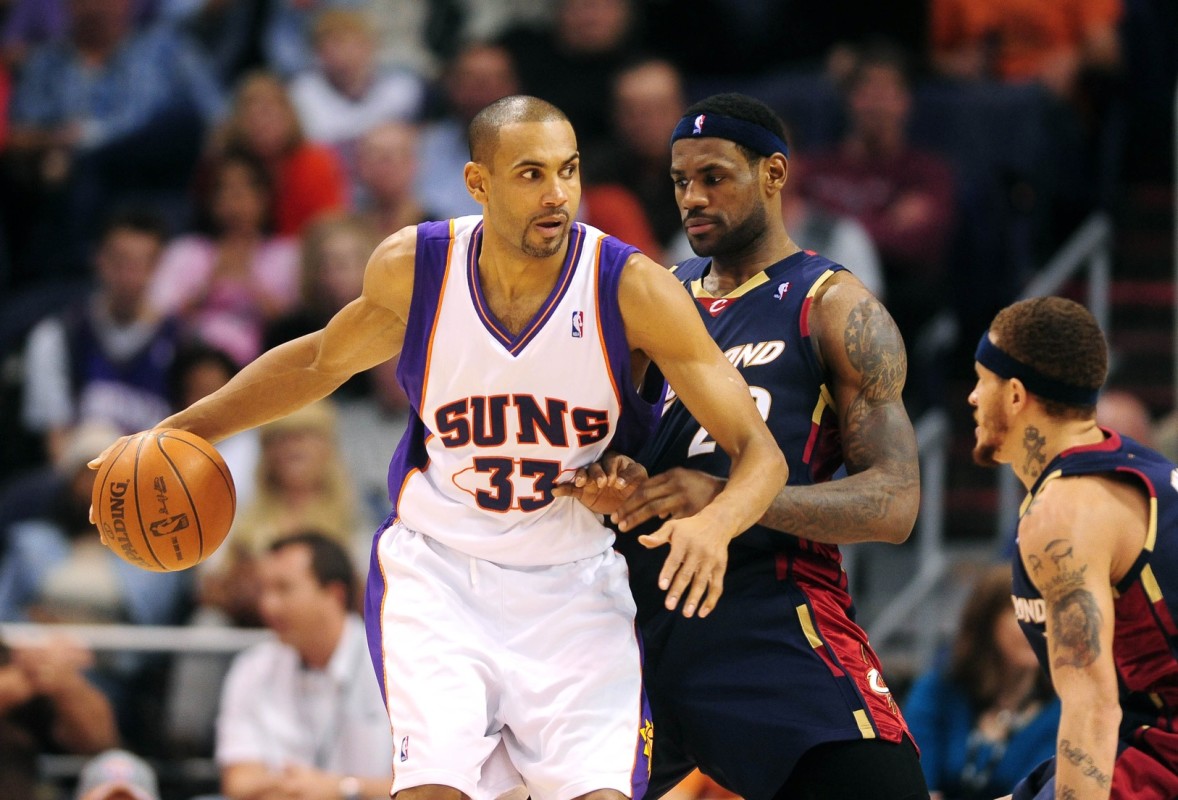
He would spend two more seasons in Orlando, helping the Magic become a playoff team in the Dwight Howard era before moving on to the Phoenix Suns in 2007–08. Hill finally won his first playoff series and advanced to the Western Conference finals during the 2009–10 season, part of a stretch where a healthy Hill would play in at least 80 games in three consecutive seasons from 2008–09 through 2010–11.
“My career has sort of been three different careers,” said Hill. “The early part in the Orlando years, which were really, really hard, and then a new lease on life. You go to Phoenix, and all of a sudden you have this great appreciation of playing. You’re able to be healthy, and you go from not playing to being an iron man and not missing games but are more of a role player. I kind of experienced everything you can possibly experience in the NBA during the course of my career.”
Hill, who is in the Naismith Basketball Hall of Fame, wrapped up his career with the LA Clippers during the 2012–13 season at the age of 40.
“It does feel good, considering everything — to be able to fight through, not quit and still find great joy and fulfillment in playing the game. Maybe because I was older and because I had some real restrictions and limitations from the injury, I wasn’t the same player. But I was still able to make an impact.
“I’m most proud of that part of my career, even better than some of the moments and experiences before the injury,” said Hill. “Because to be able to come back and play and — it wasn’t exactly perfect in terms of my career trajectory — but to have gone through that and to get back out there and play is probably something I’m most proud of as it relates to my professional basketball career.”
Since retiring, Hill has been active in broadcasting as an analyst of college and NBA games for CBS, TNT and NBC. In addition, he is co-owner of the Atlanta Hawks, and part-owner of the Baltimore Orioles, the Orlando City SC of the MLS and the Orlando Pride of the NWSL.
More must-reads:
- Thunder's Shai Gilgeous-Alexander breaks insane Wilt Chamberlain record against Celtics
- 'I apologize to absolutely no one': Heat HC Erik Spoelstra blasts critics of Bam Adebayo's historic performance
- The 'NBA 30-point game leaders' quiz
Breaking News
Trending News




Customize Your Newsletter
 +
+




Get the latest news and rumors, customized to your favorite sports and teams. Emailed daily. Always free!
PRIVACY POLICY COOKIE POLICY CONTACT US
ABOUT YARDBARKER TERMS OF SERVICE


By using this site, you agree to our Terms of Service and Privacy Policy.
This site is for entertainment purposes only.
There is no gambling offered on this site.
Gambling Problem? Call 1-800-Gambler.
