
-

-


Follow Us
-

 On Facebook
 On Flipboard

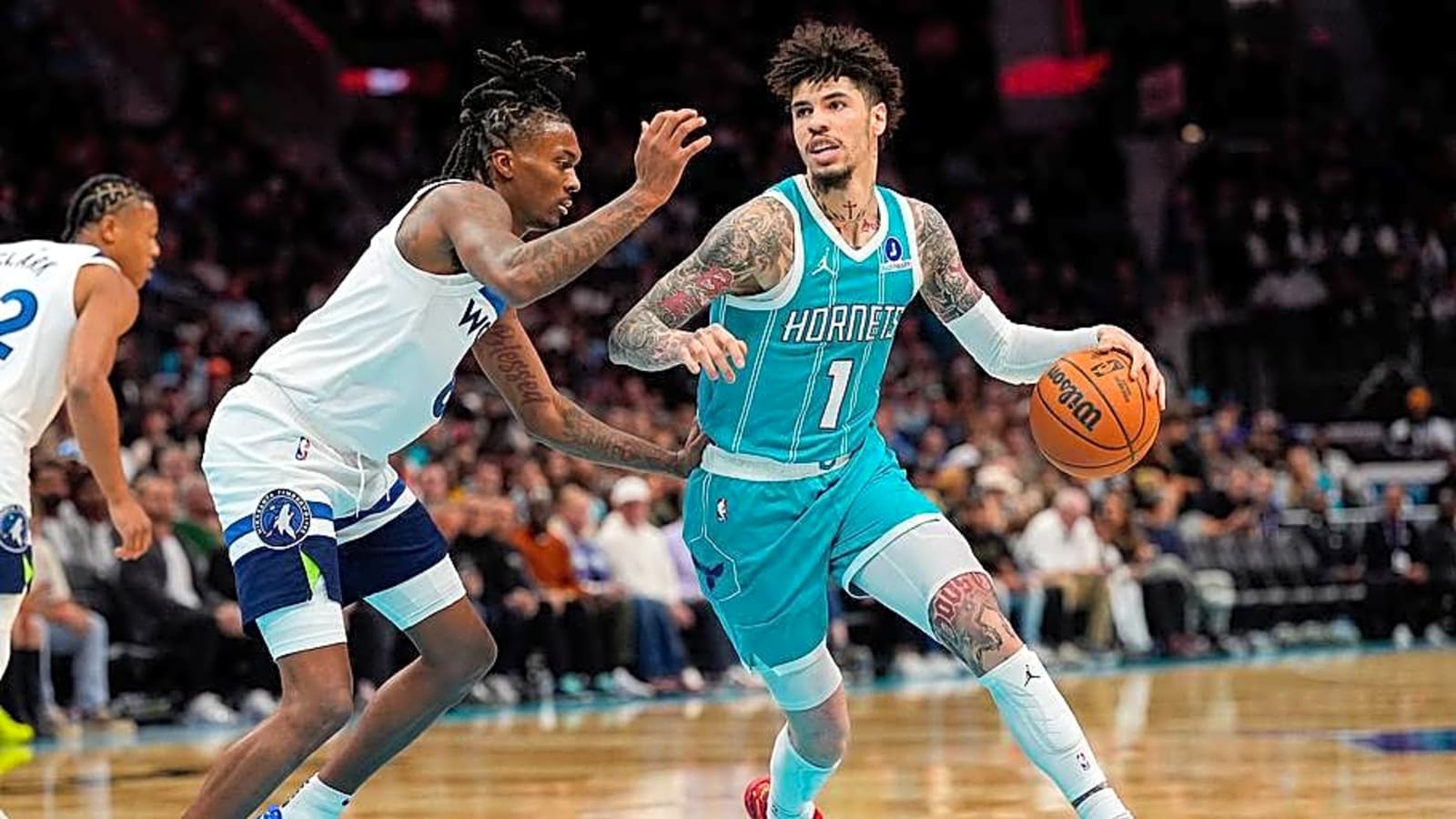
For the third time in five years, Tim Connelly has conducted a franchise-altering summer for the Minnesota Timberwolves. First, it was five players and five picks for Rudy Gobert in 2022. Then, it was Karl-Anthony Towns for Julius Randle and Donte DiVincenzo in 2024.
Now, it's Randle and Naz Reid for LaMelo Ball.
With just over two months left to go until the season tips off, it is obviously way too early to get an accurate look at how Connelly’s moves this summer will pan out. That accurate look won’t be clear for years.
With that in mind, let’s roll through my tentative grades for all Minnesota’s moves ahead of a season that will mark the dawn of a new era for a team balancing a young core while still having championship aspirations.
LaMelo Ball, Naz Reid, Julius Randle trade
Grade: A
With one swing, the Timberwolves patched two holes this summer that would have prevented them from reaching their championship goals. By bringing in Ball, the Wolves add their long-term All-Star partner next to Anthony Edwards, who is 17 days younger than him. The Wolves have solidified their nucleus, doing so by bringing in a legitimate point guard, which they didn’t have last season, negatively impacting Edwards.
The availability concern with Ball is legitimate. He played in 72 games last season, but over the three years before that, he played in 42.7% of Charlotte’s regular-season games. Connelly is betting that Ball can stay healthy, especially during the season’s most crucial points and into the playoffs, an environment that Ball has yet to experience.
But even with those concerns and unknowns, Ball’s offensive talent—coming in on the same timeline as Edwards—is tantalizing for Minnesota’s ceiling. He is the type of talent that rarely becomes available and that the Wolves would have been silly to pass up, given their obvious needs, especially with what the package looked like to acquire him.
Wolves fans losing Naz Reid undoubtedly hurts, but Ball is a significant upgrade. Julius Randle played well for large chunks of his time with the Wolves, but his time here had grown stale. Pick swaps (the Wolves included six of them for Ball) are only so valuable, and by the time Charlotte would use the 2033 first-round pick it received, Reid will be 34, Randle will be 39, and Edwards and Ball will both be 32.
Connelly’s latest home run swing brings in one of the most dynamic natural point guards in the NBA who fits Minnesota’s timeline around Edwards, and he didn’t have to give up Jaden McDaniels or Rudy Gobert to get it done. That alone is worthy of an A grade, despite the risks involved.
Ayo Dosunmu 5-year, $112 million extension
Grade: B+
The Timberwolves re-signed Dosunmu to this lucrative deal soon after dumping Randle to the Brooklyn Nets and before Ball became available for trade. Now, Minnesota has $109 million tied between three guards in Ball, Dosunmu and Edwards this season with minimal size in the frontcourt.
Still, Dosunmu earned every penny of his contract. He is an on-ball scorer capable of dropping 43 points in a playoff game when needed. Dosunmu is also one of the NBA’s most efficient 3-point shooters, both on and off the ball. He provides Minnesota with crucial, versatile guard depth, which is important in getting through teams like the Oklahoma City Thunder and San Antonio Spurs in the playoffs.
As contracts continue to become richer and richer (Dillon Brooks just signed an extension with the Phoenix Suns for $73 million over three years), I think Dosunmu’s contract will age well for a player with the scoring chops and overall energy on both ends that he possesses.
Bones Hyland veteran’s minimum re-signing
Grade: A+
With a combination of lead-guard scoring and a contagious, never-ceasing joy, Hyland helped keep the Timberwolves’ season alive last year during a season where Minnesota struggled to find scoring off the bench and remained moody and occasionally disconnected throughout the year.
He averaged 8.5 points and 2.6 assists over 71 games last season on 45.3% from the floor and 38.8% from deep. Hyland was electric with the ball in his hands, and the Wolves will need that this season as he is the only other on-ball creating guard on the roster outside of Ball and Dosunmu, who may very well end up playing like more of a wing than a point guard.
I thought Hyland played himself out of a veteran’s minimum deal with his scoring and efficiency last season. However, the Timberwolves getting him back on that contract is a steal.
Jaylen Clark 3-year, $10 million extension
Grade: B+
Clark has solidified himself as Minnesota's most productive point-of-attack defender. He leverages his bulky frame very well to disrupt ball handlers. That build, despite standing only 6’3”, gives Clark the ability to switch onto bigger opponents, which the Wolves will need from him this season. He still must improve as a shooter, hopefully getting back close to the level he was on in 2024-25 when he shot 43% on 1.3 three-point attempts per game.
If that happens, Clark’s role with the Wolves could grow exponentially. But for now, Connelly keeping a young plug-and-play defender with the stopping power Clark has around at a $3.3 million average annual value is solid business.
Trey Lyles veteran’s minimum signing
Grade: B-
Lyles joins the Timberwolves after spending last season in Real Madrid, where he averaged 11.7 points, 4.8 rebounds and 1.8 assists on 47.7% from the floor and 39% from deep in 20.6 minutes over 25 games.
At 30 years old, I think there is more left in Lyles’ tank than many are expecting. There is a chance he will be a significant part of filling Minnesota’s power forward void. Maybe that comes with him in the starting lineup regularly, or just in the rotation. Regardless, Minnesota needed to add depth at forward, and it did just that in Lyles — a 6’10” big with somewhat versatile offense and solid rebounding abilities.
Isaiah Evans draft selection
Grade: C
In his first taste of professional basketball, at the Las Vegas Summer League, Evans averaged 10.5 points on 27% from the floor and 20.5% from deep over four games. Meanwhile, Meleek Thomas, who the Cleveland Cavaliers selected right after Evans, averaged a Summer League high 27.3 points on 50% shooting and 43.8% from deep over four games.
I get it, the optics of that suck.
But it is completely unreasonable to write off Evans’ professional career based on those results, or even to get discouraged about what lies ahead for him. There are far too many examples of players having either great or bad Summer League showings, only for the opposite to hold true in their NBA careers.
Evans played with consistent defensive commitment in Las Vegas. That is far more likely to follow him into the NBA than his shooting splits. There is also zero pressure for Evans to become NBA-ready quickly with the Timberwolves’ depth at guard entering this season.
Trey Kaufman-Renn draft selection
Grade: C-
Kaufman-Renn, whom the Wolves selected with the 59th pick out of Purdue this year, had some solid stretches in Las Vegas where his physicality and energy popped. Kaufman-Renn gives the Wolves some size at 6’9”, but he unsurprisingly did not look NBA-ready during the Summer League.
I am also concerned about his lack of athleticism, shooting, and defensive mobility at an NBA level. I am expecting Kaufman-Renn to spend most of his rookie year in the G-League with the Iowa Wolves.
Will Barton coaching promotion
Grade: A
Chris Finch needed to backfill his coaching staff this summer after his lead assistant Micah Nori left to become head coach of the Portland Trail Blazers, and fellow assistant coach Max Lefevre departed to become head coach of the Paris Men’s Basketball team.
With internal promotions or external hires to come to replace those two in Finch’s pecking order, Barton is joining his coaching staff lower down the totem pole in a player development role for the 2026-27 season. Last season, Barton was an assistant coach for the Iowa Wolves. And this summer, he was an assistant for the Timberwolves’ Summer League team.
Barton has deep ties with Connelly and Hyland. He impressed Finch last year. And now, he provides the Timberwolves with a unique voice from the perspective of a former score-first guard with extensive experience playing alongside All-Star talent in the backcourt. That could really help the Wolves figure out and maximize the Edwards-Ball duo this season.
More must-reads:
- Clippers hit with yet another Kawhi Leonard scandal
- Jaylen Brown has telling answer to question about Jayson Tatum
- The 'Most playoff games by NBA team' quiz
Breaking News
Trending News


Customize Your Newsletter
 +
+




Get the latest news and rumors, customized to your favorite sports and teams. Emailed daily. Always free!
PRIVACY POLICY COOKIE POLICY CONTACT US
ABOUT YARDBARKER TERMS OF SERVICE


By using this site, you agree to our Terms of Service and Privacy Policy.
This site is for entertainment purposes only.
There is no gambling offered on this site.
Gambling Problem? Call 1-800-Gambler.
