
-

-


Follow Us
-

 On Facebook
 On Flipboard


To this point, they traded up in the draft for Stanford guard Ebuka Okorie. They traded away their longest-tenured Piston, center Isaiah Stewart, to the Memphis Grizzlies for three second-round picks. They acquired Isaiah Joe from the Oklahoma City Thunder for two second-round picks.
They also re-signed Kevin Huerter to a three-year, $27 million deal with a team option in the final season, Javonte Green signed a 1-year, $3.9 million deal to return, while John Collins signed a three-year, $51 million contract in which only the first year is fully guaranteed at $17 million. That move will likely be completed as a sign-and-trade with the Clippers.
Meanwhile, 33-year-old Tobias Harris, one of the team's leaders and the starting forward who helped spearhead the turnaround two years ago, departed for the San Antonio Spurs on a two-year, $31 million deal.
Okorie is a smaller guard who was one of college basketball's best isolation scorers and ball-handlers. Despite carrying a heavy workload as a freshman, he maintained a low turnover rate and was ultra-effective with the ball in his hands. Isaiah Joe shot better than 40 percent from three-point range for the fourth consecutive season and is coming off the best year of his career. Collins, meanwhile, is coming off a career-high 41 percent shooting season, provides positional versatility at the four or the five and he's a vertical lob threat.
Despite this, many fans are upset. Especially after striking out on the likes of Kyrie Irving, Kawhi Leonard, Austin Reaves, and most recently, reportedly Kevin Durant.
Lakers initially offered Austin Reaves $30M/year, but were forced to increase their offer to $46M/year after the Pistons started to aggressively pursue him.
— Legion Hoops (@LegionHoops) June 25, 2026
Damn. (via ESPN, h/t @RealGM) pic.twitter.com/krcM6mSZ8D
There were reportedly talks of the Pistons getting Kevin Durant in a blockbuster trade with the Rockets and Celtics, per @BrettSiegelNBA.
— (@the_det_times) July 2, 2026
However, Houston ultimately killed the deal as talks continued. pic.twitter.com/uZR2Nonm5x
It has been especially difficult for fans to watch their Eastern Conference peers make splashier moves. The Sixers traded for Jaylen Brown, the Raptors acquired Kawhi Leonard, and the Miami Heat landed Giannis Antetokounmpo.
But there is a more nuanced reason why those teams were better positioned to make those moves.
Outside of Giannis, whose acquisition required virtually every asset imaginable, those teams largely dealt pieces that were not attached to their core players in exchange for an even greater piece to their puzzles.
For example, the Raptors moved Brandon Ingram, who they acquired last season for Bruce Brown, Kelly Olynyk, a first-round pick and a second-round pick. This week, Ingram, along with the Raptors' former No. 13 overall pick from the 2023 NBA Draft, Gradey Dick, two first-round picks, two second-round picks and a pick swap, were sent out to acquire Kawhi Leonard.
That deal allowed Toronto to maintain a core of Scottie Barnes, RJ Barrett, Collin Murray-Boyles, Immanuel Quickley, Jamal Shead and Jakob Poeltl while pairing them with a 34-year-old Kawhi Leonard, who is coming off the best statistical season of his career.
A move like that, however, is often the product of a previous regime's ability to steward a franchise successfully over time, something the Pistons have been unable to do for nearly two decades.
In 2000, the Pistons acquired Ben Wallace in the sign-and-trade that sent the former No. 3 overall pick Grant Hill to Orlando. Wallace became the backbone of the franchise. They signed Chauncey Billups in 2002, and he became the team's franchise point guard. Those two served as anchors, but drafting TayShaun Prince and trading for Richard Hamilton and Rasheed Wallace formed the foundation of a championship team and a contender that reached six consecutive Eastern Conference Finals from 2003 to 2008.
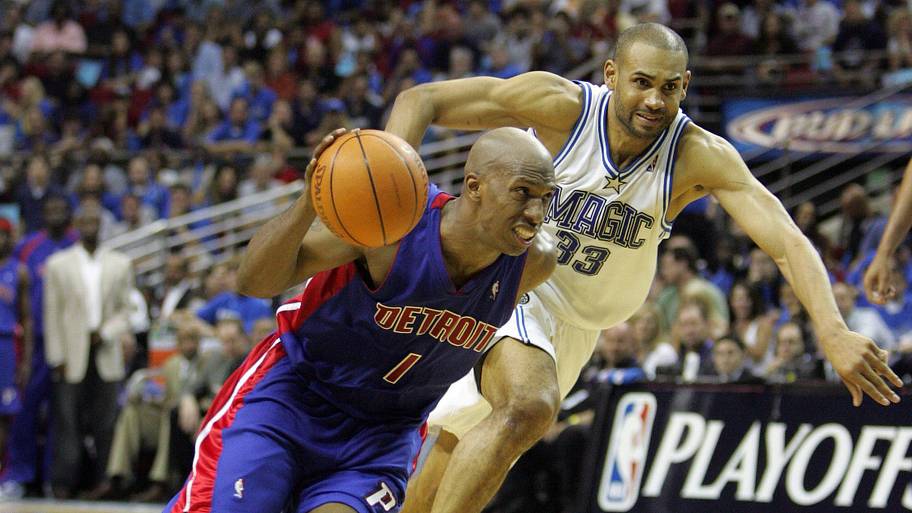
What happened afterward is what this current Pistons regime is still paying for today.
They lost Wallace in free agency in 2006. They traded Billups in 2008. Over the next decade-plus, the franchise struggled to maintain or replenish its collection of assets. During that span, the best player the organization developed was Andre Drummond, and when the Pistons finally decided to move him, they received Brandon Knight and a poor second-round pick in return, essentially getting nothing for one of their only developmental successes.
When Masai Ujiri took over basketball operations for the Toronto Raptors in 2013, his most promising core pieces were DeMar DeRozan, Jonas Valančiūnas, Kyle Lowry, Lou Williams and Terrence Ross.
Within a few years, Ujiri drafted Norman Powell, OG Anunoby and Pascal Siakam. He found Fred VanVleet as an undrafted free agent and later traded for Kawhi Leonard and Serge Ibaka. Those moves helped deliver a championship. Even after that title run, Toronto continued extracting value from its assets to establish a quick rebuild. Trading Anunoby eventually returned multiple starters, while Jamal Shead, a key rotation piece, was later acquired through a deal involving Jalen McDaniels.
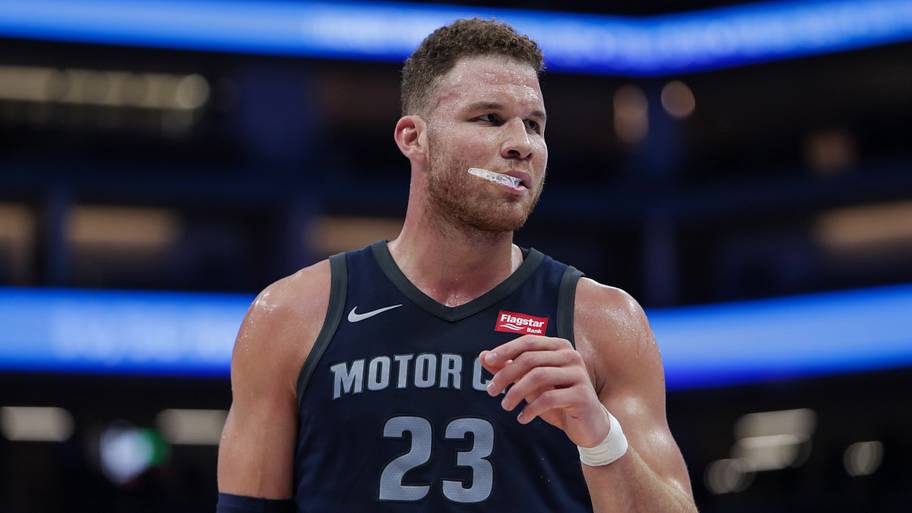
The Pistons' best asset during that same period was Blake Griffin, whom they acquired in the Tobias Harris trade in 2018. After producing an MVP-caliber season, Griffin's knee injuries derailed his career, and the contract ultimately became a sunk cost.
That trade was a knee-jerk move that generated excitement but ultimately produced diminishing returns. A more aggressive yet measured approach may be exactly what the Pistons need to build sustained success rather than simply catch lightning in a bottle.
The Pistons have never been a premier free-agent destination, which makes drafting and asset management even more important. Former Pistons executive Jack McCloskey, who helped build the original Bad Boys teams, drafted Isiah Thomas, Joe Dumars, and then found Dennis Rodman in the second round. Those types of moves are the lifeblood of franchises that have to build from within.
Since 2008, the Pistons drafted in the top 15 ten different times. Drummond is the only All-Star with two. Players like Khris Middleton, Arron Afflalo, Bruce Brown, and Spencer Dinwiddie excelled once they left the team, but the Pistons seemed to lack an ability to develop internally and never bore their fruit.
Fast forward to this offseason, and many fans are frustrated. But the reality is that, for the first time in more than two decades, the Pistons have roster clarity.
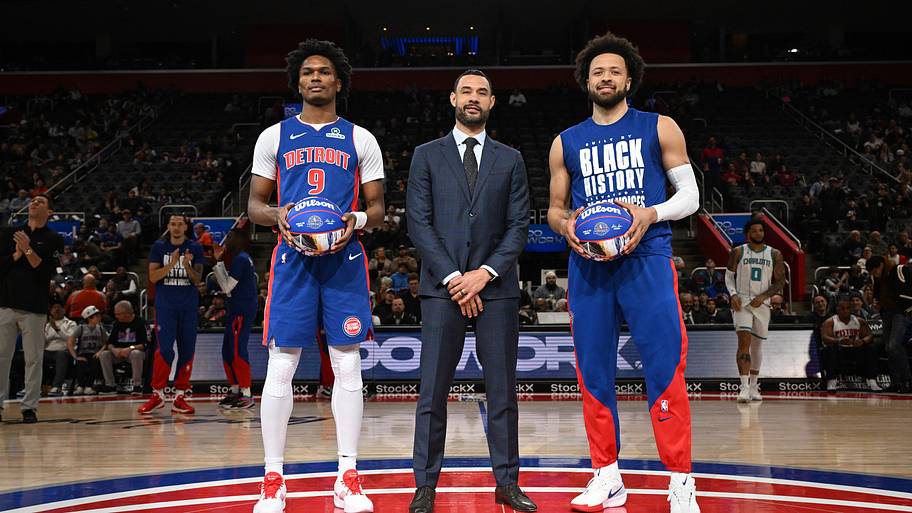
Cade Cunningham is the franchise cornerstone, coming off a First Team All-NBA selection and his second All-Star appearance, where he was voted in as a starter. Ausar Thompson is the backbone of the team's defense, fresh off an All-Defensive First Team selection. And Jalen Duren is coming off an All-NBA and All-Star season of his own after averaging 19 points and 10 rebounds on 65 percent shooting.
Duren is currently in the midst of restricted free-agent negotiations. His playoff performance left something to be desired, but he is still only 22 years old. Like Cunningham and Thompson, he has improved every season of his career.
Those three players are a major reason why Pistons President of Basketball Operations Trajan Langdon has become more aggressive in his view of player targets to pair with the team's timeline.
The Pistons went from 14 wins to 44 wins in one season, then followed it with a 60-win campaign, all while being led by three players under the age of 25.
Patience and practicality remain key for Detroit. as they seek the right pieces to surround their budding core.
Those three players were all drafted by the previous regime. Other previous draft picks like Isaiah Stewart was traded last week, and Jaden Ivey, who was arguably the team's best trade asset, suffered an injury during last season season in which he was blossoming as a player.
He was later moved at this year's trade deadline for what many viewed as below-market value.
The Raptors provide a useful blueprint for how to identify talent, develop it, and strike when the right opportunity presents itself. They found gems, developed them, and stayed ready for their big move.
And now, even with Masai having moved on, the new leadership was able to capitalize off of prior gains.
Even on a higher level, organizations like the Oklahoma City Thunder turned young prospects and finds like Serge Ibaka and Domantas Sabonis into Jalen Williams and Shai Gilgeous-Alexander through trades and drafts over time.
But there's also a balance. Like with the Warriors, who were teased as the Kevin Love trade destination as a final piece after their young core went through two separate playoff runs, they decided to hold firm. The following year, the team won a title.
The approach mirrors some of what the Pistons are faced with. Trading young players to gain instant help or waiting and developing what's in house until the right move arises.
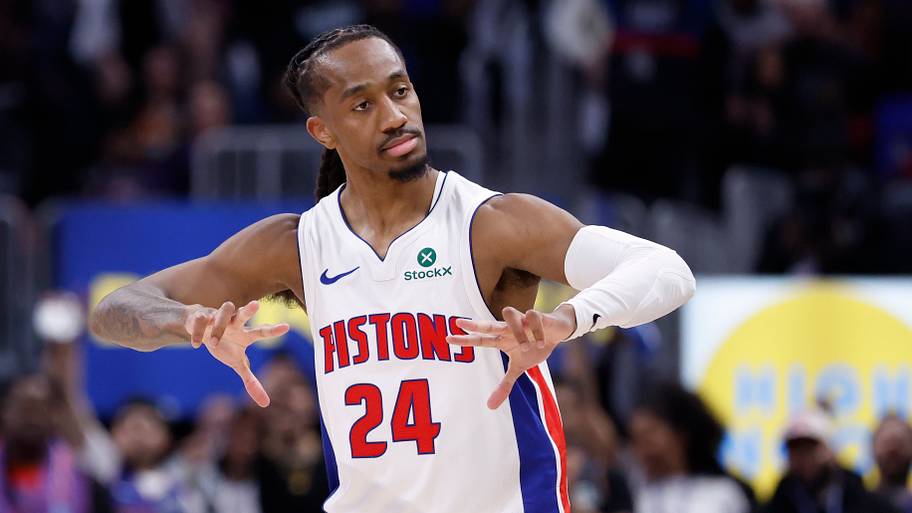
The Pistons have found value of their own. Daniss Jenkins has emerged as a player who, at minimum, looks like a solid rotational guard and showed growth during the playoffs. Their young forward, Ron Holland is only 20 years old and feels like a league-average jumper away from becoming a 30-minute-per-game player thanks to his aggressive on-ball defense and motor in the open court.
Around that young core, Detroit has added elite floor spacing and another guard who, at minimum, projects as a future on-ball creator.
It remains to be seen what other moves the Pistons make, but they appear to be operating methodically because that is the hand they were dealt.
The sins of the past kept this franchise confined to mediocrity for far too long, and the approach taken over the last two seasons feels like a long-overdue effort to correct those patterns. Building patiently, preserving assets, and developing young talent may not generate the same headlines as blockbuster trades, but it is the type of foundation the Pistons have lacked for a while.
And for the first time in a long time, that foundation appears to be firmly in place.
More must-reads:
- Five worst signings of NBA free agency
- Lakers reportedly eyeing Jonathan Kuminga — but there's a roadblock
- The 'NBA Playoff-3's leaders' quiz
Breaking News
Trending News




Customize Your Newsletter
 +
+




Get the latest news and rumors, customized to your favorite sports and teams. Emailed daily. Always free!
PRIVACY POLICY COOKIE POLICY CONTACT US
ABOUT YARDBARKER TERMS OF SERVICE


By using this site, you agree to our Terms of Service and Privacy Policy.
This site is for entertainment purposes only.
There is no gambling offered on this site.
Gambling Problem? Call 1-800-Gambler.
