
-


Follow Us

 On Facebook
 On Flipboard
 On Twitter
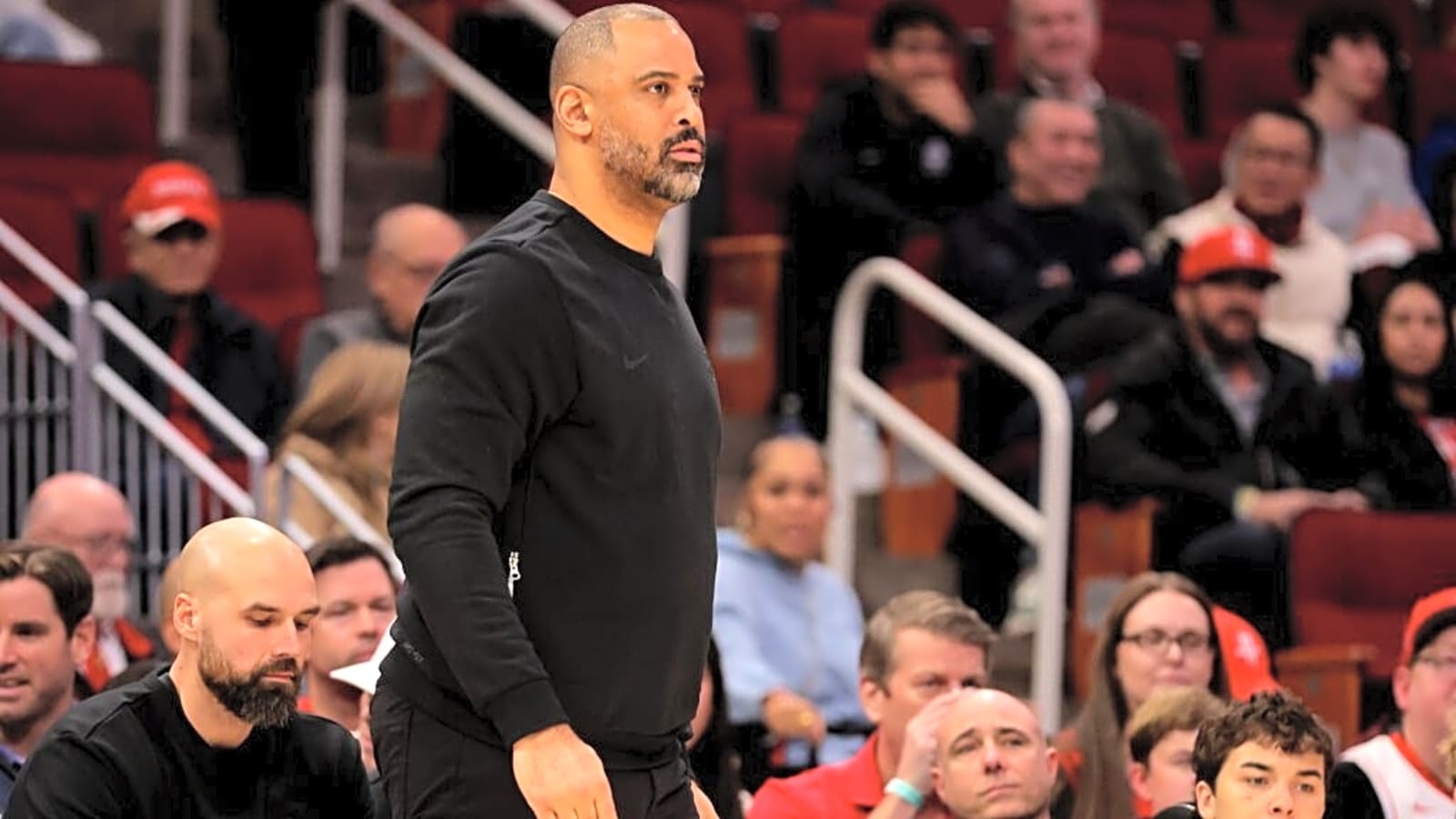
For much of the early season, the Houston Rockets looked like a team searching for answers. The talent was evident. The depth was real. Yet the results often felt disconnected from the process. Over the past stretch, however, signs of structure have begun to emerge, and much of that points back to the Ime Udoka’s adjustments taking shape.
Houston’s recent wins have not been flawless, but they have followed a clearer pattern. Defensive principles have tightened, offensive responsibilities have become more defined, and the Rockets are beginning to resemble a team that understands how it wants to win games, not just one that hopes talent carries them through.
Ime Udoka’s Adjustments Are Starting to Show in Houston
The most noticeable shift has come on the defensive end. Early in the season, Houston struggled with perimeter containment and late rotations, especially against teams willing to push pace. Over the last several games, those breakdowns have become less frequent.
Udoka has leaned into physicality. Houston is switching with more purpose, tagging rollers earlier, and shrinking the floor when opponents attempt to attack downhill. That approach has limited easy looks and forced teams into longer possessions.
These adjustments have been particularly effective late in games, where Houston has shown a greater ability to string together stops. While the Rockets are still not immune to lapses, the defensive foundation now looks intentional rather than reactive.
Sengun’s Role Clarifies the Offense
Offensively, the biggest change has been how the Rockets are using Alperen Sengun. Instead of oscillating between scorer and facilitator from night to night, Sengun has increasingly become the offensive hub.
Houston is running more sets through him at the elbows and in the high post, allowing the offense to flow naturally rather than stalling into isolation. Sengun’s passing has helped stabilize lineups that previously struggled to generate clean looks, especially when opposing defenses load up on primary scorers.
This shift reflects a broader theme within the Ime Udoka’s adjustments: clarity. Houston looks more comfortable knowing where its offense should start, even if execution is still a work in progress.
Kevin Durant’s Usage Is More Measured
Another subtle but important adjustment has been how Kevin Durant is being deployed. Rather than forcing late-game possessions through isolation every time, Houston has begun using Durant more as a pressure point within the offense.
Durant still closes games, but he is no longer asked to carry entire stretches alone. That balance has allowed others to stay engaged and reduced the predictability that plagued Houston during earlier losses.
For a veteran player, this approach also preserves energy across the schedule. It is an example of corrections that may not always stand out on the stat sheet but matter over an 82-game season.
Progress Without Illusions
Despite the improvement, Houston is not a finished product. Late-game execution remains inconsistent, and turnovers still surface at the worst moments. There are nights when the offense stalls and the defensive focus wavers under pressure.
That reality matters. The Rockets are better organized now, but consistency is the final hurdle. Contending teams execute these principles every night, not just in spurts.
What makes this stretch encouraging is not the win-loss record alone, but the repeatability of the approach. Ime Udoka’s adjustments are no longer experimental.
Where This Leaves Houston
The Rockets are still defining who they are. They are not yet a team that dictates outcomes regardless of circumstance. However, they are beginning to look like a group aligned in its identity.
Udoka’s influence is becoming clearer with each game. Defensive accountability has improved, offensive roles are settling, and the confusion that defined earlier stretches has given way to structure.
Whether that structure holds when the schedule tightens will determine Houston’s ceiling. For now, the adjustments are working, and for the first time in weeks, the Rockets appear to be moving in a single direction.
More must-reads:
- Jaylen Brown took Celtics doubters 'personally' — and now he can dunk on them
- When Steelers reportedly could make final Aaron Rodgers decision after hiring of Mike McCarthy
- The 'Youngest Conference Champ QBs' quiz
Breaking News
Trending News






Customize Your Newsletter
 +
+




Get the latest news and rumors, customized to your favorite sports and teams. Emailed daily. Always free!
PRIVACY POLICY EDITORIAL POLICY CONTACT US
ABOUT YARDBARKER TERMS OF SERVICE


Use of this website (including any and all parts and
components) constitutes your acceptance of these
Terms of Service and Privacy Policy.
This site is for entertainment purposes only.
There is no gambling offered on this site.
Gambling Problem? Call 1-800-Gambler.
