
-


Follow Us

 On Facebook
 On Flipboard
 On Twitter
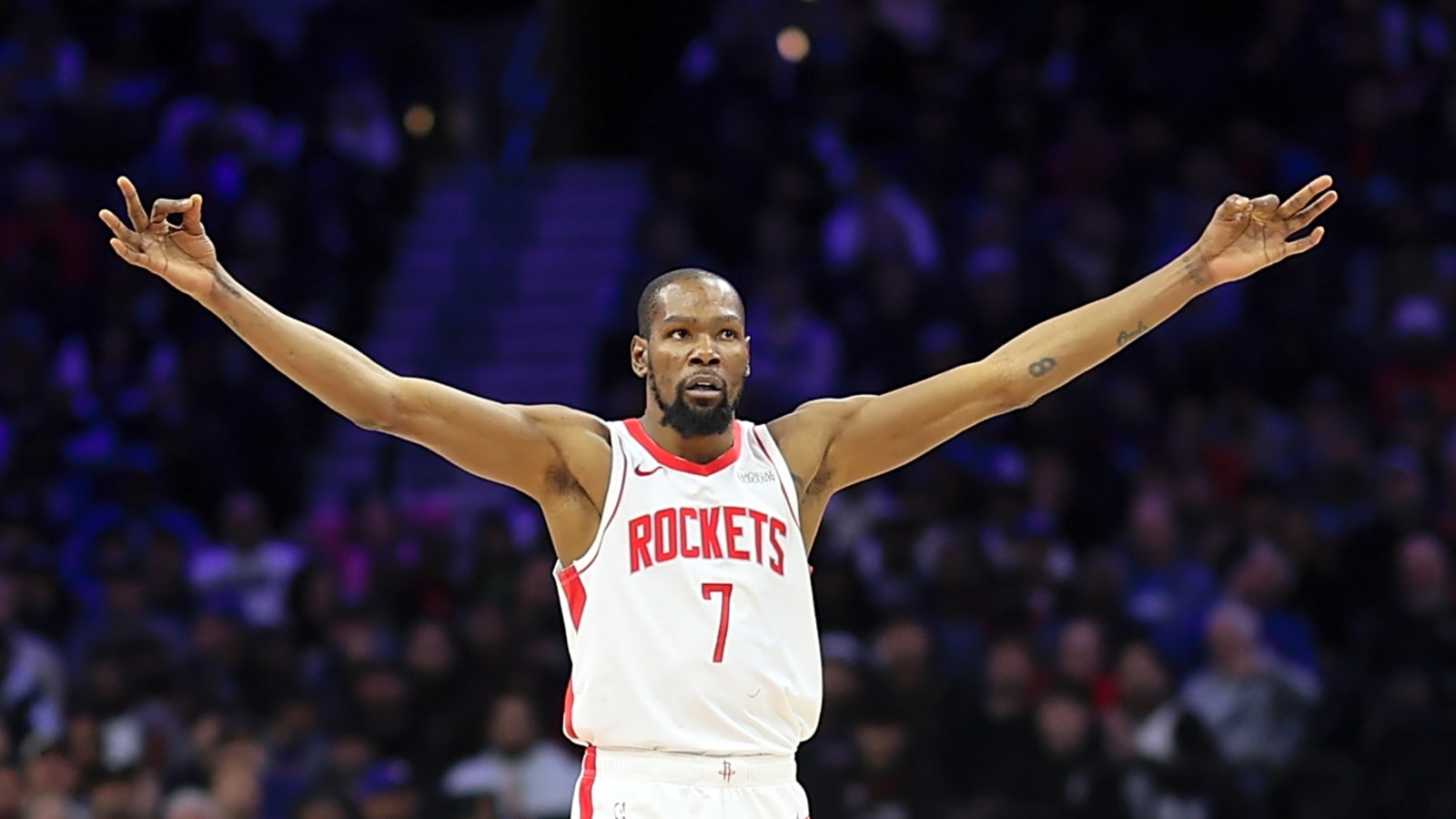
At an age when most scorers begin to fade, Kevin Durant continues to defy basketball’s natural timeline. In Houston’s 111–104 win over the Detroit Pistons, Durant once again reminded everyone why he remains one of the most unstoppable offensive forces the NBA has ever seen. Logging 41 minutes, he finished with 32 points on 11-of-19 shooting, buried five three-pointers, pulled down seven rebounds, and posted a +18 plus/minus—a vintage Durant performance that felt routine only because he has made sustained greatness look effortless for nearly two decades.
Kevin Durant moved up the all-time three-point leaderboard and led the Rockets to victory!
— NBA (@NBA) January 24, 2026
32 PTS
7 REB5 3PM pic.twitter.com/jH1NxDlLvp
Durant’s brilliance on the night wasn’t just about the box score. It was about control. He dictated tempo, punished mismatches, and delivered timely buckets whenever Detroit threatened to swing momentum. At 37 years old, his game looks polished, precise, and somehow even more efficient than before—built less on explosion and more on mastery.
To fully appreciate what Durant is doing now, you have to understand the complete arc of his career.
Before the injury that once threatened to alter everything, Durant had already cemented himself as an all-time great. From his early days in Seattle and Oklahoma City, he was a scoring prodigy—winning Rookie of the Year, capturing four scoring titles, and earning the 2014 NBA MVP. His move to Golden State elevated him to dynasty status, where he won two NBA championships and two Finals MVPs, becoming nearly unguardable on the game’s biggest stage. By the time the 2019 NBA Finals arrived, Durant was firmly on a top-15 all-time trajectory.
Then came the moment that changed the narrative.
In Game 5 of the 2019 Finals, Durant suffered a devastating Achilles tear, one of the most feared injuries in basketball history. The injury forced him to miss the entire 2019–20 season, and skepticism quickly followed. History suggested elite scorers rarely return the same—if they return at all.
Durant didn’t just come back. He evolved.
Post-injury, Durant has arguably become a more refined scorer and a more complete overall player. His shot selection has tightened, his playmaking has sharpened, and his efficiency—already elite—has somehow climbed another level. In Brooklyn, Phoenix, and now Houston, Durant has consistently hovered in the 27–30 points per game range, all while maintaining elite shooting splits in both the regular season and the playoffs. His postseason résumé remains staggering, with career playoff averages near 30 points per game on exceptional efficiency, production that rivals anyone in NBA history.
What makes this stretch unprecedented is context. Achilles injuries have ended or drastically diminished the careers of legends. Durant, instead, has joined rarefied air by becoming the exception. His blend of size, skill, footwork, and shooting touch allows him to age differently—less reliant on burst, more reliant on precision and feel.
Now steadily climbing the NBA’s all-time scoring list—already sixth all-time with 31,648 career points—Durant’s résumé reads like a basketball encyclopedia: 14+ All-Star selections, multiple All-NBA honors, a league MVP, two Finals MVPs, NBA championships, Olympic gold medals, and sustained dominance across eras, teams, and systems.
Against Detroit, the performance felt symbolic. Not flashy. Not forced. Just inevitable.
Kevin Durant isn’t surviving late in his career—he’s thriving. And as the seasons pass, one truth becomes clearer: greatness, when built on skill, discipline, and adaptability, doesn’t expire.
It simply ages like fine wine.
More must-reads:
- Grizzlies reveal extent of Ja Morant's latest injury
- Giannis Antetokounmpo out 4-6 weeks as Bucks drama mounts
- The 'NFL tight end receiving leaders' quiz
Breaking News
Trending News




Customize Your Newsletter
 +
+




Get the latest news and rumors, customized to your favorite sports and teams. Emailed daily. Always free!
PRIVACY POLICY EDITORIAL POLICY CONTACT US
ABOUT YARDBARKER TERMS OF SERVICE


Use of this website (including any and all parts and
components) constitutes your acceptance of these
Terms of Service and Privacy Policy.
This site is for entertainment purposes only.
There is no gambling offered on this site.
Gambling Problem? Call 1-800-Gambler.
