
-

-


Follow Us
-

 On Facebook
 On Flipboard

In September, National Basketball Association commissioner Adam Silver addressed concerns about fans struggling to access games on television by saying, “This is very much a highlights-based sport, so Instagram, TikTok, Twitter, YouTube — another example that is advertising based that consumers can consume.”
The backlash was swift. And, increasingly, that has become the pattern whenever Silver speaks publicly.
Adam Silver correctly calling out corrupt NBA ownership for their part in tanking/ruining the league pic.twitter.com/QbpkgLOswX
— Dead Serious (@Deadseriousness) February 14, 2026
This weekend at All-Star festivities, Silver again found himself at the center of controversy after addressing tanking.
“It’s not what the fans want,” Silver said, before adding that teams are in a difficult position because “many of you have written the worst place to be is a middle-of-the-road team and either be great or be bad, because that will help you with the draft.”
But is that really what fans want?
If the league truly believes it is a “highlight league,” and that full-game viewership is secondary to social media consumption, why does it matter who is on the floor in late-season games between lottery-bound teams? Why does the league selectively police competitive intent?
Look no further than the Chicago Bulls as a case study. Over the past six seasons, Chicago has compiled a 219–236 record. The highest seed it reached in that span was No. 6, followed by a first-round exit. Most Bulls fans would likely argue that bottoming out for a top pick would have been more productive than hovering around mediocrity.
The league’s own structure incentivizes losing. The lottery system exists to reward teams that finish near the bottom with better odds at landing a franchise-altering player. Silver himself acknowledged the strength of the upcoming draft class and suggested that may be driving earlier tanking behavior.
Then came the fine.
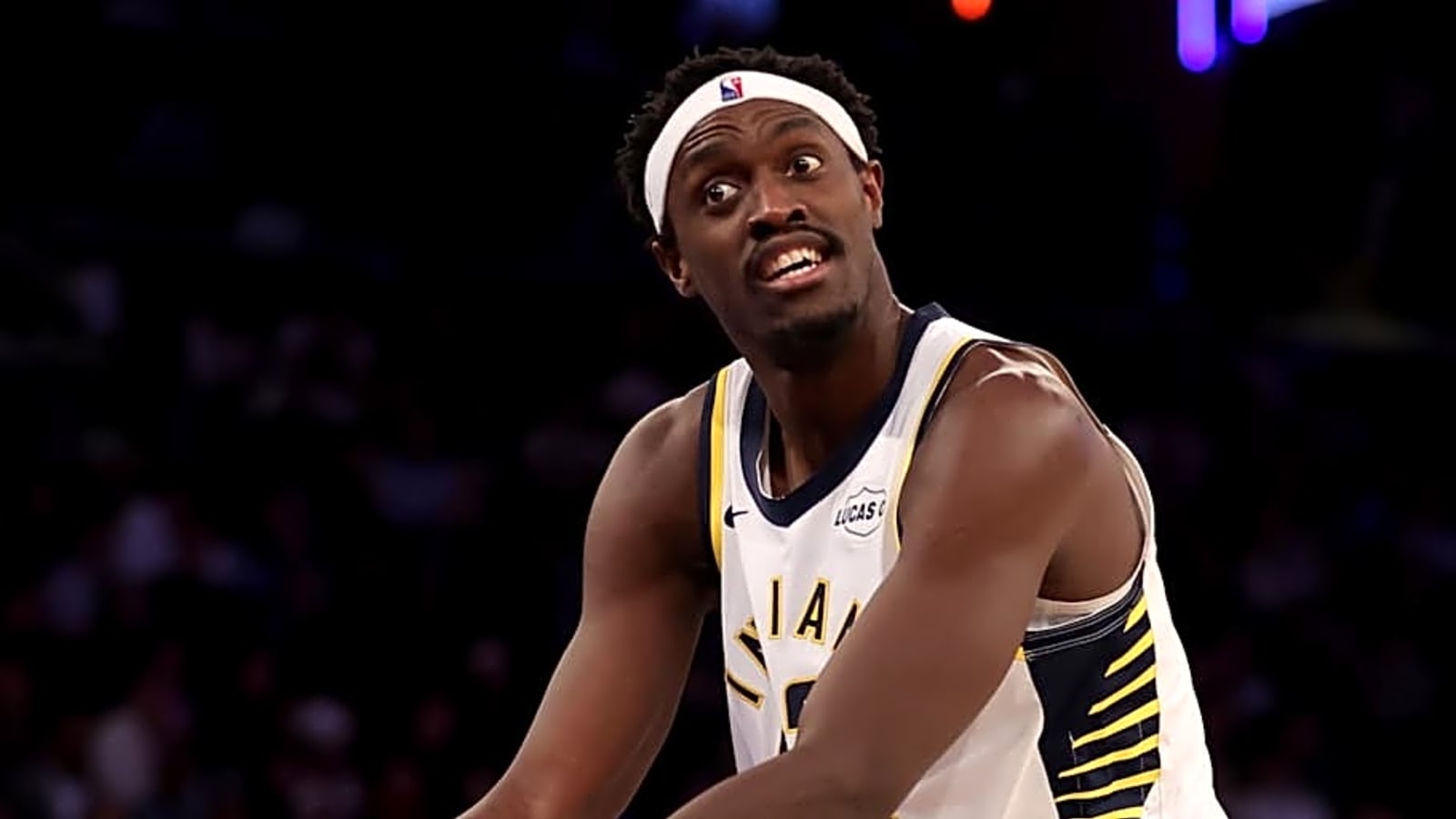
The Indiana Pacers were penalized under the Player Participation Policy (PPP) after resting key players, including Pascal Siakam. Siakam did not hide his frustration.
“I don’t know where that comes from,” Siakam said. “My name was in it. I play almost every game, I have the most minutes. A couple of years ago in Toronto I played the most minutes in the whole league. I’m the guy that wants to be on the court. I want to play… Every time I’m on the court I’m trying to win.”Pascal Siakam at All-Star Weekend Media
The issue is not the existence of the PPP. It is the inconsistency in its enforcement.
Indiana listed Siakam and Bennedict Mathurin out for rest in one instance and was fined. Yet in other games, including a January matchup against Detroit where multiple starters sat, no penalty was issued. Why was one decision deemed tanking and another not? Was it opponent-based? Perception-based?
Meanwhile, the Utah Jazz were fined for holding Lauri Markkanen late in games, while other teams have maneuvered lineups without consequence.
Since the PPP was implemented in 2023–24, only four teams have been penalized: Indiana, Cleveland (twice), Utah and Atlanta. The players involved have included Siakam, Darius Garland, Donovan Mitchell, Markkanen and Trae Young.
Only Indiana and Utah have been publicly framed within the context of “tanking" under the PPP rules. That's where the concern lies.
If the league sets a precedent, it must enforce it consistently. Will the Brooklyn Nets face scrutiny if they rest veterans like Micahel Porter Jr. and Noclas Claxton down the stretch? Would Washington be fined if it shelves stars Trae Young and Anthony Davis for developmental purposes? Or does enforcement hinge on perception and market size?
The Pacers’ situation exposed a broader issue: clarity.
If the league wants to curb tanking, it must address the structural incentives that encourage it. Fining select teams without uniform application only fuels skepticism.
Silver may be right that fans dislike tanking. But fans also dislike inconsistency.
And until the NBA finds a consistent, transparent way to enforce its policies, or reforms the system that incentivizes losing in the first place, this debate isn’t going away anytime soon.
More must-reads:
- Knicks' Jalen Brunson responds to Taylor Swift bandwagon fan accusations
- Ill-fated Jalen Brunson decision continues to haunt Mavericks, especially after guard won 2026 NBA Finals MVP
- The 'NBA Finals MVPs' quiz
Breaking News
Trending News


Customize Your Newsletter
 +
+




Get the latest news and rumors, customized to your favorite sports and teams. Emailed daily. Always free!
PRIVACY POLICY COOKIE POLICY CONTACT US
ABOUT YARDBARKER TERMS OF SERVICE


By using this site, you agree to our Terms of Service and Privacy Policy.
This site is for entertainment purposes only.
There is no gambling offered on this site.
Gambling Problem? Call 1-800-Gambler.
