
-

-


Follow Us
-

 On Facebook
 On Flipboard
 On Twitter
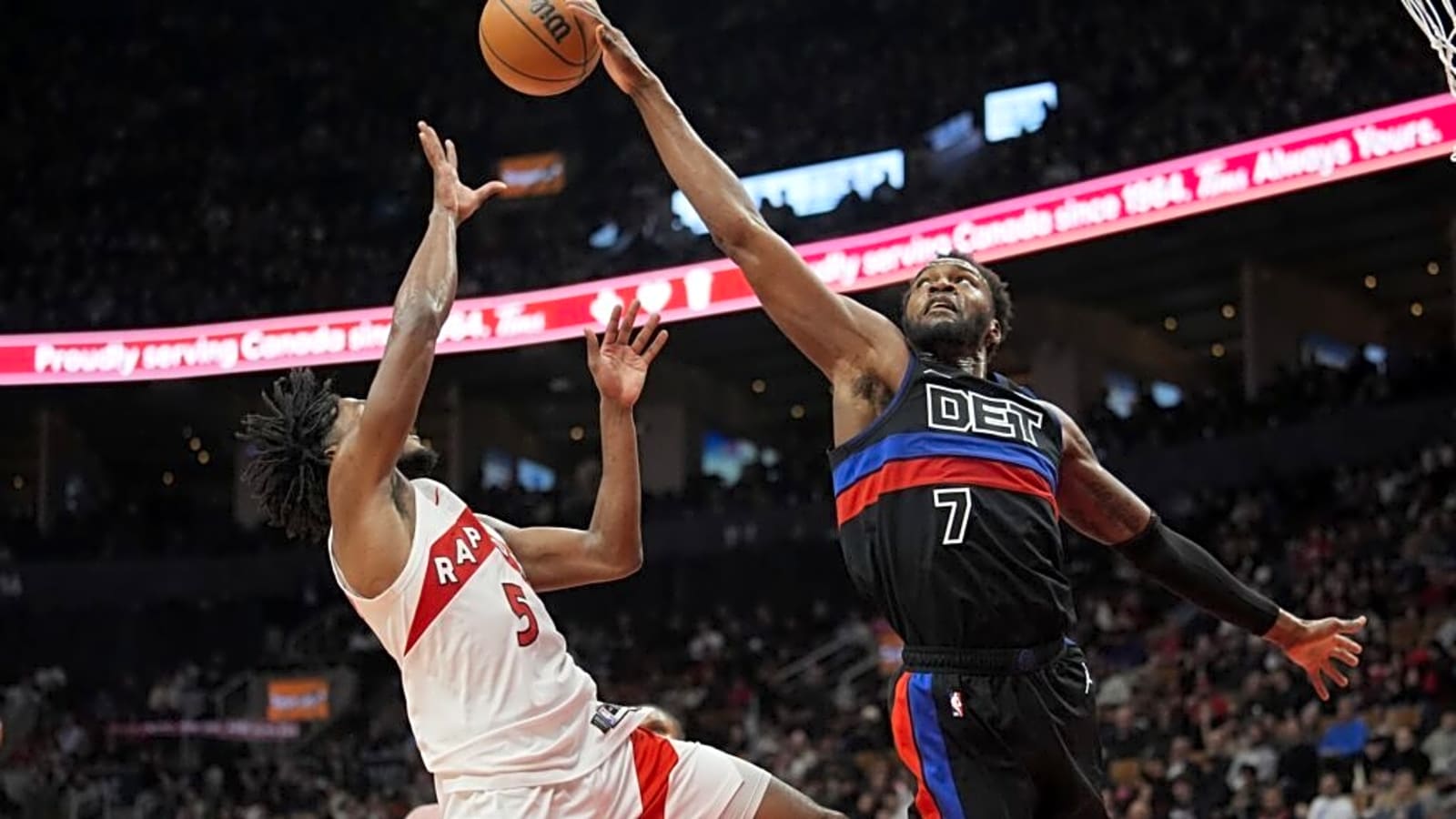
The Detroit Pistons sit atop the NBA standings. After the Thunder’s 110–93 loss to the Bucks, Detroit now owns the league’s best record by percentage points — a reality few envisioned when the season began. What was projected to be a middle-of-the-pack team has instead evolved into one of the NBA’s most complete and connected groups heading into the second half. And it hasn’t happened by accident.
While the starting five has drawn deserved attention, the Pistons’ rise has been fueled by something deeper: a second unit that has consistently swung momentum, stabilized games, and exceeded every preseason expectation. Once viewed as a potential weak spot lacking firepower, the bench has instead developed a clear identity: defending with an edge, pushing the pace, and maintaining the physicality and discipline that define Detroit’s starters.
As we continue handing out All-Star break grades, it’s time to evaluate the engine behind the surge. How does the Pistons’ second unit stack up? Let’s dive in.
Pistons Second Unit Proving Doubters Completely Wrong
Pistons Second Unit Anchored By Beef Stew’s Edge
When you talk about the Pistons’ identity, it starts with Isaiah Stewart. He embodies the rugged, physical edge Detroit leans on — always ready, always engaged.
December’s Defensive Player of the Month, Stewart, averaged 2.2 blocks and 4.4 contested shots per game during that stretch. On the season, he ranks seventh in total blocks (82) and sixth in blocks per game (1.7), while anchoring bench lineups with a 109.8 defensive rating.
He understands his role, protects the rim at a high level, and sets the tone every night.
Grade: A
Hustle Man
Ron Holland came into the season with real momentum after a strong Summer League. The three-point shot hasn’t followed (22.9%), but his impact goes far beyond scoring.
In 20.7 minutes per game, he’s averaging 8.1 points, 4.3 rebounds, and 1.4 steals while ranking near the top of the league in defensive rating (106.4) and steal metrics across the board. He’s disruptive, active, and constantly around the ball.
Grade: B+
Impact Without Needing Spotlight
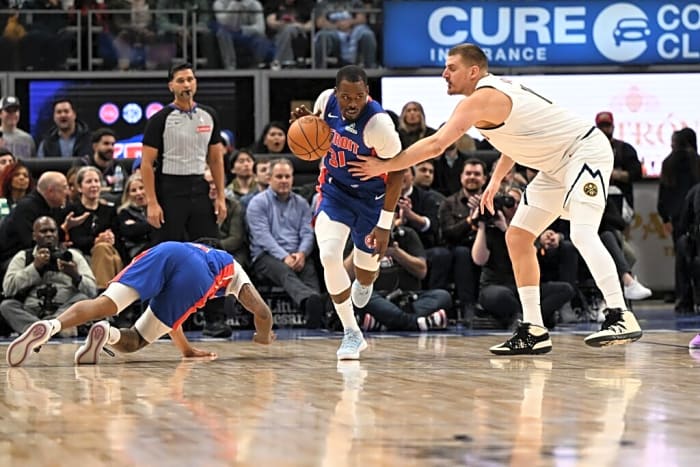
For Javonte Green to be a steady piece of Detroit’s second unit speaks to his work and professionalism. When he checks in, something happens. A timely three. A sharp backdoor cut. A momentum-shifting defensive play. “Woo” delivers winning moments.
His biggest impact comes on the defensive end. Green is averaging a career-high 1.3 steals per game and ranks near the top of the team in multiple defensive categories — eighth in defensive rating (108.1), sixth in defensive box plus/minus (2.4), and top five in steal percentage, steals per 36, and steals per 100 possessions.
Grade: A-
From G-League To Glue Guy
From G-League standout to legitimate NBA contributor, there may not be a better development story on the roster than Daniss Jenkins. What started as a pleasant surprise has quickly become a source of reliability.
When Detroit needed a steady secondary ball-handler and playmaker, Jenkins answered. His emergence softened the blow of moving on from Jaden Ivey, giving the second unit structure and control. He’s shooting 42% from the field and 38.1% from three — efficient numbers that force defenses to respect him.
Grade: A-
A Complementary Piece Still Finding Consistency
Caris LeVert has been hampered by injuries that have caused him to work his way into a rhythm. His ability to be another ball handler and playmaker has been on display, but his scoring has taken a bit of a hit.
The minutes have decreased from last year, which means the touches will as well. He’s shooting just 43.2% from the floor, but his three-point shot has slightly improved at 34.2%. As LeVert continues to find his rhythm in the second half, I expect his full complementary game to be in full effect.
Grade: C
Pistons Second Unit Secure With B.Ball Paul
If “stay ready so you won’t have to get ready” were a player, it would be Paul Reed. His minutes fluctuate, but his motor doesn’t. When called upon, he produces — immediately.
The last two games are proof. Against the Hornets, Reed posted 12 points and two steals in 18 minutes. Inserted into the starting lineup versus the Raptors, he erupted for 22 points, five rebounds, three assists, three steals, and four blocks in 33 minutes. No easing in. No hesitation.
That reliability — the ability to shift from limited minutes to major responsibility — has been invaluable for Detroit’s depth.
Grade: A-
The Last Word
The Detroit Pistons second unit entered the season surrounded by question marks. Did it have enough scoring? Enough stability? Enough two-way impact to support a team with serious aspirations? Halfway through the year, those questions have been answered.
This isn’t just a bench that survives minutes — it wins them. It defends with edge, forces turnovers, protects the rim, and provides timely shot-making when games tighten. From energy disruptors to instant offense to stay-ready veterans, the Pistons’ second unit mirrors the starters’ identity: physical, unselfish, and relentless.
More must-reads:
- Latest Luka Doncic injury update may have big implications for Lakers star
- Warriors receive massive Stephen Curry injury update before Rockets game
- The 'NBA two's leaders by season' quiz
Breaking News
Trending News







Customize Your Newsletter
 +
+




Get the latest news and rumors, customized to your favorite sports and teams. Emailed daily. Always free!
PRIVACY POLICY COOKIE POLICY CONTACT US
ABOUT YARDBARKER TERMS OF SERVICE


By using this site, you agree to our Terms of Service and Privacy Policy.
This site is for entertainment purposes only.
There is no gambling offered on this site.
Gambling Problem? Call 1-800-Gambler.
