-

-


Follow Us
-

 On Facebook
 On Flipboard

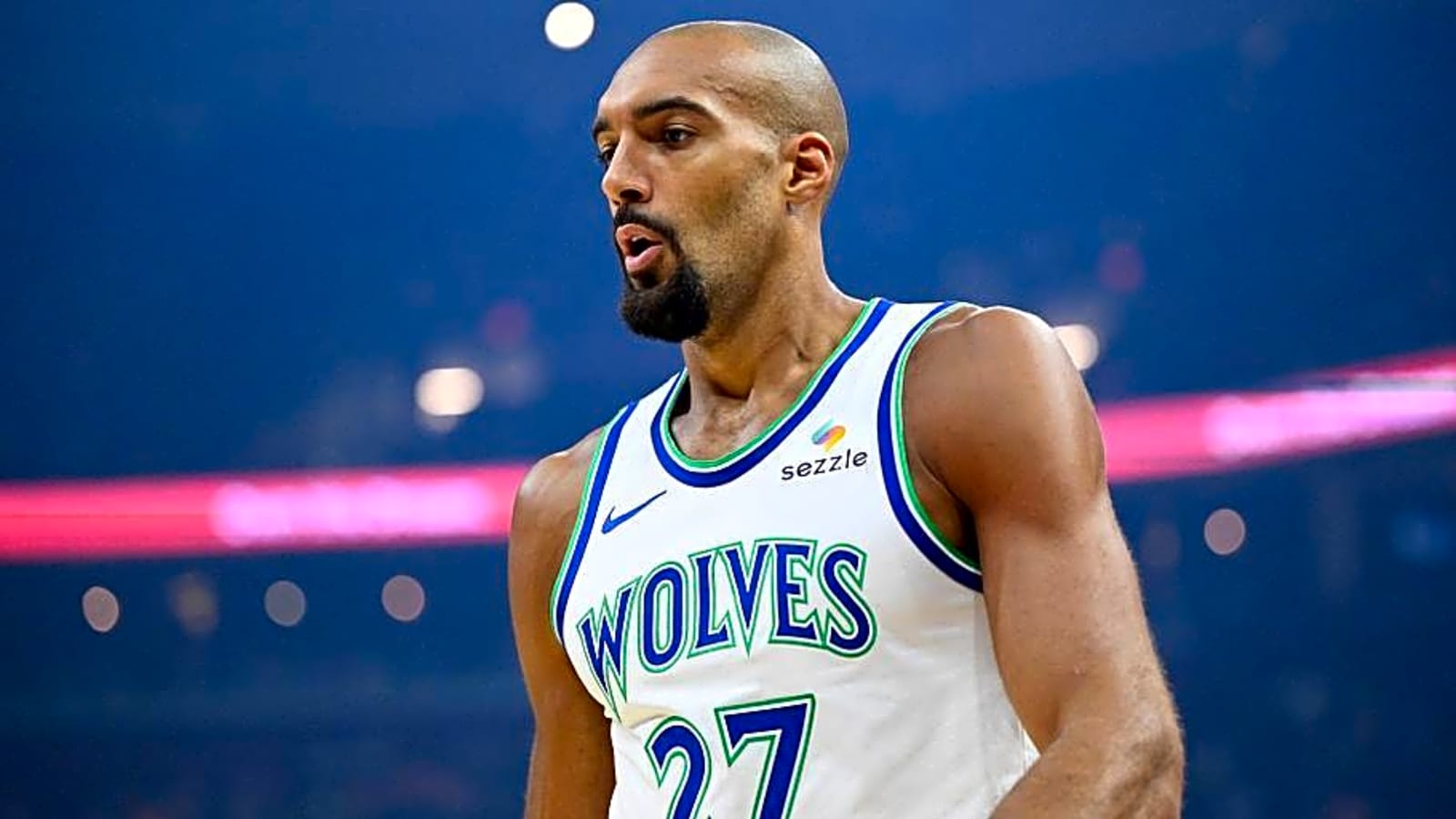
Rudy Gobert has had an incredibly difficult start to his season offensively. He is shooting an abysmal 45.1 percent from the field and already has six games in which he failed to make a single field goal. In the past decade, the fewest made field goals Gobert has had in any 14-game stretch was 49. In the same number of games this season, Gobert has only 37.
The efficiency numbers look even uglier. In the past eight seasons, Gobert has not had a single stretch of games of this length with a field goal percentage under 55 percent. His shooting percentage is currently ten points below that number.
The regression has been curious in many different ways. Gobert is second in NBA history in field goal percentage. He may be uncomfortable to watch as an offensive player, but usually, when he catches the ball, it goes into the basket.
Gobert doesn't appear to be regressing physically, either. The Timberwolves, so far, have the NBA's top-ranked defense, largely thanks to Gobert, and his rebounding numbers are right in line with the rest of his tenure with the Timberwolves.
He deserves plenty of criticism for his play, but the solution to the Timberwolves' Gobert problem will need to come from the entire team. While Gobert will certainly be required to improve his own play, the offense as a whole will also need to run much more efficiently around the Wolves' big man to put him and his teammates in more advantageous positions.
Pick-and-Roll chemistry is hurting Gobert severely
One of the main benefits of adding LaMelo Ball to the Wolves roster was to give Gobert a quality pick-and-roll point guard. With Anthony Edwards as the de facto point guard last season, the Wolves regressed as a pick-and-roll team, and Gobert saw his production affected the most.
Before, when Mike Conley was the team's point guard, Gobert was much better utilized in the Wolves' offense. In 2023-24, Gobert had an outstanding season as a screen-and-roll big, as the Conley-Gobert empty-side pick-and-roll was one of the Wolves' go-to actions during their 56-win campaign.
According to Synergy Sports, that season the Conley-Gobert pick-and-rolls generated 1.036 points per possession, one of the better rates in the NBA that season. Possibly most importantly, 12 percent of those plays ended with a Gobert field goal attempt of some kind, where he made 73 percent of those looks.
So far this season, Ball and Gobert have not found that same chemistry. They have scored just 0.928 points per possession together in the pick-and-roll, and most alarmingly, only five percent of those plays have ended with a Gobert shot, dunk, or layup.
One of the largest reasons for Gobert's lack of involvement has been that when he comes to set a screen, opposing centers are dropping way back in the paint, daring the Wolves to give Gobert the ball in space with a big defender back at the rim.
The Wolves' counter to that has been to use the open space on the perimeter to generate open three-pointers for their guards. While Ball has been in a shooting slump of late, that likely will not last, as he is one of the best off-the-dribble three-point shooters in the NBA.
A good example of this came against the Dallas Mavericks last Thursday when Daniel Gafford sank deep in the paint after a Gobert screen, and Ball walked into a wide-open three-pointer at the top of the key.
LaMelo Ball PnR pull-up 3 pic.twitter.com/YwLfWpsx2H
— Wolves Videos (@WolvesVids) November 13, 2026
While those types of looks from Ball should expect to go in at a very high rate, one downside is that it has drastically driven down the number of easy shot attempts at the rim for Gobert. With teams largely parking their center in the paint, there has not been room for the Wolves to generate advantage opportunities for their big man.
There is a balance that the Wolves will need to find between the number of three-pointers they take and how much they attack the paint. Ball's shot selection has largely been solid, but Finch believes there are more opportunities for him to drive to the basket and create plays from there.
"The looks that he took weren't bad looks," Finch explained after his team's disappointing loss to the Chicago Bulls. "It's just that they could have been at the expense of maybe some drive-and-finish opportunities. I do think there's some of that there for him."
As Ball and the Wolves knock down three-pointers at a higher rate, opposing defenses will likely stop dropping their bigs into the paint and will more often blitz the Wolves' pick-and-rolls, sending two defenders at Ball to force a pass.
Late in Tuesday's game against the Portland Trail Blazers, Donovan Clingan stepped up to guard Ball following a Gobert screen. Instead of hitting Gobert streaking to the rim, Ball took an ill-advised three-pointer that elicited an "Oh boy" from play-by-play man Jon Sciambi.
BIG TIME BUCKET, TREY pic.twitter.com/sLehd8qdsN
— Minnesota Timberwolves (@Timberwolves) November 18, 2026
The correct read on that play would have been to hit Gobert rolling to the rim. If Ball had given the ball to Gobert, it would have left Jrue Holiday and Sidy Cissoko to guard all three of Gobert, Jaden McDaniels, and Trey Lyles, and the play likely would have ended in either a McDaniels dunk or a wide-open Lyles three-pointer.
It may seem counterintuitive to solve Gobert's offensive issues by giving him the ball in space, but he has largely done well in these types of short roll plays. It certainly beats a contested step-back three-pointer, a shot that both Ball and Edwards have too often settled for.
What comes next for Gobert and the Wolves?
While the Wolves can do a better job of putting Gobert in advantageous positions more often, something that should also be easier when Edwards comes back, there is only so much they can do when the player receiving the pass often fumbles it away or takes a layup that flies off the backboard.
Ultimately, there will need to be a level of self-improvement that comes from Gobert. He needs to make better decisions about when to attack the basket and when to pass out to the perimeter. The upside is that Gobert is one of the more self-aware players on the Wolves and, more often than not, doesn't let a bad stretch linger longer than it needs to.
"He knows when he hasn't played well," Chris Finch said of Gobert. "He takes ownership over that, and he holds himself accountable, and he gets back to being the guy that he knows he can be, and we know we need him to be."
Almost every other aspect of the Wolves' play on the court has gone well this season. Even without Edwards, the Wolves have gone 11-4 with the third-best Net Rating in the NBA. The Wolves have gotten contributions from every area of the roster and look to be a much deeper team than previously thought.
Still, Gobert's defensive impact remains irreplaceable, which means the Timberwolves can't just take him off the floor. It would too greatly reduce the ceiling for a team that, in years past, has looked a league below the top-tier teams in the Western Conference.
The Wolves will need to find a way to get Gobert back on track offensively. If not, they may be forced to settle for a version of their team that is not nearly as potent as it could have been.
More must-reads:
- Nets embarrassed in front of Dr. J, get called out by Julius Randle
- LeBron James calls 76ers' comeback over Magic possibly best win of season
- The 'NFL yards-from-scrimmage champs' quiz
Breaking News
Trending News


Customize Your Newsletter
 +




Get the latest news and rumors, customized to your favorite sports and teams. Emailed daily. Always free!
PRIVACY POLICY COOKIE POLICY CONTACT US
ABOUT YARDBARKER TERMS OF SERVICE


By using this site, you agree to our Terms of Service and Privacy Policy.
This site is for entertainment purposes only.
There is no gambling offered on this site.
Gambling Problem? Call 1-800-Gambler.