
-

-


Follow Us
-

 On Facebook
 On Flipboard


It’s no longer common for teams to rely on NBA free agency to build the foundation of their rosters and add superstars, like the Nets did back in 2019 when they hoarded cap room to bring Kevin Durant and Kyrie Irving to Brooklyn. But a handful of impact players still reach free agency every year, and it continues to be a way for teams to solidify their rotations with reliable role players.
There’s a chance that the NBA’s lottery reform plan could also reinvigorate free agency to a certain degree, as lower-end teams with spending flexibility who would otherwise want to bottom out and focus on absorbing unwanted salary in trades should have a reason to add players who will make them a bit more competitive.
Listed below are our top 50 free agents for the 2026/27 NBA season. Our rankings take into account both a player’s short-term and long-term outlook and lean a little more heavily toward market value than present on-court value.
Players who are under contract for next season aren’t listed here, even if their salaries aren’t fully guaranteed and they’re candidates to be waived. We’re also not listing guys with player or team options who appear highly likely to have those options exercised. However, we’ll update this list at least once more before free agency begins on Tuesday afternoon, so certain players figure to be added or removed as option decisions are made and other roster moves are finalized.
Finally, we’ve included players who have already reached tentative agreements to return to their respective teams during the exclusive negotiating window that opened after the NBA Finals, since those players will still technically become free agents and there’s always a chance those deals could fall apart before they’re officially finalized in July.
In addition to the players listed below, there are plenty of other free agents available this summer. You can check out our breakdowns of free agents by position/type and by team, along with our free agent tracker, for a more complete picture.
Here are our top 50 free agents of 2026:
1. Jalen Duren, C, Pistons (RFA)
Duren’s disappointing playoff performance against the Cavaliers is still fresh in the minds of NBA fans, but it shouldn’t – and won’t – define his value in free agency. The Pistons’ center earned his first All-Star berth in 2025/26, finished second in Most Improved Player voting, and was named to the All-NBA third team after proving to be the second-best player on a 60-win club. And he won’t turn 23 until November. The postseason letdown probably means a maximum-salary contract is no longer the lock it once looked like, but this is still an extremely valuable player whose prime years are ahead of him.
2. Trae Young, G, Wizards (player option)
The league-wide perception of Young appeared to be on the decline as he battled through an injury-plagued season and was traded from Atlanta to Washington for a pretty modest package that didn’t include any draft picks. But the 27-year-old is a four-time All-Star and one of the league’s most talented scorers and play-makers, with averages of 26.2 points and 10.5 assists per game across his last four full seasons with the Hawks. There are obviously concerns on the defensive side of the ball, but Young has been the best player on a conference finals team and the terms of the Wizards’ tentative agreement with the star point guard suggest they felt they’d have stiff competition for his services if he reached the open market.
Note: Young reportedly intends to sign a four-year, $212MM contract with the Wizards.
3. Austin Reaves, G, Lakers (player option)
Like Young, Reaves won’t necessarily provide a ton of resistance on defense but still finds himself near the top of this list due to what he can do on offense. He has increased his scoring average in each season since joining the Lakers as an undrafted rookie in 2021, putting up 23.3 points, 5.5 assists, and 4.7 rebounds per game on .490/.360/.871 shooting in 2025/26. A verbal agreement with the Lakers lines up him to form one of the NBA’s most dangerous backcourts alongside Luka Doncic for years to come.
Note: Reaves reportedly intends to sign a four-year, $184.8MM contract with the Lakers.
4. Walker Kessler, C, Jazz (RFA)
Kessler’s fourth NBA season was cut short after just five games due to shoulder surgery, but he’s expected to be good to go for training camp and the injury has done little to reduce his value. The big man is said to be seeking an even larger payday from Utah despite reportedly having a five-year, $140MM offer on the table. Kessler is one of the NBA’s best rebounders, especially on the offensive end, and has shown the potential to be a rim-protecting defensive anchor. He was even flashing some promise as a play-maker and shooter last fall in the small sample before he suffered that shoulder injury. It makes sense that he’d at least want to try to match the $30MM average annual value that a player like Jarrett Allen got on his most recent deal.
5. LeBron James, F, Lakers
It feels wrong to place four players ahead of James, but given that we’re focused more on long-term value than 2026/27 impact, you could make the case that this is still several spots too high for a player who will turn 42 later this year. Still, James’ numbers haven’t fallen off drastically (he averaged 20.9 points, 7.2 assists, and 6.1 rebounds per game on 51.5% shooting in 2025/26) and he has remained relatively durable, appearing in at least 60 games in each of the past three years. The four-time MVP, who is still one of the NBA’s most marketable players, will likely only consider a small handful of potential destinations, some of which have little cap flexibility — but if more teams had clean cap sheets and LeBron were willing to sign anywhere, I bet there would be no shortage of clubs willing to give him whatever sort of deal he wanted.
6. James Harden, G, Cavaliers (player option)
Like LeBron, Harden is a former MVP who has continued to put up big numbers deep into his career. The Cavaliers guard will turn 37 in August and is coming off another up-and-down postseason in which he made just 29.9% of his three-pointers and averaged 4.7 turnovers per game. But he also helped Cleveland advance to the conference finals for the first time since LeBron’s 2018 departure, and all indications are that the Cavs are prepared to give him a lucrative new multiyear contract after he declines his player option. A deal that slightly reduces his 2026/27 cap hit from his $42.3MM option and tacks on another year seems likely.
7. Peyton Watson, G/F, Nuggets (RFA)
After barely playing for the Nuggets as a rookie, Watson has taken on a larger role in each of the past three seasons and had his best year across the board in 2025/26, with career highs in points (14.6), rebounds (4.9), and assists (2.1) per game and a strong .491/.411/.730 shooting line. The 23-year-old is a versatile wing defender who would be a perfect fit for almost any team in the NBA, though Denver seems determined not to let him get away, even if it requires trading away a starter or two to create more tax/apron flexibility. It wouldn’t be a shock if Watson matches or exceeds the $25MM average annual value that teammate Christian Braun got on his rookie scale extension last fall.
8. Isaiah Hartenstein, C, Thunder (team option)
While it was teammate Chet Holmgren finished second in Defensive Player of the Year voting, Hartenstein is one of several Thunder players whose contributions were crucial to the team posting the league’s best defensive rating (106.5) by a comfortable margin. He’s also a terrific rebounder (9.4 RPG in just 24.2 MPG), a solid finisher around the rim, and an underrated play-maker (3.7 APG since arriving in OKC). We’re still waiting on the exact option/guarantee details of his new three-year, $75MM agreement with Oklahoma City, but the cap-strapped Thunder did well to turn his $28.5MM team option into a smaller first-year salary while retaining one of their most indispensable role players.
Note: Hartenstein reportedly intends to sign a three-year, $75MM contract with the Thunder.
9. Ayo Dosunmu, G, Timberwolves
Dosunmu has been an effective role player for a few years, and the 26-year-old showed in his fifth season that he may not have reached his ceiling quite yet. After averaging nearly 15 points per game with an outstanding .517/.439/.876 shooting line, Dosunmu helped the Timberwolves get past Denver in the first round of the playoffs by scoring 43 points in a Game 4 win after Anthony Edwards exited due to a knee injury. Dosunmu may not start in Minnesota’s backcourt following the acquisition of LaMelo Ball, but it looks like he’ll be one of the few free agents this summer who signs a nine-figure deal.
Note: Dosunmu reportedly intends to sign a five-year, $112MM contract with the Timberwolves.
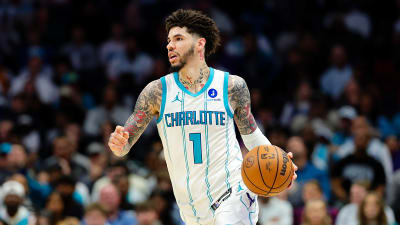
10. Coby White, G, Hornets
After playing alongside one another in Chicago for several years, Dosunmu and White were both traded at the 2026 deadline and ended up in favorable situations. A North Carolina native who joined his hometown team in Charlotte, White showed enough in a reserve role down the stretch (15.6 PPG, .461/.391/.839 shooting) that the Hornets were comfortable trading Ball this offseason to open up a spot in the starting lineup – and on their salary cap sheet – for White, who reached a three-year deal with the team shortly after word broke that Ball was being sent to Minnesota.
Note: White reportedly intends to sign a three-year, $74MM contract with the Hornets.
11. Andrew Wiggins, F, Heat (player option)
A 12-year NBA veteran, Wiggins has never made it to free agency before, having signed a five-year extension in 2017 and a four-year extension in 2022. He has a chance to test the open market for the first time this week, but it would mean turning down a pretty favorable player option worth $30.2MM. That may end up being the right move for the 31-year-old, who could almost certainly lock in a multiyear deal worth significantly more than $30MM, even if the starting salary comes in slightly lower than his option number. A former No. 1 overall pick, Wiggins has never evolved into the star many expected him to during his his high school and college days, but he has almost become underrated as a result — you’d be hard-pressed to find many wing defenders of his caliber out there who have a career scoring average of 18.2 PPG and have made 38.7% of their three-point tries since the start of 2020/21.
12. Tari Eason, F, Rockets (RFA)
Eason has the look of a prototypical three-and-D wing, but he has yet to fully break through as a consistent, reliable option in that role during his first four NBA seasons. Eason’s 35.8% three-point percentage in 2025/26 was dragged down by a miserable 13-for-78 (16.7%) stretch across 21 games in February and March — he made 44.0% for the rest of the season. While Eason isn’t a future star, he has the potential to be a star in his role, and that will likely be enough to earn him a strong multiyear deal this summer, though it’s worth noting that may hinge on a rival suitor pushing to acquire him. As we saw with a series of players who got stuck in limbo for multiple months last summer, it becomes far more difficult for a restricted free agent to land a favorable deal as the offseason progresses and his options dry up.
13. Luguentz Dort, F, Thunder (team option)
The perception of Dort entering this offseason reminds me a little of how another physical, defensive-minded wing, Dillon Brooks, was being discussed following his last season in Memphis. Like Brooks in 2023, Dort saw his three-point shot fail him at the worst possible time, making just 5-of-25 attempts (20.0%) vs. San Antonio after hitting 15-of-40 (37.5%) in the first two rounds. Brooks has played some of his best basketball in recent years and I’d be wary of writing off the possibility that Dort, who turned 27 in April, could follow a similar path. He’s just one year removed from making an All-Defensive first team, posting a .412 3PT%, and winning a title. A cap-strapped Thunder team facing a decision on his $17.7MM team option won’t want to let him get away for nothing.
14. Julian Champagnie, F, Spurs (team option)
One of the NBA’s most overlooked players over the past two or three seasons, Champagnie showed his value on a national stage this spring, starting all 23 games for the Spurs during their run to the NBA Finals and providing crucial floor spacing around the likes of Victor Wembanyama, Stephon Castle, De’Aaron Fox, and Dylan Harper. San Antonio holds a $3MM team option on Champagnie that the club could simply pick up, but with Wembanyama, Castle, and Harper still on their rookie contracts, it might make sense for the Spurs to negotiate a long-term deal with Champagnie now — a descending structure would help allow San Antonio to pay all its young stars down the road.
15. Mitchell Robinson, C, Knicks
Another role player who showed during an extended playoff run why he’s so important to his team, Robinson is one of the more unique free agents on the market. His rebounding ability and rim protection make him an elite role player, but his free throw shooting is a liability and he’s best deployed for no more than 20 to 25 minutes per game. That should be enough to warrant offers in the range of the non-taxpayer mid-level exception, which makes a return to the Knicks unlikely unless he’s willing to take a discount, since team owner James Dolan wants to avoid the second tax apron.
16. Draymond Green, F, Warriors (player option)
At age 36, Green is no longer the two-way play-making menace that he was in his prime, but he remains fully capable of changing a game with his defense and making an impact with his passing (5.5 APG in 2025/26). His $27.7MM player option is more than he’ll get in 2026/27 if he opts out, so exercising that option is probably his most likely path. But declining it in order to sign a new contract with the Warriors isn’t out of the question with Monday’s decision deadline looming.
17. Rui Hachimura, F, Lakers
Hachimura has been somewhat overlooked in recent weeks with higher-profile players like Reaves and James facing free agency for the Lakers, but the 28-year-old forward should be a popular target if Los Angeles doesn’t make him a top priority. He has good size to defend wings and power forwards, and – most importantly – he’s a legitimately dangerous outside shooter, having made 42.6% of his three-pointers during his three full seasons in L.A. There will be no shortage of teams around the NBA looking to bring in a stretch four to round out their frontcourts this summer.
18. Norman Powell, G, Heat
Powell battled injuries for much of last season and was limited to 58 appearances while also playing through a variety of ailments. But he still had one of the best seasons of his NBA career, averaging 21.7 points per game on .470/.380/.827 shooting and appearing in his first All-Star Game at age 32. Those health issues will be of utmost concern as Powell enters his mid-30s having only played in more than 60 games once in the past five seasons. He’s also not exactly an elite defender. But teams seeking an injection of scoring, shooting, and shot creation could do a lot worse than this former NBA champion.
19. Neemias Queta, C, Celtics (team option)
The Celtics parted ways with almost all their big men last summer, trading away Kristaps Porzingis and then losing Al Horford and Luke Kornet in free agency. Rather than going out and trying to trade for a new starting center, the team handed the keys to Queta, who exceeded all expectations in the starting role. The former second-round pick contributed 10.2 points, 8.4 rebounds, and 1.3 blocks in 25.3 minutes per game across 76 outings, while the Celtics posted an outstanding +13.2 net rating when he was on the court, compared to just +3.9 when he sat. We’ll find out soon whether Boston will pick up its $2.67MM option to keep Queta on the cheap for another year or whether the club declines that option in order to sign him to a more lucrative long-term contract.
20. Tobias Harris, F, Pistons
Adding Harris in free agency isn’t going to result in a surge of ticket sales or fans celebrating in the streets. But the veteran forward fully lived up to his two-year, $52MM contract with Detroit over the past two seasons, starting all 156 regular season and postseason games he played for the Pistons, doing his part to establish a winning culture, and raising his level in the playoffs when Cade Cunningham needed help carrying the scoring load. At age 34, Harris certainly won’t match the $180MM contract he signed in 2019 and may well fall shy of the $52MM deal he inked in 2024, but he might to better than you think.
21. John Collins, F, Clippers
One of the NBA’s most reliable frontcourt shooters, Collins made a career-high 40.6% three-pointers in his first year as a Clipper in 2025/26, but saw his overall role cut back — his 27.1 minutes per game represented his lowest mark since he was a rookie in 2017/18. Collins needs to be paired with the right big man to get the most out of his offensive strengths and mask his defensive limitations, but it’s hard to find shooters with his size.
22. Kristaps Porzingis, F/C, Warriors
Porzingis is only entering his age-31 season, so if he were fully healthy, he’d be worth a strong multiyear investment and would rank much higher on this list. But it’s hard to feel confident about how many games you’ll get from the big man, who battled a series of injuries earlier in his career and has dealt with an illness – diagnosed as POTS – for the past season and a half. Porzingis was still highly effective last season when he played — the Warriors were 6.4 points per 100 possessions when he was on the court, and that number was even higher (7.8 points per 100 possessions) during his time with Atlanta. But he also only played 32 games. If he can come close to doubling that number next season, he could be a bargain this summer.
23. Jonathan Kuminga, F, Hawks (team option)
Given the way his restricted free agency played out last season, Kuminga probably won’t welcome the prospect of returning to the market this summer, but his situation should be a little more favorable this time around. If the Hawks don’t exercise his $24.3MM team option, it may be because they want to sign him to a new multiyear deal. And if not, at least he’ll be unrestricted, allowing him to regain some control over the process after he spent a long three months as an RFA in 2025. Kuminga has been an inconsistent three-point shooter throughout his career, but he displayed the ability to put pressure on the rim and score in bunches, and he has the tools to be a strong defender.
24. Collin Gillespie, G, Suns
The Suns made it their top priority this offseason to re-sign Gillespie on the heels of a breakout year in which the former Villanova star started 58 of his 80 games, shot 40.1% from beyond the arc, and contributed 12.7 PPG, 4.6 APG, and 4.1 RPG. He reportedly agreed to a fully guaranteed four-year deal last week.
Note: Gillespie reportedly intends to sign a four-year, $48MM contract with the Suns.
25. Sandro Mamukelashvili, F/C, Raptors (player option)
Mamukelashvili played pretty well as a reserve for the Spurs in 2024/25, but it wasn’t clear whether his effectiveness in limited minutes would scale up to a more featured role. It did. The Raptors got a terrific return on their investment after signing the Georgian big man to a minimum-salary contract that included a second-year player option, as he contributed 11.2 PPG, 4.9 RPG, and 1.9 APG on .523/.389/.747 shooting in 80 games (21.9 MPG). Now the question is whether a cap-strapped Toronto team will be able to retain him, given that Mamukelashvili is reportedly expected to draw interest from rival suitors who could be prepared to offer $10MM+ annually.
26. Mark Williams, C, Suns (RFA)
It was encouraging that Williams was able to suit up for 60 games in 2025/26 after appearing in just 106 in his first three seasons in the NBA, but the big man isn’t entirely out of the woods when it comes to his health issues — he played in just four games after March 3 due to a stress reaction in his left foot. When he’s healthy, Williams is a solid rim protector and rebounder, though he probably can’t be relied upon for more than about 25 minutes per game. Fortunately for the Suns, who have agreed to re-sign him, that should leave a good amount of playing time for young bigs Oso Ighodaro and Khaman Maluach.
Note: Williams reportedly intends to sign a three-year, $38MM contract with the Suns.
27. Robert Williams, C, Trail Blazers
While we’re on the subject of centers named Williams who have injury-related question marks, this seems like a good time to discuss Robert. Like his fellow Williams in Phoenix, the Trail Blazers’ big man had his healthiest season in years in 2025/26, appearing in 59 games after playing in just 61 total in the previous three years. And he was highly effective in his 17.1 minutes per game, averaging 7.0 rebounds and 1.5 blocks while shooting 70.8% from the floor. He’ll never be someone who plays 30 minutes per night, but Williams can still make a significant impact in 20. When he was on the court in 2025/26, Portland had a 107.2 defensive rating, which would’ve been equivalent to the second-best mark in the NBA.
28. Marcus Smart, G, Lakers (player option)
Smart bet on himself last summer by negotiating a buyout with the Wizards and then signing a one-plus-one deal with the Lakers worth the bi-annual exception ($5.13MM). That bet paid off, as Smart started 54 of his 62 games and provided a reminder of why he has made three All-Defensive first teams and won a Defensive Player of the Year award. Smart has never shot the ball efficiently enough to justify the amount of three-pointers he takes, but he’s a reliable secondary ball-handler who has a history of elevating his game in the playoffs, like he did this year in a first-round series win over Houston. The 32-year-old looks like a lock for a raise once he declines his option.
29. Dean Wade, F, Cavaliers
Wade has never averaged more than six points per game, but he has also made at least one three-pointer per game in his part-time role in each of the past six seasons and has never shot below 35.4% from outside. More importantly, he has become an excellent defender against guards and forwards alike, using his height (6’9″) and length to his advantage and frequently handling the most challenging perimeter assignments for the Cavaliers. That defensive versatility, along with the ability to make opposing defenses pay for him leaving him alone, should earn the 29-year-old raise as his three-year, $18.5MM contract comes to an end.
30. Quentin Grimes, G, Sixers
Grimes was never going to repeat the numbers he put up in the second half of the 2024/25 season when he was the featured scorer on a tanking Sixers team (21.9 PPG, 4.5 APG). Still, his transition to a reserve role as more of a three-and-D player was a little rockier than expected, as his 3PT% dropped to .334, a career-worst mark. The 6’5″ guard is a solid point-of-attack defender who has historically shot the ball well and can handle the ball and play-make a little, so he’ll draw interest as an unrestricted free agent, even if the $17-21MM annual salary he was reportedly seeking last offseason is probably a long shot.
31. Anfernee Simons, G, Bulls
It was a down year for Simons, who accepted a reduced role in Boston and then appeared in just six games as a Bull before a fractured bone in his wrist prematurely ended his season. Prior to 2025/26, he had averaged 20.7 PPG and 4.7 APG and shot 37.4% on three-pointers during his last three seasons in Portland. Simons is a bit undersized for a shooting guard at 6’3″, but teams in need of scoring will likely be circling him this offseason as a possible buy-low target. I’ll be curious to see whether Simons, who earned $27.7MM last season, is willing to take a discount to play a featured role on a potential contender like Miami.
32. Collin Sexton, G, Bulls
Sexton is similar in many ways to Simons as an undersized shooting guard who can break down defenses, shoots the ball well, and is capable of putting up big scoring numbers. Sexton is the better ball-handler of the two but is a subpar defender, whereas Simons has made some strides on that side of the ball. In all likelihood, many of the teams that target one of the two veteran guards will consider the other as well — they’ve both been linked to the Warriors already, for instance.
33. Luke Kennard, G, Lakers
Kennard is one of the best shooters of the past decade, leading the NBA in three-point percentage three times during that stretch, including in 2025/26 (47.8%). The knock against him has been that he isn’t nearly aggressive enough in looking for that shot and that he doesn’t do a whole lot else besides stretch the floor. So it was interesting to see him function as the Lakers’ de facto point guard late in the season with Luka Doncic and Austin Reaves out — at one point, he had eight or more assists in three straight games. It’s unlikely that brief display of a broader skill set will juice his market significantly, but it could give teams in the market for a shooter some ideas for creative new ways to use him.
34. Kelly Oubre Jr., F, Sixers
While Oubre doesn’t have a single elite skill, he contributes in a lot of ways for the Sixers, having established himself as a regular starter over the past three years. He has averaged at least 14 points and five rebounds per game in each of those seasons, and his size (6’8″) and wingspan (7’2″) are assets on the defensive end, where he has averaged 1.5 steals per night since the start of 2024/25. He even set a career high this past season by making 36.0% of his three-point tries. After drafting guard Labaron Philon Jr. on Tuesday, the Sixers may prioritize Oubre over Grimes in free agency, given their positional needs.
35. Bennedict Mathurin, G, Clippers (RFA)
As talented as Mathurin is as a scorer, his isolation-heavy style never quite fit in a fast-paced Pacers system focused on ball movement, and after his mid-season trade to the Clippers earlier this year, his outside shooting numbers fell off a cliff, as he made just 17-of-82 three-pointers (20.7%). I worry that Mathurin’s restricted free agency could play out like Cam Thomas‘ did a year ago, when the former Nets guard was forced to accept his $6MM qualifying offer. Interestingly, one report this week suggested the Clippers have considered the possibility of forgoing a QO for Mathurin, which could actually be a good outcome for him, since being an unrestricted free agent might help him find a team that wants to take advantage of his strengths.
36. Deandre Ayton, C, Lakers (player option)
A former No. 1 overall pick, Ayton likes to operate with the ball in his hands and was somewhat resistant this season to focusing on the dirty work the Lakers wanted him to, like setting screens, defending, and rebounding. He told reporters that he ultimately bought into that role, but it’s a little concerning that it didn’t happen until March. Giving Ayton the ball in the post wouldn’t really mesh with most teams’ offensive systems, and there are other big men who are better fits for the rim-running role those teams would want to use him in, which may help explain why he’s said to be leaning toward picking up his $8.1MM player option.
37. Keon Ellis, G, Cavaliers
Ellis is a career 40.7% three-point shooter who plays good defense, which should make him a valuable addition to any team’s backcourt. However, two coaches in Sacramento – Mike Brown and Doug Christie – used him inconsistently, and he didn’t have a real role in Cleveland’s playoff rotation after averaging nearly 25 minutes per game in the Cavaliers in the regular season. Although Ellis’ limited offensive skill set and his slight frame – which is problematic defensively against bigger guards or wings – put a cap on his earning potential, he’s very capable of returning positive value if his price stays below eight figures per year.
38. Jordan Goodwin, G, Suns
Goodwin’s new contract agreement with the Suns, reportedly worth a little over $6MM per year, may actually be a logical point of comparison for Ellis and his reps, given the similarities between the two players. Goodwin is an excellent point-of-attack defender who ranked among the league leaders in steals (1.5) and deflections (3.7) per game. While his defense has always been his calling card, Goodwin earned a regular role in Phoenix’s backcourt by showing he’s not a liability on offense, where he set new career highs with 8.7 points and 1.6 threes per game.
Note: Goodwin reportedly intends to sign a three-year, $19MM contract with the Suns.
39. Jose Alvarado, G, Knicks (player option)
Alvarado held a $4.5MM player option entering the offseason, but after winning a championship with his hometown team, it always seemed unlikely that he’d be looking to leave New York rather than sticking around and trying to repeat. The high-energy, ball-hawking guard, who played a key role in the biggest comeback in NBA Finals history by hitting 3-of-3 fourth quarter shots in Game 4, is reportedly getting a three-year contract, with the first-year value essentially matching what his option would have paid.
Note: Alvarado reportedly intends to sign a three-year, $14MM+ contract with the Knicks.
40. Al Horford, C, Warriors (player option)
At one point last offseason, it sounded like there was a 50/50 chance that Horford would decide to call it a career and not play in 2025/26. But the 40-year-old big man apparently didn’t contemplate retirement too seriously this time around, having already reached a new deal with the Warriors that covers not just the ’26/27 season, but ’27/28 too. It took Horford a little time to find his footing as a Warrior and he battled sciatica during the first half of the season, but the savvy veteran was his usual effective self in the second half — from January 7 onward, Golden State was 9.4 points per 100 possessions better when he was on the floor than when he wasn’t.
41. Tim Hardaway Jr., G/F, Nuggets
The plan for Hardaway, who had earned at least $16MM in each of the eight seasons prior to 2025/26, was to settle for a minimum-salary contract in order to play a key role for a team with championship upside that badly needed second-unit depth. Hardaway held up his end of the bargain in Denver, scoring 13.5 points per game and converting 40.7% of his three-point attempts en route to a third-place finish in Sixth Man of the Year voting. Unfortunately, a Nuggets team that battled injuries all season long had an abbreviated playoff run that ended with a first-round loss to Minnesota. Will Hardaway be willing to take another team-friendly deal to go ring hunting again? Maybe, but he should be able to do better than the veteran’s minimum if money is his priority.
42. Daniss Jenkins, G, Pistons (team option)
With Jaden Ivey and Marcus Sasser not stepping up to claim the backup point guard role in Detroit behind Cade Cunningham, Jenkins was a revelation. He appeared in 72 total regular season games, starting 19 of them and averaging 9.3 PPG and 3.9 APG with a .374 3PT%. He also earned a promotion from his two-way deal in February, signing a two-year standard contract that started well above the rookie minimum and includes a $4MM team option for 2026/27. Simply picking up that option might be the move for the Pistons, but depending on how they manage their cap situation this summer, declining it to re-sign Jenkins to a longer-term contract could make more sense.
43. De’Anthony Melton, G, Warriors (player option)
Like Horford, Melton got off to a slow start for the Warriors in 2025/26, which is understandable, given that he had just spent a year recovering from ACL surgery. But by the time the calendar turned to 2026, Melton was looking a little more like his old self. During one 27-game stretch from early January to mid-March, the veteran guard averaged 15.4 PPG, 3.4 RPG, 2.6 APG, and 1.6 SPG, showing off the jack-of-all-trades skill set that earned him a full mid-level salary prior to the ACL tear. I don’t expect him to repeat that feat, but turning down a minimum-salary player option to seek a slightly larger payday certainly seems logical.
44. Harrison Barnes, F, Spurs
Barnes didn’t play a whole lot during San Antonio’s postseason run to the NBA Finals, but he was an important part of the Spurs’ regular season success. He averaged just shy of 10 points per game, hit 38.8% of his three-point tries, and made 52 starts before eventually being supplanted by Julian Champagnie in the starting five. Barnes, who turned 34 last month, isn’t a candidate for a long-term contract and might be willing to take a significant pay cut to keep playing for the Spurs. But if he considers other options, I bet there will be a handful of teams with interest in adding a three-and-D veteran with championship experience.
45. Spencer Jones, F, Nuggets (RFA)
He’s a distant second on the Nuggets’ list of restricted free agent priorities behind Peyton Watson, but Jones came up big over the course of the season for a Denver team whose starting forwards repeatedly missed time due to injuries. While he wasn’t asked to do much offensively, he shot 50.4% from the floor and 39.6% from outside, and he’s a strong, versatile defender with a 6’11” wingspan. The Nuggets will have some leverage in contract negotiations due to Jones’ restricted status, but I’ll be curious to see if a team seeking wing help might make a play for him in an effort to take advantage of Denver’s tricky cap situation.
46. Marvin Bagley III, F/C, Mavericks
Known largely as the player drafted one spot ahead of Luka Doncic, Bagley has flown under the radar in recent years as he bounced around from Detroit to Washington to Memphis, then back to Washington and onto Dallas. But he had a really nice year for the Wizards and Mavericks in 2025/26, averaging 10.5 PPG and 6.1 RPG in 20.0 MPG across 60 total outings while making 61.8% of his field goal attempts, including 46.2% of his threes in an admittedly small sample (24-of-52). His defensive shortcomings will limit his value in free agency, but a deal in the neighborhood of the taxpayer mid-level exception is reportedly in play.
47. Jusuf Nurkic, C, Jazz
One of the trades that surprised me most during the 2025 offseason was the Jazz giving up a second-round pick along with Collin Sexton in order to acquire Nurkic, who was coming off one of the worst years of his career in Phoenix and Charlotte. But Nurkic made Utah’s front office look good, bouncing back by averaging 10.9 PPG, 10.4 RPG, 4.8 APG, and 1.3 SPG in 41 games (26.4 MPG) before nasal surgery ended his season. If he’d had another poor season, the 31-year-old might’ve been heading back to Europe this offseason. Instead, he should receive strong consideration from NBA clubs seeking a reliable backup center.
48. Khris Middleton, F, Mavericks
A three-time All-Star before knee and ankle problems slowed him down, Middleton is entering his age-35 season and is far removed from the player he was in his prime. Still, he finished the 2025/26 season strong in Dallas and ended up playing in 63 total games for the Wizards and Mavericks, his most in a single season since 2021/22. If he’s healthy in ’26/27, I can still envision Middleton being a productive rotation player.
49. Brandon Williams, G, Mavericks
Williams is an unusual player, a 6’1″ guard who shot just 23.2% from three-point range last season. As ineffective as he is an outside shooter, the 26-year-old has shown a knock for scoring from inside the arc, making 55.8% of his two-pointers over the past two seasons. He’s also a solid play-maker who can get to the free throw line and grades out well in several advanced stats. Williams has spent his entire NBA career so far on two-way or minimum-salary deals, but I think that could change in 2026/27.
50. Jock Landale, C, Hawks
Forced into a featured role due to injuries in Memphis, Landale made the most of the opportunity, averaging 11.3 points and 6.5 rebounds in 23.6 minutes per game across 45 outings with the Grizzlies before being traded to Utah in the blockbuster Jaren Jackson Jr. deal. The tanking Jazz flipped him to Atlanta, where he didn’t miss a beat, putting up nearly identical per-36 and shooting numbers as the Hawks’ backup center. Landale isn’t an explosive athlete who will deter interior pressure with his ability to block shots, but he has good size to match up with centers in the post and doesn’t get caught out of position on defense too often.
More must-reads:
- Kawhi Leonard slated to return to Raptors after blockbuster trade from Clippers
- Warriors receive unwanted Anthony Davis update
- The 'Triple-Double leaders by team' quiz
Breaking News
Trending News



Customize Your Newsletter
 +
+




Get the latest news and rumors, customized to your favorite sports and teams. Emailed daily. Always free!
PRIVACY POLICY COOKIE POLICY CONTACT US
ABOUT YARDBARKER TERMS OF SERVICE


By using this site, you agree to our Terms of Service and Privacy Policy.
This site is for entertainment purposes only.
There is no gambling offered on this site.
Gambling Problem? Call 1-800-Gambler.
