
-


Follow Us

 On Facebook
 On Flipboard
 On Twitter
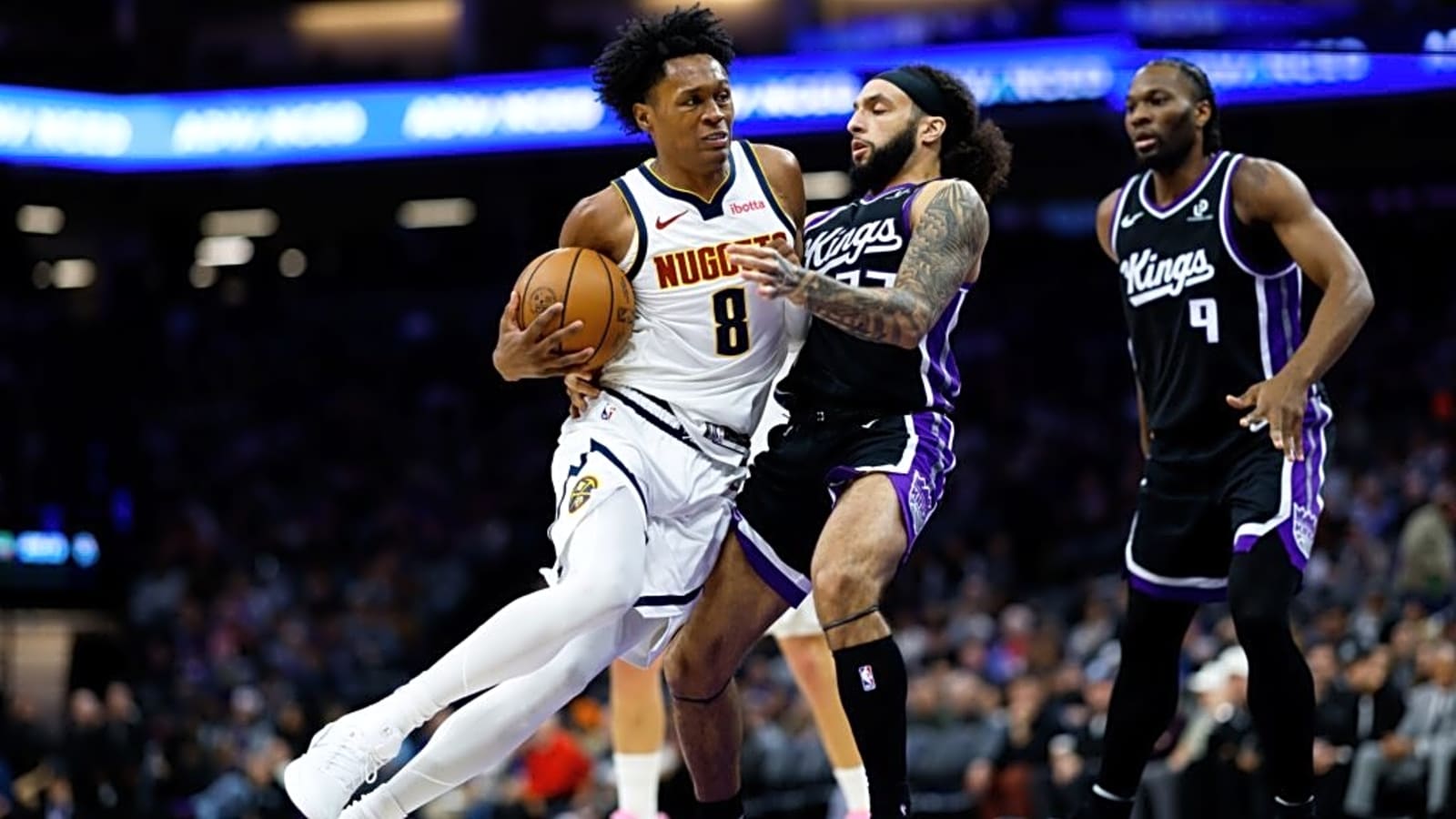
What Peyton Watson’s Development Means For The Nuggets
Through all the excitement surrounding Denver’s new arrivals, what might have been forgotten was the fact that these moves inevitably came at the expense of playing time for the team’s young players. For prospects, such as Julian Strawther and Jalen Pickett, that reality led to a significant reduction in minutes. The same fate could have easily awaited Watson, despite entering the season higher in the pecking order. Instead, injuries to Gordon and Braun opened the door for him to start several games. Watson fully capitalized on the opportunity.
While it may be tempting to attribute Watson’s emergence solely to good fortune created by injuries, there was just as easily a scenario in which things broke the other way. Concerns about his decision-making, limited shooting ability, and overall offensive impact could have led to him being benched, overtaken by players such as Bruce Brown or Spencer Jones. Watson could have shared a fate similar to Zeke Nnaji. Nnaji is a intriguing player who never developed enough offensively to become a reliable contributor for this Nuggets team.
Instead, Watson has done the opposite. He has proven himself fully capable of starting for the Nuggets. Not only that, but his versatility also makes him a fascinating X-factor for Denver when the playoffs arrive. He can credibly fill multiple roles, effectively defending and playing positions three through five. His rise gives the Nuggets legitimate hope that Gordon’s long-term successor may already be on the roster, much in the same way Braun once emerged as a successor to Kentavious Caldwell-Pope.
Watson’s Hard Work Is Finally Bearing Fruit
Watson has always had the raw physical tools that made him an incredibly intriguing prospect. Traits that led former general manager Calvin Booth to famously declare in a 2023 interview with Kevin O’Connor that Watson, compared to the at the time departing Brown, was “bigger… longer… more athletic… guards better… passes better…”. To this day, the quote has lived on in infamy largely because basketball experts all over the world are still trying to find out how he concluded that Watson’s passing was anything to get excited about.
However, the undeniable truth is that he has worked tirelessly on his weaknesses. Now, the fruits of his labor are finally showing. His shooting has improved, as has his decision-making on both ends of the floor. He’s continually improving as a cutter off Jokic double teams, using his physical tools more effectively on defense, and displaying an increasingly refined understanding of his role. In short, he’s steadily becoming a better complement to Jokic and Murray.
As encouraging as the positives have been, they need to be viewed in the proper context. It would be a mistake to look at Watson’s near-39 percent shooting from three and assume he has suddenly become a knockdown shooter. Much like Russell Westbrook’s numbers last season, it is important to consider what type of looks we are talking about here. If it means taking the ball out of the stars’ hands, opposing defenses are content to leave him wide open. The difference is that, for now, he’s making them pay. In the postseason, however, a disciplined defensive team could still exploit him if his shooting isn’t fully reliable. This was evident as the Thunder did with Westbrook last year.
Unlocking Devastating Defensive Lineups
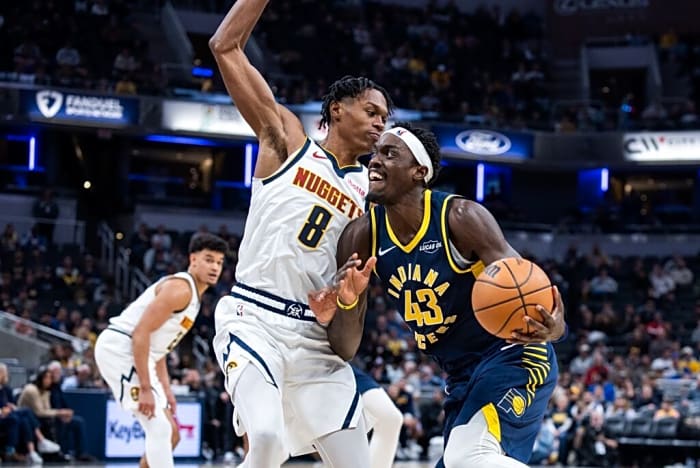
Thanks to his offensive improvement, the Nuggets can now deploy Watson in several crunch-time lineups. We could see him alongside Gordon in a hyper-switchable frontcourt, or the Nuggets could utilize larger lineups featuring him alongside Jokic, Braun, Gordon, and Cam Johnson—a combination whose incredible length could form the basis of an intriguing zone defense. Looking at how incredibly deep the Western Conference is, every round could be a complete bloodbath. Having the ability to switch defensive schemes against different opponents might be key to winning it all. In fact, this was something the Thunder were able to do effectively last year. They seamlessly alternating between going small—as they did in the Finals against the Pacers or deploying a two-big lineup, as they did against the Nuggets.
The Potential Aaron Gordon Successor
Aaron Gordon’s health inevitably complicates Denver’s long-term outlook. If the Nuggets can’t count on him to be consistently available, having a potential successor already on the roster becomes immensely valuable. In that sense, Peyton Watson’s development eases the burden on Gordon. They don’t have to rush him back from injury. If his physical issues worsen, they won’t need to scramble for a replacement since his successor is already within their ranks.
The Nuggets were right to hold off on extending Watson. It avoids a repeat of the Nnaji mistake and forcing him to first prove he can be a reliable contributor. That approach carries the risk of a higher eventual price tag. However, it’s one Denver would gladly pay if Watson continues on this trajectory. Gordon’s situation will need close monitoring moving forward, but Peyton Watson’s development and emergence as an internal successor may be the safety net the Nuggets desperately need to maximize Jokic’s prime and remain legitimate championship contenders.
More must-reads:
- Cooper Flagg tops LeBron James with record-breaking performance
- Adam Silver's Las Vegas experiment with NBA Cup may be ending
- The 'Active NBA PPG leaders' quiz
Breaking News
Trending News







Customize Your Newsletter
 +
+




Get the latest news and rumors, customized to your favorite sports and teams. Emailed daily. Always free!
PRIVACY POLICY EDITORIAL POLICY CONTACT US
ABOUT YARDBARKER TERMS OF SERVICE


Use of this website (including any and all parts and
components) constitutes your acceptance of these
Terms of Service and Privacy Policy.
This site is for entertainment purposes only.
There is no gambling offered on this site.
Gambling Problem? Call 1-800-Gambler.
