
-


Follow Us

 On Facebook
 On Flipboard
 On Twitter
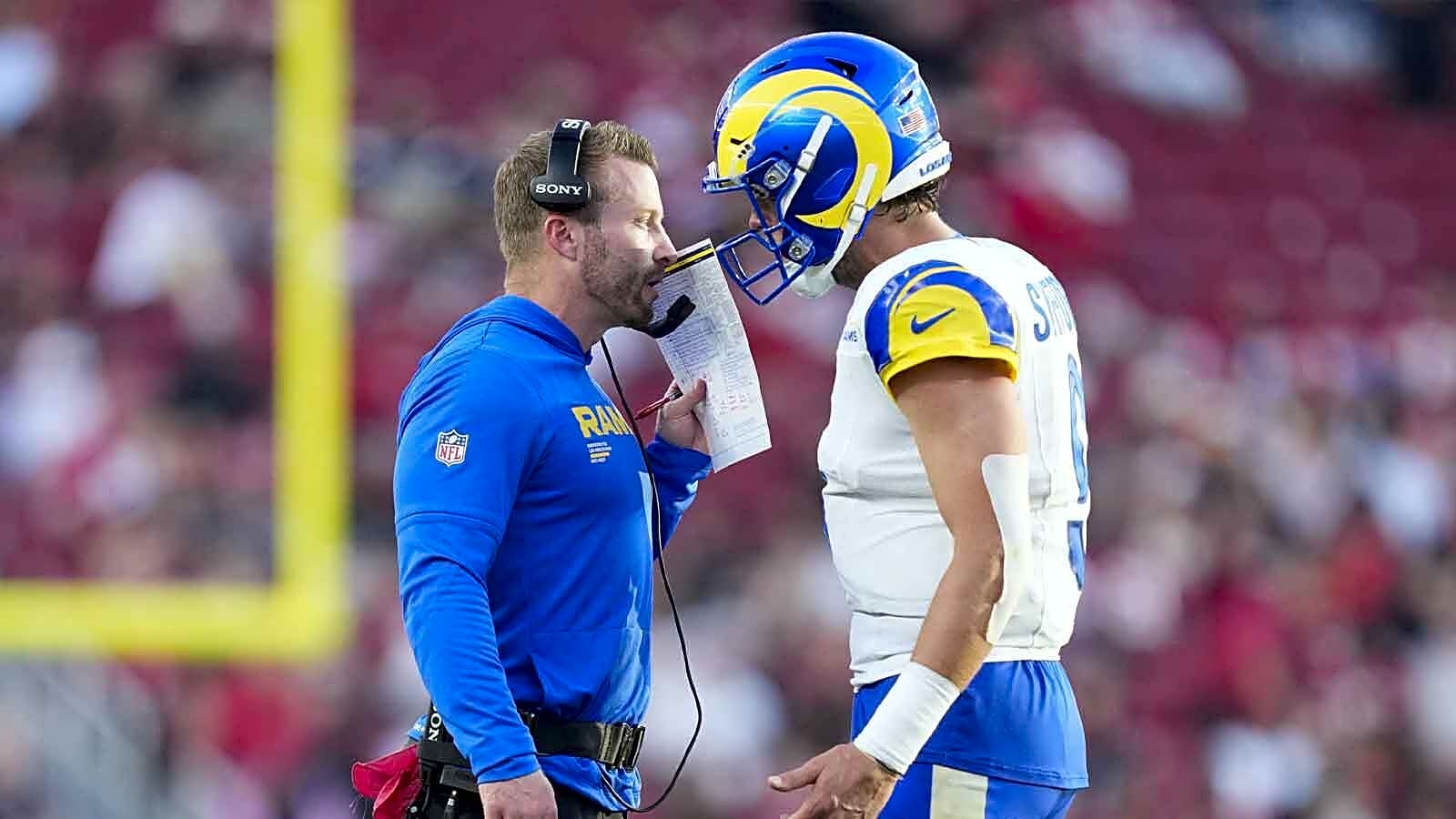
All over the NFL, prospective Super Bowl contenders will have to face very tough decisions. The Los Angeles Rams are among those teams. They had a resurgent 2025 campaign that reaffirmed Sean McVay’s program as one of the NFL’s gold standards. Now, the Rams enter the 2026 offseason with both momentum and looming financial decisions. Extensions for cornerstone stars, roster youth movements, and long-term succession planning around Matthew Stafford all sit on the table. Sure, Los Angeles holds enviable cap flexibility compared to many contenders. However, that flexibility won’t remain if difficult veteran decisions aren’t made. Three names, in particular, stand out as prime cut candidates as Les Snead prepares to recalibrate the roster for another Super Bowl push.
Rams’ resurgence
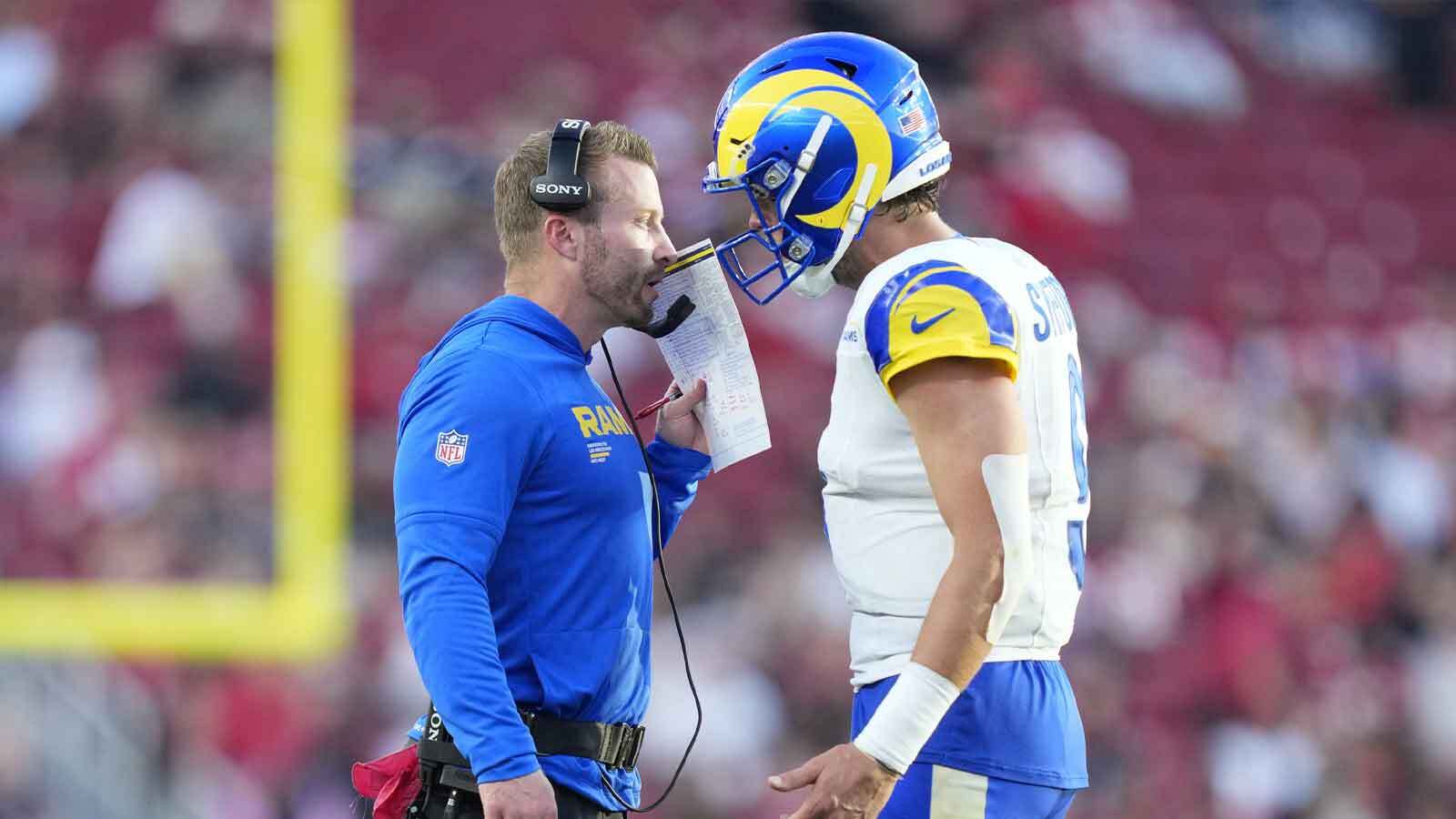
The Rams’ 2025 season was defined by a high-octane offense and a resilient veteran core that propelled the team to a 12-5 record. After moving on from franchise staple Cooper Kupp in the offseason, the Rams leaned fully into the evolving connection between Stafford and Puka Nacua.
Stafford delivered a masterclass in longevity, throwing for 4,707 yards and 46 touchdowns at age 37. Those numbers placed him squarely in the MVP conversation deep into December. Nacua, meanwhile, elevated from rising star to bona fide superstar, earning First-Team All-Pro honors behind a staggering 1,715-yard campaign that overwhelmed defenses weekly.
Kyren Williams’ 1,252 rushing yards provided balance, while a mid-season infusion from Davante Adams gave the passing attack another elite layer. The result: 518 total points, the highest scoring output in the league, and the NFC’s No. 5 seed.
Battle-tested playoff run
The Rams’ postseason path was anything but easy. That actually made their run more impressive.
They opened with a 34-31 Wild Card shootout victory over the Carolina Panthers, surviving a late Bryce Young rally behind Stafford’s composure. The Divisional Round tested them differently: a frozen, defensive grind at Soldier Field against the Chicago Bears that ended in a 20-17 overtime win.
That set up a heavyweight NFC Championship clash with the Seattle Seahawks at Lumen Field.
Despite a furious late rally, the Rams fell 31-27 in a game defined by defensive breakdowns and missed late opportunities. The loss stung, but it also reinforced Los Angeles’ status as a legitimate contender entering 2026.
Free agency priorities
The Rams’ offseason mandate is clear. They must fix the back end of the defense without compromising the offensive engine that carried them.
The secondary was exposed against Seattle’s vertical attack, highlighting the need for a true shutdown corner. Yes, the defensive front, anchored by Jared Verse and Byron Young, remains promising. That said, coverage inconsistency threatens playoff viability.
Offensively, the aging line is another pressure point. Rob Havenstein’s injury-marred 2025 and pending free agency create urgency at tackle. That’s particularly true with Stafford entering his age-38 season. Of course, Los Angeles may also explore a developmental quarterback to future-proof the position.
Whatevery they do, all of this requires financial maneuvering. That’s even with nearly $50 million in cap space.
TE Colby Parkinson
Parkinson delivered a career year in 2025. He emerged as one of Stafford’s most trusted red-zone targets. His eight touchdowns provided situational value. That was particularly true in condensed-field packages where his size and catch radius stood out. Roster evolution, though, rarely waits for sentiment.
The Rams invested draft capital in Terrance Ferguson. His late-season emergence signaled readiness for an expanded role. Ferguson’s athletic profile aligns more closely with McVay’s motion-heavy, alignment-flexible system.
Financially, Parkinson’s cap hit exceeds positional value in Los Angeles’ current structure. The Rams could redirect the $7 million savings toward cornerstone extensions, most notably the looming mega-deal for Puka Nacua.
C Coleman Shelton
Shelton has been the definition of steady. Rarely spectacular but consistently reliable, he anchored the Rams’ interior protections during Stafford’s prolific season. Still, age and economics are converging.
McVay has publicly praised Beaux Limmer’s developmental trajectory. Limmer is younger, cheaper, and more athletic. He profiles as a natural fit in the Rams’ zone-blocking scheme that emphasizes lateral mobility and second-level engagement.
Shelton turns 31 entering the 2026 season. Of course, he remains serviceable. However, investing nearly $10 million at center may not align with Snead’s roster age curve strategy. Shelton is a respected locker-room presence. On the flip side, he is a logical cap casualty if Limmer is ready to assume starting duties.
CB Darious Williams
This may be the most difficult decision fro an emotional and strategic standpoint. Williams returned to Los Angeles to provide veteran stability to a young secondary. For stretches of 2025, he delivered exactly that. The NFC Championship loss, though, exposed the secondary’s ceiling.
Williams will be 33 at the start of the 2026 season. Against younger, speed-heavy receiver groups, the Rams’ coverage unit struggled to hold up late in games.
Meanwhile, Emmanuel Forbes Jr, who was claimed off waivers, showed encouraging growth. He flashed ball skills and recovery speed that fit the Rams’ defensive evolution. Add in two first-round picks, and Los Angeles is well positioned to inject elite youth at corner.
The next Rams reload

The Rams’ offseason calculus isn’t about tearing down but sustaining a championship window.
Cutting Parkinson, Shelton, and Williams would create meaningful financial flexibility while accelerating youth transitions at key positions. More importantly, those savings could be redirected toward extensions, secondary reinforcements, and offensive line succession planning.
Snead and McVay have never followed conventional roster-building blueprints. History, though, shows they’re willing to make uncomfortable decisions to keep the title window open. This offseason will be no different.
More must-reads:
- Mike McCarthy already making unprecedented change to Steelers organization after Mike Tomlin era
- At least one member of the Patriots dynasty made the Hall of Fame this year
- The 'NFL playoff receptions leaders' quiz
Breaking News
Trending News

Customize Your Newsletter
 +
+




Get the latest news and rumors, customized to your favorite sports and teams. Emailed daily. Always free!
PRIVACY POLICY EDITORIAL POLICY CONTACT US
ABOUT YARDBARKER TERMS OF SERVICE


Use of this website (including any and all parts and
components) constitutes your acceptance of these
Terms of Service and Privacy Policy.
This site is for entertainment purposes only.
There is no gambling offered on this site.
Gambling Problem? Call 1-800-Gambler.
