
-

-


Follow Us
-

 On Facebook
 On Flipboard
 On Twitter

Contender pressure can bring really difficult roster math. That’s because success in the NFL doesn’t just raise expectations. It accelerates timelines. That’s what the Houston Texans are in the middle of. The coming 2026 offseason isn’t about proving they belong among the AFC elite. That box has already been checked. Instead, the challenge now is keeping a championship-caliber roster intact while preparing for the financial aftershocks of paying franchise pillars like CJ Stroud and Will Anderson Jr.
With extensions looming and cap flexibility tightening, General Manager Nick Caserio must identify contracts that no longer align with Houston’s competitive arc. The Texans are firmly in their Super Bowl window, but staying there requires difficult veteran decisions.
Here are three prime cut candidates entering a defining 2026 offseason.
Resilience and midyear ignition
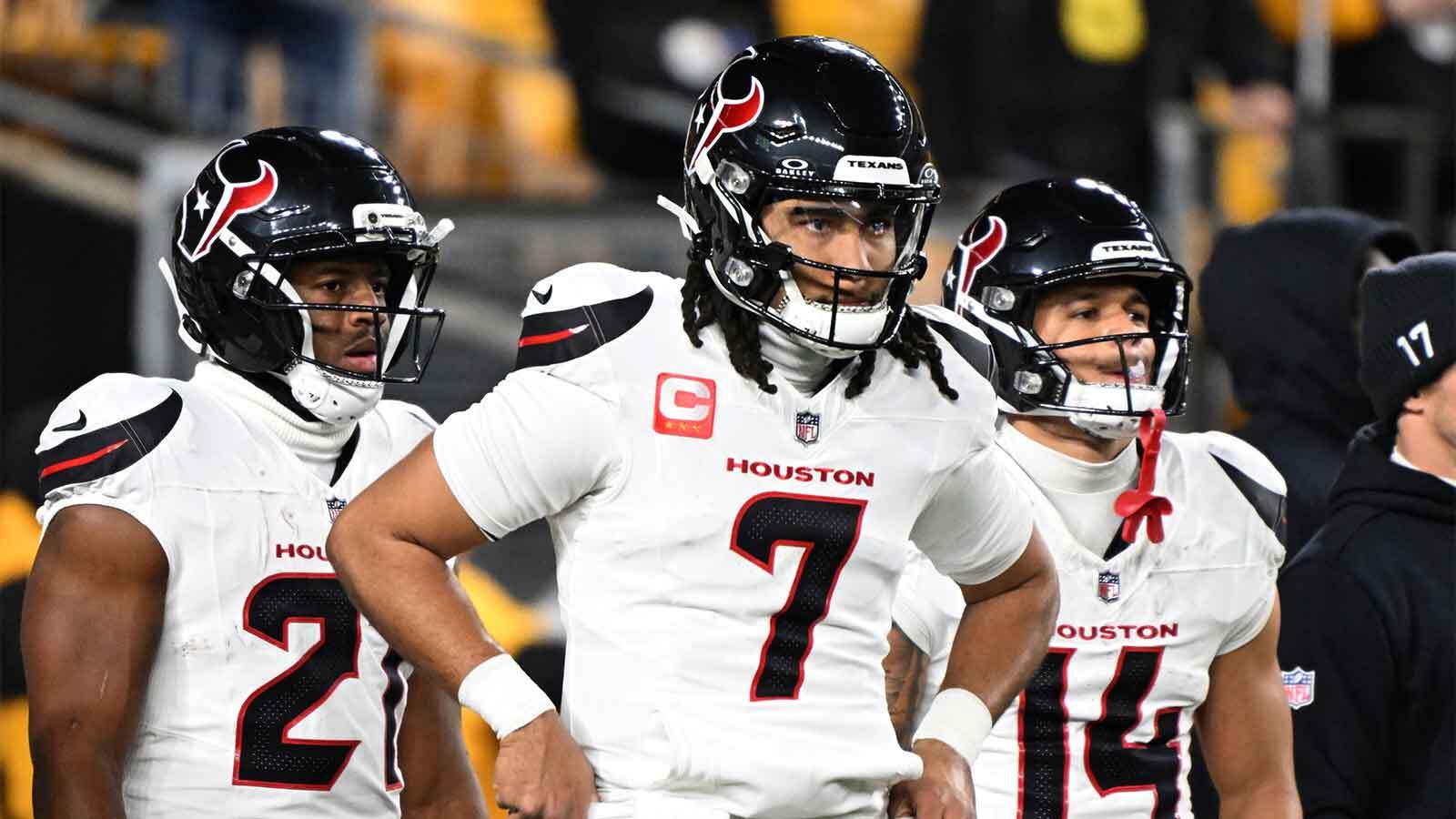
The Texans’ 2025 campaign was a masterclass in resilience. It was defined by a historic turnaround that saw the team transform from an 0-3 cellar-dweller into a legitimate AFC powerhouse.
After a sluggish start that raised questions about their “Super Bowl or bust’ billing, DeMeco Ryans’ squad flipped the narrative emphatically. Houston ripped off a nine-game winning streak. They finished 12-5 and reestablished themselves as one of the conference’s most complete teams.
Although they narrowly missed the AFC South crown to the surging Jacksonville Jaguars, the Texans secured a Wild Card berth. Their true statement came in the postseason.
Houston dismantled the Pittsburgh Steelers 30-6 on the road, delivering the franchise’s first-ever road playoff victory. It was a tone-setting performance that showcased the Texans’ defensive ferocity and playoff readiness.
Playoff promise halted
The season’s emotional peak, however, was followed by a sobering exit. In the Divisional Round, Houston fell 28-16 to the New England Patriots in a game shaped heavily by offensive limitations. Star receiver Nico Collins was sidelined due to a concussion sustained in the Wild Card win. His absence proved pivotal.
Without their primary vertical threat, the Texans struggled to generate explosive plays. Stroud posted a statistically leaner outing as New England compressed the field. Still, the season reinforced Houston’s legitimacy.
First-Team All-Pros Will Anderson Jr and Derek Stingley Jr anchored a defense that ranked second in points allowed. Their dominance symbolized a roster built not just to compete-but to contend annually.
The next step? Financial calibration.
Free agency priorities
Houston’s 2026 shopping list begins where playoff games are most often won and lost: the offensive line.
The unit ranked near the bottom of the league in protection metrics. That left Stroud under consistent duress. With Ed Ingram entering free agency and the run game posting one of the NFL’s weakest EPA-per-rush figures, interior reinforcements are mandatory.
Beyond protection, the Texans must modernize their skill positions. Joe Mixon’s advancing age and declining explosiveness leave Houston seeking a more dynamic backfield weapon. At receiver, Collins needs a more consistent running mate after underwhelming output from veterans like Christian Kirk.
Defensively, Ryans would benefit from a disruptive interior tackle to stabilize run defense in January football. All of these upgrades require cap room. That brings us to the looming departures.
RB Joe Mixon
This is all about production vs. explosiveness. Mixon entered 2025 as Houston’s workhorse, but the efficiency never matched the volume. Sure, he remains dependable in pass protection and short-yardage situations. However, the Texans’ ground game ranked near the league’s bottom in explosive run rate. Houston increasingly leaned on Stroud’s arm as the season progressed.
A pre-June 1 release saves approximately $8 million while leaving only $2 million in dead cap. That would be clean, immediate relief for a cap-conscious contender. Houston has also been linked to a deep 2026 running back market. Younger, more explosive options are potentially available via free agency or the draft.
Moving on from a 29-year-old back aligns with the Texans’ timeline: faster, cheaper, and more dynamic offensive support for Stroud.
TE Dalton Schultz
Schultz has been exactly what Houston signed him to be: reliable, assignment-sound, and quarterback-friendly. Reliability, though, comes at a steep price entering 2026.
Schultz carries a $15.9 million cap hit in the final year of his deal. A post-June 1 cut or trade would generate roughly $11.5 million in savings. Those are significant funds for roster reallocation.
The emergence of Cade Stover complicates Schultz’s future. With a younger, cheaper tight end capable of absorbing snaps, Houston may see diminishing returns in maintaining a premium veteran contract at the position.
With looming mega-extensions and defensive reinforcements needed, allocating nearly $16 million to a non-elite tight end becomes difficult to justify.
DL Mario Edwards Jr
Edwards has been a valuable rotational lineman. He offers versatility across the defensive front. That said, Houston’s defensive identity hinges on dominance not adequacy up the middle. Releasing Edwards frees approximately $4.4 million with minimal dead money. Sure, that’s modest compared to other cuts. Still, the savings contribute to cumulative flexibility.
Houston’s edge rush, anchored by Anderson and Danielle Hunter, remained elite. However, interior disruption lagged, particularly against playoff-caliber run games. Upgrading defensive tackle becomes easier if the Texans redirect Edwards’ cap space toward a more impactful presence.
Championship windows, ruthless timing
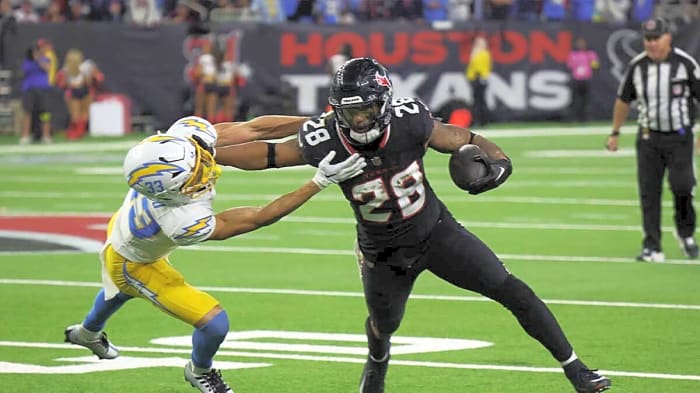
Houston’s rise has been deliberate, physical, and sustainable. Sustainability, though, requires financial foresight. This is why cutting Joe Mixon, Dalton Schultz, and Mario Edwards Jr makes sense. It wouldn’t signal regression but evolution.
The Texans are entering the expensive phase of contention. This is where franchise quarterbacks and All-Pro defenders command market-resetting deals. Every dollar saved now fuels the roster’s long-term viability. At this point, Houston doesn’t need a roster overhaul. They just need precision trimming to keep their Super Bowl trajectory intact. That reality makes these three veterans the most vulnerable names entering the 2026 offseason.
More must-reads:
- Steelers' QB plans revealed if Aaron Rodgers doesn't return
- Travon Walker's contract extension could be long-term steal for Jaguars
- The 'Rushing-TD leaders by NFL team' quiz
Breaking News
Trending News







Customize Your Newsletter
 +
+




Get the latest news and rumors, customized to your favorite sports and teams. Emailed daily. Always free!
PRIVACY POLICY COOKIE POLICY CONTACT US
ABOUT YARDBARKER TERMS OF SERVICE


By using this site, you agree to our Terms of Service and Privacy Policy.
This site is for entertainment purposes only.
There is no gambling offered on this site.
Gambling Problem? Call 1-800-Gambler.
