
-

-


Follow Us
-

 On Facebook
 On Flipboard
 On Twitter
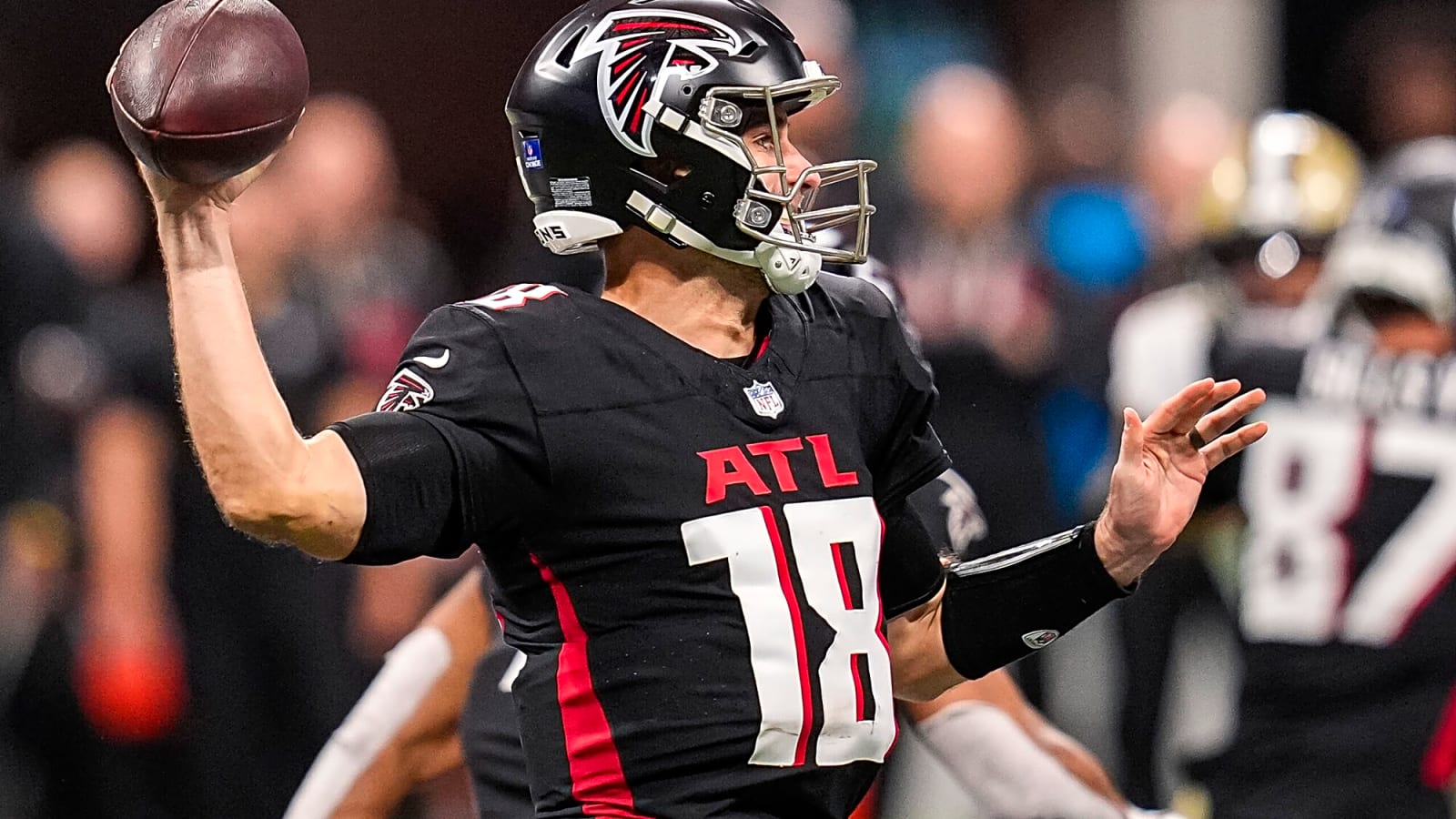
The Atlanta Falcons will release Kirk Cousins on March 11, 2026—two days before $67.9 million in guaranteed money would have vested in his contract. That two-day gap is not a coincidence. The Falcons engineered it through a January 2026 restructure that deferred $32.9 million of his base salary and embedded a March 13 vesting trigger. GM Ian Cunningham acknowledged the calculation was deliberate, telling reporters the contract structure made the release possible. Cousins—fourth all-time in NFL career earnings at $331 million—never controlled the clock on his own contract.
1. The Vesting Trigger Ambush
Teams restructure contracts mid-cycle to attach future vesting dates for guaranteed money, then release the player days before activation. The Falcons deferred $32.9 million of Cousins’ 2026 base salary while setting a March 13 vesting date for $67.9 million. Release: March 11. The two-day window eliminated the obligation entirely. This is the most surgical trap in the front office playbook because it appears to be a routine cap adjustment. Agents must treat any new vesting date added during a restructure as a programmed release countdown, not a financial accommodation.
2. The False Franchise Signal
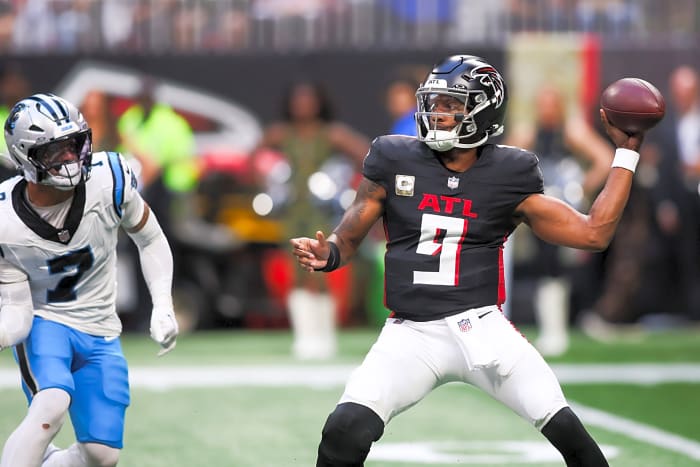
Teams sign veteran quarterbacks to landmark deals to solve immediate roster needs, then quietly plan their replacement before the ink dries. The Falcons committed $180 million to Cousins on March 13, 2024. Forty-three days later, they drafted Michael Penix Jr. eighth overall without a word of warning. Agent Mike McCartney confirmed the ambush: “We got no heads up. Kirk got a call from the Falcons when they were on the clock.” A six-week gap between a $180 million commitment and drafting a replacement signals either deliberate deception or the fastest strategy reversal in NFL history.
3. The Base Salary Strip

Contract restructures are not always about creating cap space; sometimes, they are about reducing a team’s financial exposure before a planned release. The Falcons converted Cousins’ $35 million nonguaranteed 2026 base salary down to $2.1 million during the January renegotiation, minimizing the cost of the March 11 cut to nearly nothing in the current year. When a restructure dramatically shrinks a player’s base salary without a corresponding guarantee increase or contract extension, the team is not building the player’s future; it is engineering its own exit.
4. The Dead Money Mirage

Teams publicize dead money figures as proof that releasing a veteran is financially painful, while structuring contracts so the actual hit remains far more manageable than the obligation avoided. The Falcons will carry $22.5 million in 2026 dead money and $12.5 million in 2027 after the Cousins release, $35 million total, versus the $67.9 million vesting trigger they escaped. The headline number sounds significant. The math tells a different story. Agents must always calculate both figures: what the release costs the team, and what honoring the contract would have cost.
5. The Post-June 1 Cap Spread

After a release is executed, teams retain a secondary financial tool: the post-June 1 designation. Rather than absorbing a player’s full dead money charge in the release year, this designation splits the liability across two salary cap years. The Falcons used it on Cousins to reduce their immediate 2026 cap burden while pushing $12.5 million into 2027. The player is already gone when the team’s favorable accounting treatment activates—leaving the released veteran negotiating new contracts with zero leverage while his former team banks the cap savings.
6. The Competitive Uncertainty Screen

Teams use sustained ambiguity, “open competition,” “evaluating all options,” “franchise direction”, to keep veterans compliant and cost-effective while the exit plan is quietly assembled. The Falcons benched Cousins in Week 16 of the 2024 season but retained him as backup insurance for 2025. When Penix tore his ACL in Week 11, they activated Cousins without any new financial commitment. He went 5-2. He called himself “rejuvenated.” Then came the release. Deliberate positional uncertainty is a management tactic. Agents must demand defined role clauses with financial triggers attached to any demotion decision.
7. The “Respect” Framing Cover

Once the financial engineering is complete, teams deploy empathetic language to reframe a calculated exit as organizational compassion. Cunningham said the March 11 release was “out of respect for Kirk and Mike, his agent, and what he’s done in his career, just that we owe that to him to allow him some clarity going into free agency.” The restructure that created the release trigger was executed seven weeks before that statement. “Respect” arrives only after the trap is already locked in, manufactured to protect the front office’s reputation while the player absorbs the consequences.
The Performance That Changed Nothing

The most instructive data point in Cousins’ release is that performance ultimately did not matter. After Penix’s ACL injury, Cousins started the final seven games of 2025 and went 5-2. Across all 10 games he appeared in during the season, including early relief appearances, he totaled 1,721 passing yards, 10 touchdowns, and five interceptions. His numbers were not elite, but they were functional and winning. The Falcons still proceeded with the release. In a contract-trap scenario, late-season competence cannot override predetermined financial mechanics. The decision is made in the restructure meeting, not on the field.
The New Standard for Veteran Protection

Cousins re-enters free agency at 37 with $331 million in career earnings, a 12-10 record as a Falcon, and one career playoff win. The Falcons enter 2026 without Cousins, without a first-round draft pick—traded to the Los Angeles Rams in April 2025, and without certainty on Penix’s nine-month ACL recovery timeline. The franchise has missed the playoffs for eight consecutive seasons. For every agent representing a veteran quarterback, the Cousins case sets a new minimum standard: fully guaranteed contract years, no addable vesting clauses, and written notification rights before any quarterback is selected in the NFL Draft.
Sources:
“Falcons GM Informed QB Cousins He’ll Be Released March 11.” ESPN, February 2026.
“Falcons GM Confirms QB Kirk Cousins to Be Released March 11.” Reuters, February 2026.
“Falcons GM Confirms Plan to Release Kirk Cousins.” AP News, February 2026.
“Falcons to Release QB Kirk Cousins on First Day of New League Year.” NFL.com, February 2026.
“Kirk Cousins Contract Details.” Over the Cap NFL Contract Database, January 2026.
More must-reads:
- Travon Walker's contract extension could be long-term steal for Jaguars
- Insider shares notable update on Shedeur Sanders' status with Browns
- The 'Rushing-TD leaders by NFL team' quiz
Breaking News
Trending News






Customize Your Newsletter
 +
+




Get the latest news and rumors, customized to your favorite sports and teams. Emailed daily. Always free!
PRIVACY POLICY COOKIE POLICY CONTACT US
ABOUT YARDBARKER TERMS OF SERVICE


By using this site, you agree to our Terms of Service and Privacy Policy.
This site is for entertainment purposes only.
There is no gambling offered on this site.
Gambling Problem? Call 1-800-Gambler.
