
-

-


Follow Us
-

 On Facebook
 On Flipboard

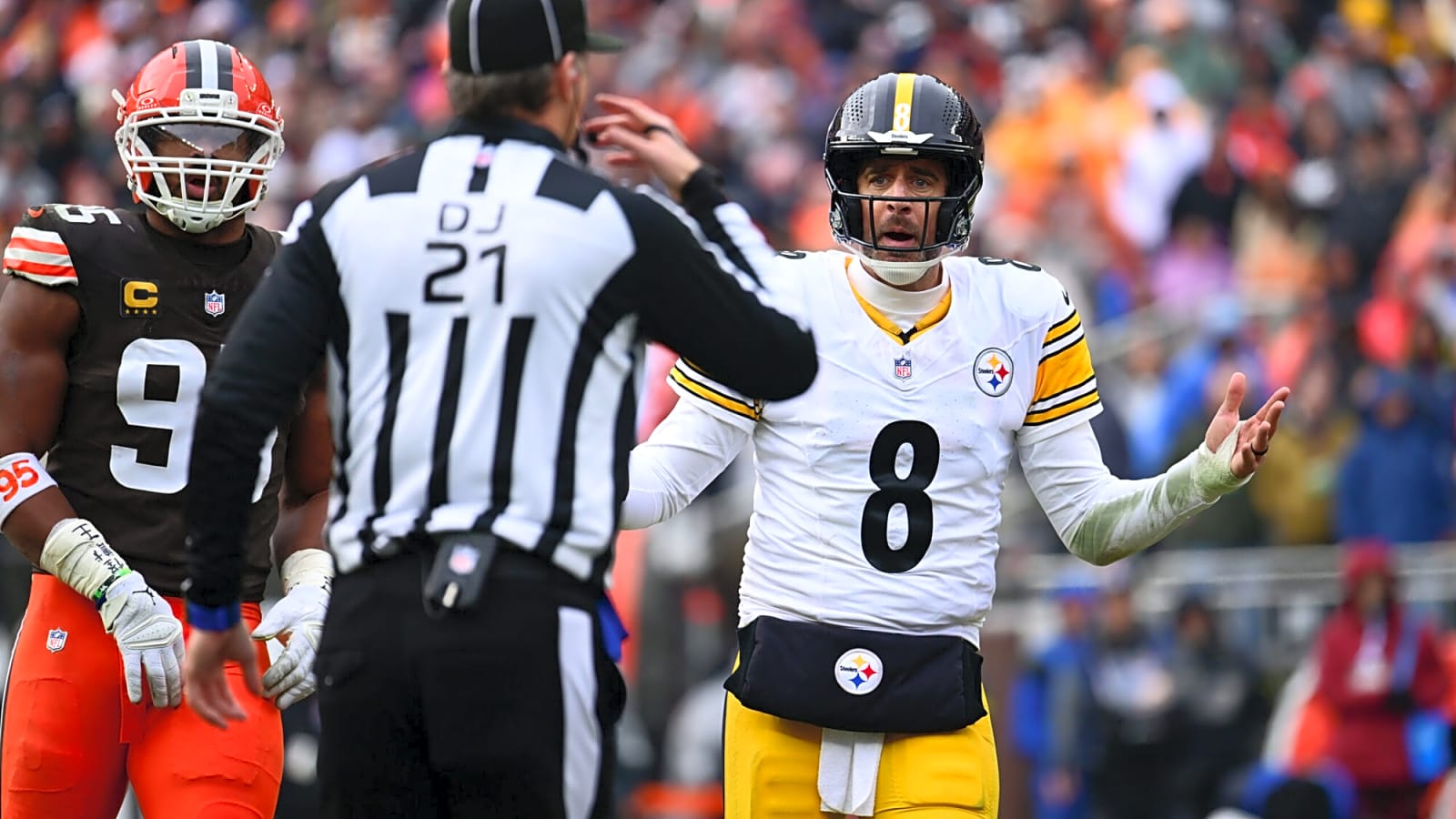
The confetti from Houston’s 30-6 demolition of Pittsburgh had barely settled when Aaron Rodgers walked to the podium in January and told the world he was done. A four-time MVP, 42 years old, walking away after the worst playoff loss of his career. That was supposed to be the ending. Four months later, Rodgers booked a flight back to the city he’d just abandoned.
The Season That Made Leaving Hard
Rodgers hadn’t limped through 2025. He completed 65.7 percent of his passes, threw for 3,322 yards, posted a 24-to-7 touchdown-to-interception ratio, and dragged Pittsburgh to an AFC North championship. The raw line looked MVP-adjacent. The deeper numbers told a quieter story. His 94.8 passer rating was well below his career norm, and his QBR of 44.4 ranked 23rd among qualifying starters, reflecting a season propped up by defense and a running game as much as by arm talent. Nobody retires after a division title. But nobody ignores a 30-6 playoff humiliation either.
The Coach Who Changed the Math
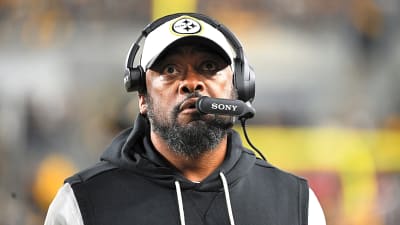
One detail the contract coverage kept underplaying was the man already inside Pittsburgh’s building. Mike McCarthy, who rode shotgun with Rodgers through a Super Bowl win and 13 Green Bay seasons, is now the Steelers’ head coach. Reuniting with the coach who knows his cadence, his audibles, and his temperament is the kind of emotional pull no tender form can replicate. If the UFA filing was the stick, McCarthy was the carrot.
The Weapons That Made Coming Back Football-Logical

Pittsburgh’s offense around Rodgers isn’t the problem it was six months ago. DK Metcalf gives him a true contested-catch alpha, Pat Freiermuth remains one of the league’s better seam tight ends, and the Steelers have quietly invested in the interior line. Rodgers isn’t being asked to carry a rebuild. He’s being asked to quarterback a playoff team again, in a conference where Joe Burrow, Lamar Jackson, and a healthy Deshaun Watson are already locked into the AFC North arms race. Walking away means letting that window close on someone else’s terms.
A Quiet Filing Changed Everything
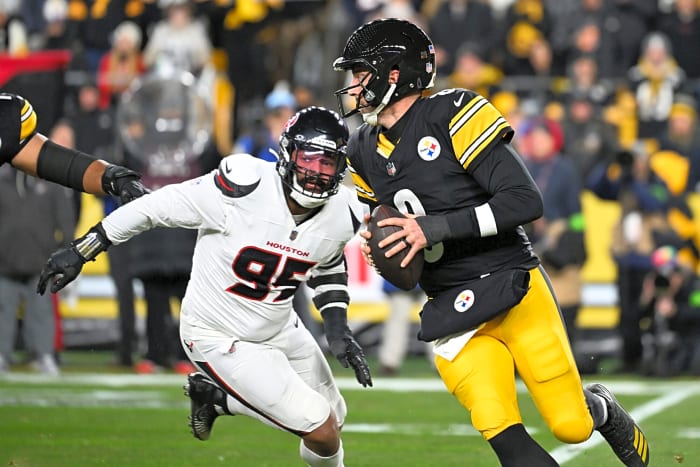
While Rodgers spent the offseason telling reporters he had no deadline and nothing to debate, the Steelers’ front office made a move most fans never noticed. Pittsburgh filed an unrestricted free agent tender on Rodgers, a mechanism the franchise hadn’t used in roughly nine years. That filing offered approximately $15 million, a 10 percent raise from his $13.65 million 2025 salary. It looked like a placeholder. It functioned like a tripwire.
48 Hours From ‘No Deadline’ To Boarding Pass
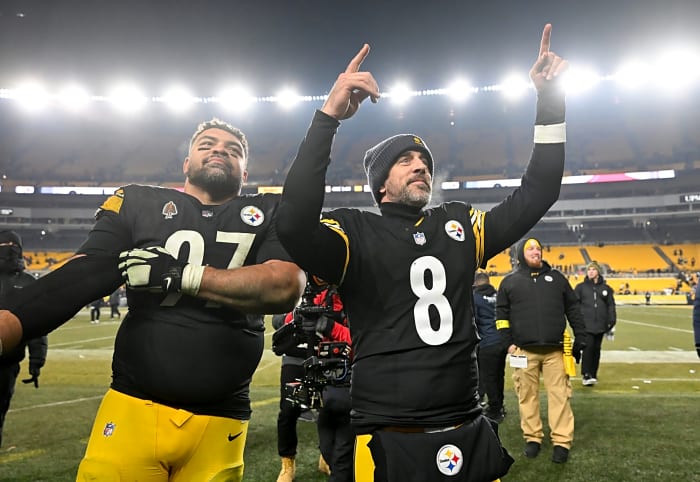
On May 5, Rodgers told the press: “There’s been no deadline that’s been put in front of me. There’s no contract offer or anything. So there’s nothing that I’m having to debate between.” By May 7, NFL Network’s Ian Rapoport reported Rodgers was expected to visit Pittsburgh that weekend to finalize a deal. Two days. From complete autonomy to travel arrangements. The quarterback who spent months on The Pat McAfee Show hinting at retirement was suddenly scheduling wheels-down in Pittsburgh.
The Invisible Machine Behind the Decision
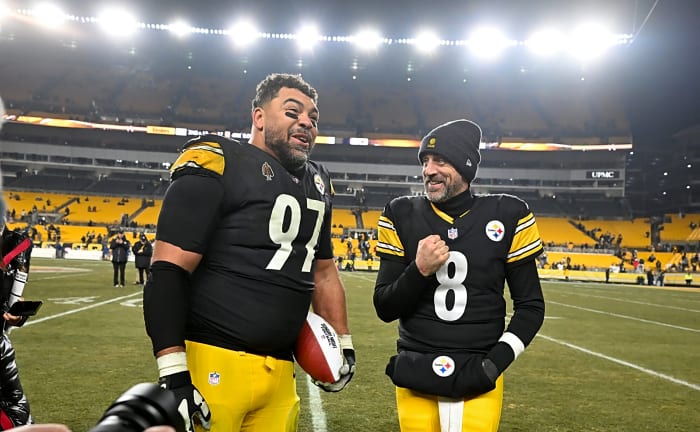
The UFA tender created three outcomes, and Rodgers controlled none of them. Sign with Pittsburgh before July 22, the Steelers keep their Hall of Famer. Sign with another team before that date, Pittsburgh receives a compensatory draft pick. Retire, and the organization loses both the player and the compensation. Every path benefited the Steelers except the one where Rodgers walked away permanently. That’s not a contract offer. That’s a chess position where one side has already moved three times before the other realizes the game started.
The Numbers Behind the Leverage
Rodgers: 21 seasons, more than 259 career games, a 166-97-1 record as a starter, four MVPs, and one tender form he can’t escape. The $15 million figure looks almost insulting next to the modern quarterback market. Patrick Mahomes, Joe Burrow, Josh Allen, and Jalen Hurts all sit above $50 million per year in average annual value. Pittsburgh offered roughly 30 percent of the going rate for a franchise quarterback, and the tender’s real value was structural anyway. After July 22, the Steelers gain exclusive negotiating rights. Rodgers’ leverage evaporates on a calendar date he publicly claimed didn’t exist.
The Market That Never Materialized

If Rodgers did want to bolt, the list of realistic destinations was shorter than his platform suggested. The Vikings pivoted to their own plan. The Giants drafted and developed around a younger arm. Minnesota and New York had both surfaced in earlier rumor cycles, but neither finalized interest into a credible offer. That left Pittsburgh as the only team willing to pay starter money for a 42-year-old quarterback with one healthy Achilles and a history of picking his spots. The market didn’t squeeze Rodgers. The absence of a market did.
The Ripple Through Pittsburgh’s Roster
Every day Rodgers delayed cost the Steelers organizational clarity. Draft strategy froze. Offensive coordinators couldn’t commit to a game plan. Backup quarterbacks like Mason Rudolph and Will Howard existed in professional limbo, unable to know whether they’d be starters or clipboard holders. The Post-Gazette reported that if no decision arrived by the May 18 OTAs start, Pittsburgh’s patience would “turn to frustration and maybe something more.” Mike McCarthy, whose first offseason in Pittsburgh hinges on knowing which quarterback he’s installing an offense around, needed an answer as badly as anyone in the building.
A New Rule for Aging Stars
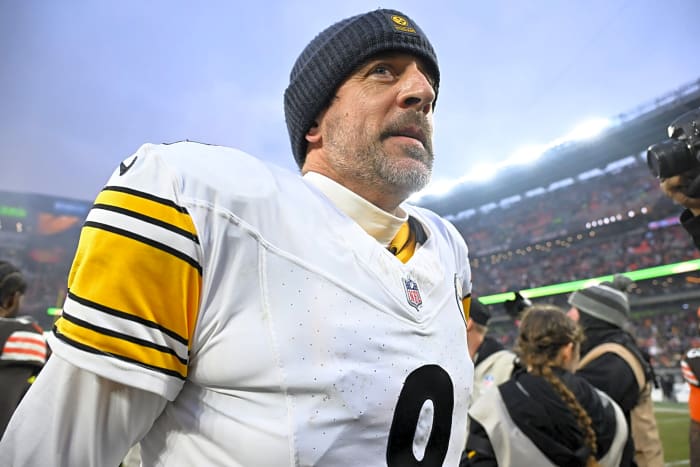
The Steelers dusted off a mechanism dormant for nine years because they understood something most fans missed: player autonomy in professional sports is engineered autonomy. Rodgers’ no-deadline claim was technically true regarding external pressure. The UFA tender created internal pressure at multiple invisible checkpoints. May 18 OTAs. July 22 exclusive rights. Compensatory pick protection. Each one narrowed his options without anyone publicly calling it a deadline. Other front offices watched Pittsburgh convert uncertainty into leverage. This wasn’t an exception. It was a blueprint.
The Countdown Nobody Admits Exists
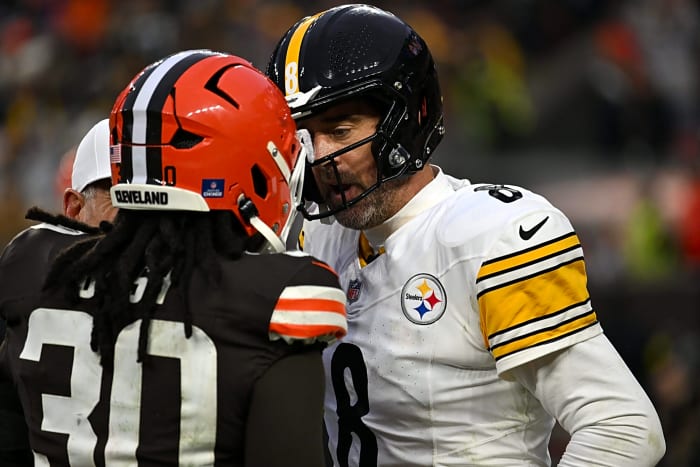
If Rodgers doesn’t sign during the May 9-10 visit, the escalation path gets ugly fast. May 18 arrives and the Steelers commit to backup quarterbacks for OTAs. June minicamp passes without their franchise arm. By July 22, exclusive negotiating rights lock in, and Rodgers loses the ability to leverage competing offers entirely. Rapoport’s caveat still echoed: “A deal is not done & there is always caution until things are signed.” The clock Rodgers denied was ticking louder than anything he’d said publicly.
What To Watch Next

The next 72 hours matter more than the last four months. The May 9-10 Pittsburgh visit will either produce a signed contract or a fresh stall tactic. Expect a staged photo on the Steelers’ official channels if it gets done, followed by a McAfee appearance from Rodgers framing the return on his own terms. If the visit ends without ink, watch the May 18 OTAs attendance list, then the June minicamp roster, then the July 22 exclusive rights trigger. Each checkpoint is a public stress test of a decision Rodgers insists he hasn’t made.
Freedom Was Always the Illusion

Steelers president Art Rooney II expressed confidence Rodgers would return. That confidence wasn’t faith. It was math. The UFA tender guaranteed Pittsburgh walked away with something regardless of the outcome, unless Rodgers retired permanently. And a four-time MVP with 21 seasons, 259 career games, and a 166-97-1 starter’s record doesn’t retire after one bad playoff loss. The organization knew it before Rodgers did. Now every front office in the league knows how to handle the next aging Hall of Famer who wants to pretend the deadline doesn’t exist.
Does Rodgers owe Pittsburgh one more season, or should the Steelers have let him walk and started the next era? Tell us in the comments.
Sources:
Rapoport, Ian. “Aaron Rodgers likely to play for Steelers in 2026; QB to visit Pittsburgh this weekend.” NFL Network, May 6, 2026.
Pryor, Brooke. “Steelers use UFA tender on quarterback Aaron Rodgers: What does it mean?” ESPN, April 27, 2026.
Patra, Kevin. “Report: Steelers tender UFA Aaron Rodgers, giving organization control over QB’s future.” NFL.com, April 27, 2026.
Reuters Staff. “Steelers place rare contract tender on Aaron Rodgers.” Reuters, April 27, 2026.
Pittsburgh Steelers Communications. “Steelers finalize Mike McCarthy’s first coaching staff.” Pittsburgh Steelers Official Website, February 12, 2026.
Dulac, Gerry. “Steelers’ patience with Aaron Rodgers could wear thin if decision stretches past May 18 OTAs.” Pittsburgh Post-Gazette, May 6, 2026.
More must-reads:
- New OC Frank Reich makes stunning claim about Jets' ineptitude
- Browns' Shedeur Sanders gets more bad news amid Deshaun Watson reports
- The 'NBA scoring champions' quiz
Breaking News
Trending News







Customize Your Newsletter
 +
+




Get the latest news and rumors, customized to your favorite sports and teams. Emailed daily. Always free!
PRIVACY POLICY COOKIE POLICY CONTACT US
ABOUT YARDBARKER TERMS OF SERVICE


By using this site, you agree to our Terms of Service and Privacy Policy.
This site is for entertainment purposes only.
There is no gambling offered on this site.
Gambling Problem? Call 1-800-Gambler.
