
-

-


Follow Us
-

 On Facebook
 On Flipboard
 On Twitter

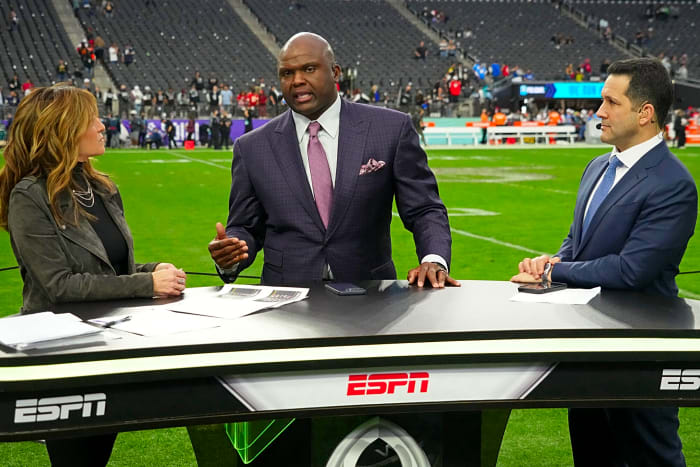
The cameras were rolling. Adam Schefter, the NFL’s most connected insider, wasn’t breaking news. He was breaking character. Somewhere between the flood of “agreed to terms” tweets and the league’s official free-agency window, Schefter stopped reporting and started ranting. Called the whole process “what a joke.” Not under his breath. Not on a podcast. On ESPN’s air, with colleagues watching. The man who built a career on being first looked like a man who’d finally had enough of the show.
Something Finally Snapped
The frustration didn’t come from nowhere. Every March, the NFL sells fans a shopping spree with a clean start time. Then deals materialize within minutes of the window opening. Frameworks negotiated during the “legal tampering” period make the official moment feel ceremonial. Schefter has spent decades as the primary courier of those instant announcements. He knows exactly how the sausage gets made. That knowledge, apparently, hit a breaking point. His tone wasn’t analytical. It was raw. And an ESPN colleague sitting right there noticed.
One Word Changed Everything

The response came fast. An ESPN host on the same set labeled Schefter “salty,” right there on live television. No buildup, no diplomatic framing. Just one word lobbed at the league’s most prominent insider while millions watched. The moment turned a structural complaint into a personality clash. Suddenly the story wasn’t about whether free agency is theater. It was about whether the guy exposing the theater was just bitter. That pivot is exactly how the system protects itself.
The Part Nobody Says Out Loud

Schefter’s frustration points at something fans sense but rarely hear confirmed: the “official” start of free agency is largely a reveal, not a competition. The NFL and NFLPA’s CBA governs tags, tenders, and contract constraints that shape which players even reach the open market. Agents and teams coordinate frameworks weeks before the signing window. The deals that appear “instant” were built in advance. The opening bell is a curtain call. Schefter called it a joke. The punchline is that the league designed it this way.
Deals Done in the Parking Lot

Think of it like an auction where every bidder agreed on a price in the parking lot before the gavel dropped. The “legal tampering” period exists as a recognized phase in the NFL’s free-agency calendar, discussed openly across league operations and major coverage outlets. Teams contact agents. Parameters get set. Dollar ranges get floated. By the time the official window opens, the only thing left is paperwork and press conferences. The spectacle of competition is real. The competition itself is largely settled.
Spontaneity That Isn’t
The credibility gap is structural, not accidental. “Legal tampering” sounds like an oxymoron because it functions like one. The league permits pre-signing contact during a defined window, then brands the official period as a fresh market opening. Fans watching deals land within minutes of the start time aren’t paranoid for feeling suspicious. The mismatch between “official rules” and visible outcomes is baked into the calendar. The outrage was never about cheating. It was always about staged timing dressed up as spontaneity.
The Machine Keeps Running

The fallout extends beyond one ESPN segment. Faster deal cycles concentrate attention on a handful of headline signings while depth moves get buried. Agents and teams keep using early frameworks because pre-alignment reduces uncertainty for both sides. Fans expecting a clean “start time” narrative lose again. And the media debate machine feeds on moments exactly like Schefter’s outburst, generating more segments about “legal tampering” hypocrisy while the underlying system stays untouched. The controversy becomes content. The content becomes distraction. The mechanism keeps running.
A Feature Not a Bug

This isn’t an exception. “Legal tampering” has become a standard, recurring phase in modern NFL free-agency coverage, normalized across every major outlet. The precedent is already set: unless enforcement meaningfully changes, early frameworks remain the operating system. Once you see that the reveal IS the product, every breathless “breaking” tweet reads differently. Schefter didn’t stumble into frustration. He articulated what the entire industry quietly knows. The league sells a starting gun. The race finished hours ago.
The Tolerance is Thinning

Public pressure could eventually push calls for stricter enforcement, but that path leads somewhere uncomfortable: selective penalties that punish some teams while others skate. The league’s likely counter-move is to keep emphasizing official windows while tolerating early frameworks behind the scenes. That contradiction is sustainable only as long as fans accept the theater. Schefter’s on-air eruption suggests the tolerance is thinning, at least among the people closest to the process. The insiders are getting louder. The league hasn’t adjusted the volume yet.
You Can’t Unsee It

The “salty” label was clever because it reframed a systemic critique as personal grievance. That’s the oldest trick in institutional defense: make the whistleblower the story. But Schefter handed fans something valuable, whether he meant to or not. The framework for understanding why free agency feels predetermined is now public, voiced by the one insider nobody can accuse of being uninformed. Most fans will forget the clip by Thursday. The ones who remember it will never watch the opening window the same way again.
Sources:
“ESPN host calls Adam Schefter ‘salty’ as he fumes at NFL free agency — ‘what a joke.'” The Mirror, 10 Mar 2026.
“What is the NFL legal tampering period? When does it start?” ESPN, 8 Mar 2026.
“NFL’s free-agent spending frenzy begins first with a legal tampering period.” Associated Press, 8 Mar 2026.
“How NFL’s legal tampering period impacts both players and teams.” Pro Football Talk (NBC Sports), 5 Mar 2026.
More must-reads:
- Insider shares notable update on Shedeur Sanders' status with Browns
- Travon Walker's contract extension could be long-term steal for Jaguars
- The 'Rushing-TD leaders by NFL team' quiz
Breaking News
Trending News







Customize Your Newsletter
 +
+




Get the latest news and rumors, customized to your favorite sports and teams. Emailed daily. Always free!
PRIVACY POLICY COOKIE POLICY CONTACT US
ABOUT YARDBARKER TERMS OF SERVICE


By using this site, you agree to our Terms of Service and Privacy Policy.
This site is for entertainment purposes only.
There is no gambling offered on this site.
Gambling Problem? Call 1-800-Gambler.
