
-

-


Follow Us
-

 On Facebook
 On Flipboard

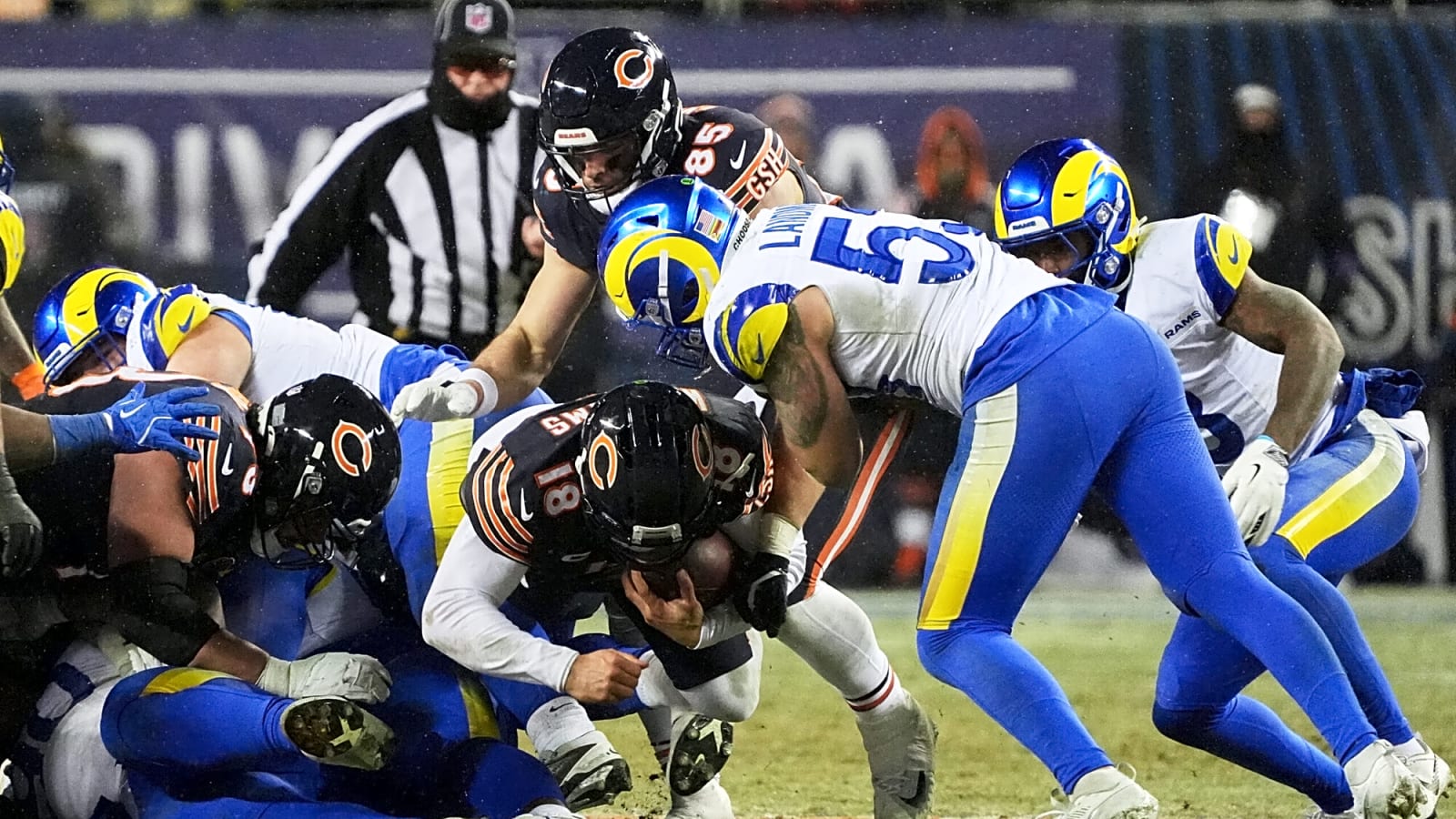
Indiana has a framework. Illinois has three weeks. The Bears are watching.
Mayor Brandon Johnson loaded into a car bound for Springfield on a Monday morning in May, carrying a pitch he’d spent weeks assembling and a problem no amount of charm could fix. The Bears had already told Illinois lawmakers the megaprojects bill wasn’t enough. Indiana had already passed its own framework three months earlier. And the franchise Johnson grew up watching, the one that hadn’t left Chicago since 1921, had a 340-acre site picked out near Wolf Lake, roughly 16 miles from the Loop.
Bears President Kevin Warren has said the team will choose between Arlington Heights, Illinois, and Hammond, Indiana, by late spring or early summer 2026. The Illinois Senate has until May 31 to act. The Bears have committed more than two billion dollars of their own money, and Indiana has offered up to one billion dollars in state-backed support. Everything else is politics.
A Century Of Loyalty, A Month To Save It
The Bears have called Chicago home for more than a hundred years. No other city. No other state. That streak now faces its first serious threat.
The Illinois Senate must vote on its megaprojects bill by May 31. That gives lawmakers roughly three weeks to deliver something the Bears haven’t seen yet, a legislative framework matching Indiana’s offer. Warren has signaled the clock is real, not rhetorical.
Indiana Didn’t Wait

Indiana passed SB 27 in February 2026. The state’s House Ways and Means Committee approved the Hammond stadium amendment 24 to 0. Unanimous. Zero debate. Governor Mike Braun signed the bill into law later that month, positioning the state as the aggressor in the fight.
Illinois passed its megaprojects bill through the House on April 22, voting 78 to 32, and the Bears immediately said more changes were needed. That gap tells the whole story. One state moved at what Indiana officials called the speed of business. The other state spent months arguing over amusement taxes and school funding protections while the clock burned down.
Hammond Mayor Thomas McDermott has been the local face of the Indiana pitch, publicly courting the franchise and packaging the Wolf Lake site as a ready-made destination. He has a governor behind him, a unanimous committee vote, and a signed law. Johnson has a trip to Springfield and a deadline.
The Mayor’s Impossible Contradiction

Johnson called the megaprojects bill short-sighted, criticizing its focus on entities with means without supporting families who have needs. Then he drove to Springfield to lobby for that exact bill.
The Bears, worth billions, need the bill’s property tax freezes and PILOT payment structures to make Arlington Heights work. Johnson opposes the mechanism but needs the outcome. Bears Chairman George McCaskey put it plainly. “We don’t have a deal to consider right now. In Indiana, we have a great site and we have a legislative framework in place.”
Why Owning Beats Renting

Soldier Field generates less than 20 percent of its revenue from Bears football. The Chicago Park District owns the building. The Bears are tenants with limited control over parking, concessions, and surrounding development.
That is the hidden engine driving this entire saga. Modern NFL stadium economics reward ownership, because ownership unlocks hotels, retail, restaurants, and year-round programming. Tenancy locks a team into someone else’s revenue ceiling, and the Bears already watch newer venues in Los Angeles, Las Vegas, and Nashville pull in sponsorship and broadcast-adjacent revenue they cannot match at Soldier Field.
The Bears purchased roughly 326 acres in Arlington Heights for just under 200 million dollars in 2023. Hammond offers 340 acres near Wolf Lake with zero property taxes on the stadium. One site the Bears already own. The other site comes with the law the Bears actually want.
The Arlington Heights Standoff
Arlington Heights was supposed to be the easy answer. It became the cautionary tale. The Bears spent two years tangled in a property tax assessment fight with Cook County and three local school districts over how the old racetrack parcel should be valued, a dispute that ballooned the projected annual tax bill and froze the project. The megaprojects bill exists largely to solve that fight by freezing assessments and redirecting payments through a PILOT structure. Without it, shovel-ready stops meaning much.
The Numbers Nobody Wants To Hear

Here is the voter paradox that makes this politically radioactive. Polling by Emerson College and WGN-TV found that 58 percent of Illinois residents oppose using state taxpayer dollars to help build a new Bears stadium. The most popular option in that same survey was the Bears paying for the project themselves.
Yet the Bears are seeking significant public infrastructure support in Illinois, and Indiana offered up to a billion dollars in state-backed financing. Politicians feel compelled to fund a deal the majority of their voters reject. The same poll found that a majority of Illinois voters still want the Bears to remain in the state, which is exactly the bind Johnson and Pritzker are caught in. Keep them, but don’t pay for them.
Chicago Already Planning Life Without Them

While Johnson lobbied to keep the Bears, the Chicago Park District quietly assembled a 630 million dollar transformation plan for a post-Bears Soldier Field. That is not the behavior of an institution expecting the team to stay.
The Bears can exit their Soldier Field lease with approximately 90 million dollars in penalties before the 2033 expiration. The franchise has pitched its broader development as a multibillion dollar economic driver with tens of thousands of construction jobs. If they leave, Illinois absorbs that loss. Indiana gains the momentum. And the NFL still has a say, because any cross-state relocation requires league ownership approval, a vote that has historically followed the money rather than blocked it.
The Precedent That Changes Everything

This is not one franchise shopping for a better deal. If Indiana lands the Bears, every NFL owner with a lease dispute watches and learns. States that legislate fast and offer property control will attract franchises. States that fragment over tax provisions and school funding will lose them.
Indiana passed its framework unanimously in February. Illinois couldn’t deliver a Senate vote by May. Legislative speed became structural advantage. Once you see that pattern, every future stadium negotiation in America looks different.
The Dominoes Still Falling

Governor Pritzker warned Illinois residents would be upset if the Bears moved to Indiana. That is an understatement bordering on comedy. The megaprojects bill allows developers to freeze property tax assessments for 25 to 45 years and negotiate PILOT payments with local taxing bodies.
Even if the Senate passes it by May 31, the Bears already signaled the House version needed substantial amendments. Johnson’s lobbying mission, framed by his own allies as a Hail Mary, acknowledged how precarious the path had become. Generations of fans who grew up on the Monsters of the Midway are watching a franchise identity debate play out inside a budget bill.
Certainty Versus Hope

Indiana locked its offer in February. Illinois is still negotiating in May. The Bears will evaluate both, but one column has numbers and the other has promises.
McCaskey said it himself. Arlington Heights is shovel-ready but lacks a legislative framework. Hammond has the framework but not Bears-owned land. The difference is that frameworks take months to build and land can be acquired in weeks. Johnson’s effort matters. But effort doesn’t rewrite a calendar, and Indiana’s head start may have decided this race before Illinois knew it was running.
Chicago fans, if the Bears pack up for Hammond, is this a betrayal of a century of history or the only business move that makes sense in today’s NFL? Tell us where you land.
Sources:
Indiana Senate, Senate Bill 27, approved 46-2 on Jan. 28, 2026, and signed into law by Gov. Mike Braun on Feb. 26, 2026.
Indiana House Ways and Means Committee, Amendment to Senate Bill 27 naming Hammond as the stadium site, approved 24-0 on Feb. 18, 2026.
City of Hammond, Ind., statement from Mayor Thomas M. McDermott Jr. confirming Hammond as the Bears’ Indiana site, Feb. 18, 2026.
Office of Indiana Gov. Mike Braun, public remarks identifying a site near Wolf Lake in Hammond and the state’s financing framework, Feb. 2026.
Illinois House of Representatives, roll call vote on the megaprojects bill, passed 78-32 on April 22, 2026.
Emerson College and WGN-TV poll of Illinois registered voters on public funding for a new Chicago Bears stadium, Jan. 2026.
More must-reads:
- Dianna Russini may still have an ace up her sleeve in Mike Vrabel saga
- Broncos get positive injury update on QB Bo Nix
- The 'Multiple 4K-yard NFL seasons' quiz
Breaking News
Trending News








Customize Your Newsletter
 +
+




Get the latest news and rumors, customized to your favorite sports and teams. Emailed daily. Always free!
PRIVACY POLICY COOKIE POLICY CONTACT US
ABOUT YARDBARKER TERMS OF SERVICE


By using this site, you agree to our Terms of Service and Privacy Policy.
This site is for entertainment purposes only.
There is no gambling offered on this site.
Gambling Problem? Call 1-800-Gambler.
